Artwork
The Xuehong Pavilion in a Scholar's Garden
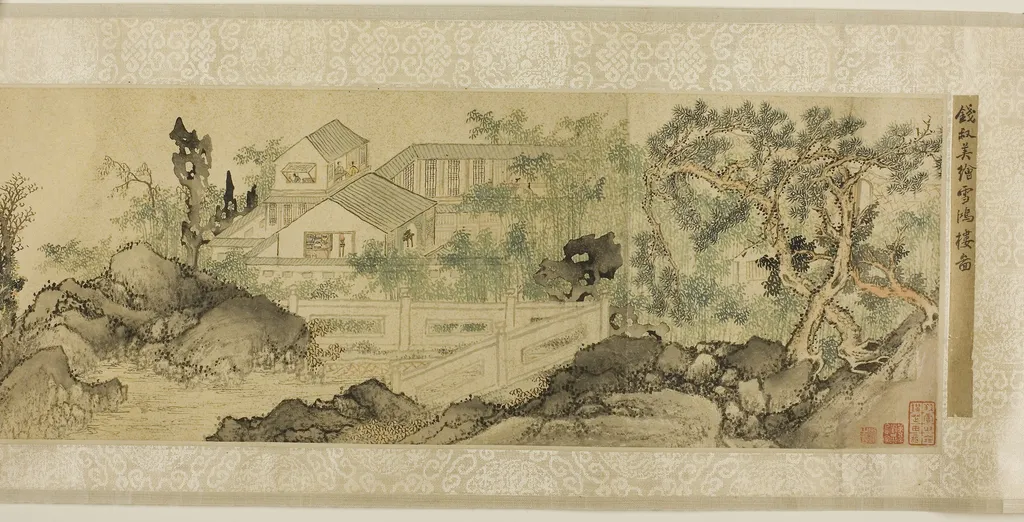
The Xuehong Pavilion in a Scholar's Garden is an unspecified painting by the Chinese Orthodox School artist Qian Du. It dates from 1831 and is held in the collection of the Art Institute of Chicago.
About this work
Overview
The painting reflects a quiet, introspective aesthetic, rooted in traditions inherited from Yuan and Ming masters like Wang Meng.
Painted in 1831 by Qian Du, a Zhejiang-born artist of the Qing Dynasty, this work depicts a secluded scholar’s garden pavilion. Qian, known by his style name Shumei and several literary sobriquets, worked within the Chinese Orthodox School, which upheld classical ideals of composition and brush discipline. The painting reflects a quiet, introspective aesthetic, rooted in traditions inherited from Yuan and Ming masters like Wang Meng.
Subject & Meaning
The scene centers on a modest pavilion nestled among carefully placed trees, rocks, and a winding path bordered by a low white fence. This arrangement evokes the literati ideal of retreat, a space for contemplation away from public life. The absence of human figures reinforces solitude, while the garden’s order suggests harmony between human design and natural forms, a core value in scholarly culture.
Technique & Style
Qian employed subtle ink washes and restrained color, favoring muted greens and browns to create depth without visual noise. The twisted roots and gnarled branches of the foreground tree are rendered with precise, expressive brushwork, echoing Yuan dynasty conventions. The soft, pale background enhances spatial recession, guiding the eye toward the pavilion without competing for attention.
History & Provenance
The painting was completed during Qian Du’s mature period, when he was actively engaged in the literati painting circles of southern China. Though specific ownership records are sparse, its adherence to Orthodox School principles suggests it was made for or acquired by educated patrons who valued scholarly aesthetics over decorative flourish.
Context
In early 19th-century China, landscape painting remained a vehicle for cultural continuity amid political instability. Artists like Qian looked to earlier dynasties for models, rejecting overt realism in favor of symbolic landscapes. This work reflects a broader trend: gardens as metaphors for moral cultivation, where nature, architecture, and brushwork converge to express inner virtue.
Legacy
Qian Du’s work, though less widely known than some contemporaries, exemplifies the endurance of Orthodox School ideals into the late Qing. His restrained palette and emphasis on compositional balance influenced later collectors and scholars who sought to preserve traditional aesthetics against emerging Western-influenced styles. The painting endures as a quiet testament to literati values in a changing world.
Artist & collection
Artist
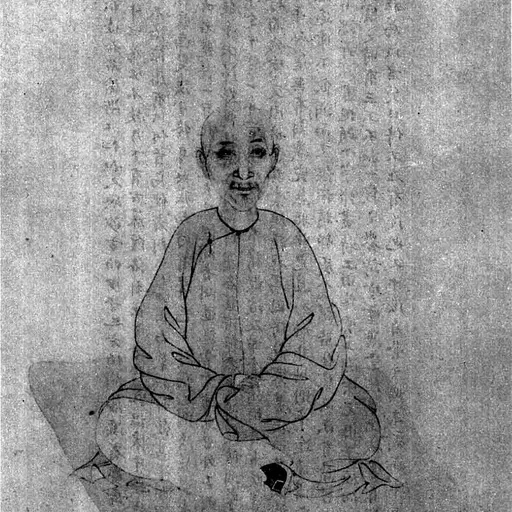
Qian Du (Wade–Giles: Ch'ien Tu, traditional: 錢杜, simplified: 钱杜; pinyin: Qián Dù); c.

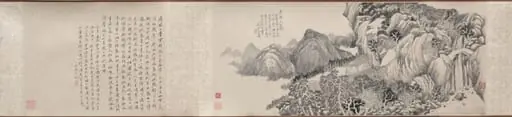
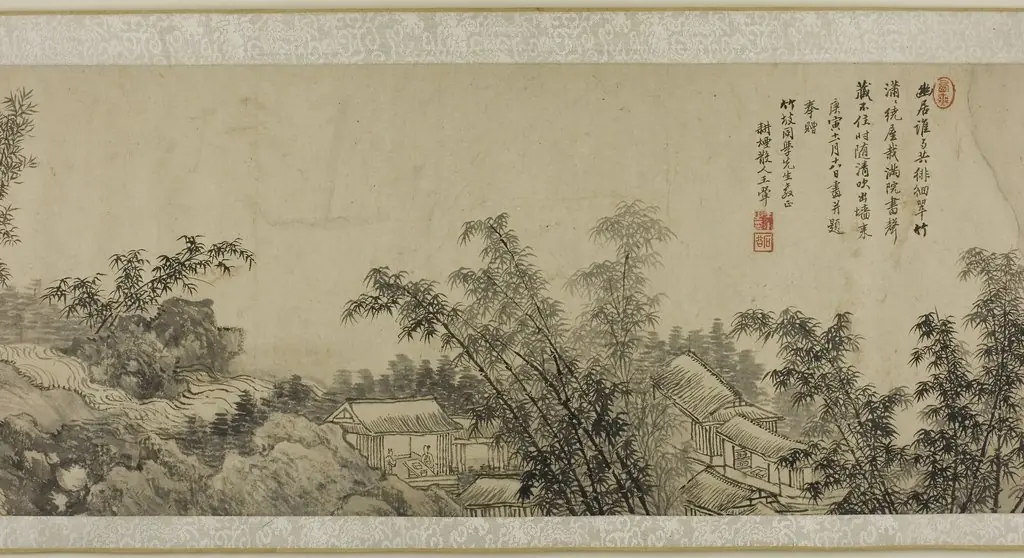
- The Bamboo Slope
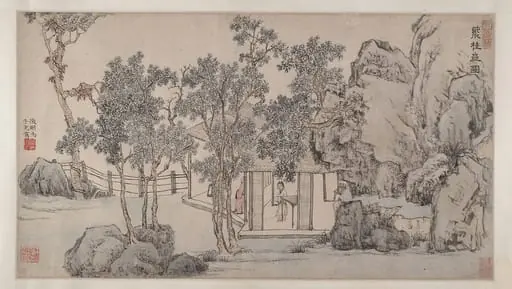 明 文徵明 叢桂齋圖 卷|The Cassia Grove Studio
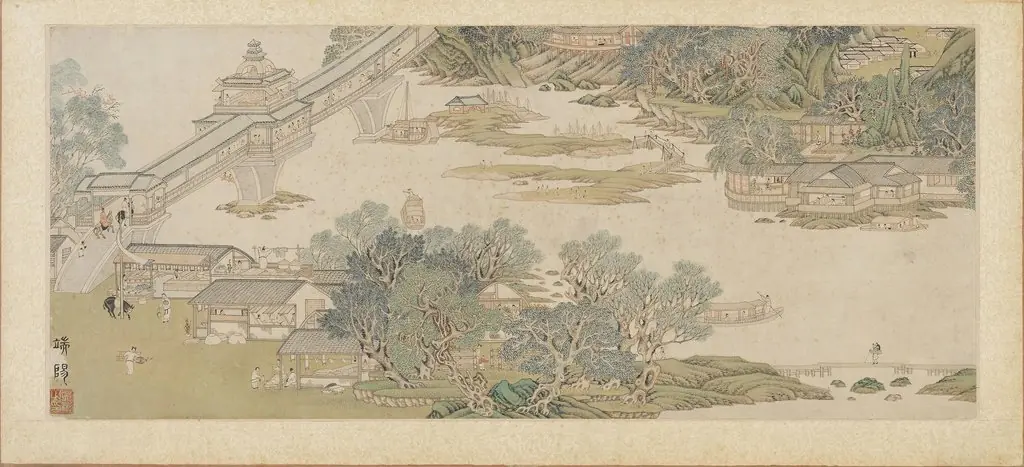 The Dragon Boat Festival
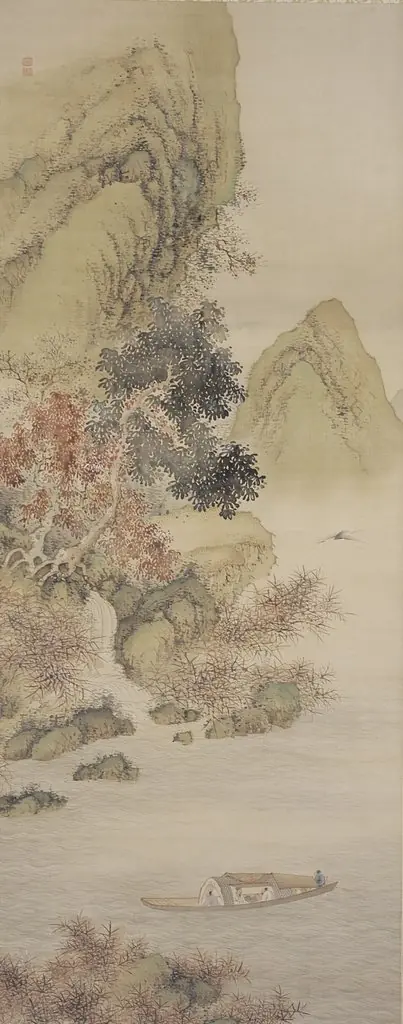 Landscape: Ode to the Red Cliff
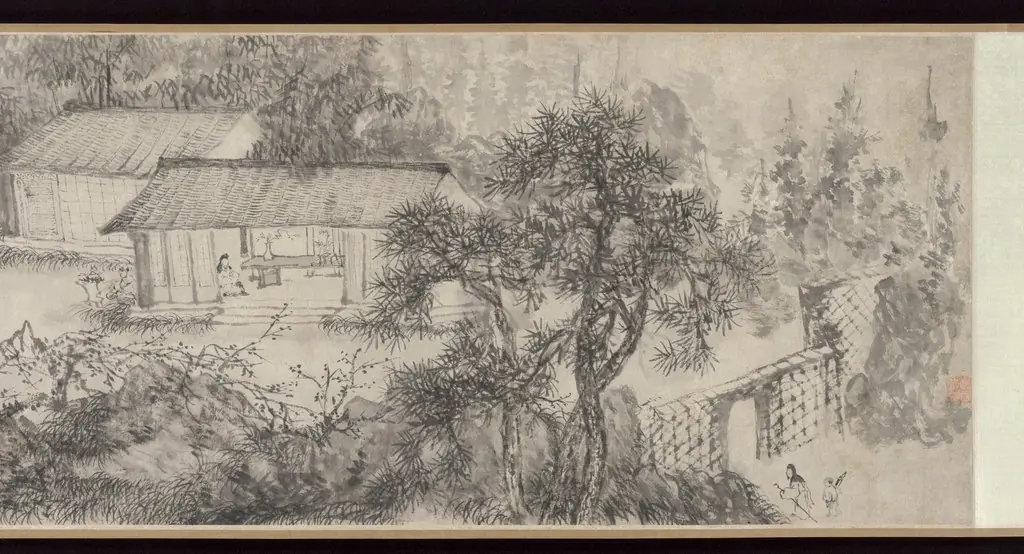 The Studio of Prolonged Soughing
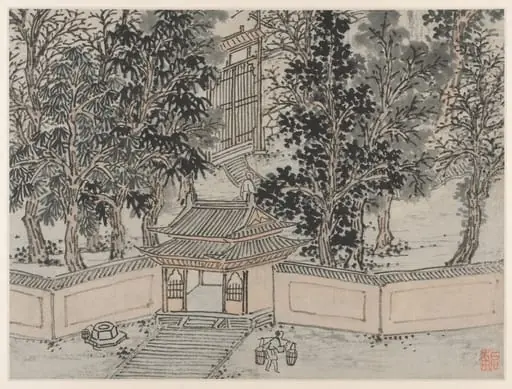 Tiger-Flight Spring at the Back Gate, from Twelve Views of Tiger Hill, Suzhou
 Untitled
 Untitled
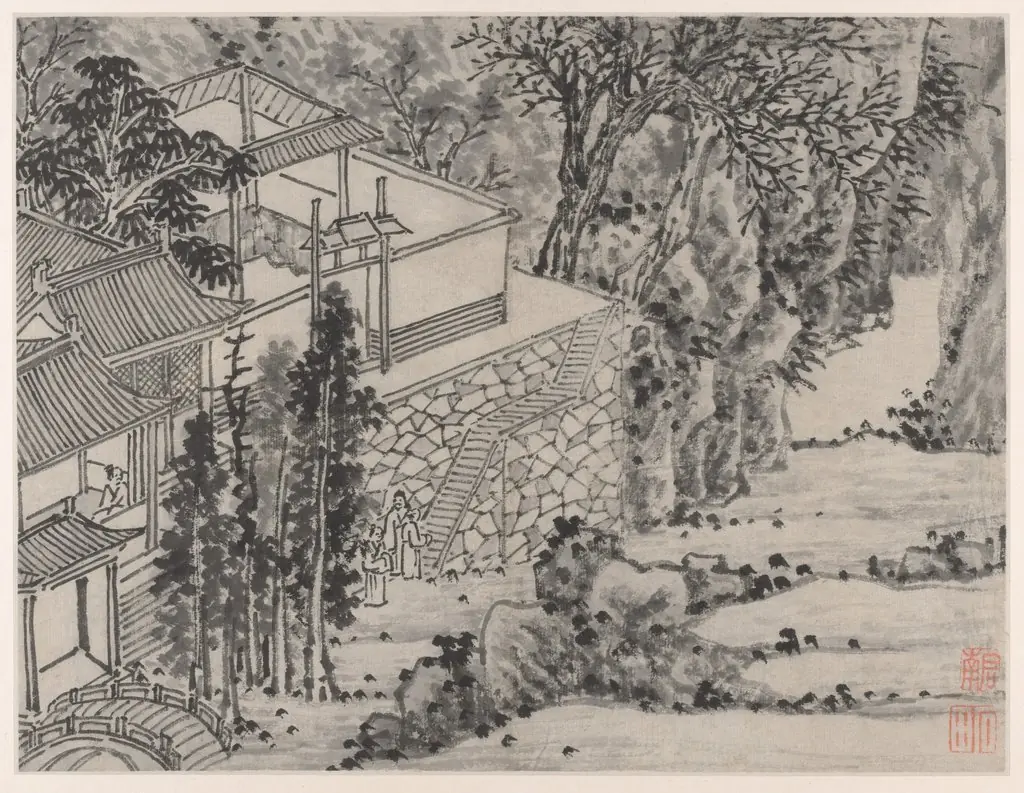 The Enlightened Stone Retreat, from Twelve Views of Tiger Hill, Suzhou
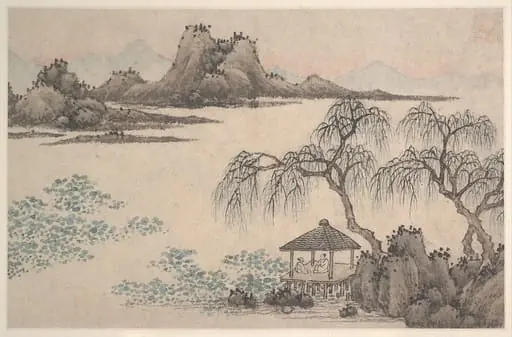 Untitled
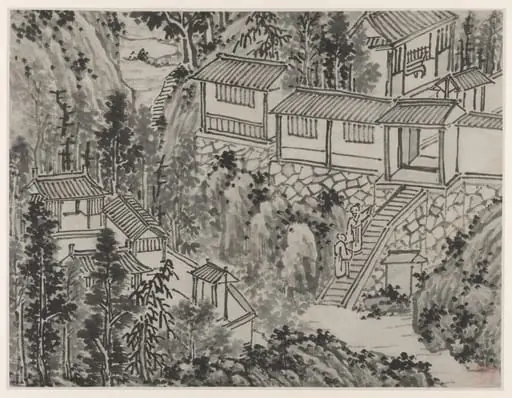 The Pine Retreat, from Twelve Views of Tiger Hill, Suzhou
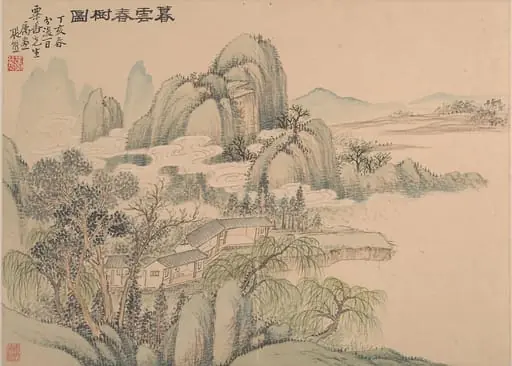 清 張熊 山水 冊頁|Landscape