Artwork
Architektura pałacowa z parkiem i postaciami uczonych
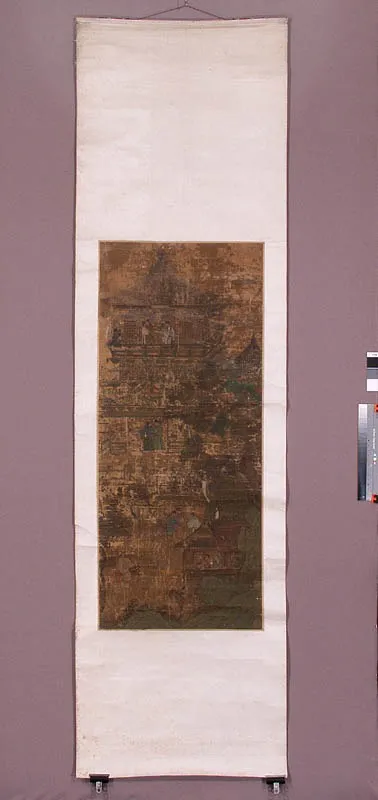
Architektura pałacowa z parkiem i postaciami uczonych is an unspecified painting by the Chinese Orthodox School artist Qiu Ying. It dates from 1533 and is held in the collection of the National Museum in Warsaw.
About this work
Overview
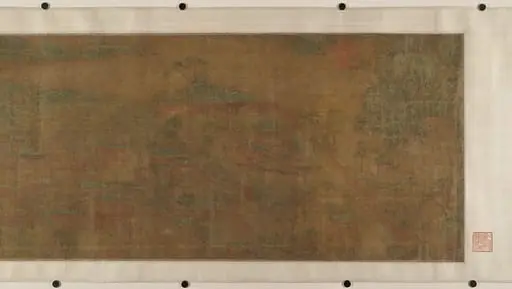
This painting, attributed to Qiu Ying and dated around 1533, is a handscroll fragment depicting an aristocratic garden setting with scholarly figures.
This painting, attributed to Qiu Ying and dated around 1533, is a handscroll fragment depicting an aristocratic garden setting with scholarly figures. It is preserved in the National Museum in Warsaw, where it survives as a partial, weathered section of what was once a longer work. The original format has been reduced, leaving only a central rectangular panel with traces of ink and color on paper.
Subject & Meaning
The scene portrays scholars in a cultivated landscape, likely referencing the idealized retreats of literati culture during the Ming dynasty. Figures are arranged among pavilions and trees, suggesting contemplation or scholarly exchange. The setting reflects the Confucian ideal of harmony between human intellect and nature, a common theme in elite artistic patronage of the period.
Technique & Style
Executed in ink and light color on paper, the work employs delicate brushwork typical of Qiu Ying’s meticulous style. Architectural elements are rendered with precise lines, while foliage and figures are suggested with subtle tonal variations. The faded pigments and surface cracks reflect age and material fragility, but the composition retains clarity in its spatial organization and rhythmic detail.
History & Provenance
The painting entered the National Museum in Warsaw’s collection as part of a broader acquisition of East Asian art in the early 20th century. Its original context as part of a longer handscroll is uncertain, but its condition suggests it was once mounted and displayed, later separated and preserved as a fragment. Documentation of its earlier ownership remains incomplete.
Context
Created during the mid-Ming dynasty, the work aligns with a tradition of literati-inspired painting that blended architectural precision with poetic landscape. Qiu Ying, though trained as a professional artist, often emulated the refined aesthetics of scholar-painters. This piece reflects the cultural prestige of garden retreats as spaces for intellectual life, favored by court and elite patrons alike.
Legacy
As one of the few surviving works by Qiu Ying outside China, this fragment contributes to the understanding of Ming painting’s dissemination in Europe. Its preservation, despite deterioration, offers insight into the material history of Chinese handscrolls and their reception in Western collections. It remains a quiet testament to cross-cultural artistic exchange.
Artist & collection


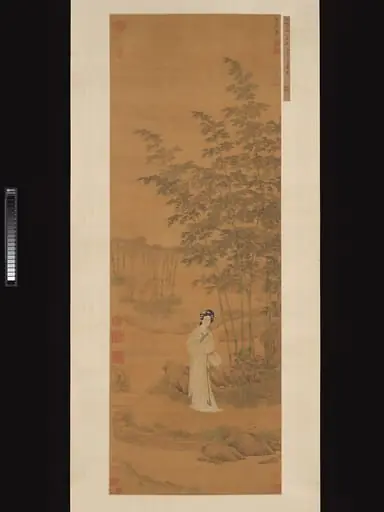 明 傳仇英 文玉圖 軸圖 軸|Lady in a Bamboo Grove
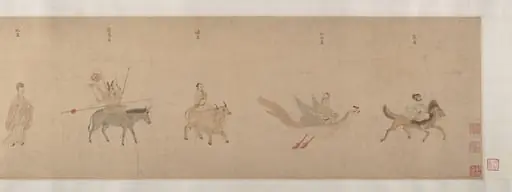 明 傳仇英 五星二十八宿神形圖 卷|Divinities of the Planets and Constellations
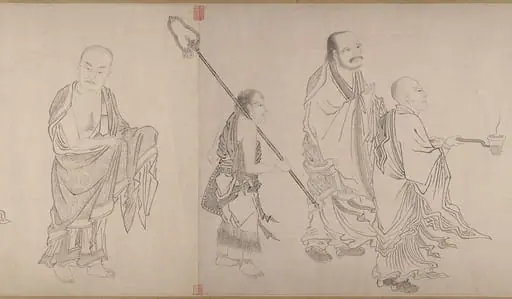 明 傳仇英 十六羅漢圖 卷|The Sixteen Luohans
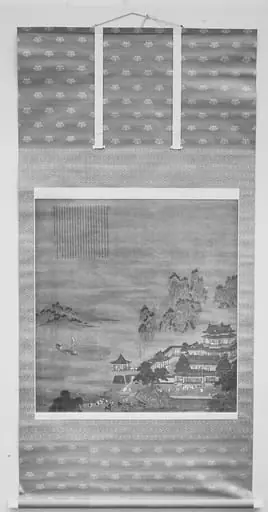 明 佚名 傳仇英 唐宫圖 軸|A Tang Palace
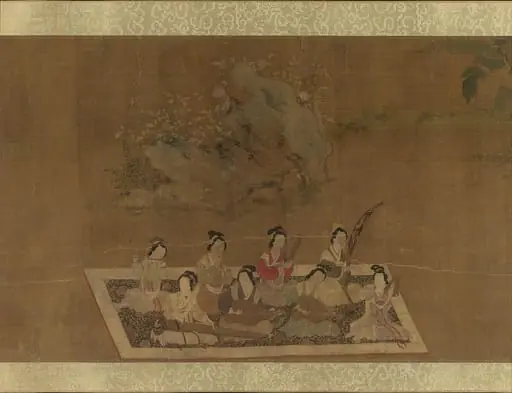 明 佚名 蘇蕙璇璣圖 卷|Lady Su Hui and Her Verse Puzzle
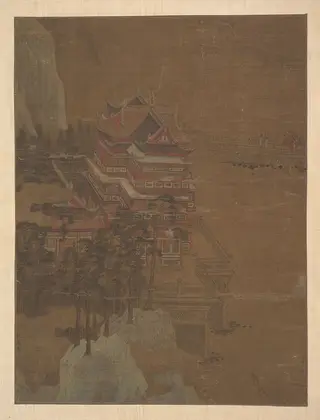 Untitled
 Zhao Mengfu Writing the Heart (Hridaya) Sutra in Exchange for Tea
 Garden for Solitary Enjoyment
 Untitled
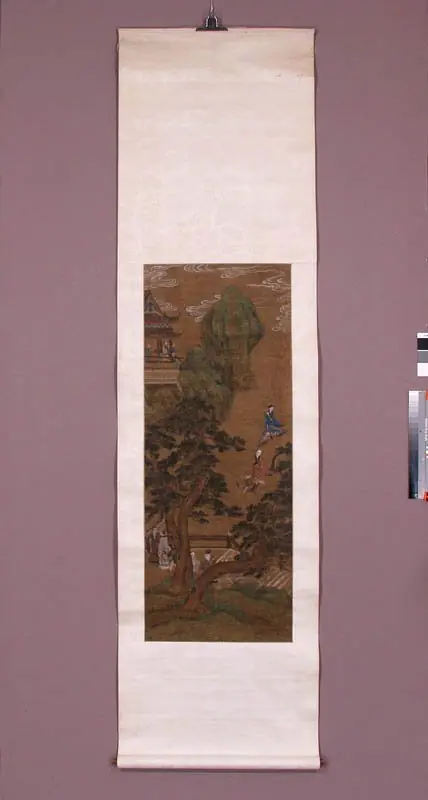 Spotkanie Ośmiu Nieśmiertelnych
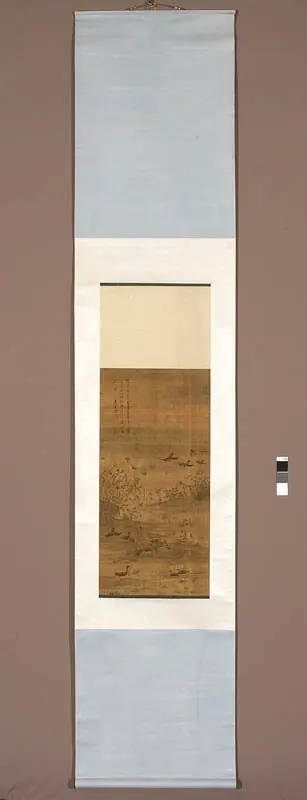 Dzikie gęsi na wodach San Xiang
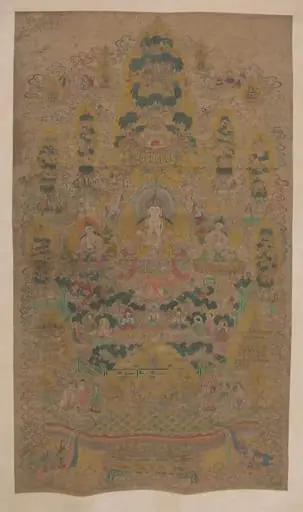 Untitled
 Bodhidharma Meditating Facing a Cliff
 Pałac nad brzegiem jeziora - pejzaż
 Prajnaparamita flanked by two female figures, folio 1 (verso), from a Manuscript of the Perfection of Wisdom in Eight Thousand Lines (Ashtasahasrika Prajnaparamita-sutra)
 Untitled
 Copy of painting inside the Ajanta caves