Artwork
Madonna del Prato
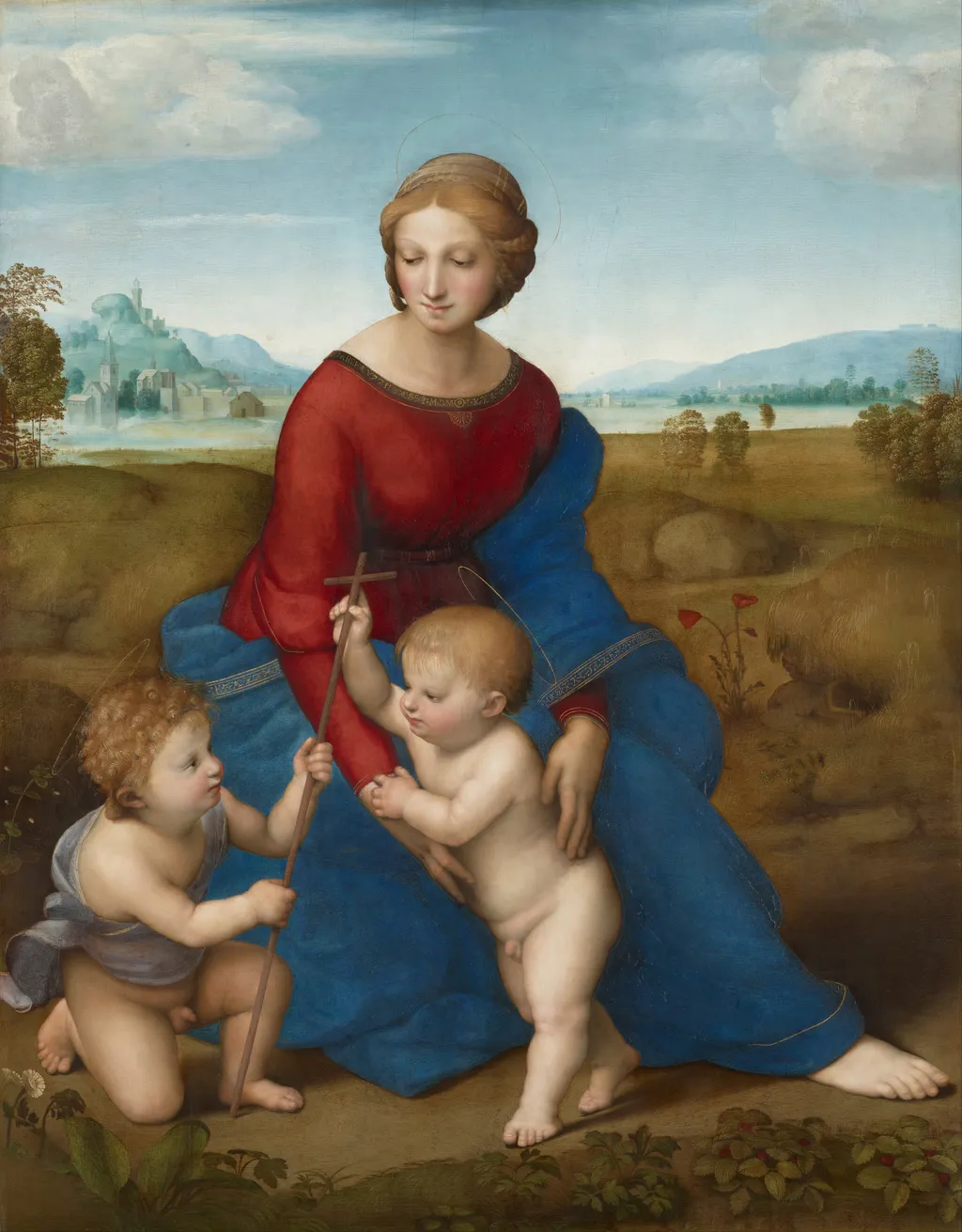
Madonna del Prato is an oil painting by the High Renaissance artist Raphael. It dates from 1505 and is held in the collection of the Kunsthistorisches Museum.
About this work
Subject & Meaning
Although the scene presents a tender, idyllic moment, the interaction regarding the cross introduces a solemn hint of Jesus's future suffering.
The painting depicts the Virgin Mary seated in a grassy meadow with the infant Jesus and the young John the Baptist, arranged in a pyramidal composition linked by their gazes. Mary wears a blue mantle over a red dress; the blue symbolizes the Church while the red signifies Christ's death, representing the union of Mother Church with Christ's sacrifice through their touching hands. John offers a miniature cross to Jesus, who reaches for it unsteadily, an action that foreshadows the Passion.
Botanical elements carry specific theological weight: a poppy flower alludes to Christ's passion, death, and resurrection due to its red color and cross-shaped stigma. Additionally, strawberries and daisies appearing in the foreground symbolize Mary's virtues, specifically purity and modesty. Although the scene presents a tender, idyllic moment, the interaction regarding the cross introduces a solemn hint of Jesus's future suffering.
Technique & Style
The Madonna del Prato is executed in oil on poplar panel, measuring 113 cm in height and 88.5 cm in width. Its construction relies on a gesso ground beneath translucent oil glazes and opaque underpaint, a structure identified during conservation at the Kunsthistorisches Museum in 1983.
The handling reflects Raphael’s engagement with Leonardo’s sfumato, particularly in the softly modeled faces of the Christ Child and John the Baptist, achieved through subtle gradations of cool and warm tones. Infrared examination reveals a precise underdrawing transferred to the panel, with clear incised lines guiding the composition. The sky appears to have been painted after the figures, as brush strokes follow contours visible in radiographs. A bluish undertone underlies the flesh tones, contributing to the work’s atmospheric unity.
Condition issues include pronounced craquelure in the blue mantle, caused by uneven drying of oil layers, and damage localized in passages where the robe and mantle were rendered.
History & Provenance
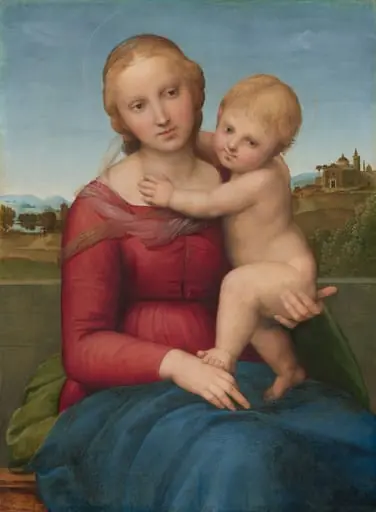
The Madonna del Prato was painted by Raphael during his Florentine period, generally dated to 1505–1506. According to Vasari, the work was executed as a gift from the artist to the Florentine patrician Taddeo Taddei, alongside another composition now identified as the Small Cowper Madonna.
After Taddei’s death, his heirs sold the painting in 1662 to Ferdinand Charles, Archduke of Austria. It entered the archducal collection at Ambras Castle before moving in 1773 into the imperial galleries at the Belvedere Palace in Vienna, where it remained and acquired the alternative title Madonna del Belvedere.
The Madonna del Prato is currently held in the Kunsthistorisches Museum in Vienna. It is also known as the Madonna del Belvedere, a designation derived from its long residence in the imperial collection at the Belvedere Palace. The work was originally commissioned by the Florentine patron Taddeo Taddei before being sold in 1662 to Archduke Ferdinand Charles of Austria.
Following this acquisition, the painting was housed at Ambras Castle in Innsbruck. In 1773, it was transferred to the imperial collections in Vienna, specifically the Belvedere, before eventually moving to its present location. While the Kunsthistorisches Museum is its permanent home, the painting has been featured in the 1980 BBC television series 100 Great Paintings.
Context
The Madonna del Prato is a seminal work of the High Renaissance, created by Raphael in 1506 during his Florentine period. It stands as a key example of the artist's synthesis of Leonardo da Vinci's techniques, specifically the pyramidal composition and sfumato, while introducing a distinct sense of calm and spontaneous familiarity absent in Leonardo's more mysterious works. Art historians regard the painting as an "icon of the new Renaissance spirit," where religion, emotion, and nature are unified.
The composition, featuring the Virgin Mary, the Christ Child, and the infant John the Baptist, earned Raphael significant prestige, directly leading to his commission for frescoes in the Vatican stanze. The work is frequently analyzed alongside the Madonna of the Goldfinch and La Belle Jardinière as part of a cohesive series of Florentine Madonnas that demonstrate Raphael's mastery of figure grouping and atmospheric landscape.
Overview
Raphael's painting, formally titled Madonna with the Christ Child and Saint John the Baptist, was completed in 1506. This oil on panel work depicts the Virgin Mary, the infant Jesus, and the young John the Baptist within a serene outdoor landscape. It is currently housed in the Kunsthistorisches Museum in Vienna, where it is known by its common name, Madonna del Prato.
Own this work as a print
Artist & collection
Artist
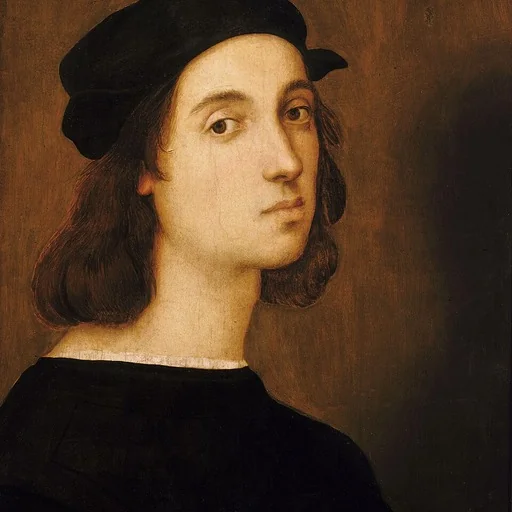
Raphael was born Raffaello Sanzio in Urbino on April 6, 1483, the son of Giovanni Santi, a painter and poet attached to the ducal court.

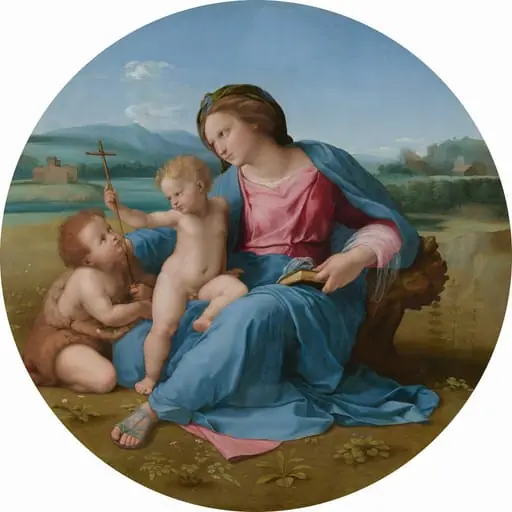
 Madonna and Child Seated in a Landscape with Saint John the Baptist
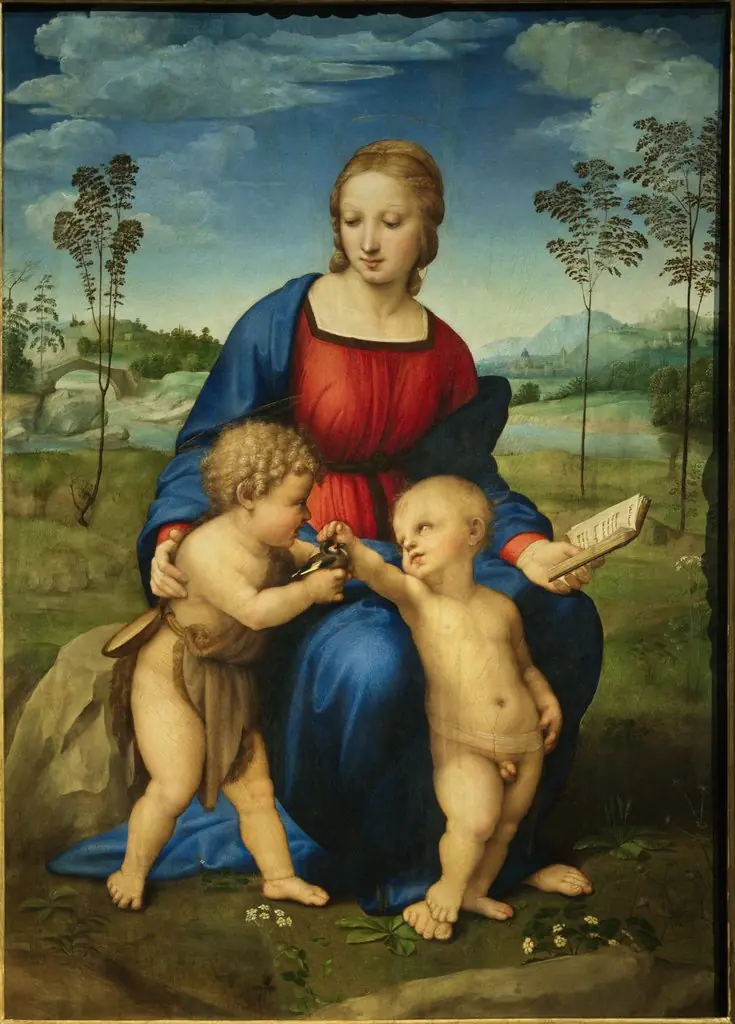 Madonna of the Goldfinch
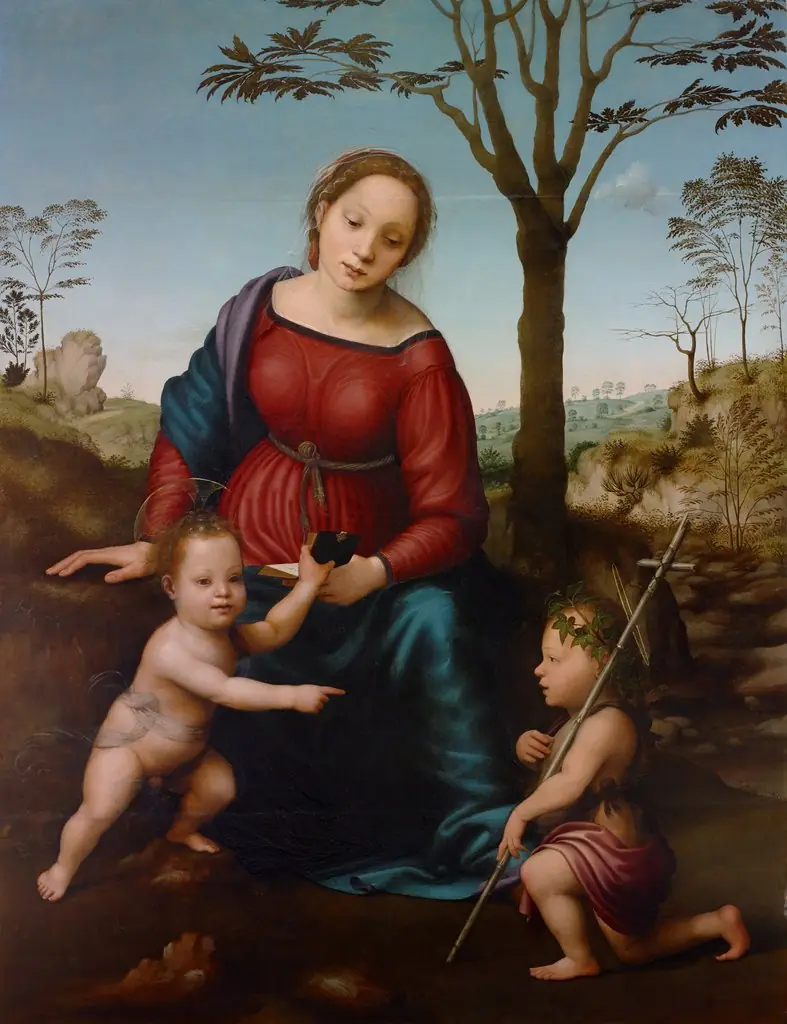
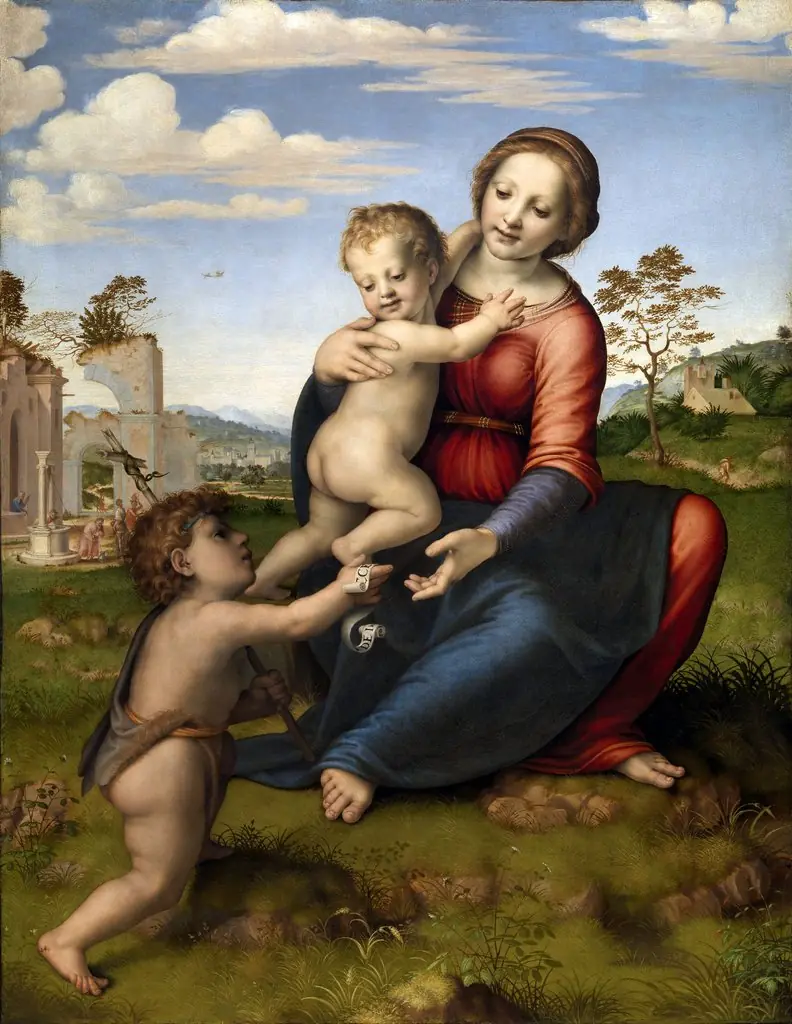 Madonna of the Well or Madonna and Child with the young St. John the Baptist
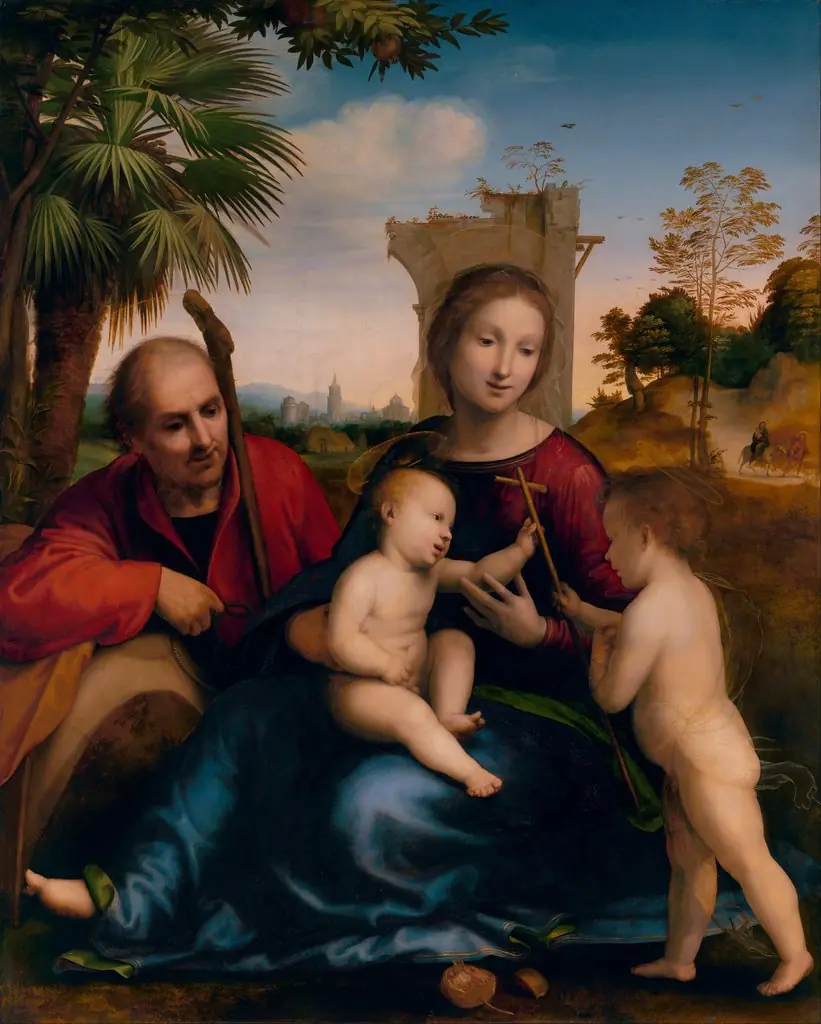 The Rest on the Flight into Egypt with St. John the Baptist
 Madonna del Cardellino, kopio Rafaelin (Raffaello Sanzio) mukaan
 Maria mit Kind und Johannesknaben
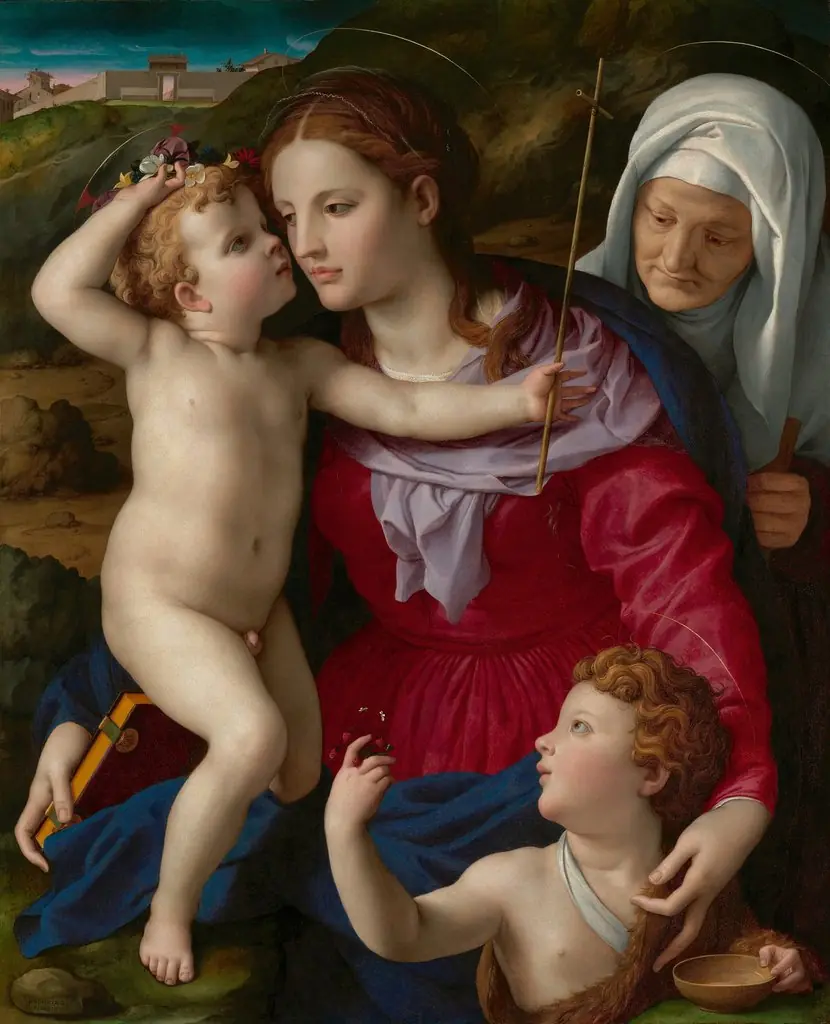 Virgin and Child with Saint Elizabeth and Saint John the Baptist
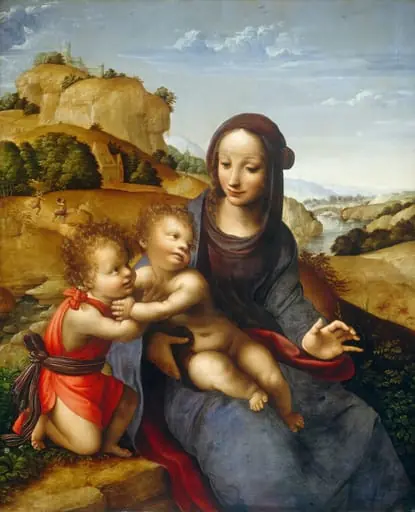 Madonna and Child with the Infant Saint John
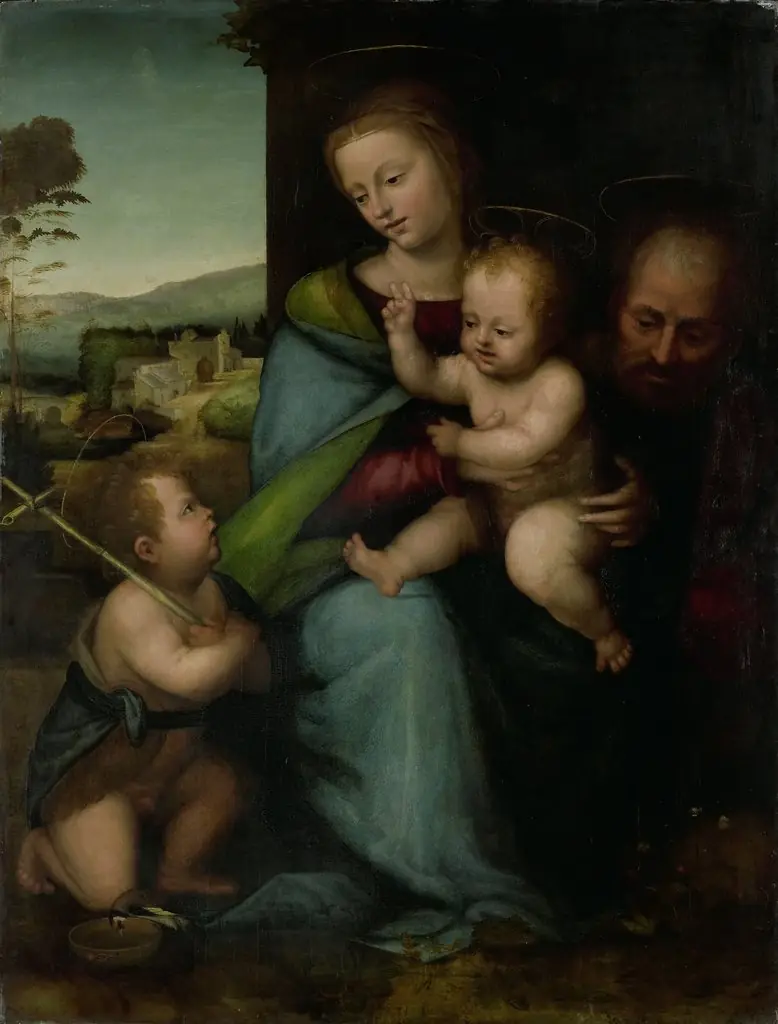 The Holy Family with the Infant John the Baptist
- Madonna della tenda