Artwork
Visitation
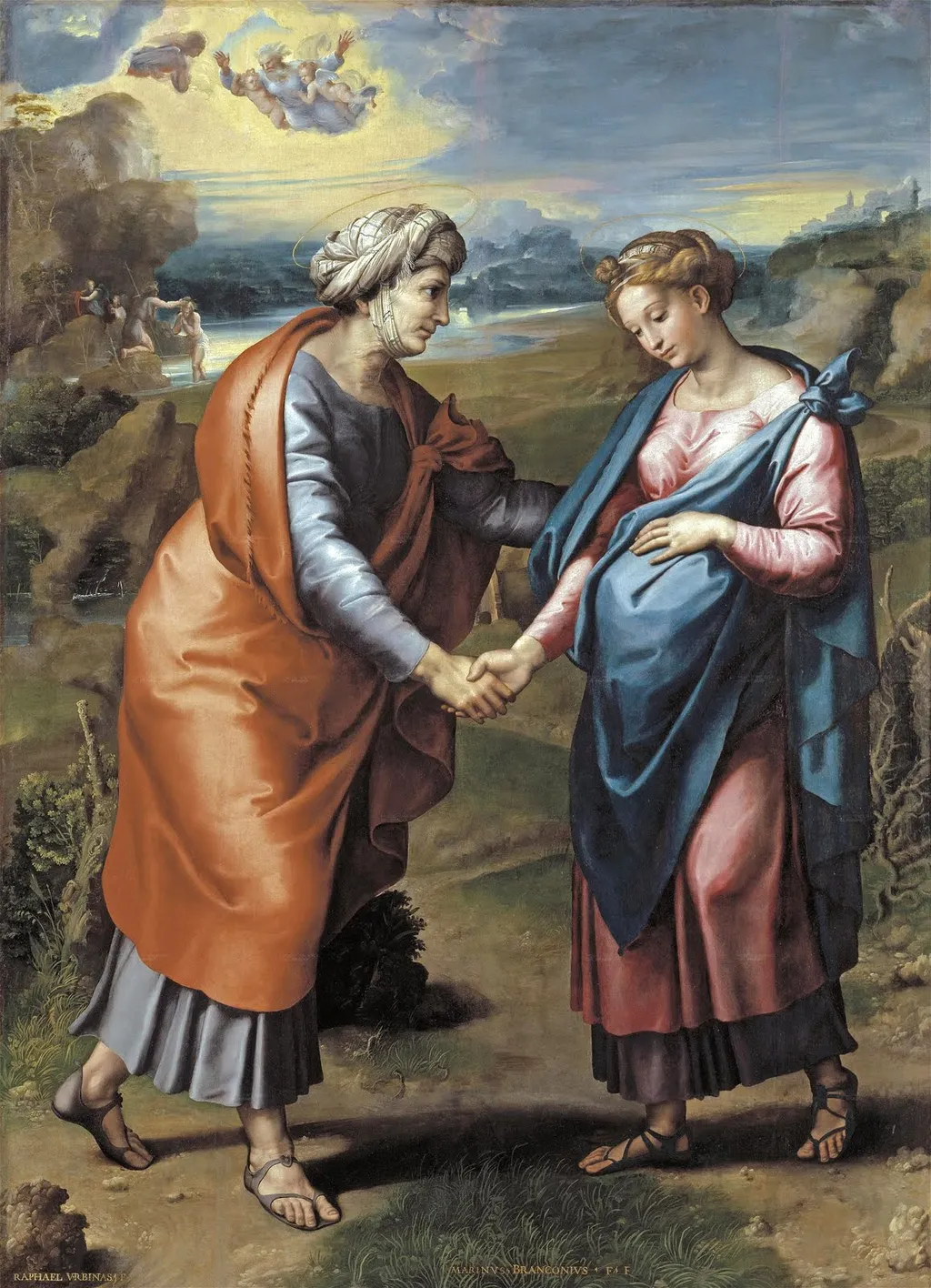
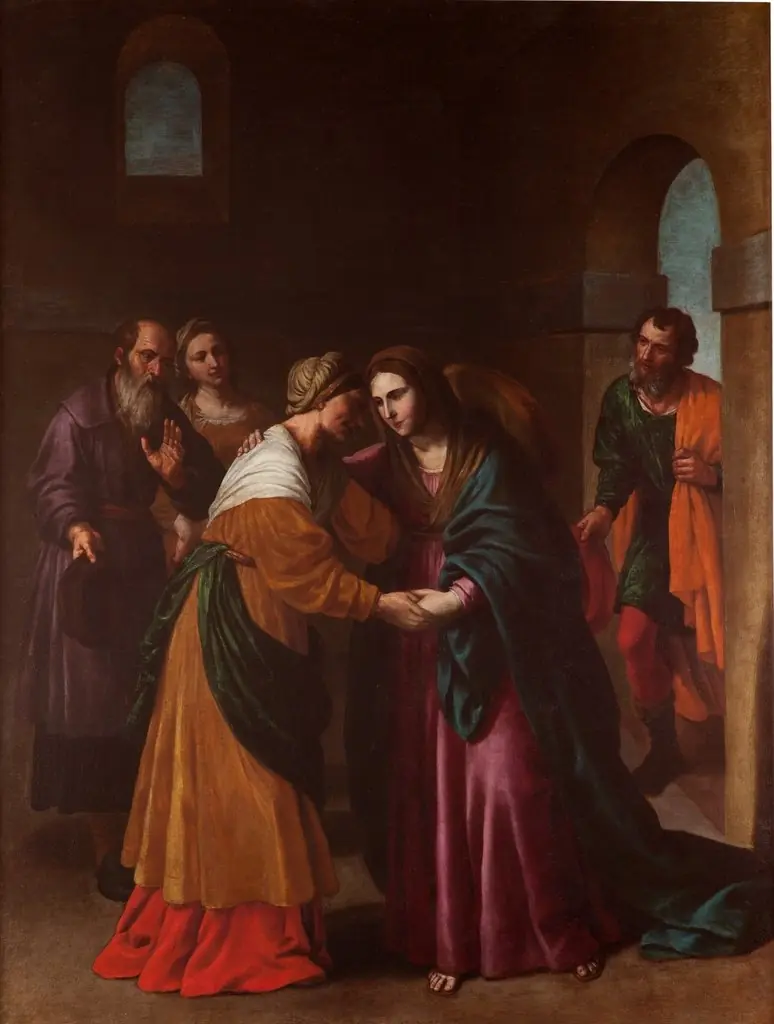
Visitation is an oil painting by the High Renaissance artist Raphael. It dates from 1517 and is held in the collection of the Museo del Prado.
About this work
Subject & Meaning
The composition balances intimate earthly interaction with a celestial vision, reflecting themes of humility, divine favor, and the dual nature of the event.
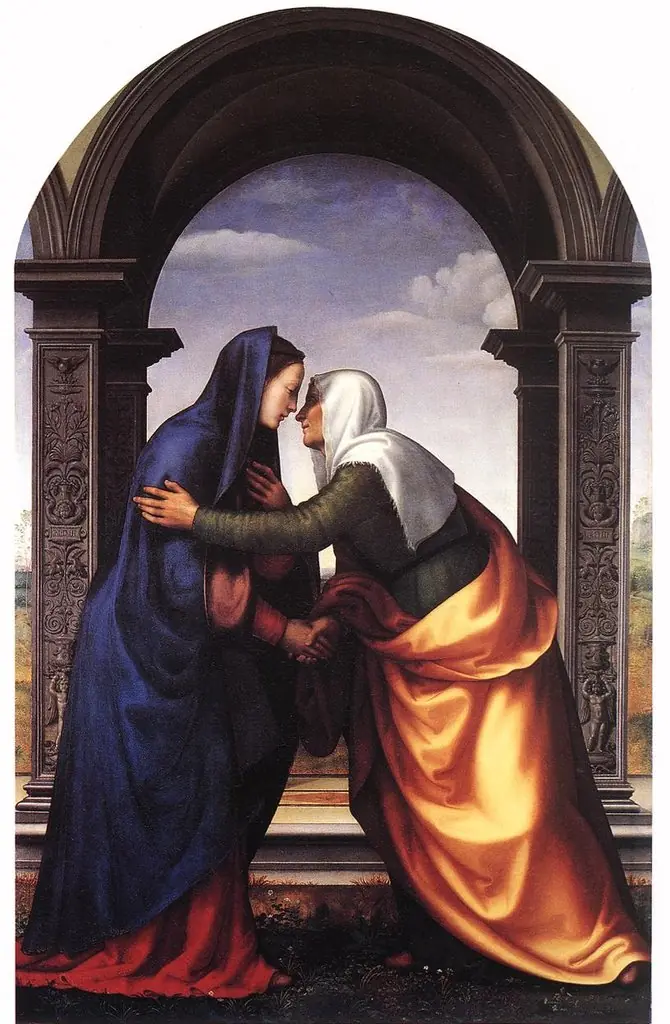
The painting depicts the biblical moment of the Visitation, showing the pregnant Virgin Mary meeting her cousin Saint Elizabeth; both are clothed in red and blue, with Mary’s hand on her womb and Elizabeth reaching toward her. Above them the scene includes God the Father surrounded by angels, the Jordan River, and the Baptism of Christ, linking the human encounter with a divine revelation. This iconography merges the personal, familial connection of the two women with a larger theological narrative of salvation, emphasizing the recognition of Christ’s forthcoming birth and the continuity between the Old and New Testaments.
The composition balances intimate earthly interaction with a celestial vision, reflecting themes of humility, divine favor, and the dual nature of the event.
Technique & Style
Executed circa 1517–1518, this High Renaissance work is an oil painting originally created on a wooden panel measuring 200 by 145 centimeters. Due to significant deterioration of the original support during the Napoleonic era, the paint layer was transferred to canvas between 1813 and 1822 while in Paris. The composition features monumental figures of Mary and Elizabeth in the foreground, rendered with polished brushwork that models flesh tones and drapery folds without distortion.
Raphael likely designed the scene and painted key portions of the figures, characterized by identical lighting intensity on both faces, while assistants Giulio Romano and Gianfrancesco Penni presumably completed the background. The landscape employs somewhat monotonous soft green and azure tones, contrasting the intimate human encounter with a distant divine vision of the Baptism of Christ and God the Father.
History & Provenance
The painting is housed in the Museo del Prado in Madrid (accession number not recorded). It entered the museum in 1837 after a complex provenance: commissioned in 1517 for the chapel of San Silvestro in L'Aquila, seized by Spanish troops in 1655, placed at the Royal Monastery of El Escorial, transferred to the Louvre in 1813 during the Napoleonic looting, returned to Spain in 1822, and finally installed in the Prado in 1837.
Context
The Visitation is situated within Raphael's late High Renaissance output, executed around 1517 as a collaborative work in which Raphael supplied the design and principal passages while his pupils Gianfrancesco Penni and Giulio Romano completed the remainder. A preparatory head study for Saint Elizabeth preserved in the Louvre is cited as evidence of the master's direct hand. The work was commissioned by Giovanni Battista Branconio at his father Marino's request for the family chapel of San Silvestro in L'Aquila, paid for at 300 scudi, and reflects personal Marian devotion since Marino's wife was named Elisabetta.
Art historian Adolfo Venturi praised Raphael's modeling of the two female figures and the unified lighting of their faces. The background apparition of God the Father among angels has been linked to Michelangelo's Vision of Ezekiel in the Palazzo Pitti.
Overview
Raphael's "Visitation," painted around 1517, depicts the biblical encounter between the Virgin Mary and Saint Elizabeth. This oil painting showcases the moment when the two pregnant women meet, a significant event in Christian tradition. Originally created for a family chapel in L'Aquila, Italy, the artwork has been a prominent feature of the Prado Museum's collection since 1837, representing a key work from the High Renaissance period.
Artist & collection
Artist
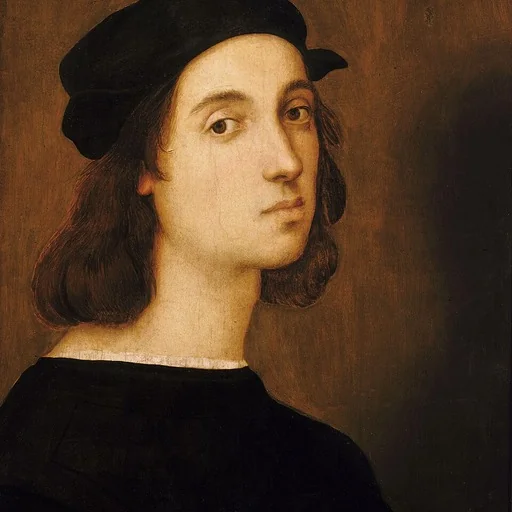
Raphael was born Raffaello Sanzio in Urbino on April 6, 1483, the son of Giovanni Santi, a painter and poet attached to the ducal court.