Artwork
Madonna Diotallevi
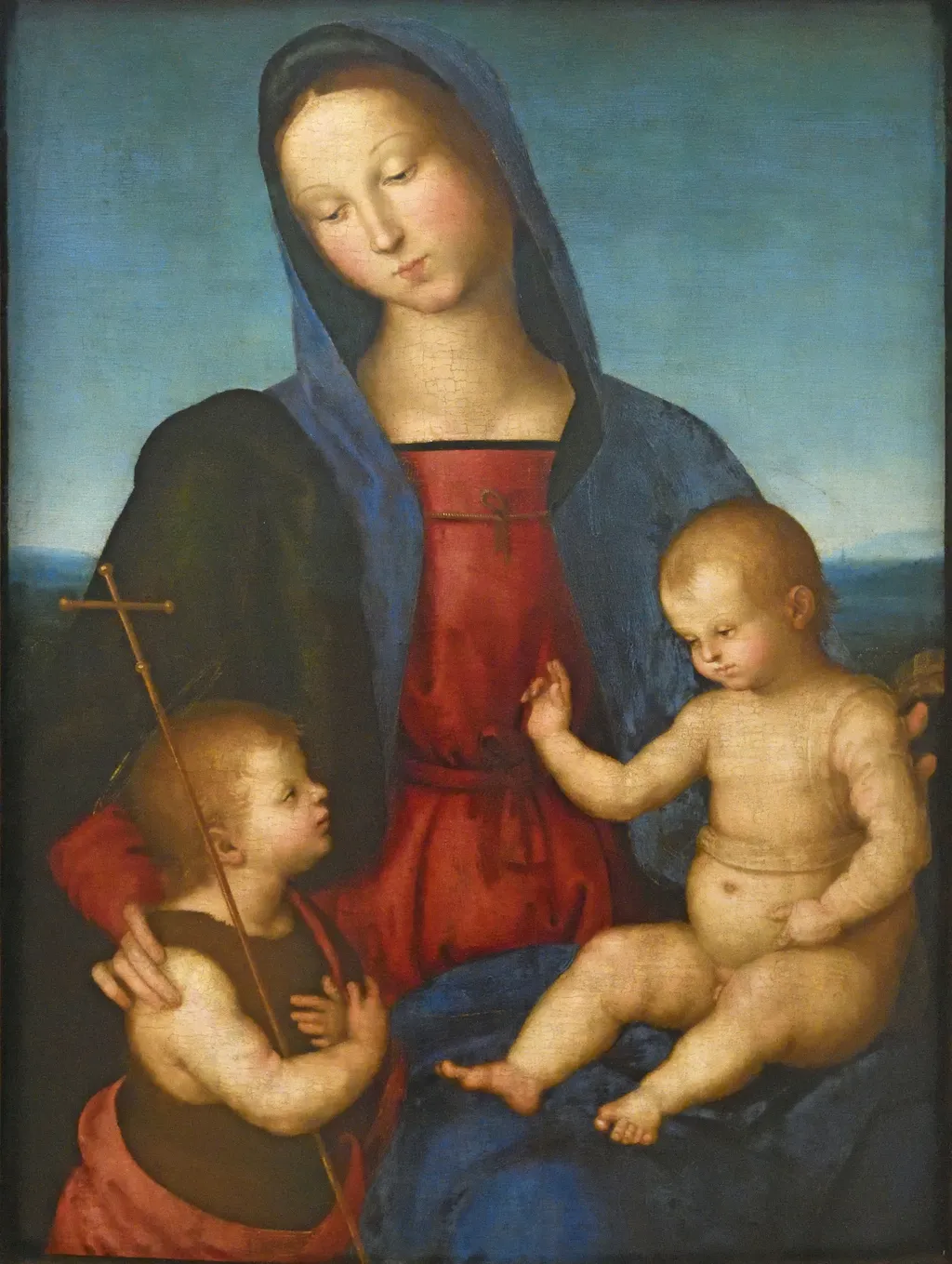
Madonna Diotallevi is an oil painting by the High Renaissance artist Raphael. It dates from 1502 and is held in the collection of the Gemäldegalerie Berlin. The work known as the Diotallevi Madonna is an oil painting on panel dating from around 1504.
About this work
Technique & Style
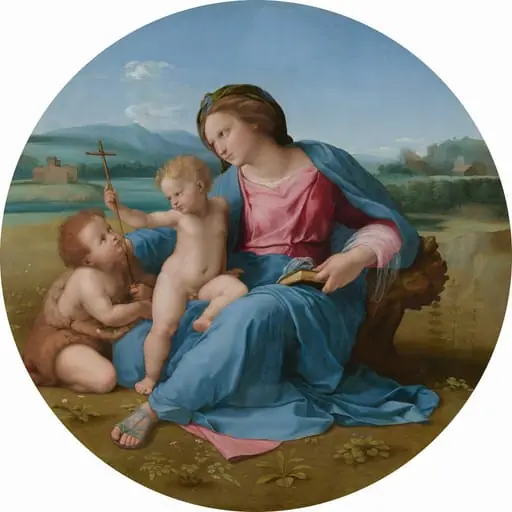
The work depicts the Virgin Mary holding the Christ Child while Saint John the Baptist stands nearby, engaged in a gesture of humility.
The Madonna Diotallevi is an oil painting executed on poplar panel, measuring 72.8 cm by 52.2 cm. It was likely begun in Perugia under the influence of Pietro Perugino, with Raphael completing it in Florence around 1504. The work depicts the Virgin Mary holding the Christ Child while Saint John the Baptist stands nearby, engaged in a gesture of humility. The composition and physiognomy reflect Peruginesque stylistic elements, particularly in the archaic rendering of Mary's features, though the chiaroscuro and coloration demonstrate Raphael's developing technique.
The painting's handling emphasizes intimate interaction among the figures, with delicate gestures and expressive gazes. Its formal qualities include a clear spatial layout, aerial perspective in the landscape background, and a restrained yet luminous color palette characteristic of early High Renaissance practice.
History & Provenance
The Madonna Diotallevi was painted in Perugia around 1502, likely beginning in Raphael's early years under Perugino's influence and completed later in Florence. Originally attributed to Perugino, the panel passed from the Diotallevi family of Rimini into the Berlin museums when Gustav Friedrich Waagen purchased it from the Collezione marchese A. Diotallevi in Rimini in 1842, for 150 Luigi (approximately 2,907 Mark), for the Royal Museum in Berlin; it subsequently became part of the Gemäldegalerie's holdings.
The work was on continuous display in Berlin from its acquisition until 1939. It was then evacuated to the Flakturm Friedrichshain and, in spring 1945, transferred to the Kaiseroda-Merkers potash mine in Thuringia, where it was recovered by American forces and taken to the Central Art Collecting Point in Wiesbaden. The painting returned to Berlin in 1956 and was shown at the Museum Dahlem from 1956 to 1997, after which it was transferred to the Gemäldegalerie, where it remains on display today.
An exhibition titled "Raffaello a Rimini. Il ritorno della Madonna Diotallevi" was held in Rimini from 17 October 2020 to 10 January 2021.
Context
Early attributions to Raphael's teacher Pietro Perugino persisted until the mid-nineteenth century, when Gustav Friedrich Waagen identified the panel as an early work by the young master for the Königliches Museum in Berlin in 1842. By the 1870s, doubts resurfaced, and Adolfo Venturi proposed an unknown "Master of the Diotallevi Madonna," linking it stylistically to parts of Perugino's Madonna della Consolazione. Roberto Longhi argued for a protracted genesis, suggesting the archaic rendering of the Madonna indicated an initial phase around 1500–1502, later overpainted in Florence about 1504–1505, though this chronology has found limited support.
Most modern scholarship aligns the panel with Raphael's Perugian period, circa 1502, recognizing its fusion of Peruginesque composition with the incipient dynamism and chiaroscuro that would define his mature style. The work's place in Raphael's oeuvre underscores his rapid assimilation of Umbrian models while signaling the transition toward High Renaissance ideals.
Legacy
The Diotallevi Madonna's legacy is defined by a complex history of attribution and critical re-evaluation. Initially identified as a work by Raphael's teacher, Perugino, the painting was recognized as an early Raphael by Gustav Friedrich Waagen, who acquired it for the Berlin museums in 1842. Although this attribution held until the 1870s, doubts resurfaced, leading Adolfo Venturi in 1913 to propose the existence of a distinct "Master of the Diotallevi Madonna."
Roberto Longhi further complicated the narrative by suggesting a multi-stage creation process, noting stylistic disparities between the archaic Virgin and the more advanced Christ Child.
Despite these scholarly debates, the consensus eventually returned to Raphael, a view that persists today. The work's survival through World War II, including its evacuation to a salt mine in Merkers and subsequent return to Berlin in 1956, cemented its status as a significant early Renaissance piece held in the Gemäldegalerie. Recent scholarship, including a 2020 exhibition in Rimini, continues to examine its historical and critical trajectory.
Overview
The work known as the Diotallevi Madonna is an oil painting on panel dating from around 1504. It depicts the Virgin Mary with the infant Christ and a young John the Baptist, set against a serene sky and distant hills. The composition is presently housed in Berlin’s Bode Museum, where it entered the collection in the early 1840s from the estate of the Diotallevi family of Rimini.
Subject & Meaning
The central figure is a seated Madonna in a blue mantle and red dress, cradling the infant Jesus on her lap. At her side kneels a youthful John the Baptist, clutching a small wooden cross and gazing downward. The arrangement emphasizes maternal tenderness and the prophetic link between the two children, a common devotional theme in early‑sixteenth‑century Italian art.
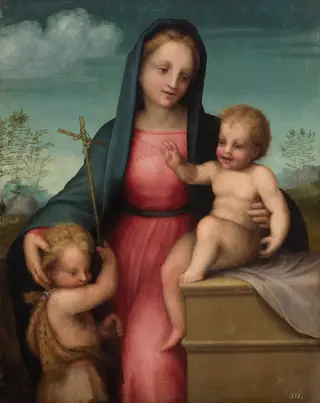
Own this work as a print
Artist & collection
Artist
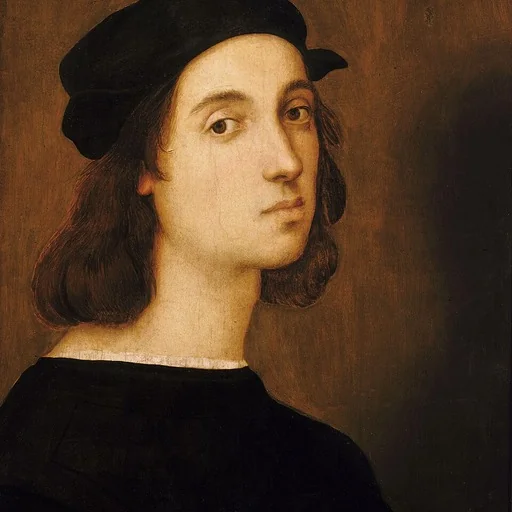
Raphael was born Raffaello Sanzio in Urbino on April 6, 1483, the son of Giovanni Santi, a painter and poet attached to the ducal court.

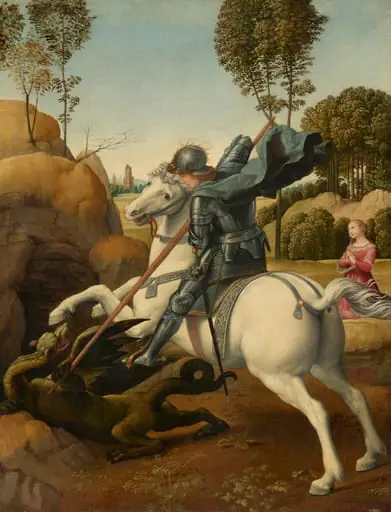
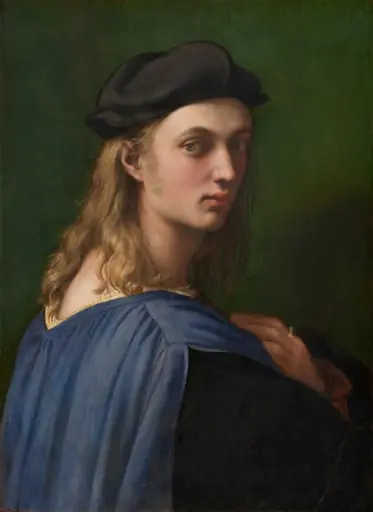
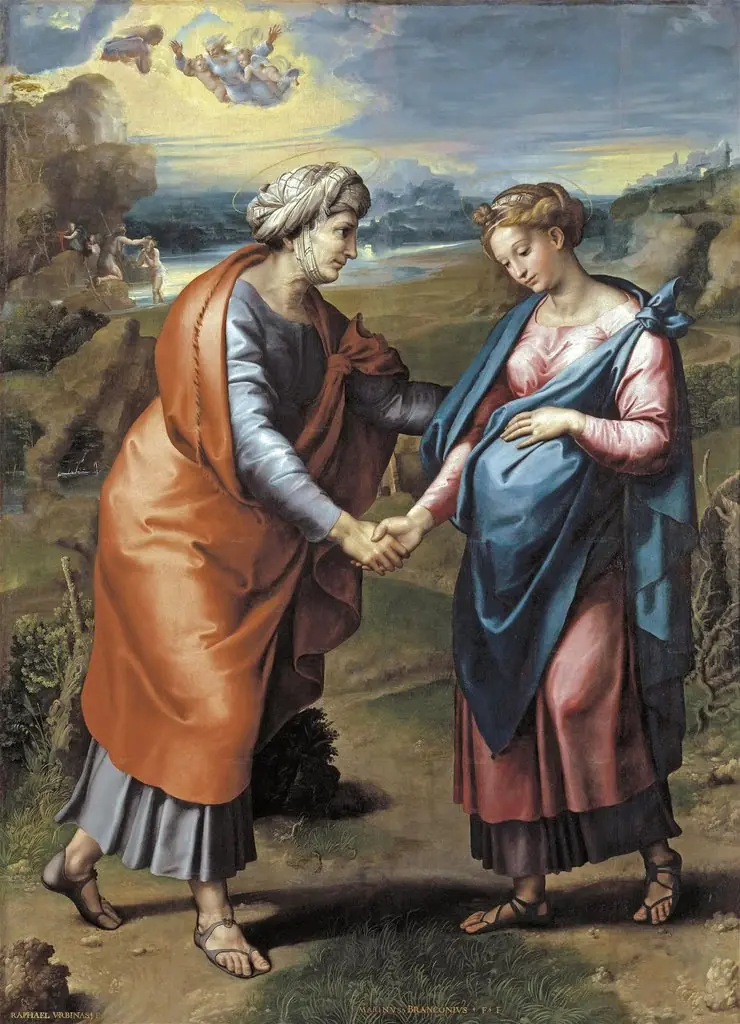
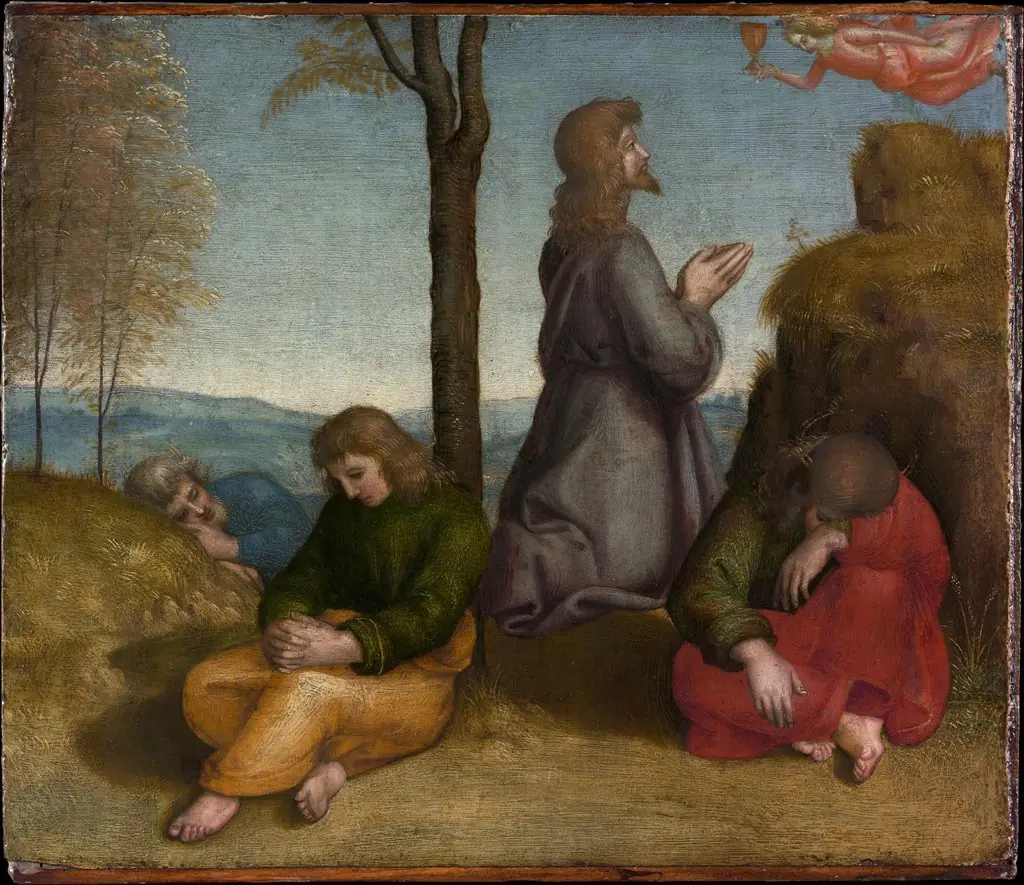
- Maria mit Kind und Johannesknaben
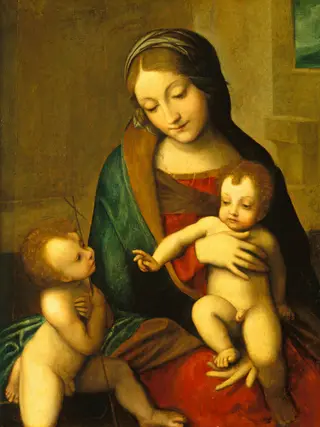 Madonna and Child with the Infant Saint John
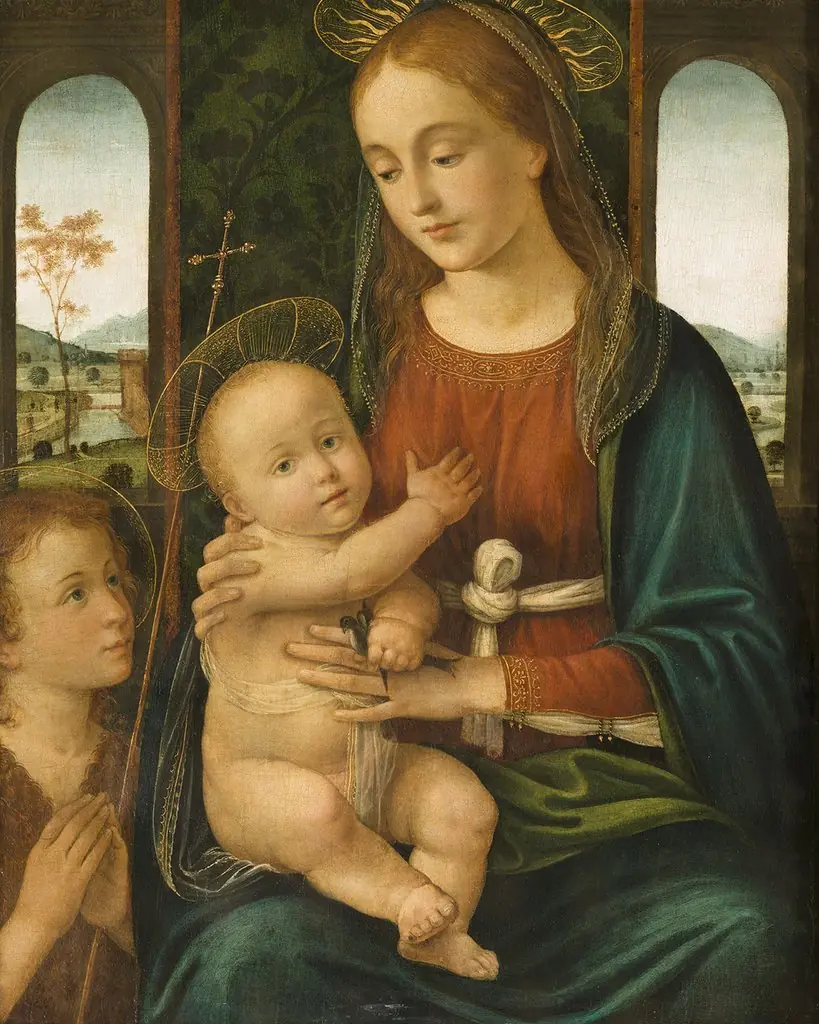 Virgin and Child with Saint John the Baptist
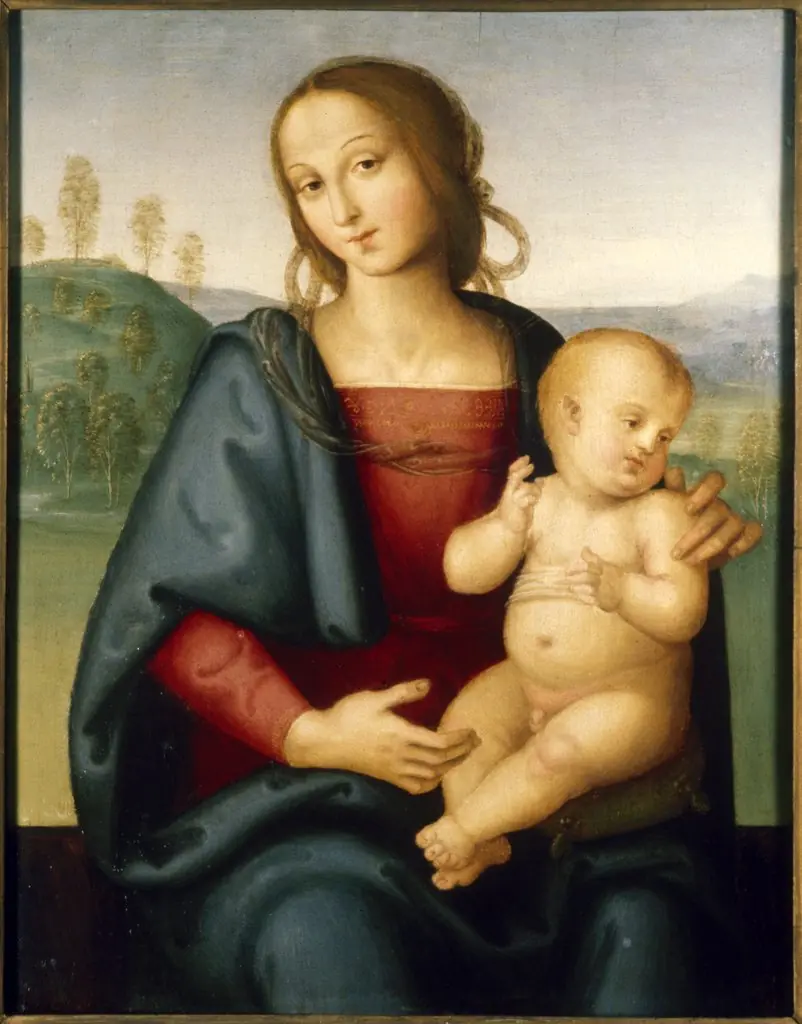 Madonna and Child
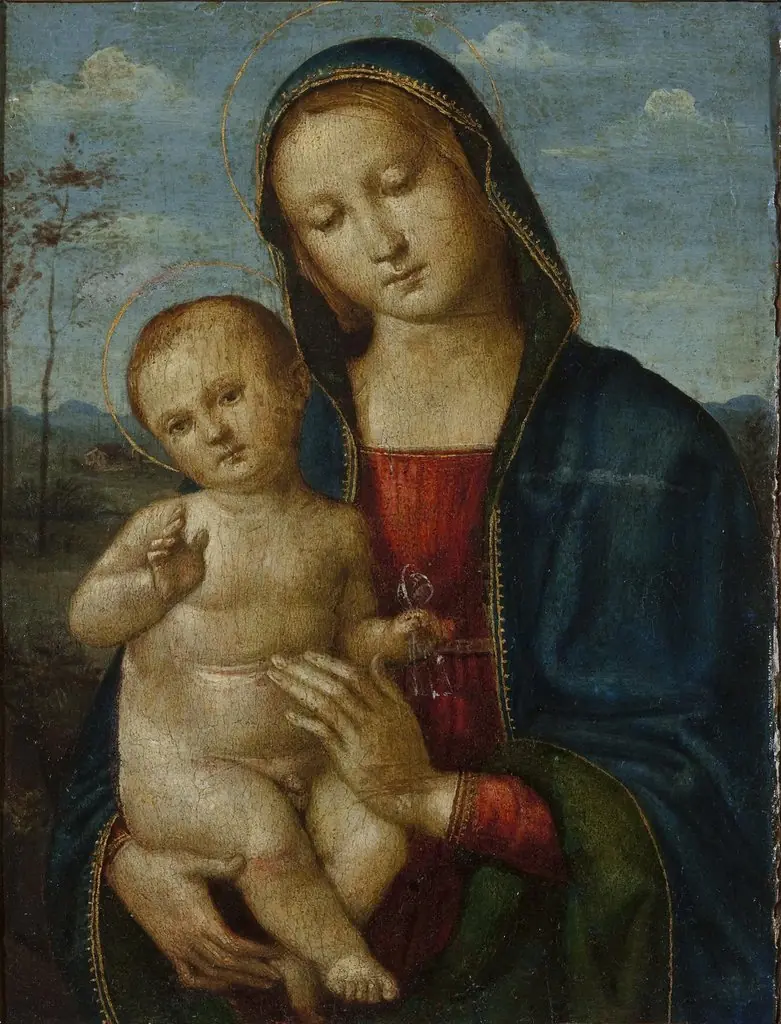 Madonna and Child
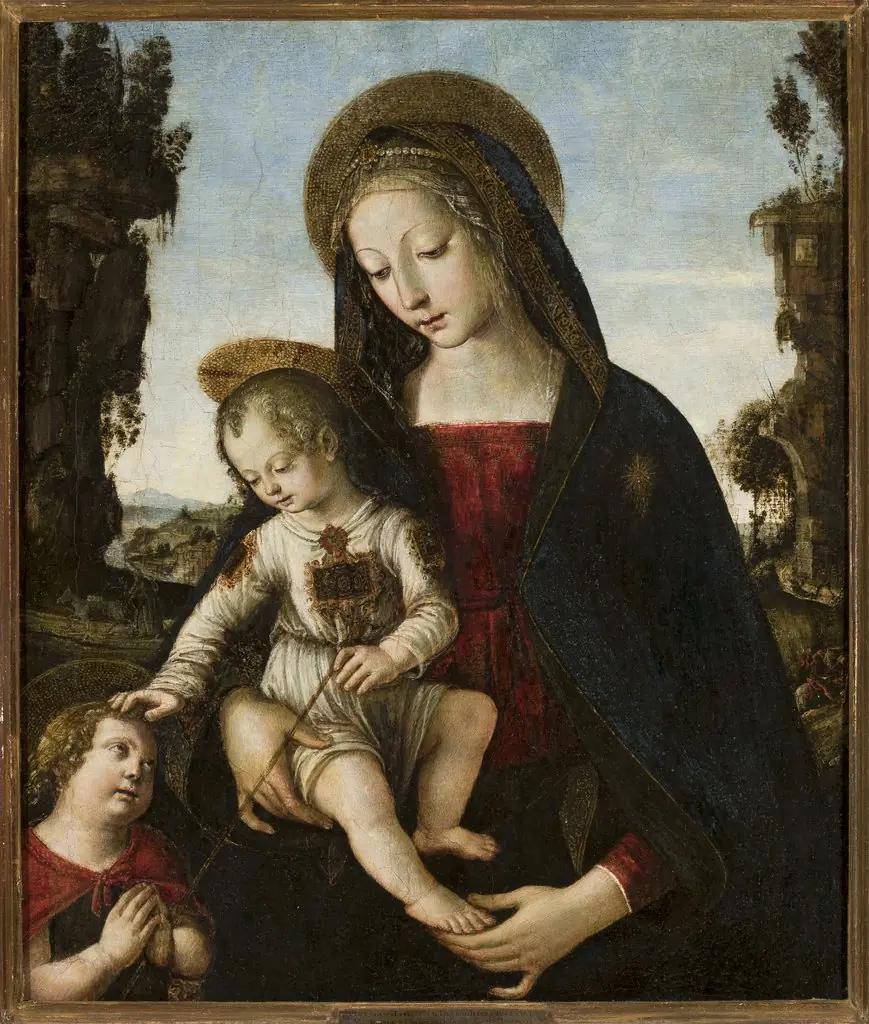 Madonna with Child Jesus and St. John
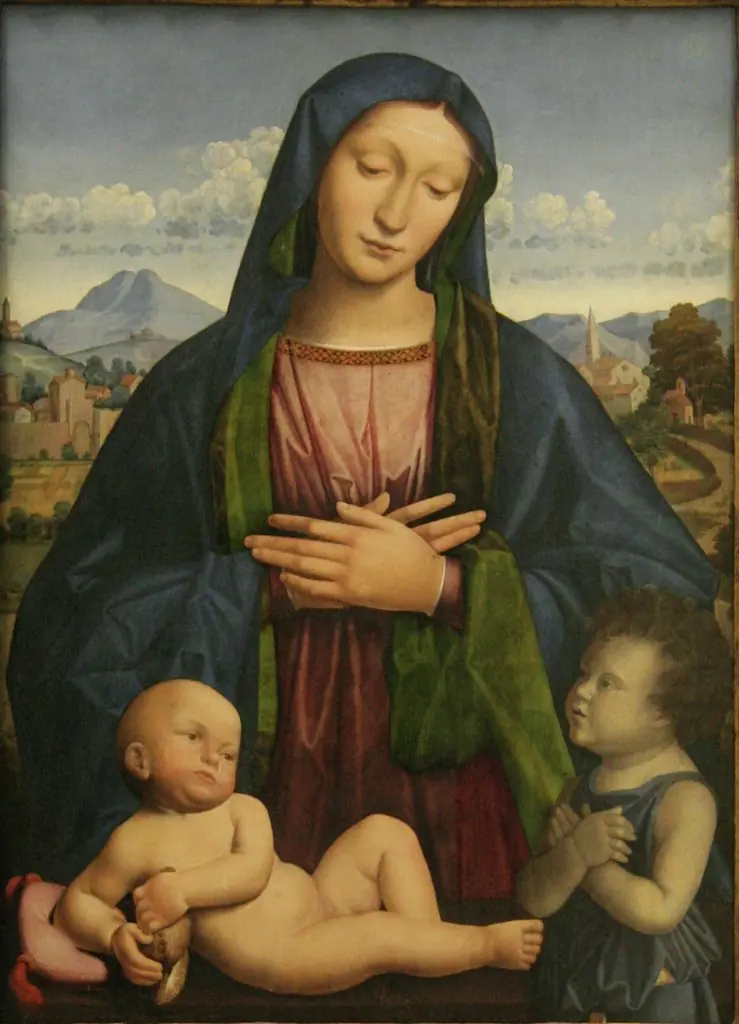 Madonna and Child with the Infant Saint John the Baptist
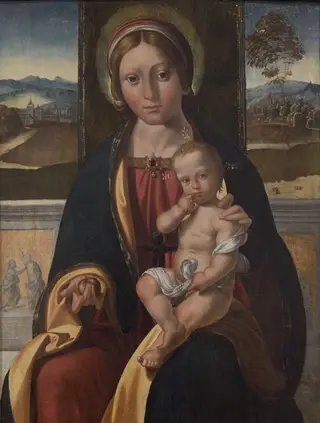 The Virgin and Child
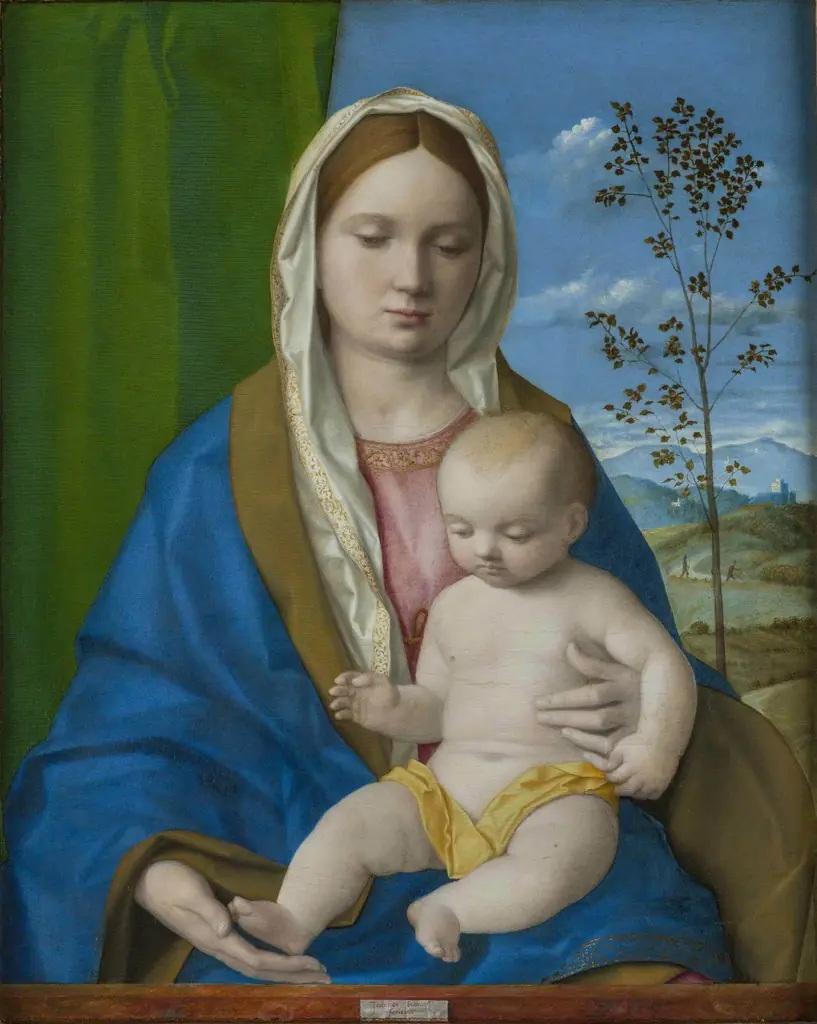 Madonna and Child
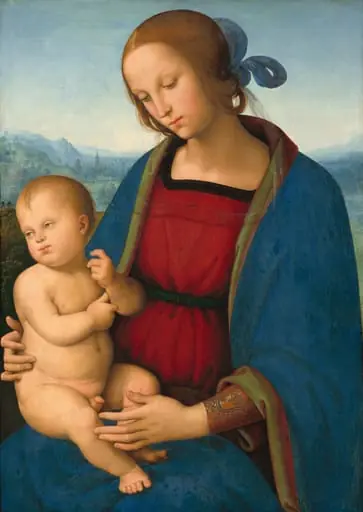 Madonna and Child
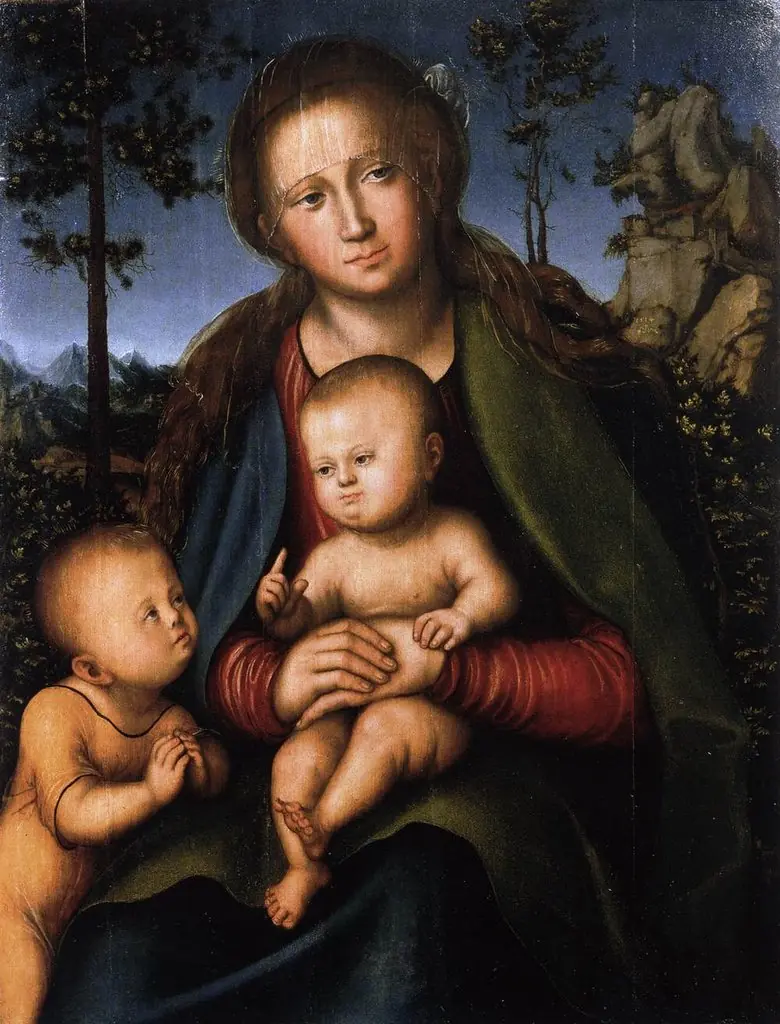 Madonna with Child with Young John the Baptist
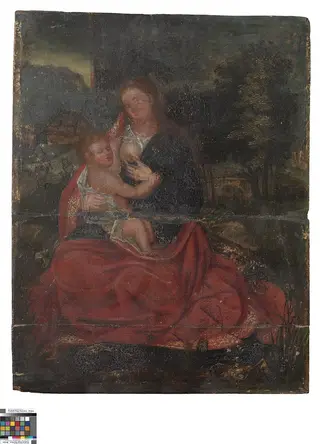 Madonna