Artwork
Jean, dit Poton, seigneur de Xaintrailles (?-1461)
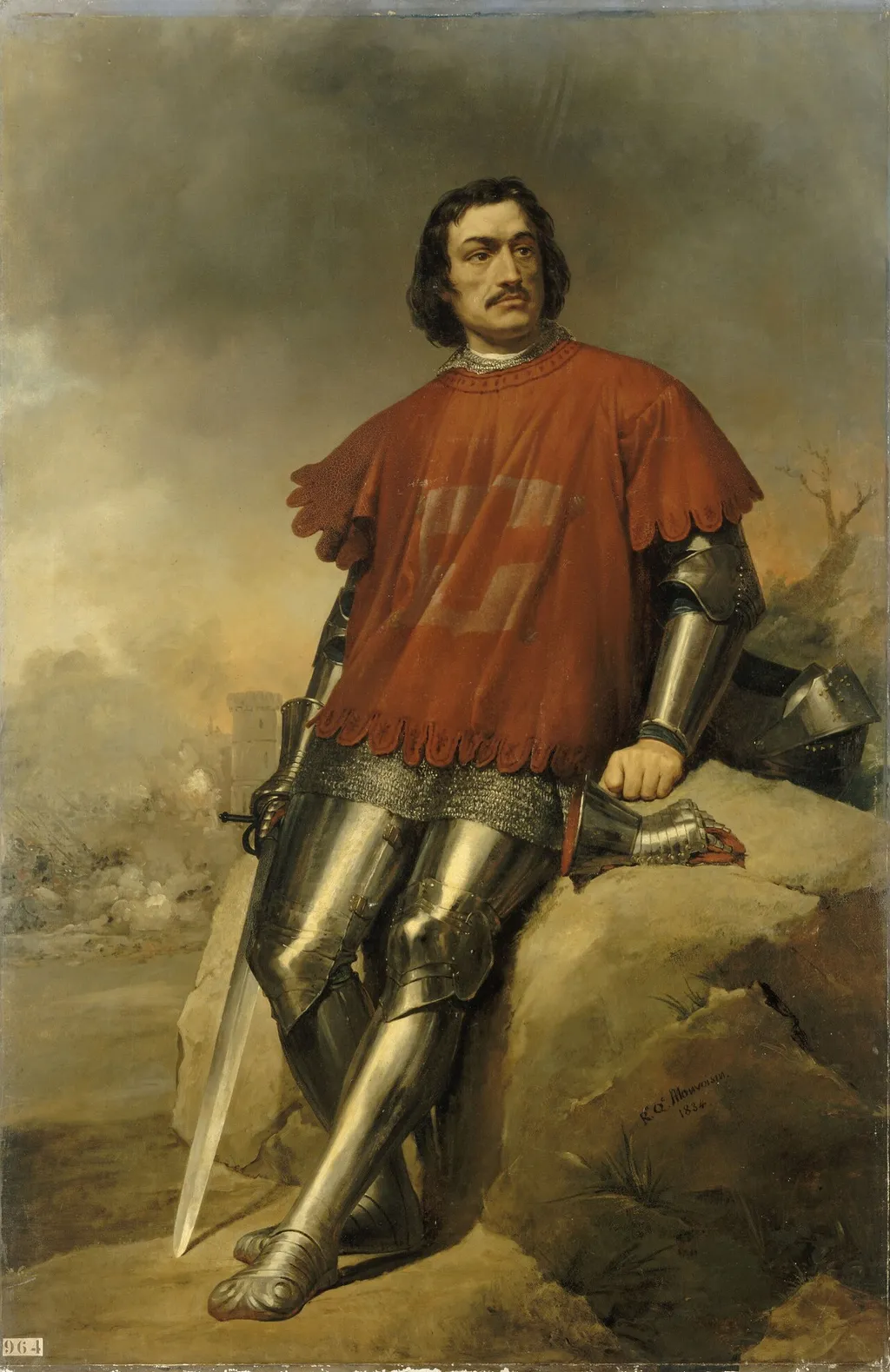
Jean, dit Poton, seigneur de Xaintrailles (?-1461) is an oil painting by the French Romanticist artist Raymond Monvoisin. It dates from 1834 and is held in the collection of the Palace of Versailles.
About this work
Subject & Meaning
The painting was executed in 1834 and first shown at the Salon of that year, later entering the collection of the Museum of the History of France at Versailles.
The portrait presents Jean, dit Poton, seigneur de Xaintrailles in the regalia of a marshal, seated amid symbolic martial elements including chainmail, a sword, and a tower, signifying his distinguished military role. An inscription identifies him as a historical figure honored by Louis-Philippe for the Musée historique de Versailles, linking the work to 19th‑century French commemorative ideals. The composition emphasizes authority and valor through its martial iconography, reflecting the era's fascination with heroic lineage.
The painting was executed in 1834 and first shown at the Salon of that year, later entering the collection of the Museum of the History of France at Versailles.
The work's symbolism draws on contemporary portrait conventions to convey status, with the marshal's insignia and armor underscoring a narrative of valor and leadership. Its placement within the Musée historique de Versailles underscores the 19th‑century French effort to memorialize celebrated figures through grand public art.
Technique & Style
Raymond Monvoisin painted this portrait in oil on canvas in 1834. The large-format work measures 214 cm in height by 140 cm in width. The composition depicts Jean, dit Poton de Xaintrailles as a seated military figure, shown in full body armor with chainmail, helmet, and sword against a backdrop that includes a tower.
The handling emphasizes martial attributes and historical costume, consistent with the portrait genre and the documentary aims of Louis-Philippe's museum projects.
The painting was commissioned by Louis-Philippe for the Musée historique de Versailles in 1834 as a copy after an original held at the Château de Beauregard. It was exhibited at the Salon of 1836.
History & Provenance
Painted in 1834 by Raymond Monvoisin, this portrait was commissioned by King Louis-Philippe specifically for the Museum of the History of France at the Palace of Versailles. The work functions as a copy after an original portrait held at the Château de Beauregard. Following its creation, the painting was exhibited at the Salon of 1836.
It currently remains in the collection of the national museums of Versailles and Trianon, where it is identified by inventory numbers MV 964, INV 6789, and LP 975.
The painting is held at the Musée national des châteaux de Versailles et de Trianon, within the Museum of the History of France at the Palace of Versailles. It is catalogued under the inventory numbers MV 964, INV 6789, and LP 975.
The work was commissioned in 1834 by Louis-Philippe for the historical museum at Versailles, executed as a copy after an original preserved at the Château de Beauregard. Its documented exhibition history includes the Salon of 1836.
Context
The painting situates the obscure 15th‑century noble Jean de Xaintrailles within the Romantic fascination for heroic ancestors, reflecting 19th‑century French efforts to construct a national narrative of martial virtue. Monvoisin’s 1834 portrait, reproduced in the Salon of 1836, was commissioned by Louis‑Philippe for the Musée historique de Versailles, underscoring institutional interest in linking contemporary monarchs with medieval exemplars. Its display at Versailles reinforced the work’s role in shaping historical consciousness, positioning the piece at the intersection of antiquarian scholarship and the era’s propagandistic art practices.
Overview
Raymond Monvoisin’s 1834 oil portrait presents the 15th‑century French nobleman Jean, dit Poton, seigneur de Xaintrailles. The work, now displayed in the Palace of Versailles, captures the figure seated on a craggy ledge, fully armored and poised with a sword. The composition balances the figure’s vivid red tunic against the muted, mist‑filled landscape beyond.
Own this work as a print
Artist & collection

 Pierre de Rohan, seigneur de Gye
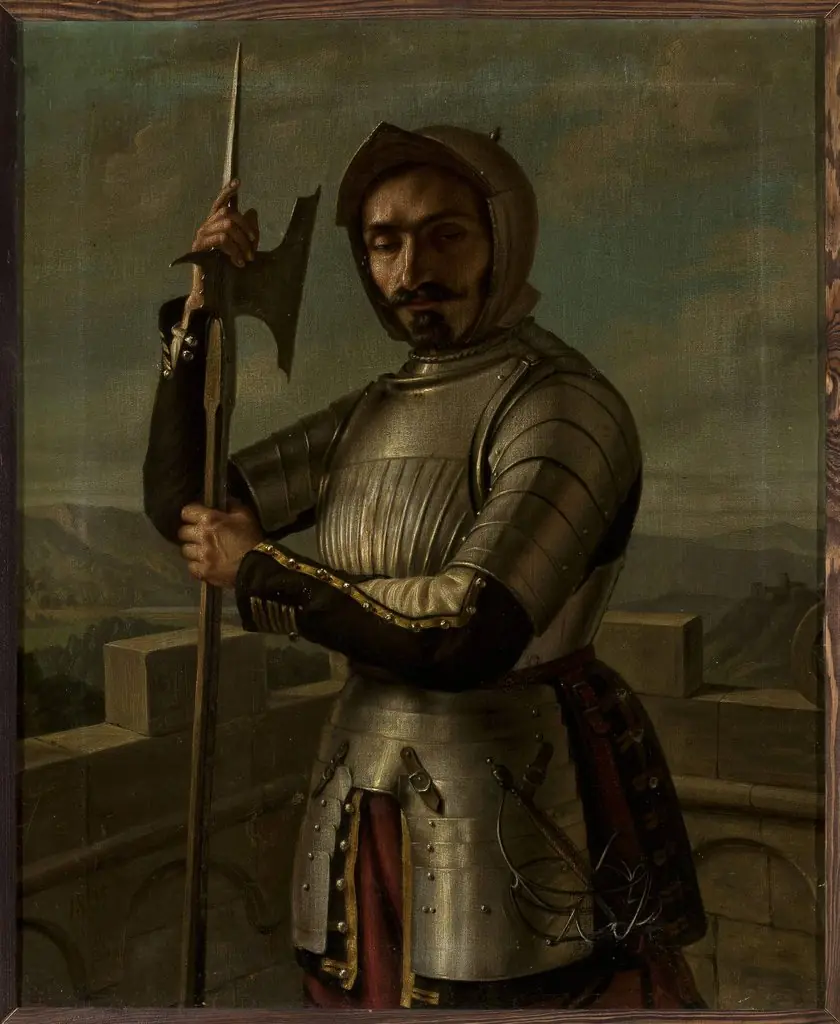 Knight in armour
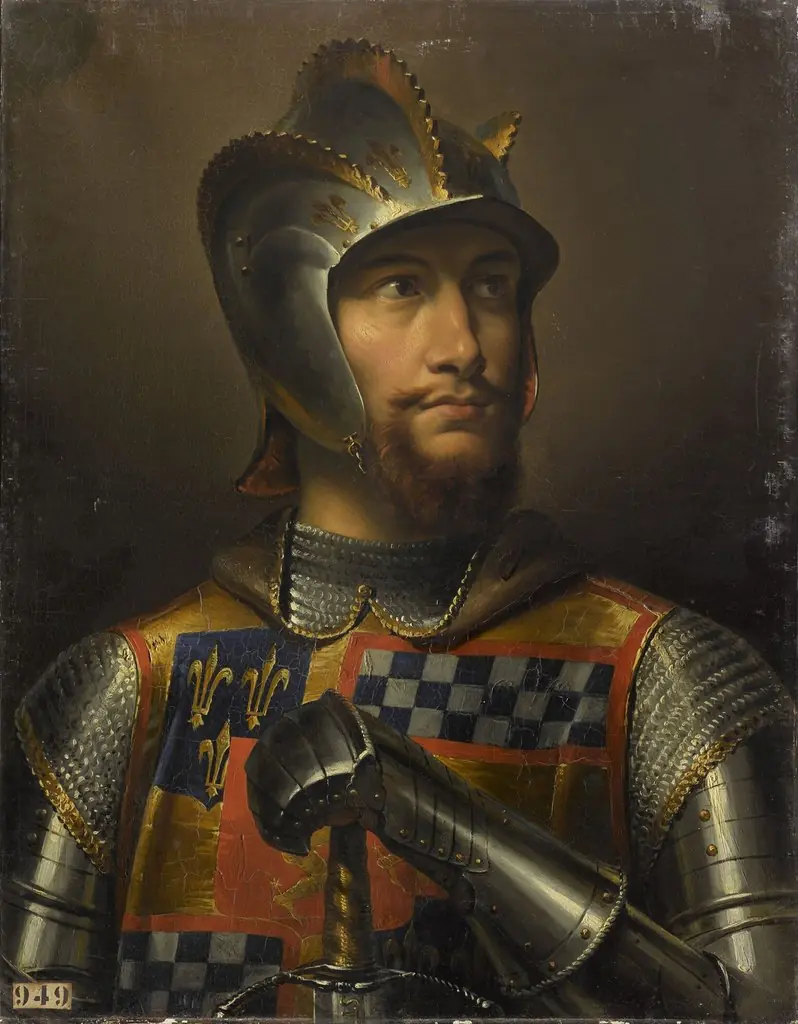 Jean II Stuart, connétable de Buchan (+ 1424)
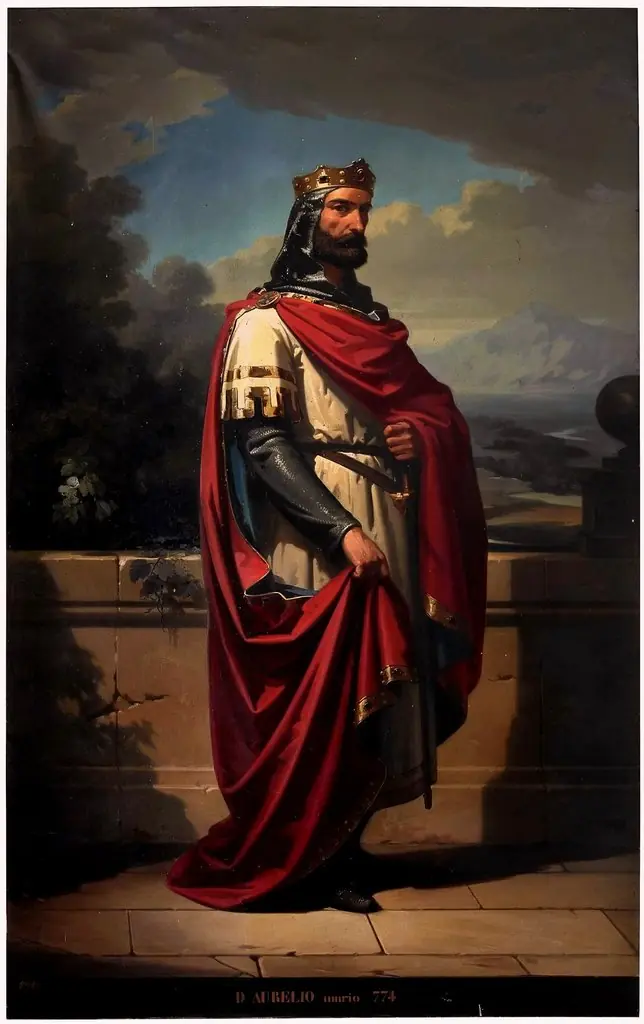 Aurelio
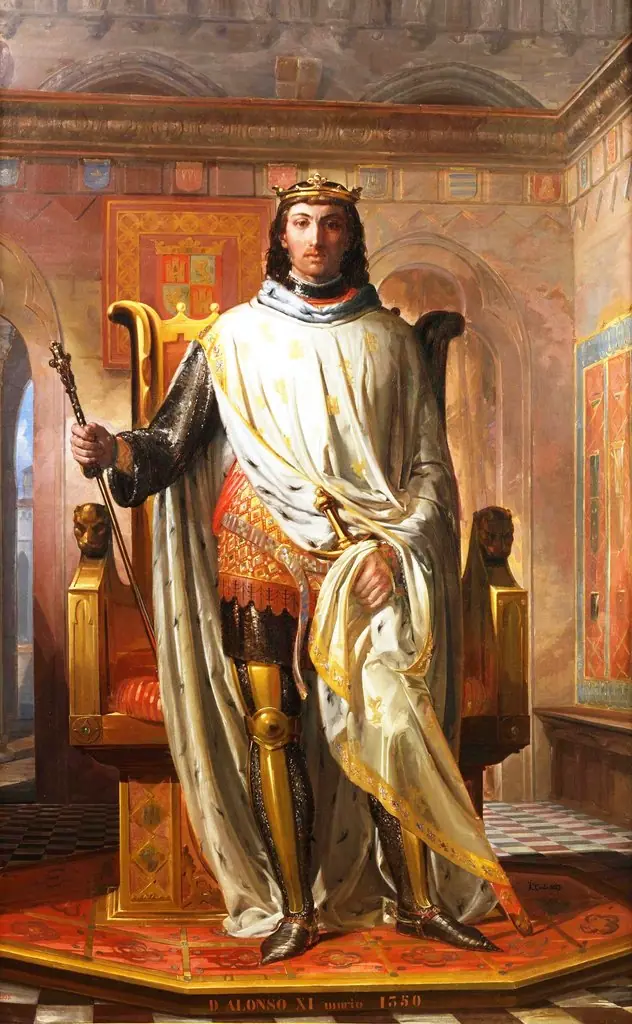 Alfonso XI
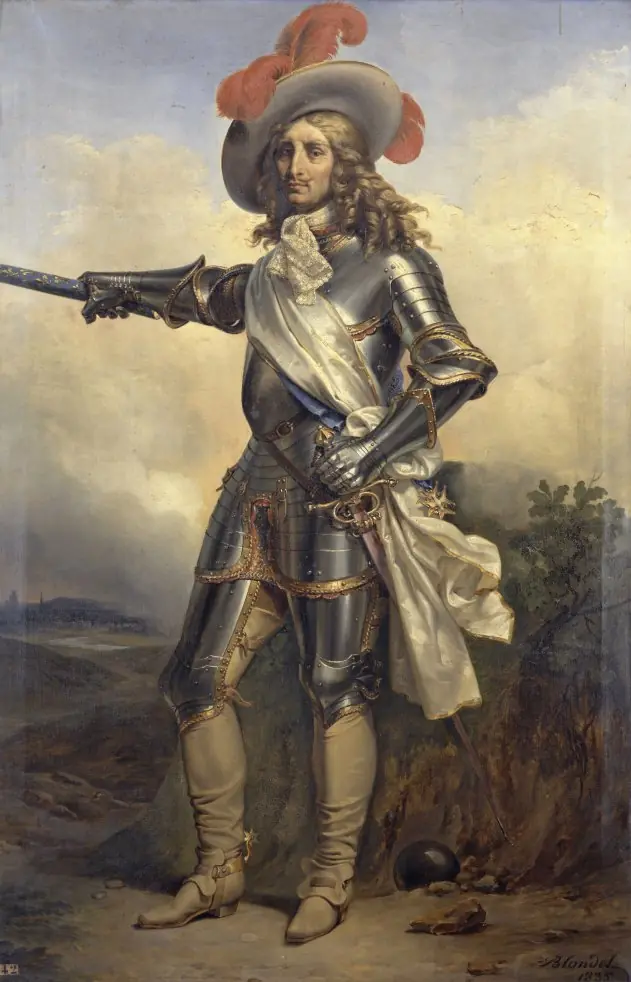 Portrait of Guy Aldonce de Durfort de Lorges (1630-1702)
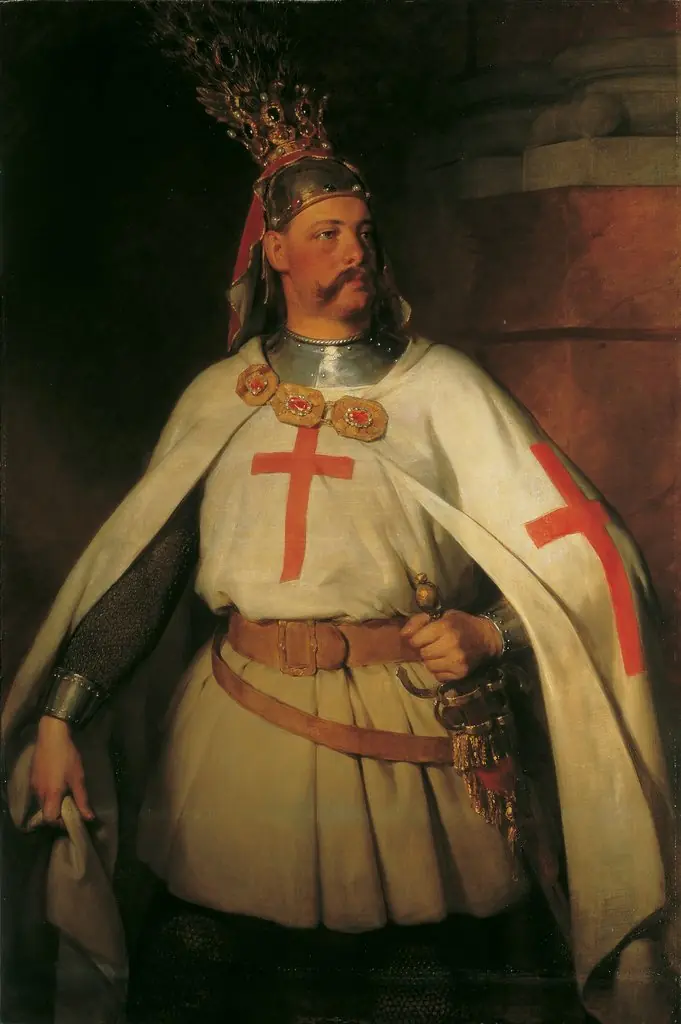 Archduke Leopold as Crusader
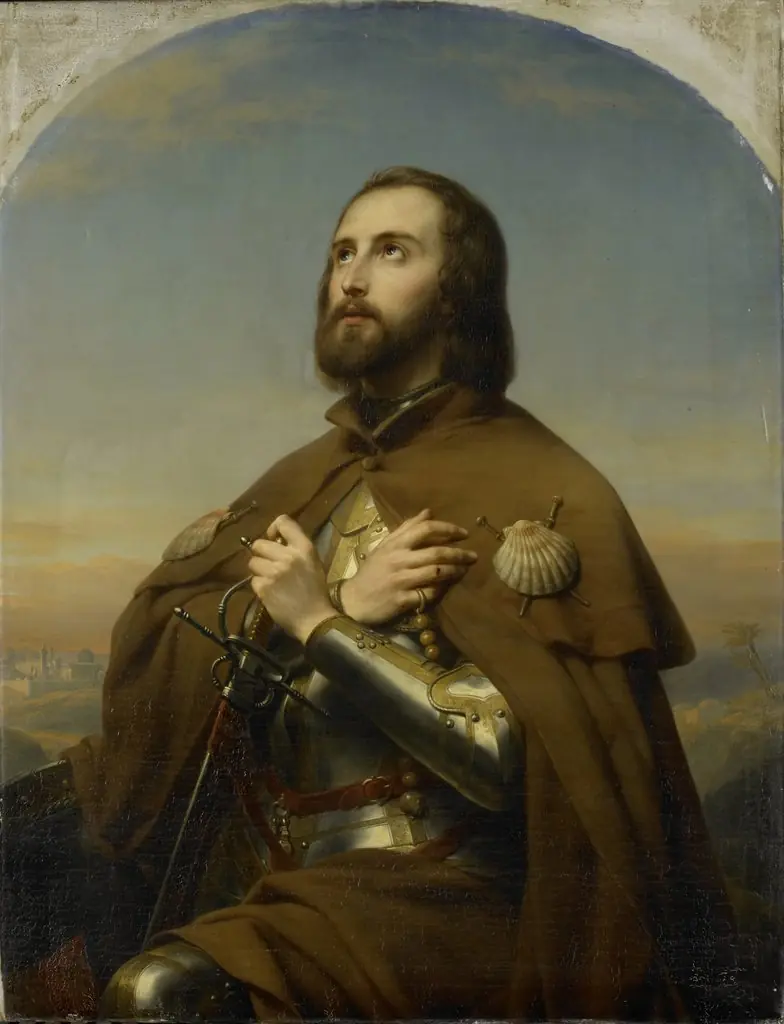 Eberhard (1445-96), Duke of Würtemberg, as a Pilgrim in the Holy Land
 Eberhard (1445-96), Duke of Würtemberg, as a Pilgrim in the Holy Land
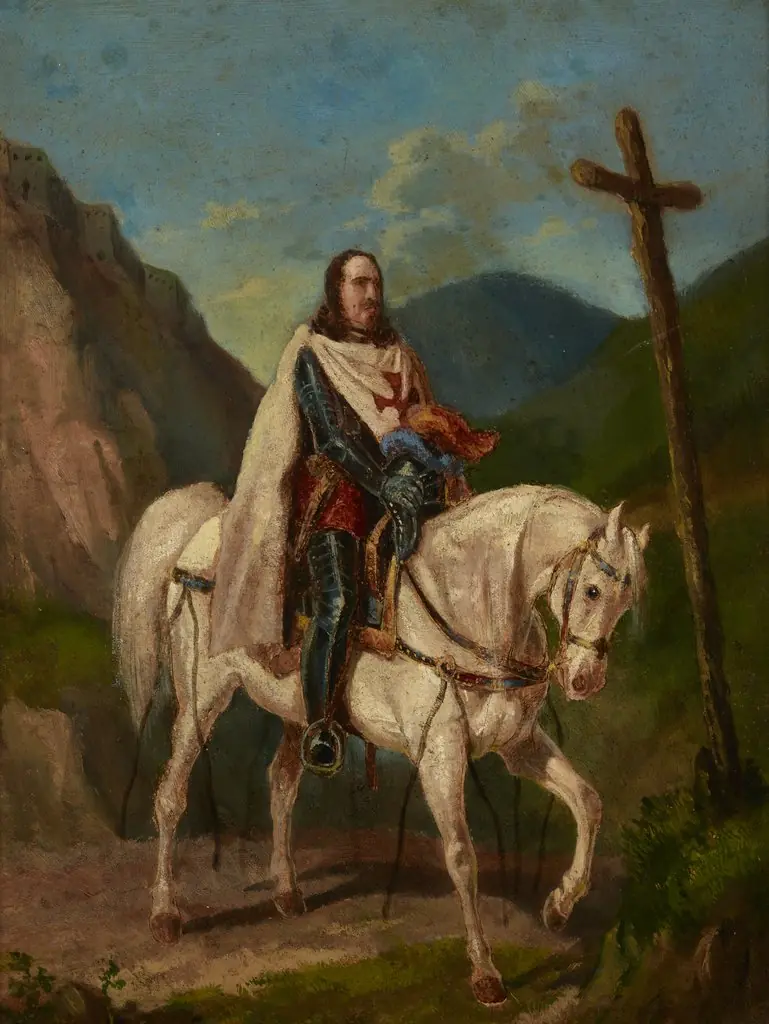 Knight on Horseback
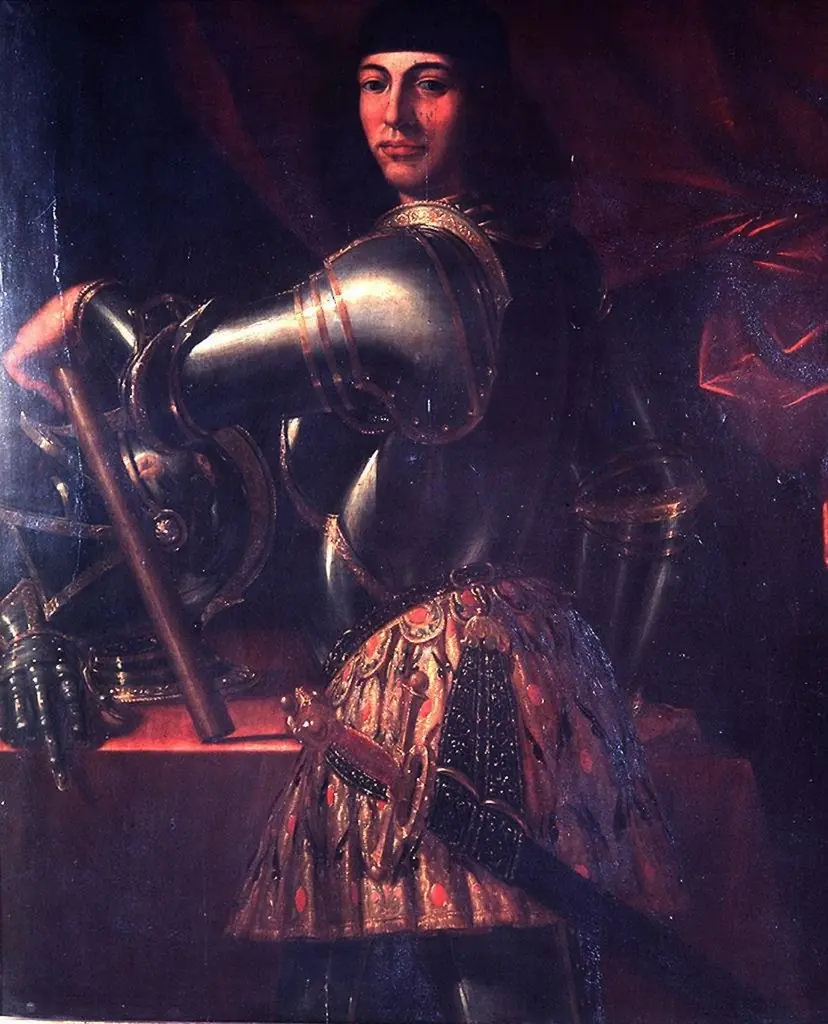 Portrait of Piero di Lorenzo de' Medici
- Louis de Champagne, comte de Sancerre, connétable de France en 1397