Artwork
Man with a Beard
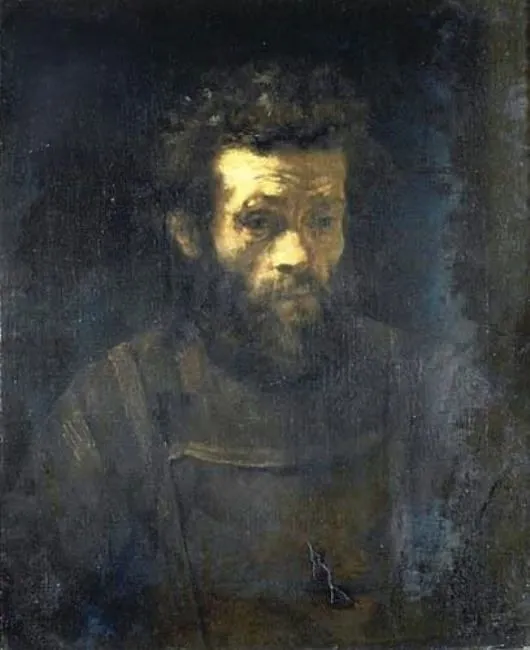
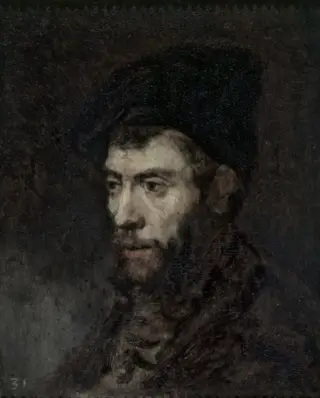
Man with a Beard is an oil painting by the Dutch Golden Age artist Rembrandt van Rijn. It dates from 1657 and is held in the collection of the Gemäldegalerie Berlin.
About this work
Subject & Meaning
The figure wears a simple dark garment with a rectangular neckline or fold across the chest.
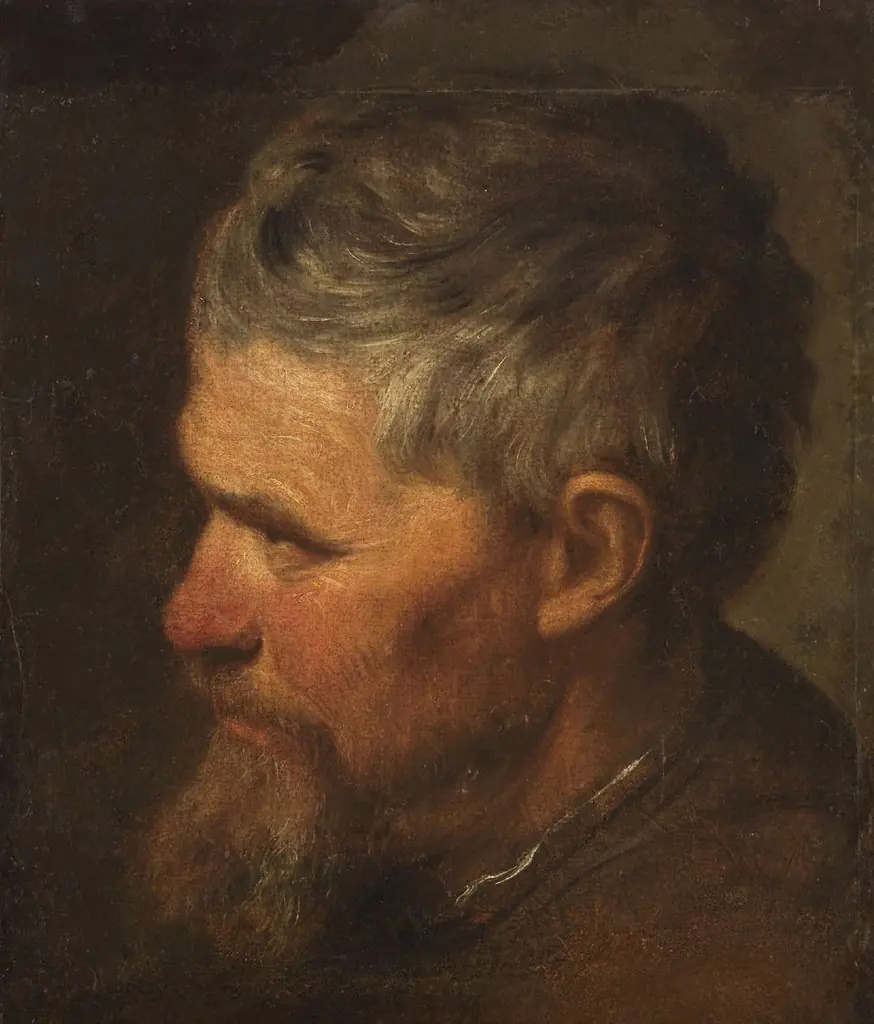
The artwork depicts a bearded male figure visible from the chest upward. His head tilts slightly to the right while his eyes look off to the left, suggesting a state of private contemplation rather than direct engagement with the viewer. The figure wears a simple dark garment with a rectangular neckline or fold across the chest. This focus on an anonymous, introspective figure aligns with the Dutch tradition of tronies, character studies that probed human emotion and the passage of time without requiring the identification of a specific sitter.
Technique & Style
Rembrandt executed the painting in oil on canvas, employing a palette dominated by browns, blacks, and muted ochres. A strong light source from the upper left illuminates the forehead, nose, and cheekbone of the figure, leaving the right side of the face and the indistinct, near-black background in deep shadow. This dramatic chiaroscuro models the form and focuses attention on the psychological weight of the face. Brushwork is loose and textured in the rendering of the hair and beard, contrasting with smoother blending on the facial features. The overall finish is matte and somber, though the surface exhibits age-related wear and minor cracking, particularly in the lower center of the garment.
History & Provenance
Created in 1657, the painting dates to Rembrandt's later years in Amsterdam, a period that followed his 1656 bankruptcy declaration. While the specific commission and early ownership chain for this work remain unrecorded in the provided sources, the painting is now part of the collection of the Gemäldegalerie Berlin. The dating of 1657 firmly places the work within the artist's own lifetime, countering later, erroneous attributions that placed the work in the nineteenth century.
Context
The year 1657 places Man with a Beard firmly within Rembrandt's late period, a time when his portrait commissions had declined and he focused increasingly on etching and introspective biblical subjects and character studies. Having applied for bankruptcy in 1656, Rembrandt treated his late subjects with a lively brushwork and a new treatment of light, prioritizing psychological depth over formal flattery. This painting emerges from that context, reflecting the artist's lifelong role as an acute observer of life whose central subject remained the human figure, fostering a shared dialogue between viewer and artist.
Legacy
Rembrandt's portraits, characterized by their psychological depth and innovative use of light and shadow, have exerted a lasting influence on the art world, shaping countless artists and subsequent movements. The misattribution of Man with a Beard to an 1889 date in some records underscores the historical challenges in documenting Rembrandt's oeuvre and the persistent market and scholarly desire to associate works with his name. Today, his authentic works continue to be studied and admired globally for their profound rendering of the human condition.

Artist & collection

Artist
Rembrandt Harmenszoon van Rijn, known mononymously as Rembrandt, was a Dutch Golden Age painter, printmaker, and draughtsman.