Artwork
Portrait of Floris Soop
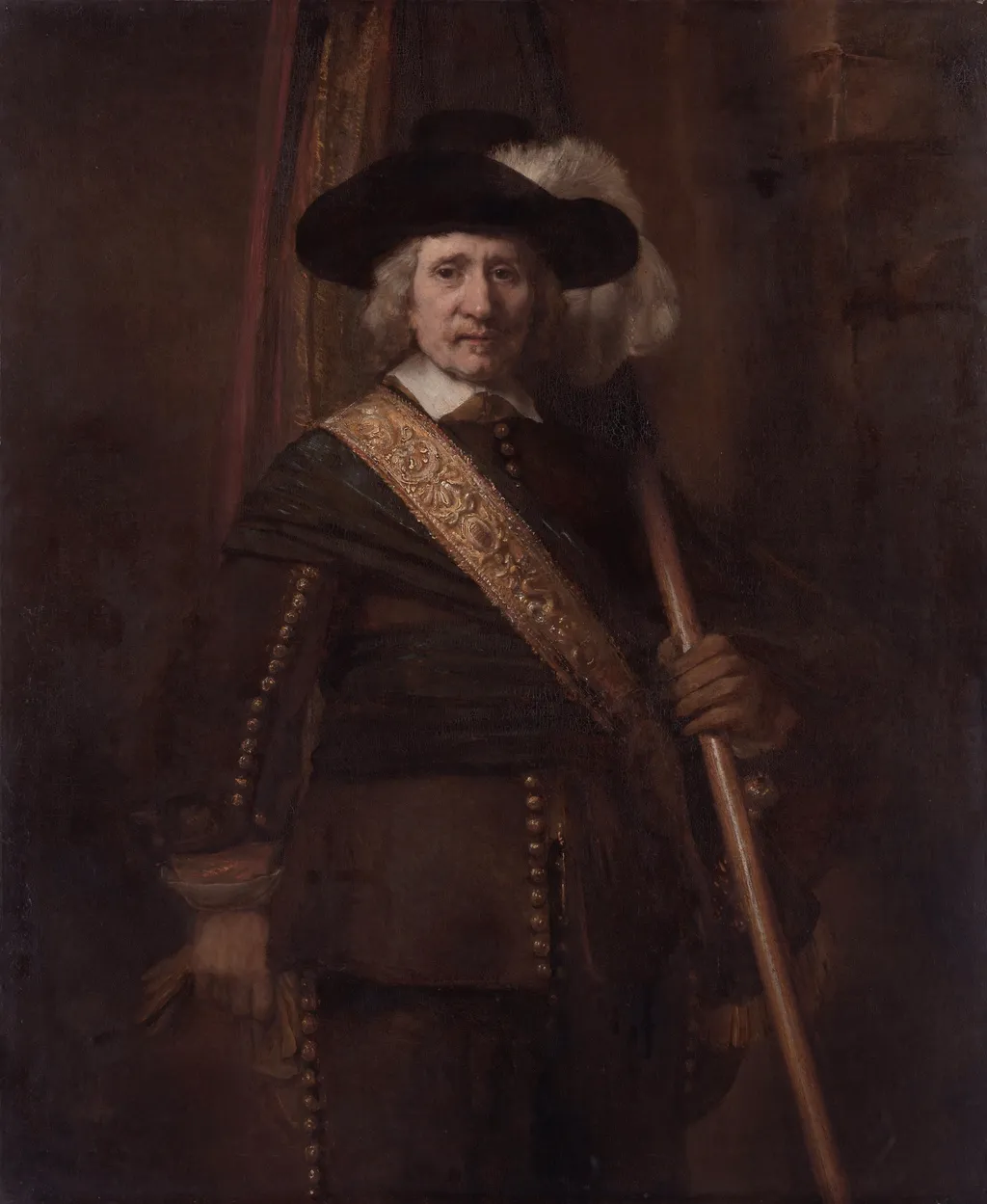
Portrait of Floris Soop is an oil painting by the Dutch Golden Age artist Rembrandt van Rijn. It dates from 1654 and is held in the collection of the Metropolitan Museum of Art.
About this work
Subject & Meaning
Painted in 1654, this work depicts Floris Soop, a wealthy Amsterdam bachelor and avid art collector who owned approximately 140 paintings.
Painted in 1654, this work depicts Floris Soop, a wealthy Amsterdam bachelor and avid art collector who owned approximately 140 paintings. The subject is portrayed in the specific role of an ensign within one of the city's civic guard companies. This military status is communicated through distinct iconographic elements: a flag held by the figure, a plume adorning his hat, and an ornate, tooled leather baldric worn over the shoulder.
These attributes collectively signify his rank and participation in the local militia. The identification of the sitter as Soop is strongly supported by a 1657 inventory of his estate, which lists a life-sized portrait by Rembrandt, a connection first established by art historian Isa van Eeghen. The painting thus represents both a personal likeness and a statement of Soop's civic duty and social standing.
Technique & Style
The Portrait of Floris Soop is executed in oil paint on canvas, a medium Rembrandt used for his 1654 portrait commissions. The canvas measures 140.3 by 114.9 centimeters, a substantial format consistent with a life-size depiction, as noted in the sitter's 1657 estate inventory, which described a portrait 'as large as life.' The composition presents the sitter in the uniform of an Amsterdam civic guard ensign, with attention drawn to the flag, a plumed hat, and a tooled leather baldric worn over the shoulder.
These attributes are rendered with descriptive precision, situating the work within Rembrandt's tradition of full-length civic guard portraiture. The painting is currently held in the collection of the Metropolitan Museum of Art in New York, where, as of 2018, it is not on public view.
History & Provenance
Painted in 1654 by Rembrandt, this oil-on-canvas portrait likely depicts Floris Soop, a wealthy Amsterdam bachelor. The work first appears in Soop's 1657 estate inventory as a life-sized likeness, which subsequently passed to his uncle Petrus Scriverius and then to Scriverius's son, Willem Schrijver. By 1769, the painting was recorded in the collection of British artist Joshua Reynolds.
It was sold at Reynolds's 1795 auction to Ottley, then to Richard Westhall in 1798, and later entered the collection of George Greville, 2nd Earl of Warwick, by 1801. The work remained with the Greville family until at least 1871 before passing to dealer Charles Sedelmeyer in 1896. After circulating through dealers including Duveen Brothers, it was acquired by George Jay Gould I by 1901.
Following Gould's death, Duveen repurchased the piece and sold it to Jules Bache in 1926 for $250,000. Bache bequeathed the painting to the Metropolitan Museum of Art upon his death.
Portrait of Floris Soop is housed in the Metropolitan Museum of Art in New York, where it is part of the museum’s collection that traces its ownership through the Charles Sedelmeyer collection and later the Jules Bache bequest. The work’s accession is recorded under the Bache collection holdings, reflecting its passage from the artist’s early 1650s portrait to the 1926 acquisition by the museum. Its exhibition record includes a showing at the Royal Academy of Arts in London in 1871, and it was later displayed in various European sales and collections before entering the Met. The painting is currently not on view.
Context
Art historian Isa van Eeghen identified the sitter as Floris Soop, a wealthy bachelor whose 1657 estate inventory lists a life-sized Rembrandt portrait matching this work. The painting, depicting Soop as an ensign of Amsterdam's civic guard, was historically titled The Standard Bearer. Its provenance traces from Soop's heir to the collection of British artist Joshua Reynolds in 1769.
The work entered the United States market in the early 20th century, passing through dealers Charles Sedelmeyer and Duveen Brothers before being purchased by Jules Bache in 1926 for $250,000. It now resides in the Metropolitan Museum of Art, though it has not been on public view since at least 2018. The identification of the subject and the painting's survival in Soop's estate inventory remain central to its scholarly recognition.
Overview
Rembrandt's 1654 oil on canvas, titled Portrait of Floris Soop, depicts a distinguished figure. This painting, also known as The Standard Bearer, is part of the collection at the Metropolitan Museum of Art in New York. The artwork captures a specific individual from 17th-century Amsterdam, showcasing the artist's characteristic approach to portraiture. As of 2018, the work was not publicly displayed.

Own this work as a print
Artist & collection

Artist
Rembrandt Harmenszoon van Rijn, known mononymously as Rembrandt, was a Dutch Golden Age painter, printmaker, and draughtsman.





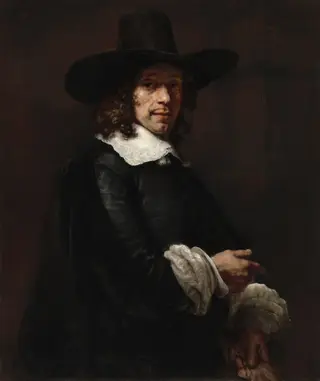
- Titus, the Artist's Son
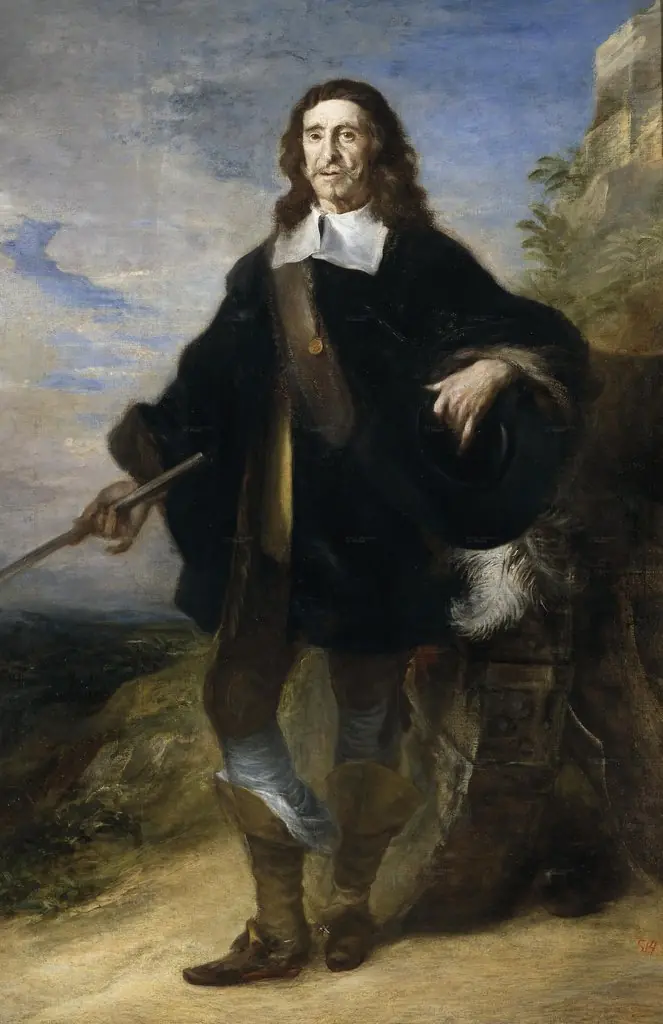 An Artillery General
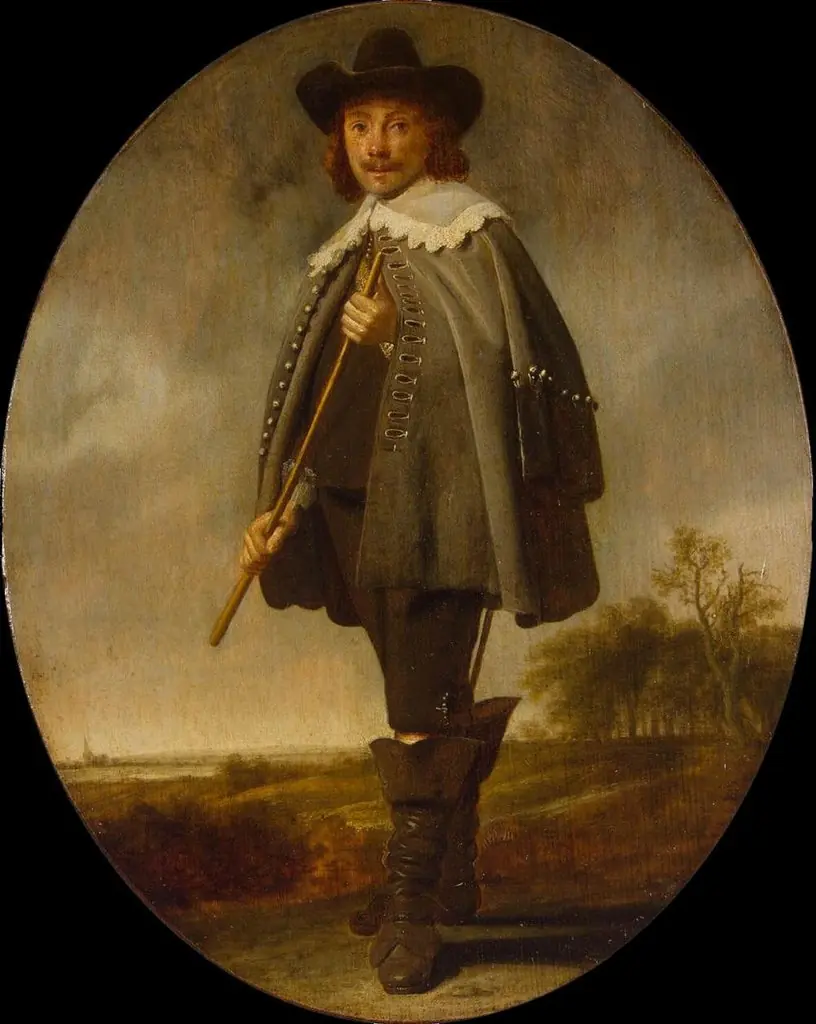 Officer in the Landscape (Portrait of a Man)
 Self portrait with a velvet beret and gold chain
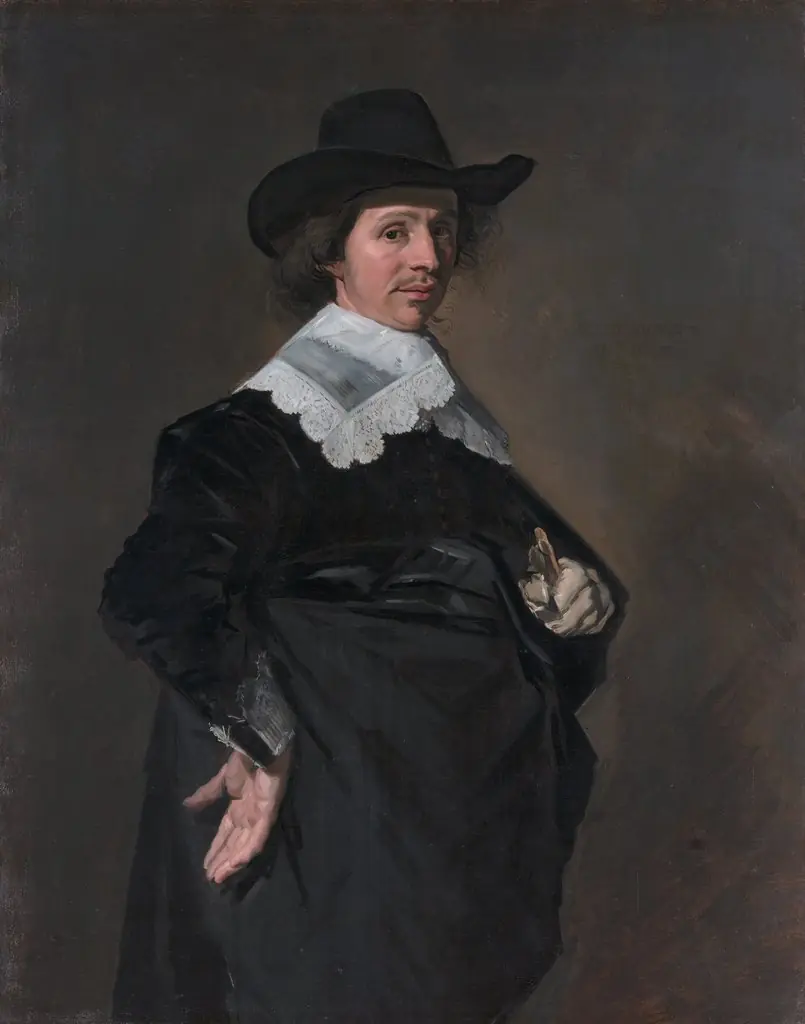 Portrait of Paulus Verschuur
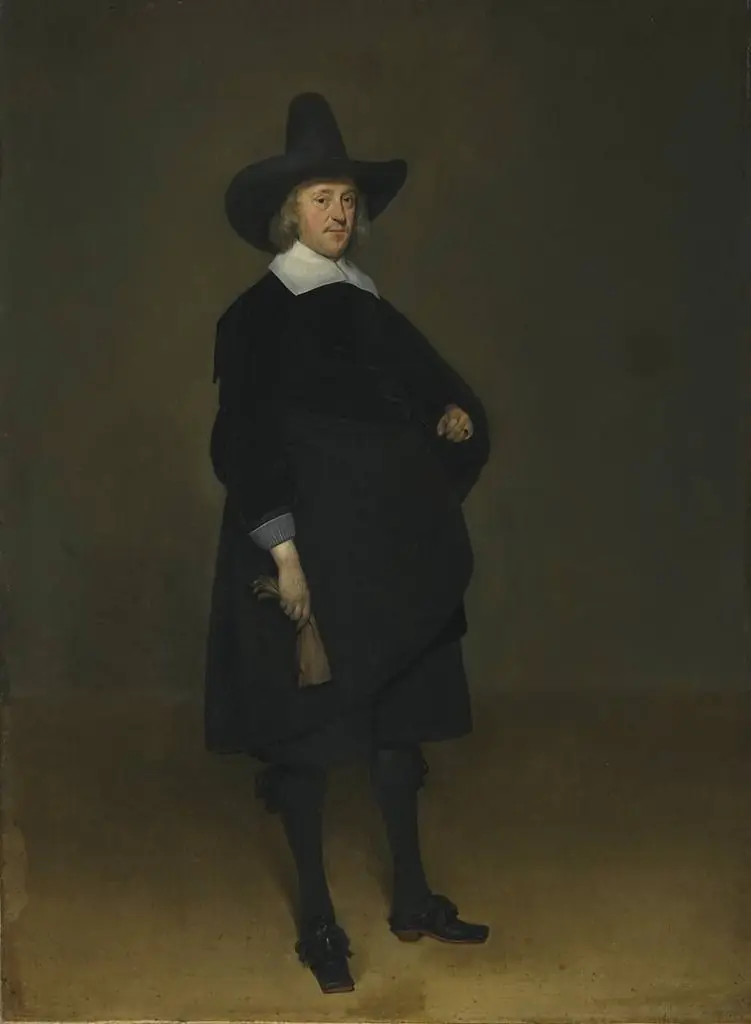 Portrait of a Man
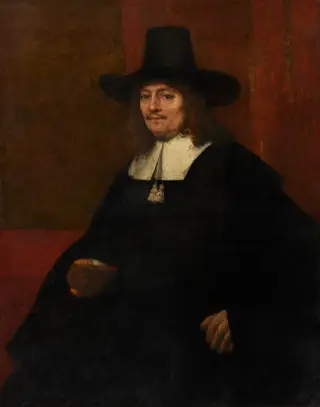 Portrait of a Man in a Tall Hat
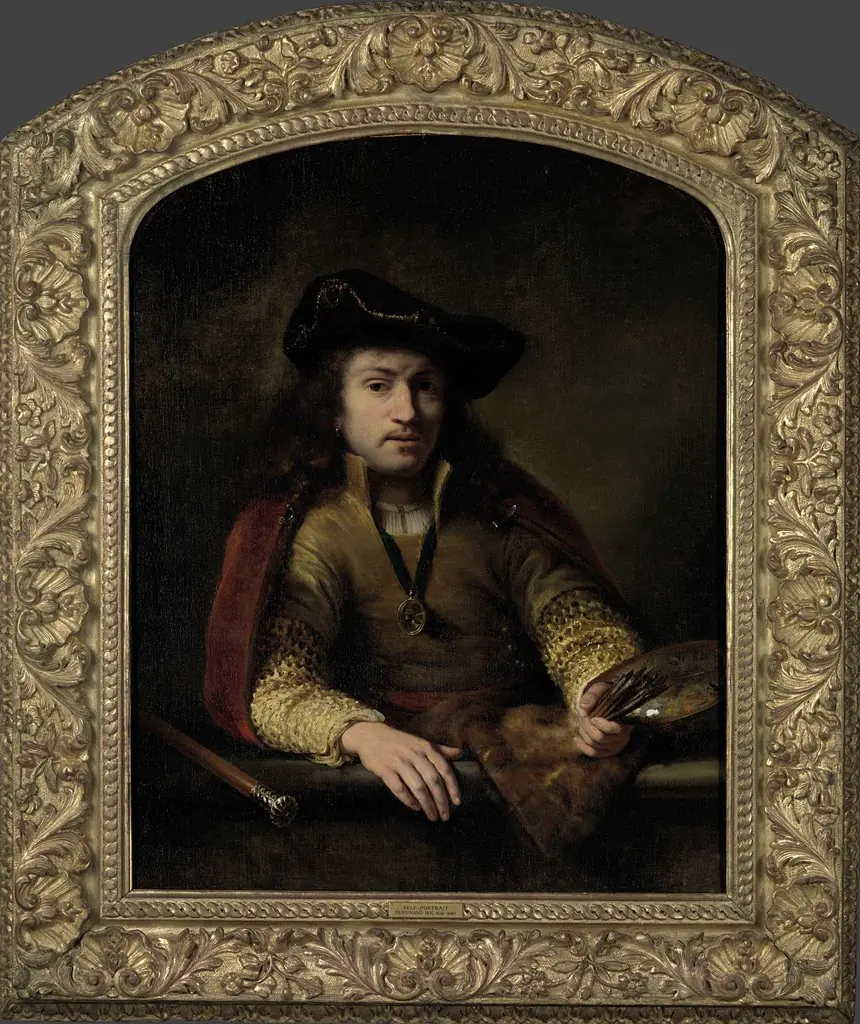 Portret van Ferdinand Bol
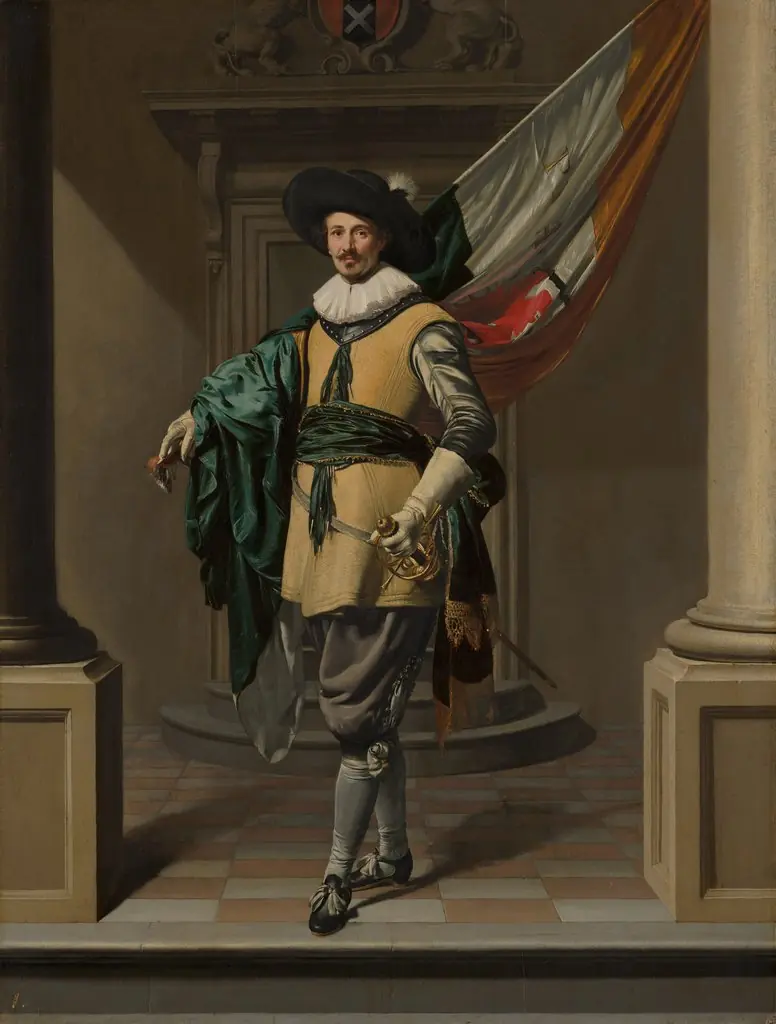 Portrait of Loef Vredericx (1590-1668) as an Ensign
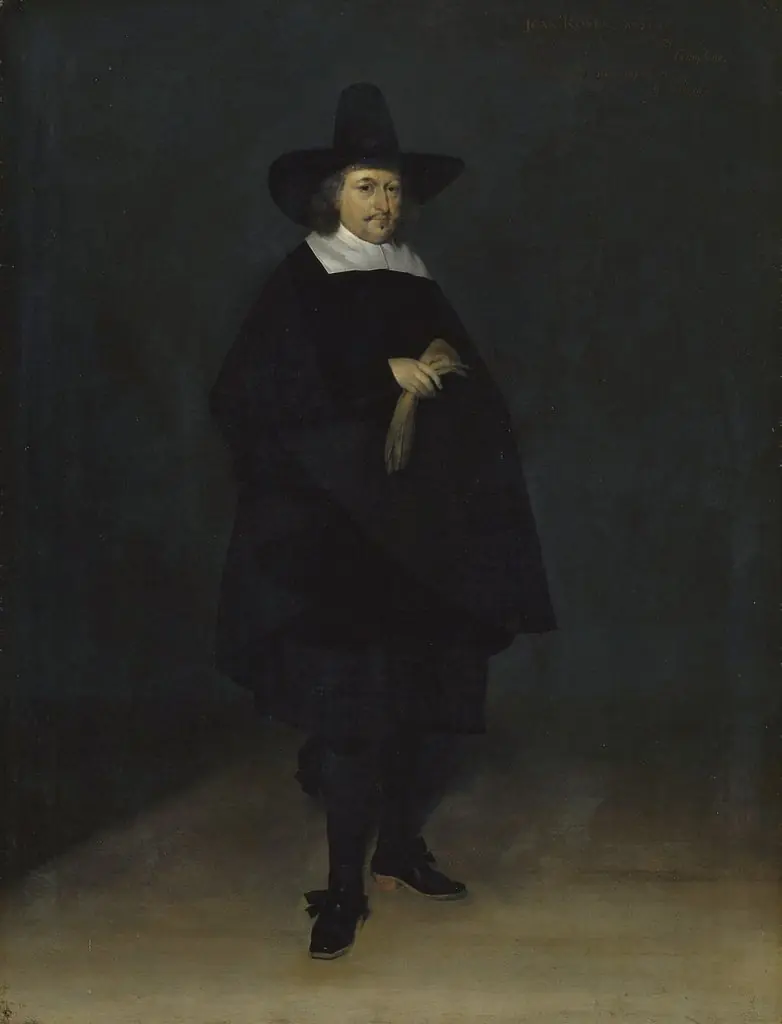 Jan Roever, Mayor of Deventer
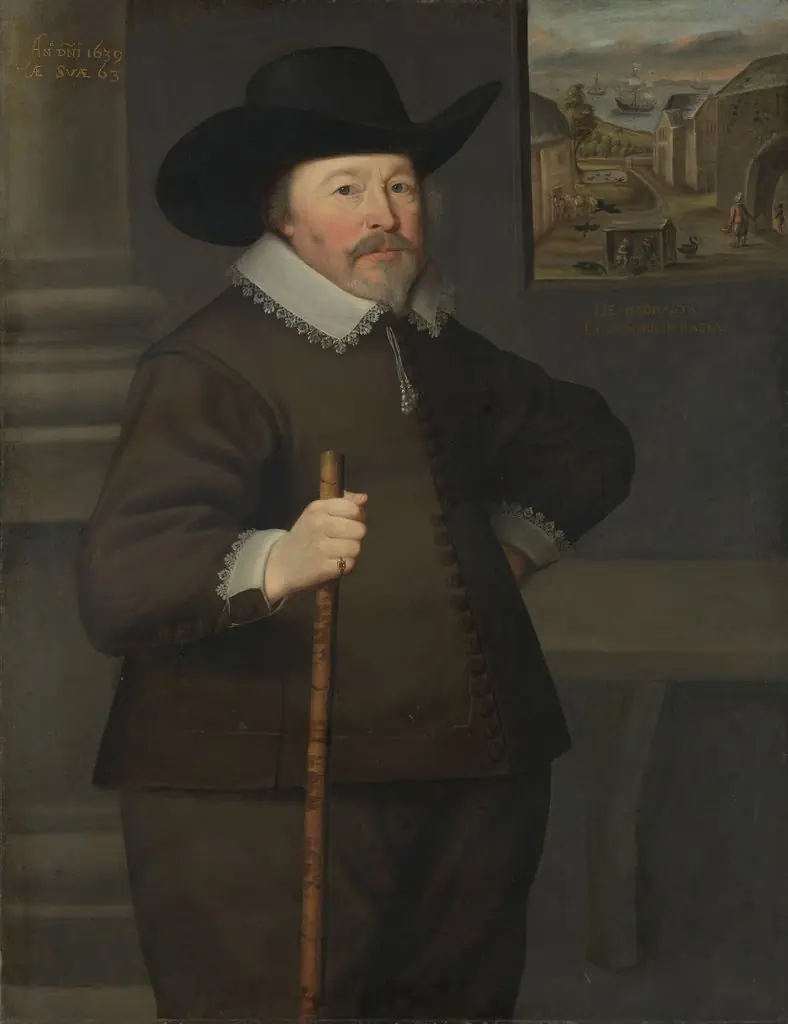 Portrait of a man