Artwork
Portrait of a Man in a Tall Hat
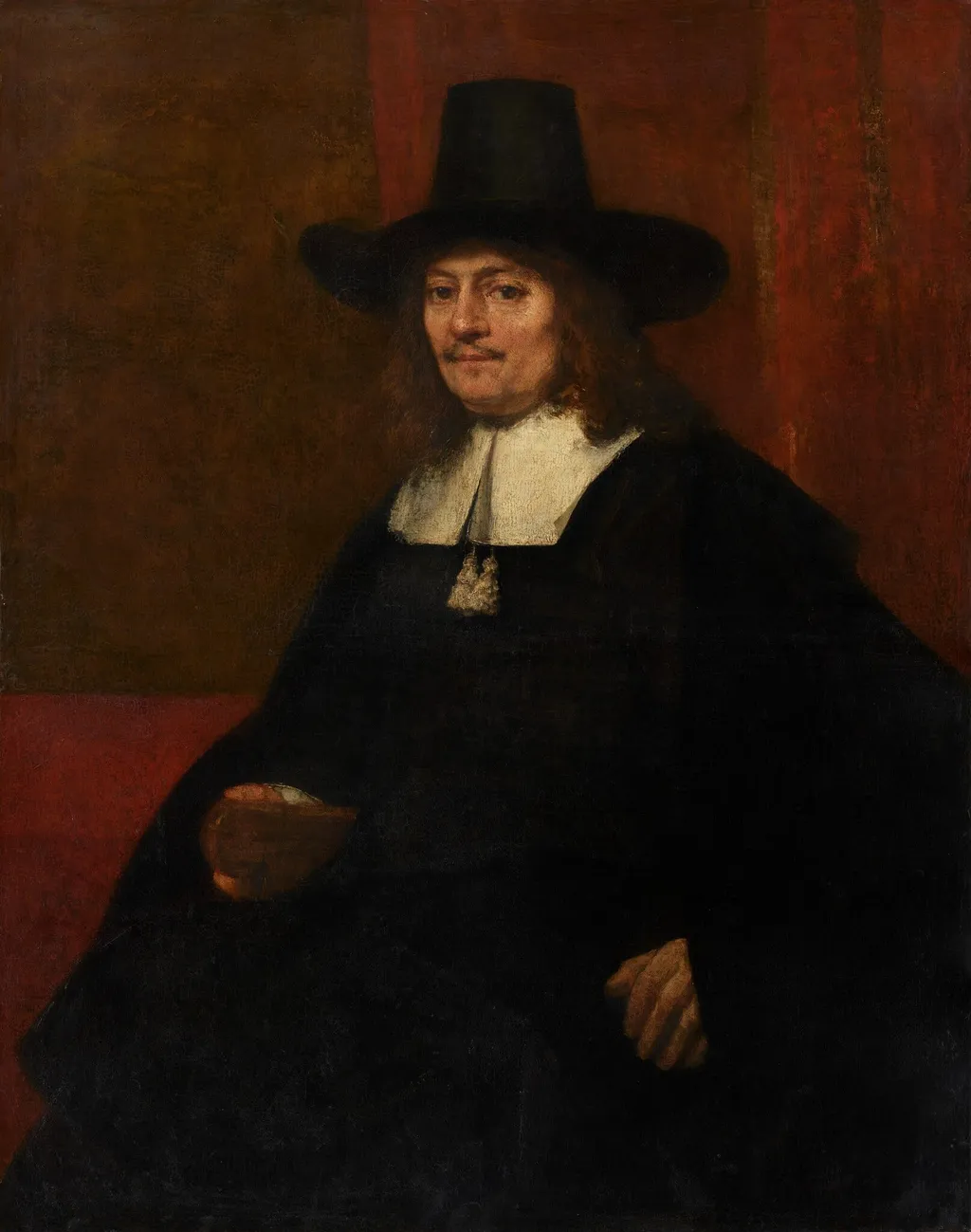
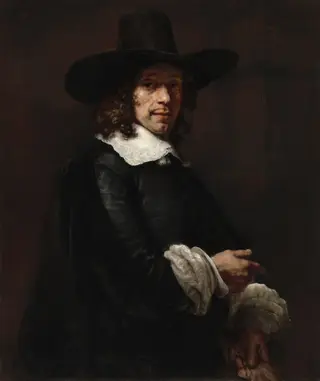
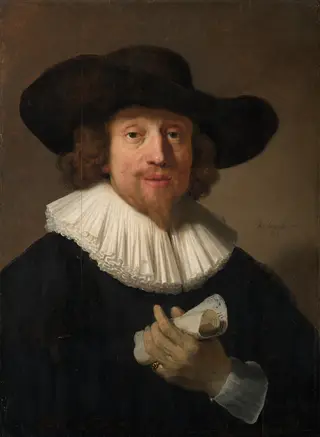
Portrait of a Man in a Tall Hat is an oil painting by the Baroque artist Rembrandt van Rijn. It dates from 1663 and is held in the collection of the National Gallery of Art.
About this work
Subject & Meaning
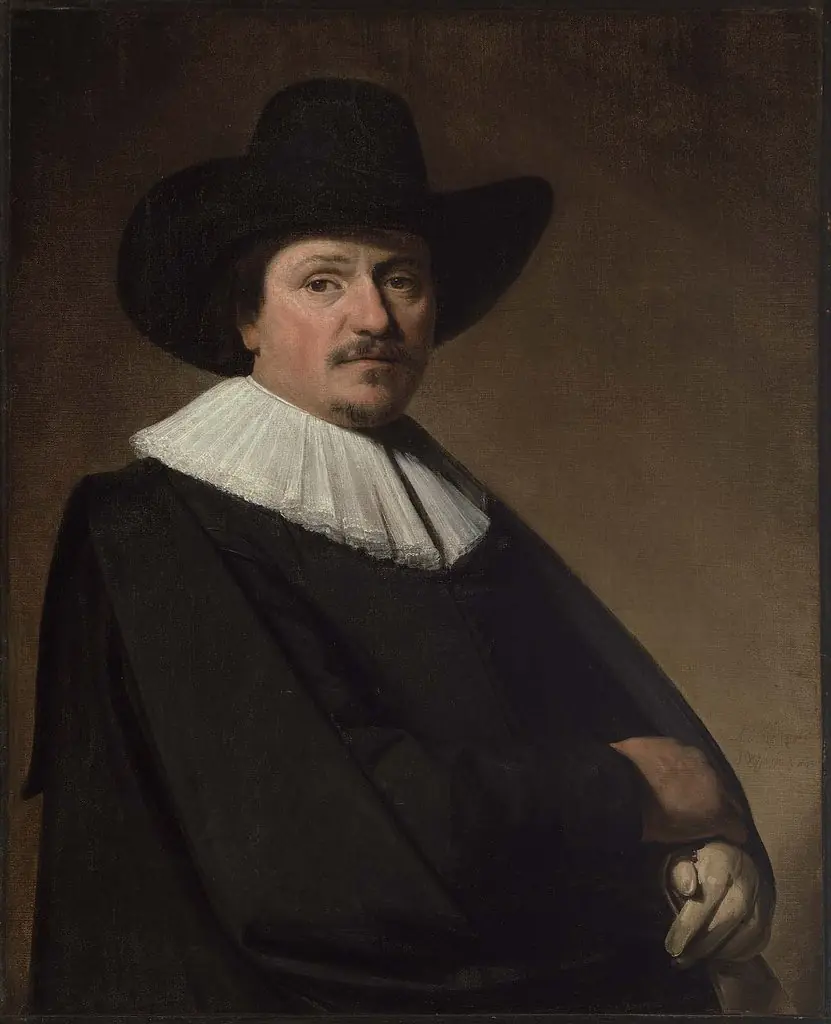
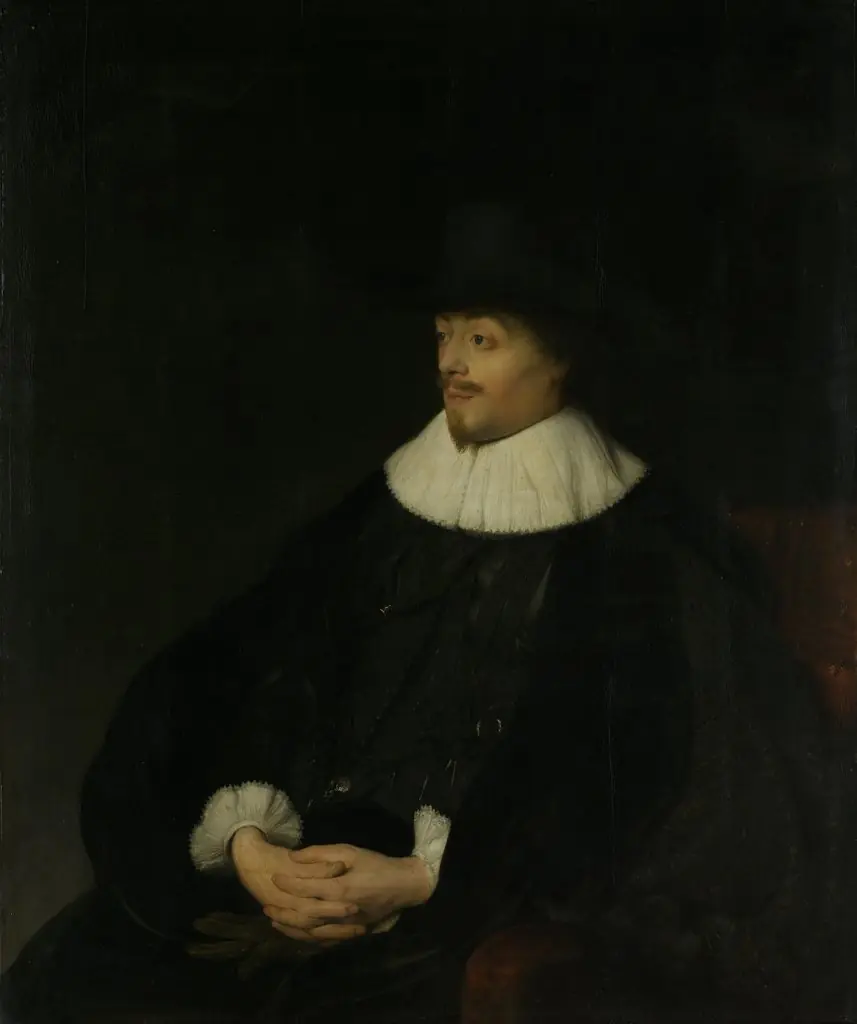
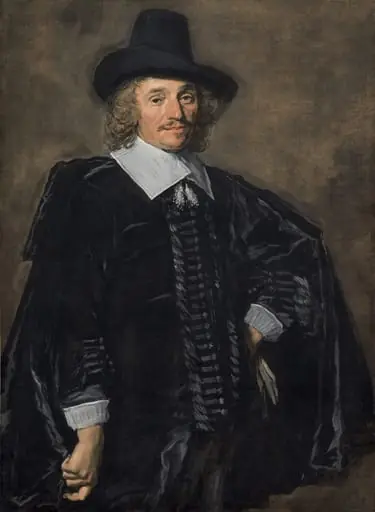
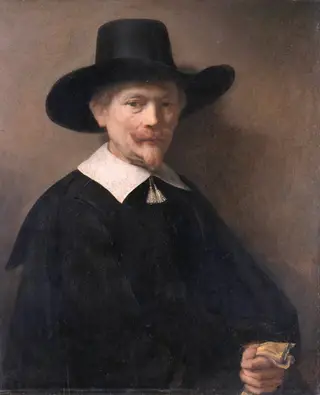
The painting depicts an unidentified man wearing a tall hat, accompanied by a book, as noted in the iconographic tags associated with the work.
The painting depicts an unidentified man wearing a tall hat, accompanied by a book, as noted in the iconographic tags associated with the work. The sitter's identity is not established in the available documentation, and the canvas offers no inscription or emblematic clue that would link the figure to a known individual, office, or household. The combination of a broad-brimmed, high-crowned hat and a book in the sitter's hands draws on a long-standing Dutch portrait convention in which such attributes signaled learning, civic standing, or piety, but the sources do not specify which of these readings Rembrandt intended here.
Because the subject remains anonymous and no symbolic program is documented, the painting's meaning resides in the generic character study itself rather than in any identifiable narrative or allegorical content.
History & Provenance
The painting was created in 1663 and is attributed to Rembrandt van Rijn. Its early provenance traces to King Stanisław August Poniatowski of Poland, though it does not appear in Tadeusz Mankowski’s 1795 inventory of the royal collection. By the late 19th century, it was in the Gasser collection in Vienna, possibly assembled by the Austrian sculptor and collector Hans Gasser.
It next surfaced with Otto Mündler in Paris, who facilitated its 1865 sale to Ivor Bertie Guest, 1st Baron Wimborne, at Canford Manor in Dorsetshire. The work later passed to Peter A.B. Widener at Lynnewood Hall, Pennsylvania, by 1912, and was bequeathed through his estate to Joseph E. Widener. It entered the National Gallery of Art, Washington, D.C., in 1942 as a Widener gift.
The Portrait of a Man in a Tall Hat is currently held in the collection of the National Gallery of Art in Washington, D.C., where it was accessioned in 1942 as a gift from the estate of Joseph E. Widener. Prior to this transfer, the work was part of the Peter A.B. Widener collection at Lynnewood Hall in Elkins Park, Pennsylvania, by 1912, and before that, the property of Ivor Bertie Guest, 1st Baron Wimborne, at Canford Manor in Dorsetshire, acquired in 1865. The painting's earlier history includes ownership by Prince Klemens Wenzel von Metternich and the Gasser collection in Vienna.
While the work was first published by Wilhelm von Bode in 1883 and listed in an 1888 catalogue of the Wimborne collection, it does not appear in the reconstructed 1795 inventory of King Stanisław August Poniatowski's collection, despite being attributed to him in some provenance records.
Legacy
The painting’s legacy is marked by its early scholarly recognition and passage through distinguished collections. It was first published by Wilhelm von Bode in his 1883 Studien zur Geschichte der holländischen Malerei and later listed in the 1888 catalogue of Canford Manor. Owned by figures such as Stanisław August Poniatowski, Prince Metternich, Ivor Bertie Guest, and Peter A.B. Widener, the work entered the National Gallery of Art in Washington, D.C., as a gift in 1942.
Its continued attribution to Rembrandt van Rijn has cemented its reputation as a notable example of the artist’s portraiture.
Overview
The painting titled Portrait of a Man in a Tall Hat is an oil on canvas depiction of a male figure. The subject is shown wearing a distinctive tall hat and holds a book, conveying a sense of scholarly engagement or personal reflection. His expression is composed and serious, contributing to the overall dignified presence of the sitter within the frame.
Technique & Style
The artist employed a dramatic contrast of light and shadow, a technique known as chiaroscuro, to shape the composition. The man's face is prominently illuminated, drawing the viewer's gaze directly to his features. This focused lighting creates a strong sense of three-dimensionality and was a prevalent method used by painters to imbue their portrait subjects with a significant and commanding presence.
Context
This approach to portraiture, characterized by its skillful manipulation of light to define form and emphasize psychological depth, aligns with artistic trends seen in the work of masters such as Rembrandt van Rijn. Such dramatic illumination was not merely decorative but served to convey the sitter's character and status, placing him firmly in the intellectual and social context of his time.
Own this work as a print
Artist & collection

Artist
Rembrandt Harmenszoon van Rijn, known mononymously as Rembrandt, was a Dutch Golden Age painter, printmaker, and draughtsman.