Artwork
Portrait of Haesje Jacobsdr van Cleyburg
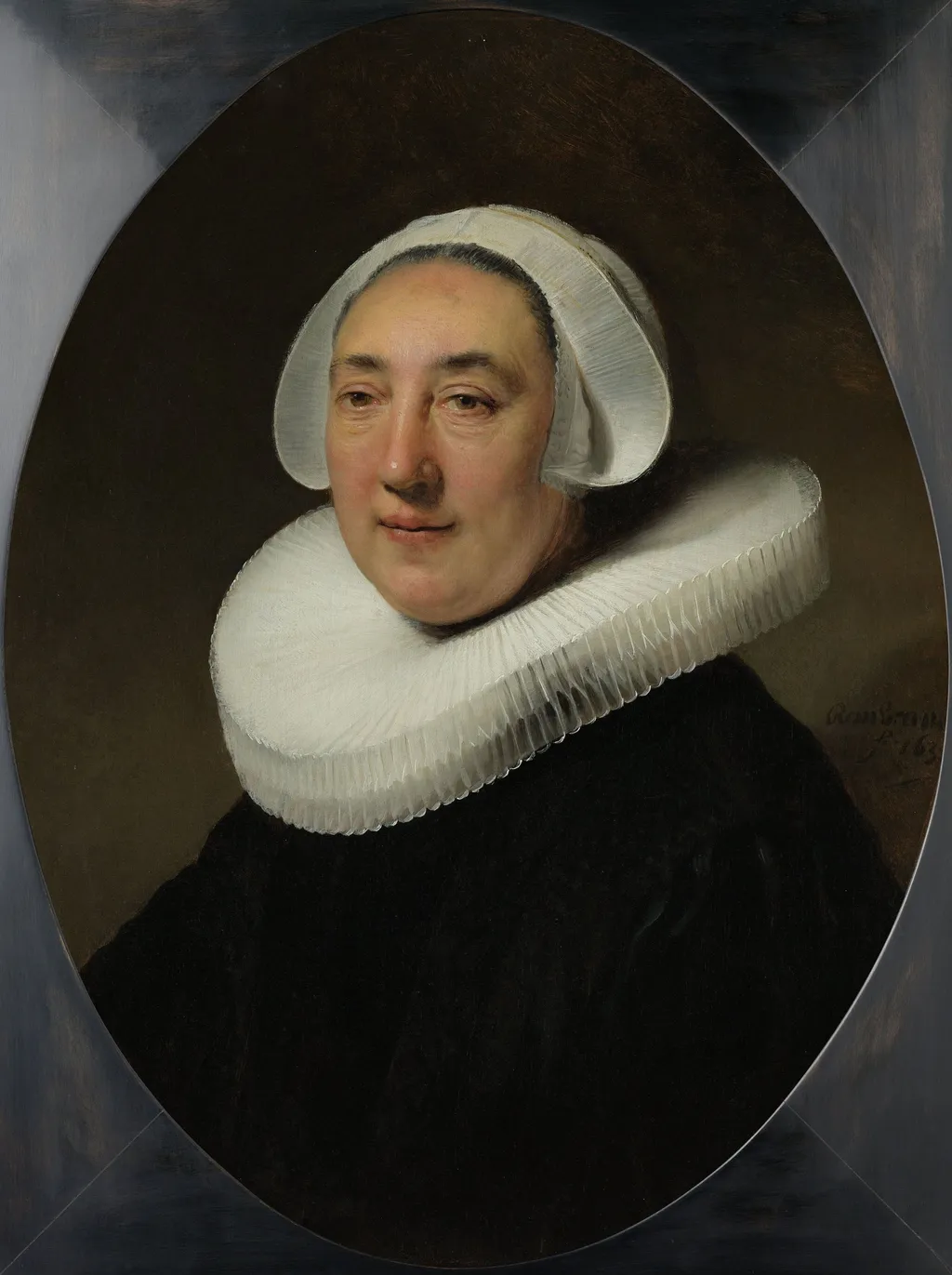
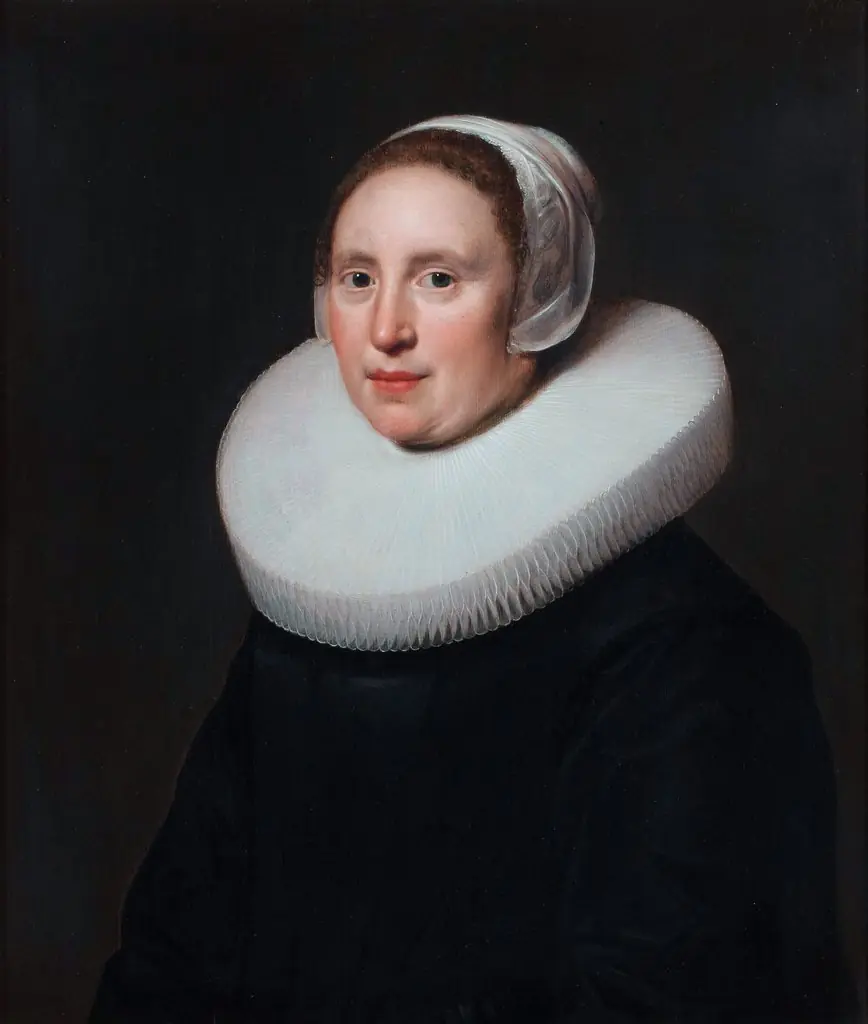
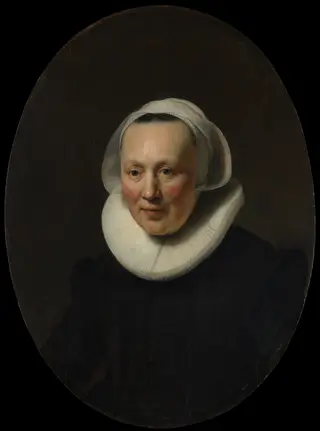
Portrait of Haesje Jacobsdr van Cleyburg is an oil painting by Rembrandt van Rijn. It dates from 1634 and is held in the collection of the Rijksmuseum.
About this work
Subject & Meaning
The work does not overtly employ conventional allegorical motifs or religious iconography, instead prioritizing a direct, lifelike representation of the sitter.
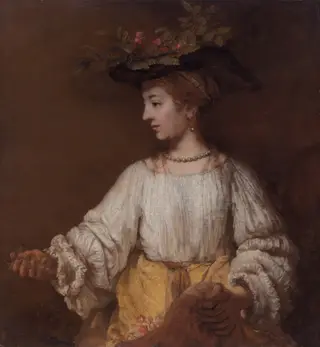
The portrait depicts Haesje Jacobsdr van Cleyburg, a woman wearing a distinctive diadem cap, which situates the work within the Dutch portrait tradition of the 1630s. The cap’s style and the sitter’s attire suggest a woman of the urban middle class or a burgher’s household in the Dutch Republic. The painting’s restrained realism and emphasis on individual character align with Rembrandt’s approach to portraiture of this period, focusing on conveying the subject’s presence rather than elaborate symbolism.
The work does not overtly employ conventional allegorical motifs or religious iconography, instead prioritizing a direct, lifelike representation of the sitter.
Technique & Style
The Portrait of Haesje Jacobsdr van Cleyburg is executed in oil paint on a wooden panel support. Created in 1634, the work measures 68.6 cm in height and 53.4 cm in width. The painting depicts a woman wearing a diadem cap, rendered with the characteristic handling associated with Rembrandt's portraiture from this period.
History & Provenance
The portrait of Haesje Jacobsdr van Cleyburg was painted by Rembrandt in 1634 and is part of the Rijksmuseum's collection in Amsterdam. It was created as a commissioned work, documented by its inception date of 1634-01-01 and recorded dimensions of 68.6 cm by 53.4 cm. The painting remains in the museum's holdings, reflecting its continuous ownership since its creation.
Overview
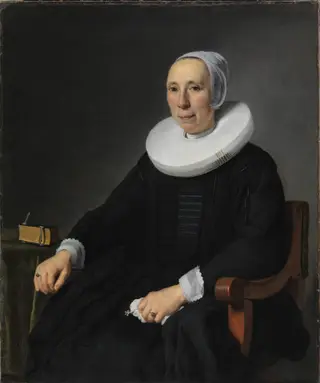
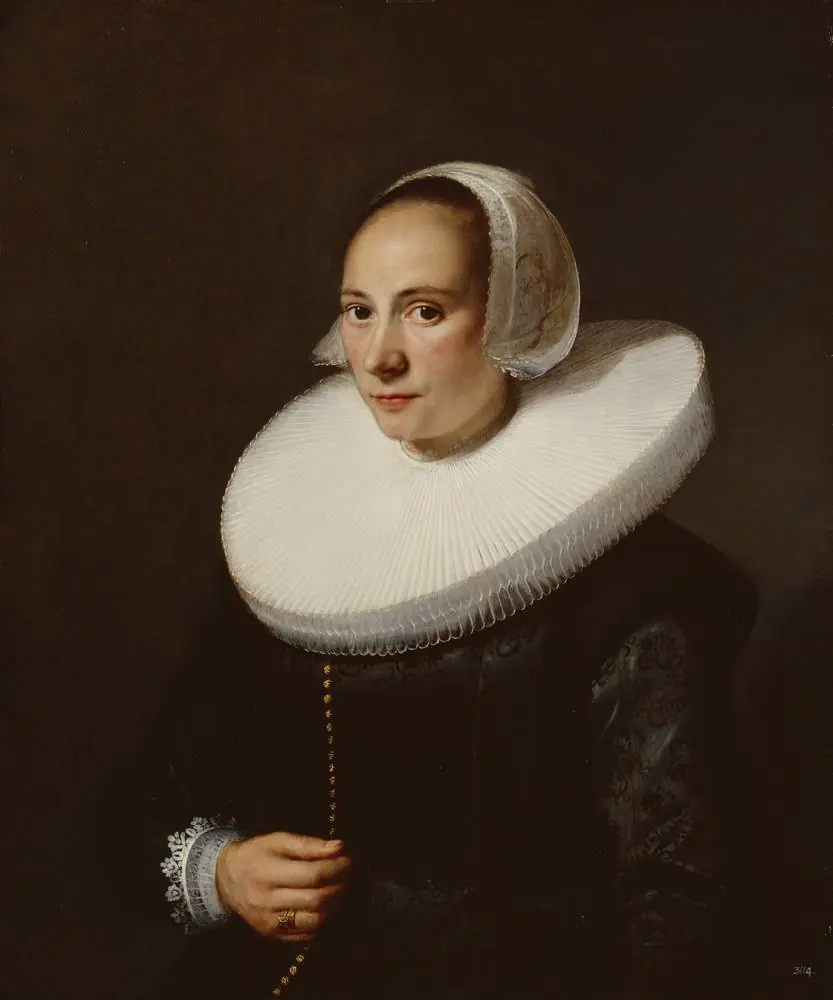
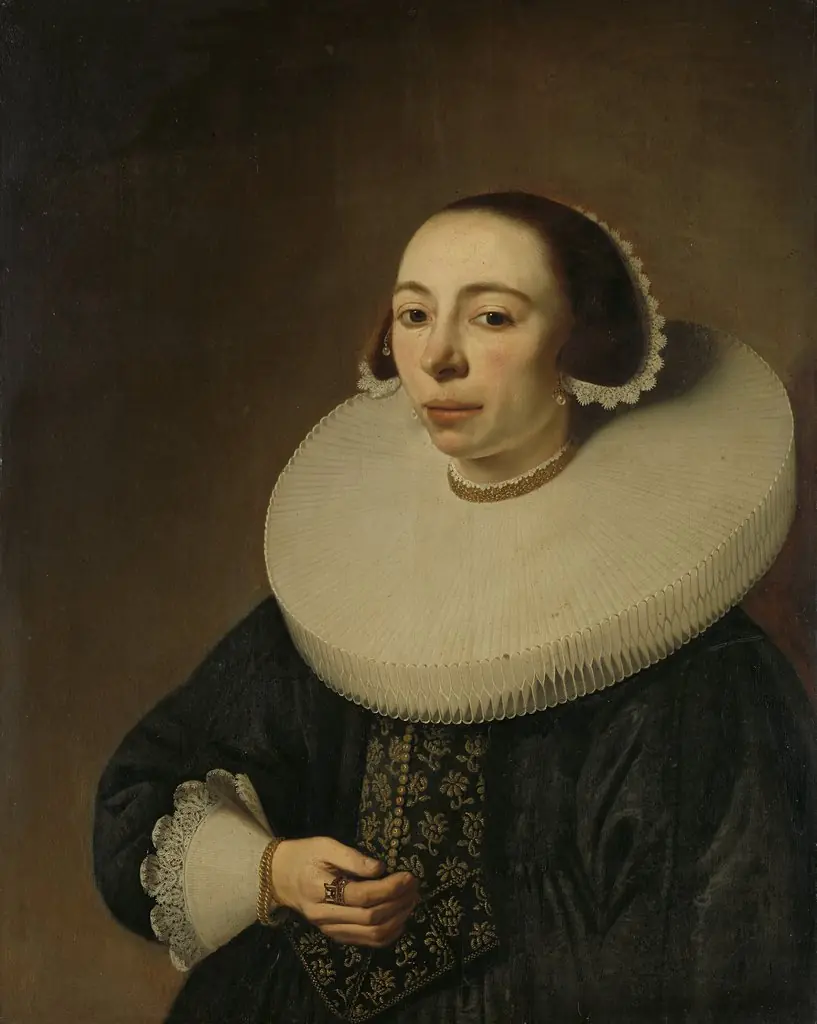
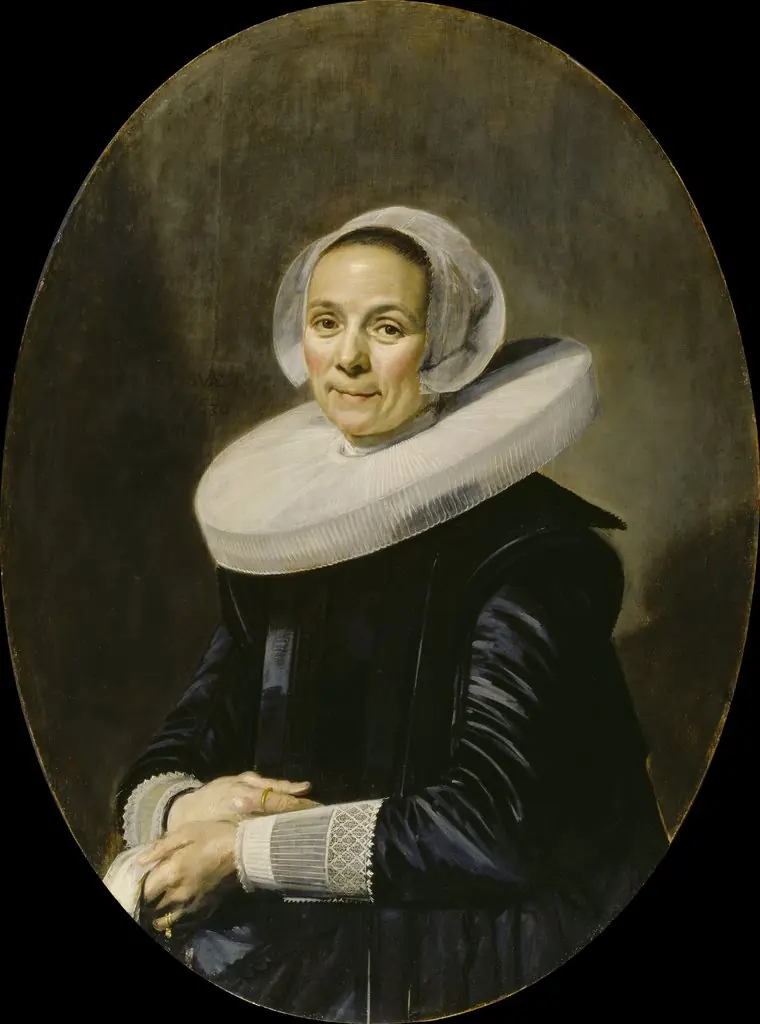
In 1634 Rembrandt Harmenszoon van Rijn painted an oil portrait of Haesje Jacobsdr van Cleyburg. The work presents a single sitter, a woman adorned with a white, diadem-style cap and a high, ruffled collar, set against a dark, neutral background. The painting is part of the Rijksmuseum’s collection in Amsterdam.
Context
The painting belongs to a period when Rembrandt was establishing his reputation for insightful portraiture. In the 1630s he produced numerous likenesses for affluent patrons, employing a blend of realism and dramatic lighting that would become hallmarks of his mature style. This work reflects both the artist’s technical skill and the cultural emphasis on personal representation during the Dutch Golden Age.
Own this work as a print
Artist & collection

Artist
Rembrandt Harmenszoon van Rijn, known mononymously as Rembrandt, was a Dutch Golden Age painter, printmaker, and draughtsman.