Artwork
Portrait of Maerten Soolmans
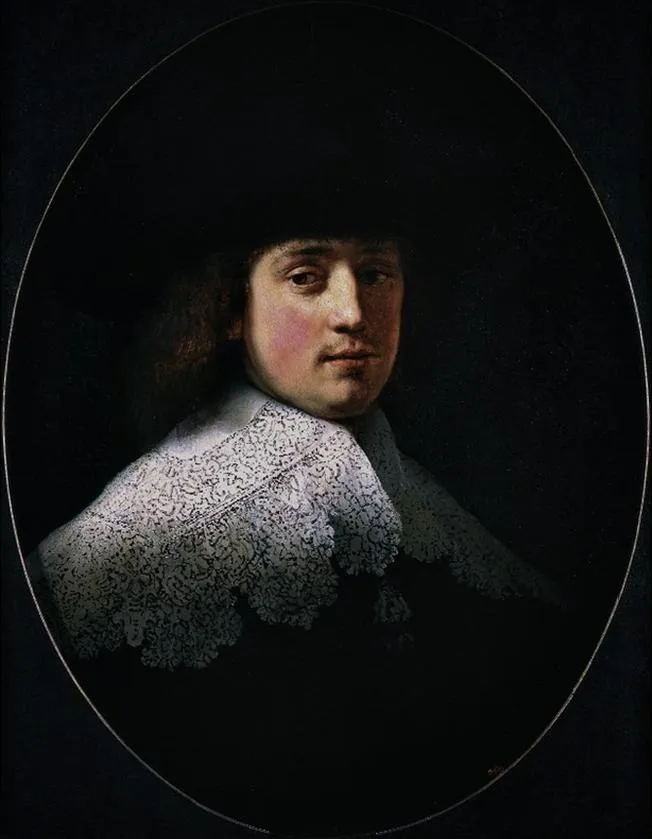
Portrait of Maerten Soolmans is an oil painting by the Dutch Golden Age artist Rembrandt van Rijn. It dates from 1634 and is held in the collection of the Hermitage Museum.
About this work
The use of chiaroscuro, a technique that emphasizes contrasts between light and dark, adds depth to the image.
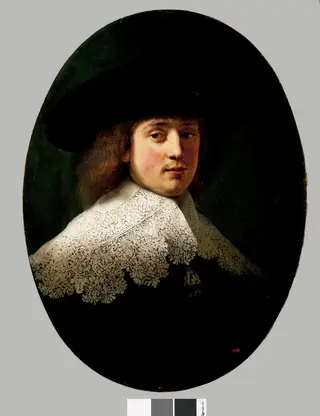
This painting features a man with a solemn expression, dressed in a white lace collar and a black hat. The subject's face is the central focus, with the background blurred and dark.
The man's attire and the style of the painting suggest a formal portrait from the 17th century. The use of chiaroscuro, a technique that emphasizes contrasts between light and dark, adds depth to the image.
The level of detail and realism in the portrait is striking, making the subject seem almost lifelike. If you're interested in seeing more works by this artist, you might want to look up Rembrandt.
History & Provenance
The Portrait of Maerten Soolmans was created by Rembrandt in 1634 as an oil painting on panel. This work, executed during the Dutch Golden Age, depicts Marten Soolmans II and measures 71.2 cm in height by 53 cm in width. While the specific commission details and the initial ownership chain are not detailed in the provided records, the painting's history includes its presence in the collections of both the Hermitage Museum and the National Museum in Warsaw. The artwork is currently located at the National Museum in Warsaw.
Context
Created in 1634, the Portrait of Maerten Soolmans is a definitive work of the Dutch Golden Age, executed by Rembrandt during his early Amsterdam period. The painting depicts Marten Soolmans II and is currently held by the National Museum in Warsaw. As a portrait from this specific era, it reflects the artistic movement's focus on capturing individual character within the wealthy merchant class of the Dutch Republic.
The work's attribution to Rembrandt and its 1634 date situate it within the artist's formative years, contributing to the broader scholarship on his development as a portraitist in the 17th century.
Overview
Created in 1634 by Rembrandt van Rijn, this oil on canvas presents a single male sitter, identified as Maerten Soolmans. The work belongs to the Dutch Golden Age and exemplifies the artist’s prolific output in portraiture, a genre that occupied a substantial portion of his roughly three hundred paintings. It is currently displayed in the State Hermitage Museum’s collection.
Subject & Meaning
The portrait shows Soolmans with a composed, solemn expression, his face illuminated against a dark, indistinct background. He wears a white lace collar and a black hat, attire that signals his social standing and the formal conventions of 17th‑century Dutch portraiture. The direct gaze and restrained demeanor convey a sense of personal dignity and quiet authority.
Technique & Style
Rembrandt employs chiaroscuro to model the sitter’s features, using strong contrasts of light and shadow to give the face a three‑dimensional presence. The brushwork is meticulous in rendering lace and fabric, while the background remains loosely suggested, focusing attention on the subject. This balance of detail and atmospheric darkness typifies the master’s approach to realism.
Artist & collection

Artist
Rembrandt Harmenszoon van Rijn, known mononymously as Rembrandt, was a Dutch Golden Age painter, printmaker, and draughtsman.

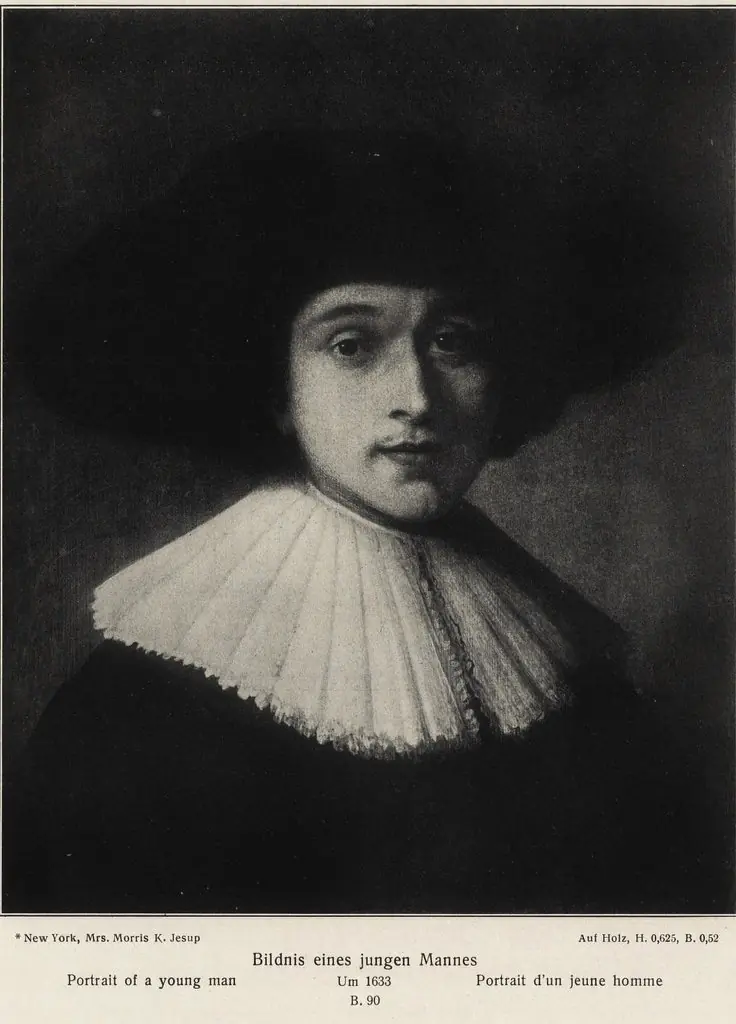 Portrait of a Young Man wrongly called Burgomaster Six
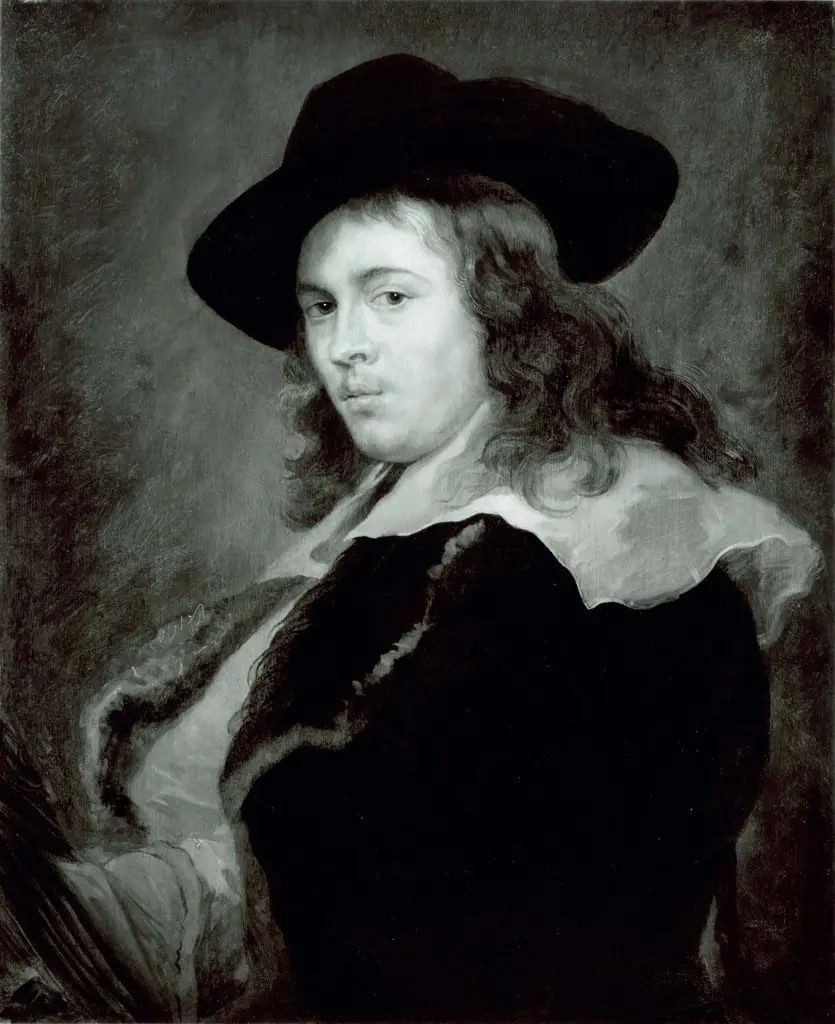 Nicolas Rubens, the artist's son
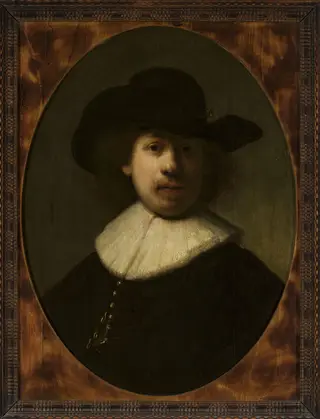 Self-portrait
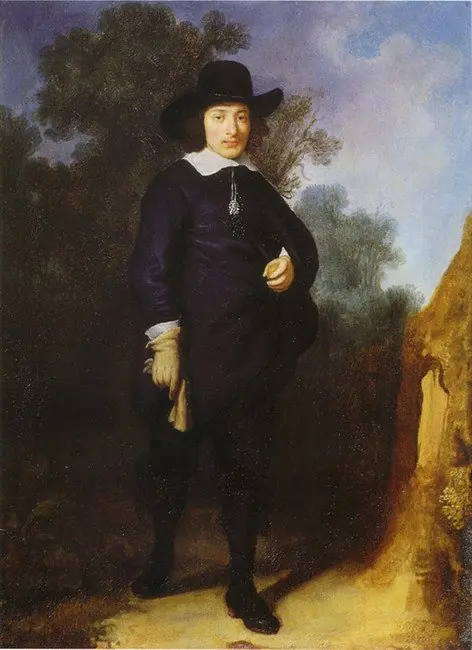 Portrait of Dirck Jacobsz Leeuw
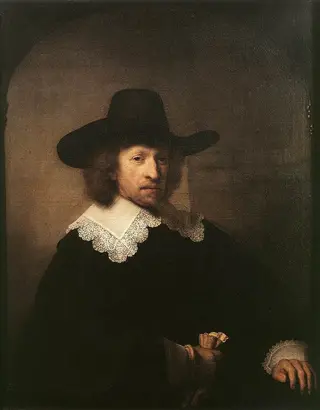 Portrait of Nicolas van Bambeeck in a Picture Frame
 Bildnis eines Mannes (Art des)
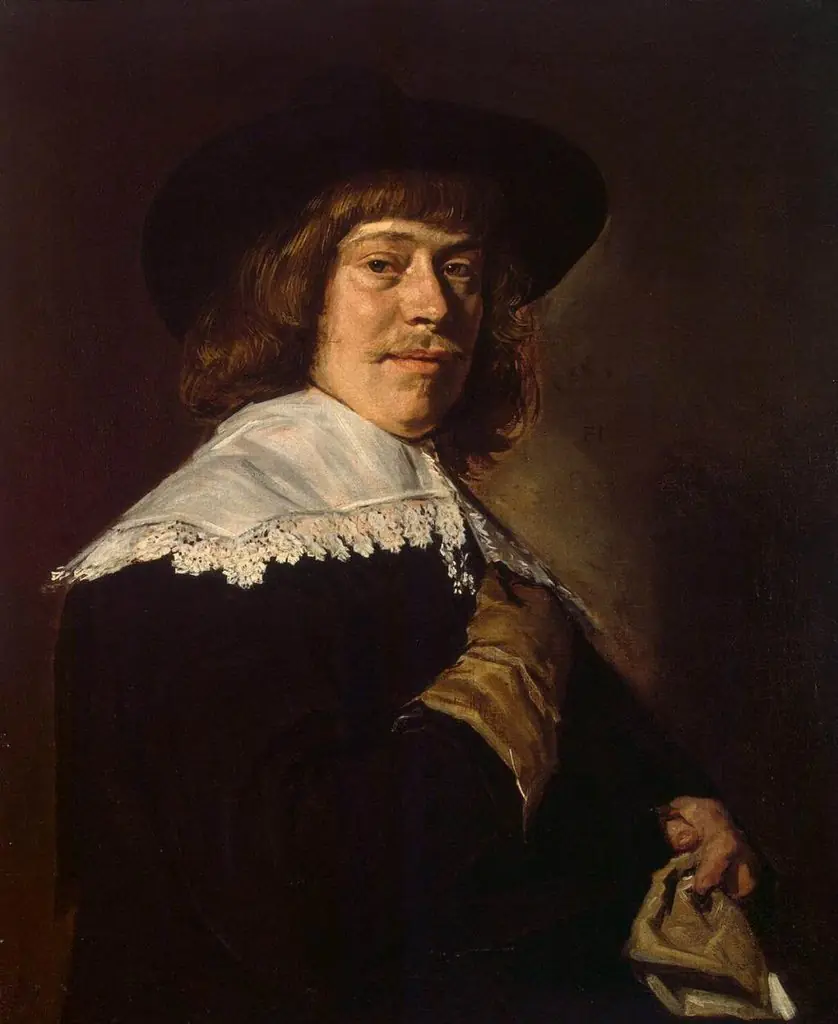 Portrait of a Young Man Holding a Glove
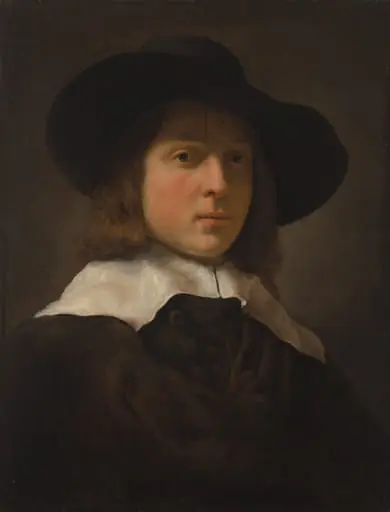 Head of a Young Man
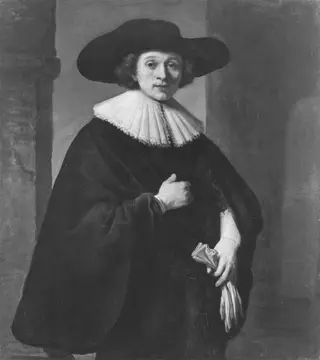 Portrait of a man
 Ein junger Mann (Werkstatt)
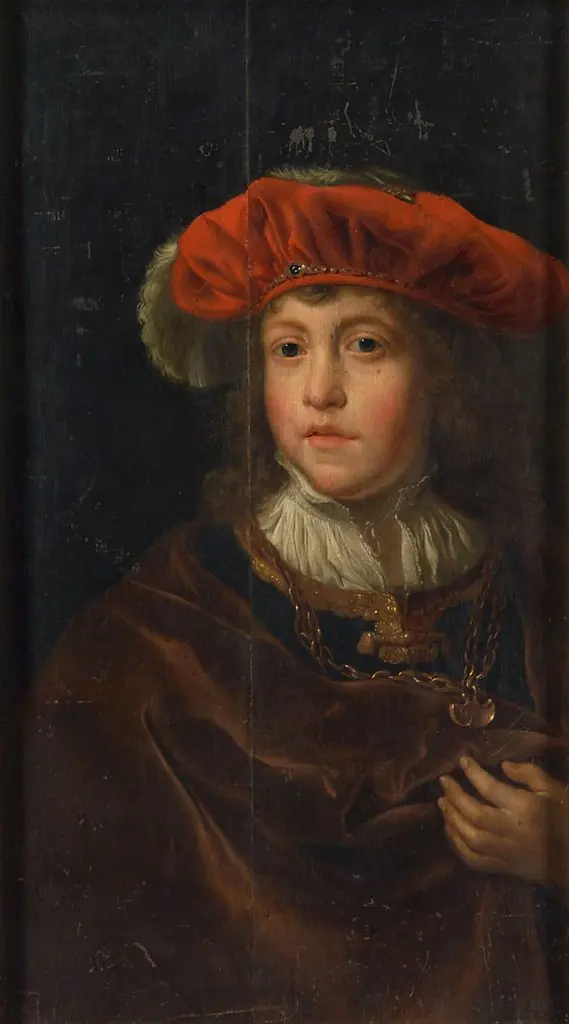 Knabe mit rotem Barett und Goldkette
- Portrait of Maerten Soolmans (1613–1641)