Artwork
Susanna and the Elders
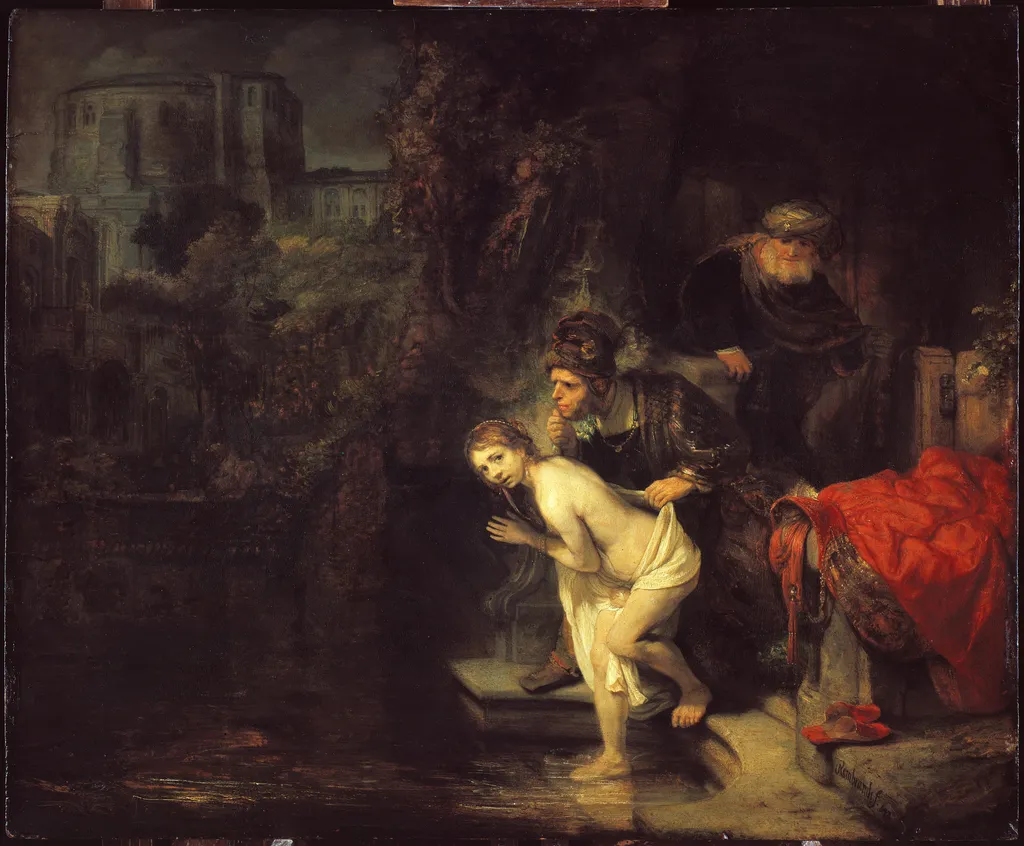
Susanna and the Elders is an oil painting by the Dutch Golden Age artist Rembrandt van Rijn. It dates from 1647 and is held in the collection of the Gemäldegalerie Berlin.
About this work
Subject & Meaning
The painting illustrates the Deuterocanonical story of Susanna from the Book of Daniel, a narrative traditionally symbolizing divine justice and faithfulness.
The painting illustrates the Deuterocanonical story of Susanna from the Book of Daniel, a narrative traditionally symbolizing divine justice and faithfulness. While earlier artistic interpretations often eroticized the scene, portraying Susanna as a temptress or treating the elders' intrusion as a minor annoyance, Rembrandt's 1647 work rejects this sensual approach. Instead, the composition emphasizes the moral gravity of the event, depicting an active assault where Susanna twists away from an elder grasping her garment.
Her distressed expression and direct gaze at the viewer transform the observer from a hidden voyeur into a participant potentially appealed to for help. The setting incorporates Orientalist fantasy elements common in Dutch art of the period, including lush tropical foliage, a Babylonian palace, and elders wearing turbans, all derived from secondhand accounts of Asia rather than direct observation.
Technique & Style
Rembrandt painted Susanna and the Elders in 1647 using oil on a wooden panel (approximately 76.6 cm high by 92.8 cm wide). The work has been altered: X‑ray analysis shows that Sir Joshua Reynolds overpainted much of the background and removed sections with solvents, leaving only the figures, the distant palace and a few foreground elements intact. Stylistically, the composition is active; Susanna twists to escape the elder who grasps her garment, her distressed gaze meets the viewer, and the scene is rendered in Rembrandt’s characteristic chiaroscuro with rich, saturated colors.
Lush tropical foliage, a Babylonian palace and the elders’ turbans introduce an orientalist ambience, while the handling of light and shadow emphasizes the narrative tension and the victimized role of Susanna.
History & Provenance
Rembrandt completed Susanna and the Elders in 1647 as an oil painting on a Peltogyne panel, basing his composition on a same-named work by his teacher Pieter Lastman, whose painting he had copied in a drawing around 1636. Shortly after finishing the work, Rembrandt sold it to the collector Adriaen Banck for 500 florins.
The painting then passed through a documented succession of owners: Adriaen Maen by 1660, Baron Schönborn by 1738, J. A. J. Aved by 1766, and Edmund Burke by 1769. It entered the collection of the painter and collector Sir Joshua Reynolds by 1795. In 2015, X-ray analysis revealed that Reynolds had extensively reworked the canvas, overpainting large portions of the background and removing other areas with solvents, leaving only Rembrandt's figures, the distant Babylonian palace, and select foreground elements intact.
In 1883, Wilhelm von Bode purchased the painting for the Kaiser-Friedrich Museum in Berlin, from which it was later transferred to the Gemäldegalerie Berlin, its present location.
Rembrandt's 1647 painting Susanna and the Elders is currently held at the Gemäldegalerie in Berlin, Germany. The work was acquired for the Kaiser-Friedrich Museum in Berlin in 1883 by Wilhelm von Bode, who purchased it on behalf of the state. Prior to this acquisition, the painting passed through several notable private collections, including those of Adriaen Banck, Adriaen Maen, Baron Schönborn, J. A. J. Aved, Edmund Burke, and Sir Joshua Reynolds.
While the sources detail this extensive ownership history, they do not provide a specific inventory or accession number for the artwork within the Berlin museum's records. Furthermore, the provided texts contain no information regarding the painting's exhibition history.
Context
Scholars consistently note that Rembrandt’s 1647 Susanna and the Elders departs from the eroticized Susanna narratives prevalent in earlier Baroque treatments by Lastman and Allori, emphasizing Susanna’s distress and the scene’s moral urgency rather than seduction.
The painting’s reception highlights its alignment with Dutch Protestant sensibilities of the mid-seventeenth century, when biblical subjects were less common in Dutch art yet persisted in Rembrandt’s oeuvre. Its later history is marked by Sir Joshua Reynolds’s extensive repainting of the background in the late eighteenth century, documented by 2015 X-ray analysis, which obscured much of Rembrandt’s original setting while preserving the central figures and Babylonian palace. This intervention underscores the work’s evolving status as a collectible subject to contemporary taste rather than an inviolable masterpiece.
Within Rembrandt’s corpus, the painting exemplifies his engagement with narrative clarity and expressive chiaroscuro amid waning religious patronage, situating it among his later biblical scenes that privilege psychological and moral immediacy over decorative allure.
Overview
Rembrandt's "Susanna and the Elders," painted in 1647, is an oil on Peltogyne panel from the Baroque era. This work depicts a dramatic episode from the Deuterocanonical Book of Daniel, where Susanna is confronted by two older men. The painting is presently part of the collection at the Gemäldegalerie in Berlin, representing a significant example of the artist's engagement with biblical narratives.
Own this work as a print
Artist & collection

Artist
Rembrandt Harmenszoon van Rijn, known mononymously as Rembrandt, was a Dutch Golden Age painter, printmaker, and draughtsman.


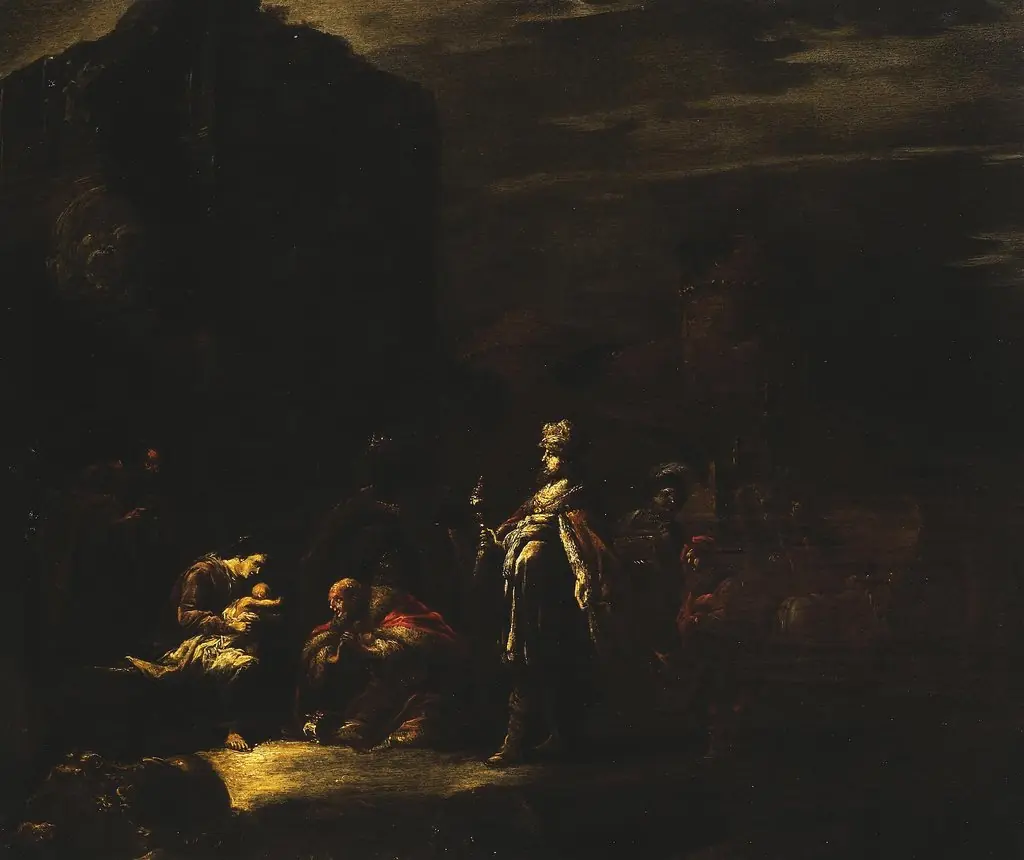 Adoration of the Magi
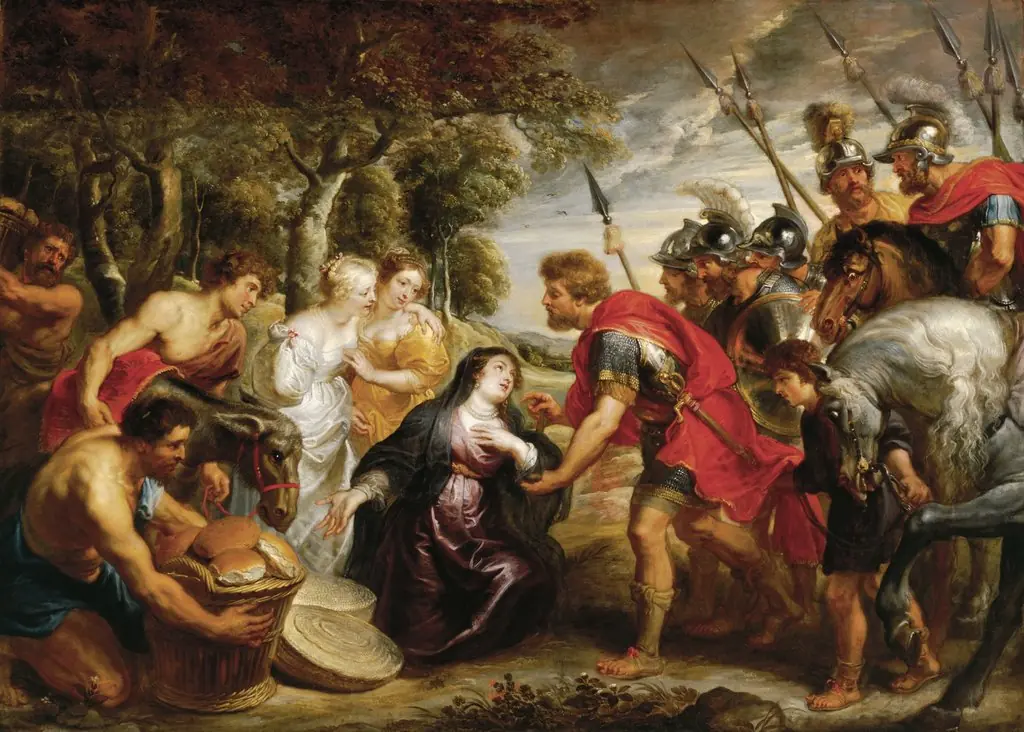 The Meeting of David and Abigail
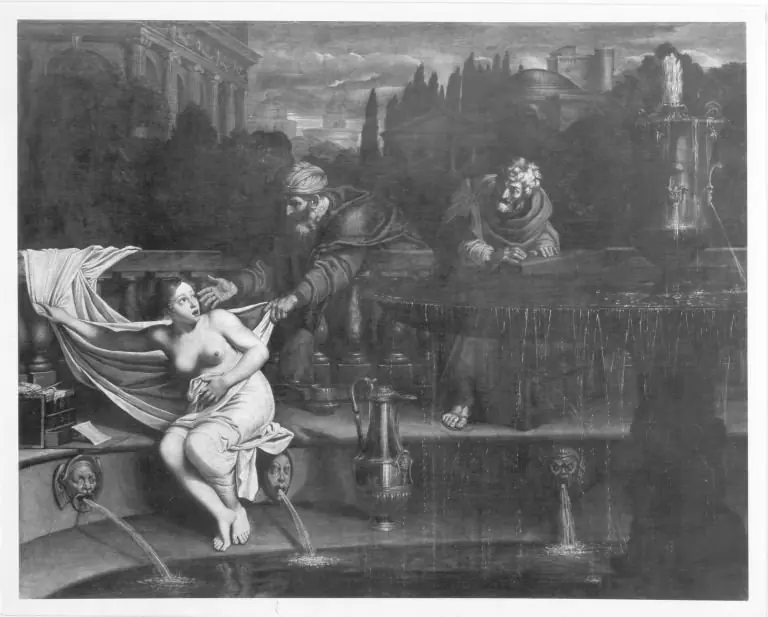 Susanna im Bade
 Christ on the Sea of Galilee
 The Angel and the Young Tobit with the Fish
 Masinissa Mourning Over the Death of Sophonisba (?)
 The Death of Orpheus
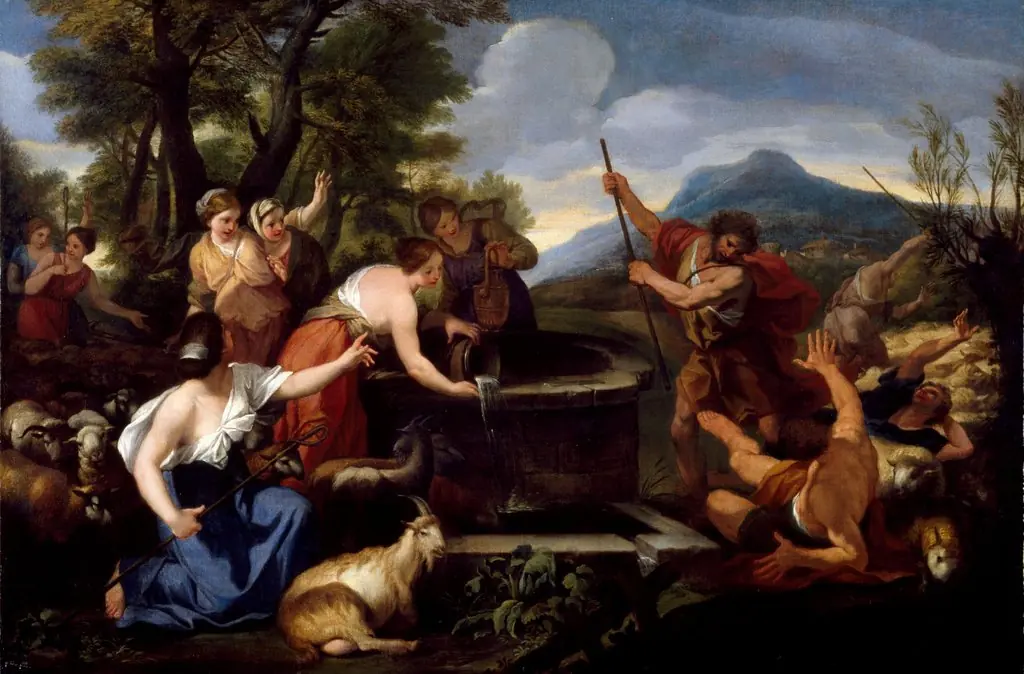 Moses and the Daughters of Jethro
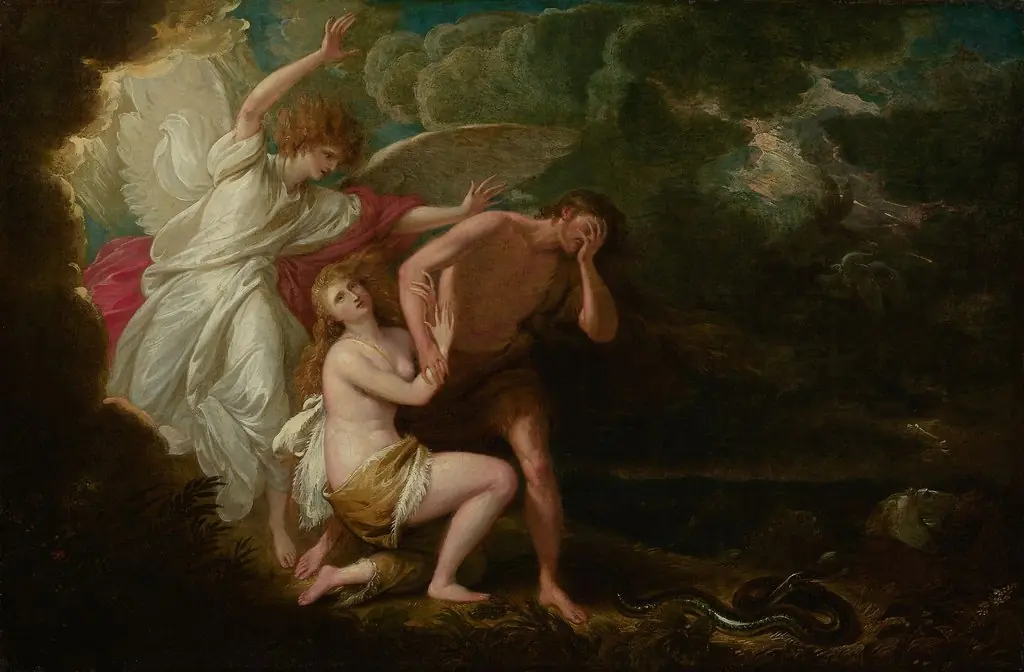 The Expulsion of Adam and Eve from Paradise
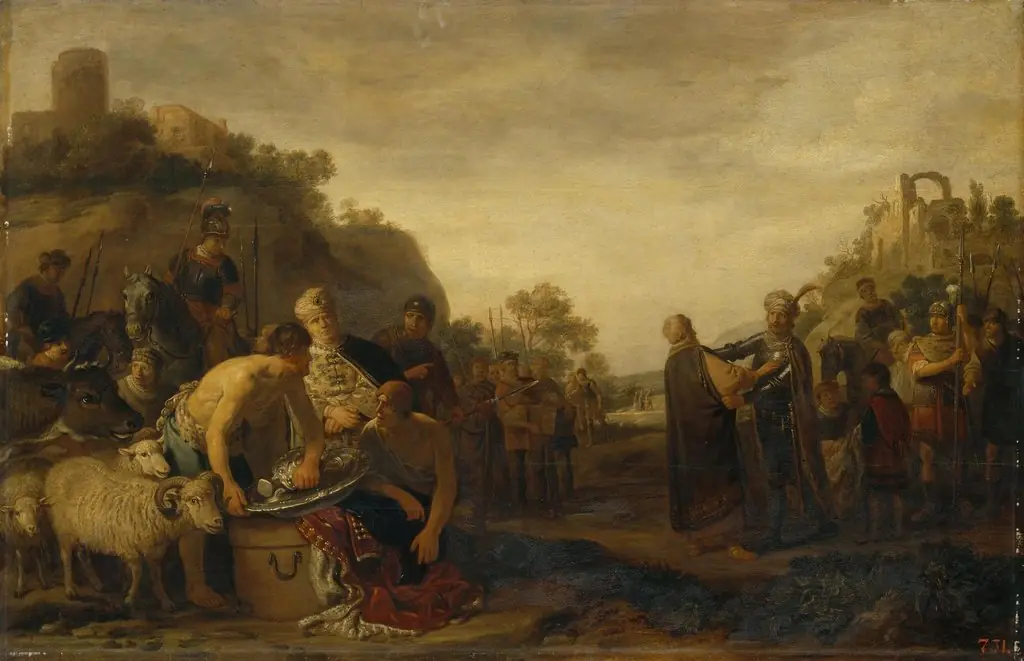 Samuel and Saul
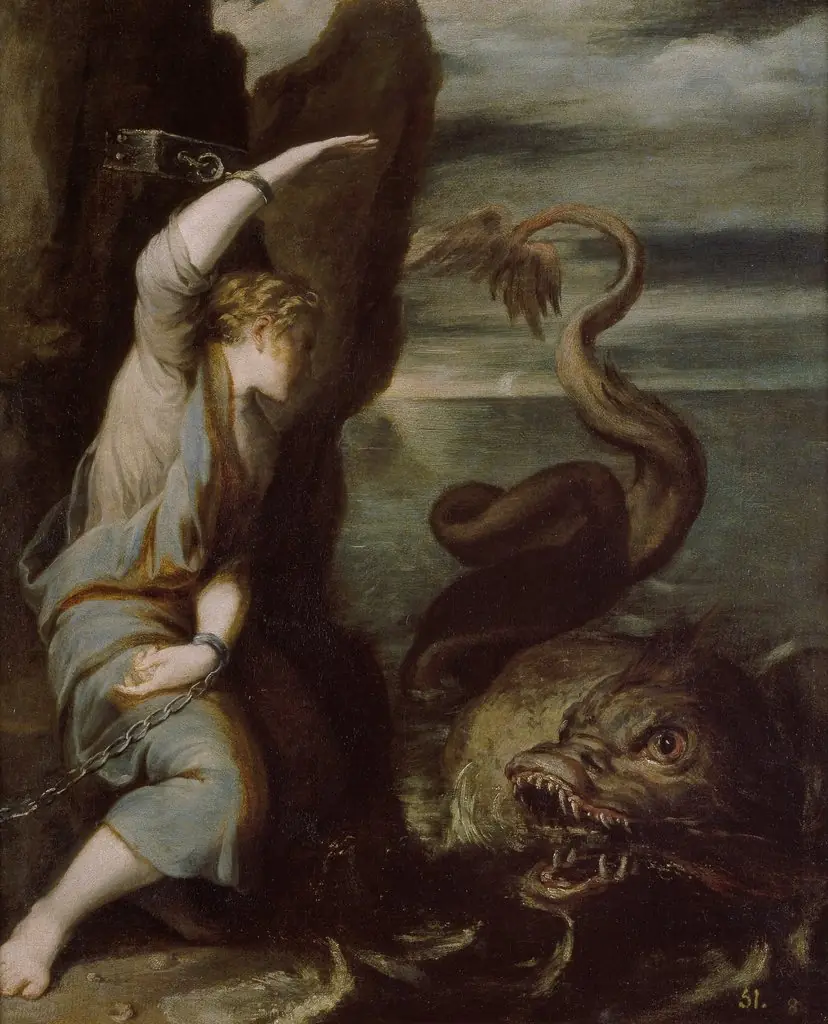 Andrómeda
- Susanna and the Elders