Artwork
The Raising of Lazarus
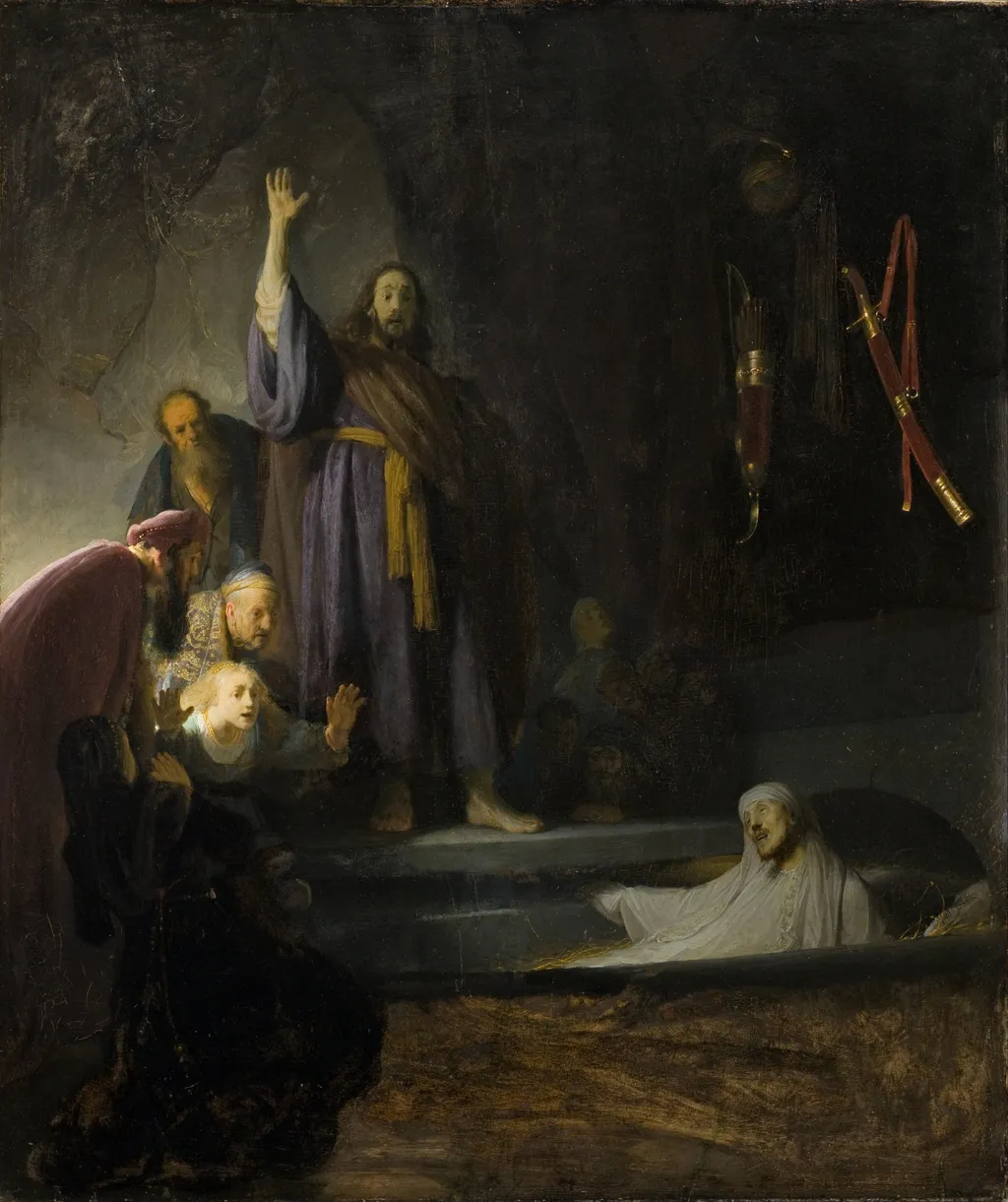
The Raising of Lazarus is an oil painting by the Dutch Golden Age artist Rembrandt van Rijn. It dates from 1630 and is held in the collection of the Rijksmuseum.
About this work
Subject & Meaning
This subject reflects Rembrandt’s early engagement with New Testament narratives and his exploration of themes of redemption and human emotion.
The painting depicts the biblical miracle from the Gospel of John in which Jesus calls Lazarus from the tomb, symbolizing spiritual awakening and the triumph of divine grace over death. Rembrandt emphasizes this transformation through dramatic chiaroscuro, contrasting the dark interior of the burial cave with the illuminated figures who witness the resurrection. The composition focuses attention on the moment of awakening, portraying Lazarus emerging from darkness while surrounding observers, including Mary Magdalene, react in awe. This subject reflects Rembrandt’s early engagement with New Testament narratives and his exploration of themes of redemption and human emotion. The work was created circa 1630-1632 during his time in Leiden, likely influenced by his teacher Pieter Lastman and contemporary prints, including those by Jan Lievens. It was painted on panel, measuring 96.4 cm in height and 81.3 cm in width, and originally belonged to Rembrandt before being sold in 1656 to settle debts, later entering the collection of Howard F. Ahmanson, Sr. and donated to the Los Angeles County Museum of Art.
Technique & Style
Rembrandt’s *The Raising of Lazarus* (1630) is executed in oil paint on a wooden panel, measuring 96.4 cm in height and 81.3 cm in width. The support, a sturdy panel, allowed Rembrandt to exploit the luminous potential of oil medium, layering translucent glazes to achieve depth and richness in color. The painting exemplifies Rembrandt’s mastery of chiaroscuro, a technique that contrasts intense light and shadow to direct the viewer’s focus. Here, a concentrated beam of light pierces the dark interior of the tomb, illuminating key figures, particularly Mary Magdalene and the witnesses, while leaving Lazarus emerging from the gloom. The handling is fluid yet deliberate, with brushwork ranging from smooth, blended passages in the lit areas to thicker, more textured strokes in the shadows, enhancing the dramatic tension of the scene.
History & Provenance
Created early in Rembrandt’s career while he resided in Leiden, *The Raising of Lazarus* was likely painted between 1630 and 1632, shortly after his apprenticeship with Pieter Lastman. The artist retained ownership of the work for most of his life, where it was recorded hanging in his anteroom. It was eventually sold to settle debts during his bankruptcy sale in 1656. Following its departure from the artist's estate, the painting circulated through various European collections, including those of François Duval, Gottfried Winckler, Gertrud Dübi-Müller, and Charles Sedelmeyer. In 1959, American philanthropist Howard F. Ahmanson, Sr. acquired the piece and subsequently donated it to the Los Angeles County Museum of Art.
The Raising of Lazarus is held by the Los Angeles County Museum of Art. Its accession number is not specified in the sources. The painting has been exhibited in museum contexts, including a documented presence in the Ahmanson Building at LACMA and through external references to its display at the Los Angeles County Museum of Art.
The work entered European ownership after Rembrandt's bankruptcy sale in 1656, passed through several collectors including Charles Sedelmeyer, and was acquired by Howard F. Ahmanson, Sr. in 1959 before being donated to LACMA.
Context
Painted early in Rembrandt's career while he was still based in Leiden and shortly after his apprenticeship with Pieter Lastman, whose influence is evident, The Raising of Lazarus belongs to the Dutch Golden Age and is one of relatively few New Testament subjects Rembrandt treated in paint, though he returned to the theme in two etchings of approximately 1632 and 1642. The composition may draw on an undated Jan Lievens etching of the same subject; Lievens and Rembrandt were friends and probably worked together. Sister Wendy Beckett has observed that Christ appears in the painting as a weary magician rather than a triumphant savior, and Rembrandt later reused the figure arrangement in his 1635/1639 Resurrection. The work was inventoried in Rembrandt's anteroom before being sold in his 1656 bankruptcy sale and eventually reaching Los Angeles.
The painting is classified as a religious work in oil on panel, measuring 96.4 × 81.3 cm, and is held in the Ahmanson Building of the Los Angeles County Museum of Art.
Legacy
The Raising of Lazarus held lasting significance for Rembrandt himself, who retained the panel for most of his life before being compelled to sell it in his 1656 bankruptcy sale. The work shaped his subsequent treatment of the subject: he produced two etchings on the same theme, in approximately 1632 and 1642, exploring different viewpoints and figures, and later most closely echoed its composition in his painting The Resurrection, dated 1635/1639, whose figure arrangement developed from the earlier Raising.
The painting is also regarded as a formative example of Rembrandt's early command of chiaroscuro, using the darkness of the burial cave and limited torchlight to direct the viewer's attention. Its subject may draw on an undated Jan Lievens etching of the same name, reflecting the collaborative circle of the young Rembrandt in Leiden. The work ultimately entered the collection of the Los Angeles County Museum of Art through a 1959 donation by Howard F. Ahmanson, Sr., securing its place in the public heritage of Dutch Golden Age painting.
Own this work as a print
Artist & collection

Artist
Rembrandt Harmenszoon van Rijn, known mononymously as Rembrandt, was a Dutch Golden Age painter, printmaker, and draughtsman.

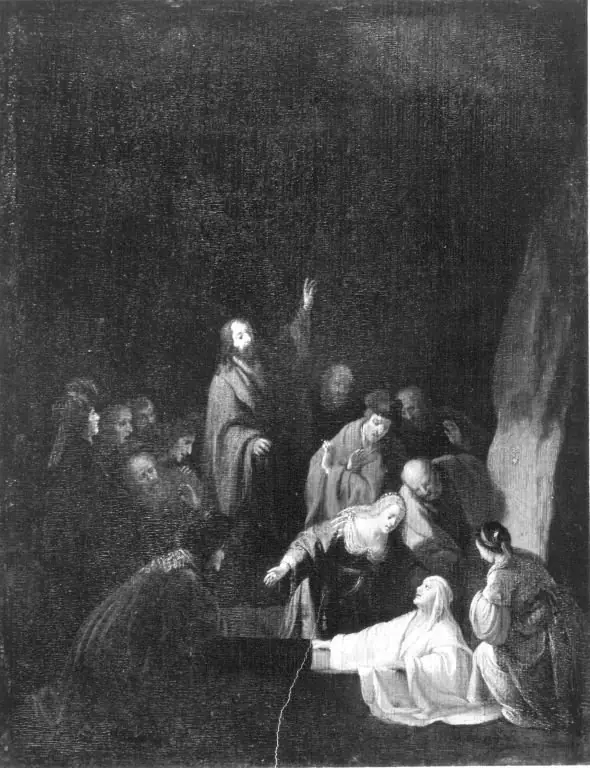 Erweckung des Lazarus
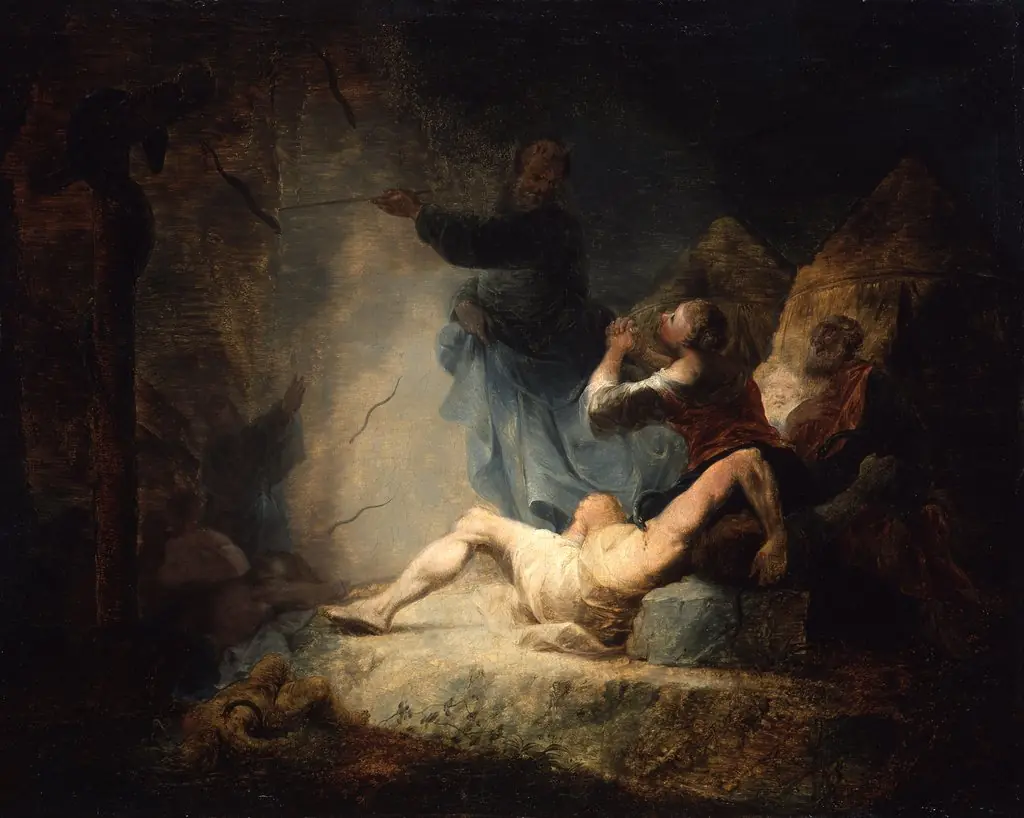 The Erection of the Brazen Serpent
 The Descent from the Cross
 The Denial of Saint Peter
 Moses Striking the Rock
 Moartea lui Alexandru Lăpușneanu
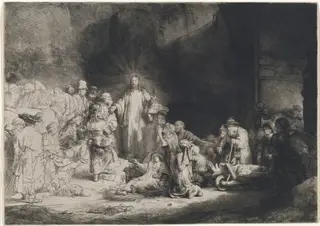 Christ Preaching (The Hundred Guilder Print)
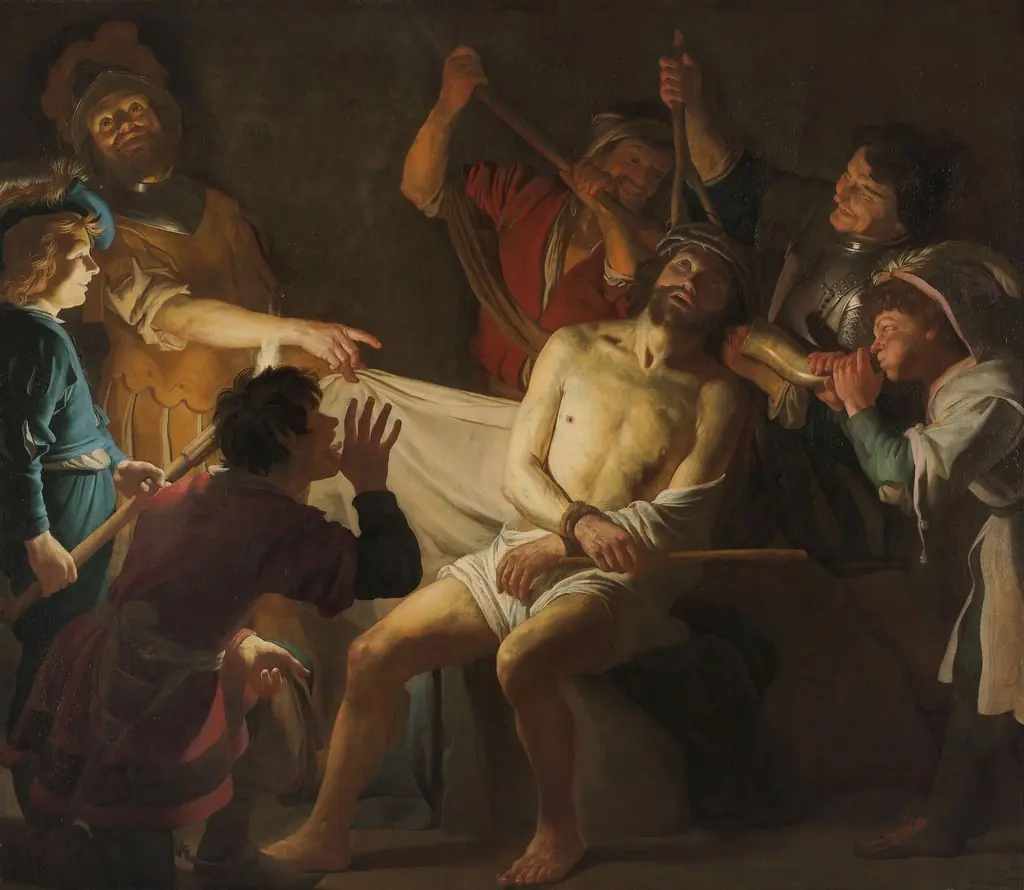 Christ Crowned with Thorns
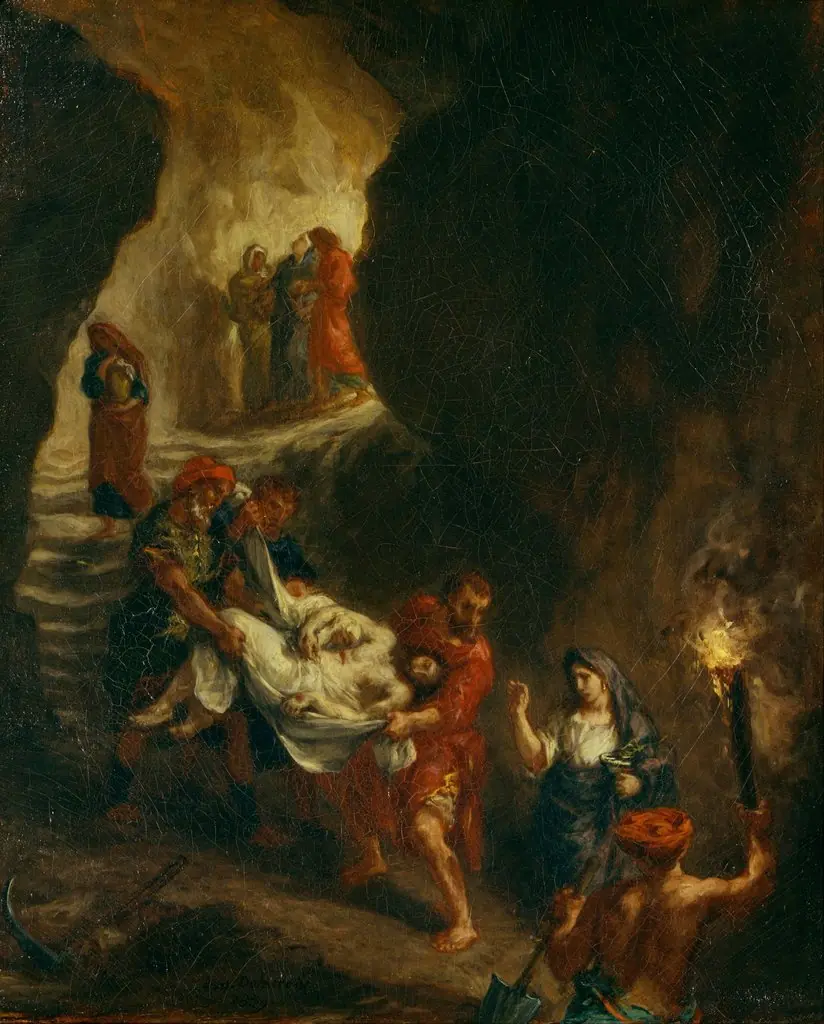 Christ Carried Down to the Tomb
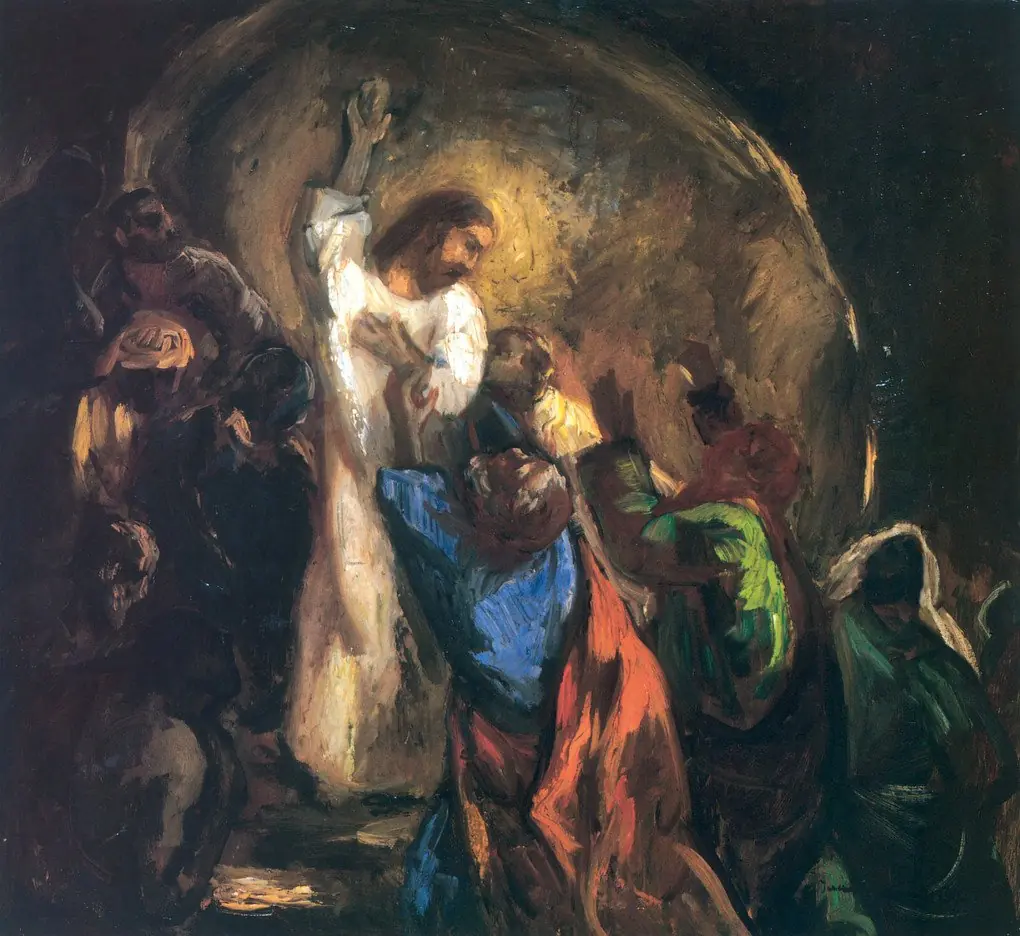 Thomas Touches Christ's Side
 De verloochening van Petrus
- The Raising of Lazarus