Artwork
Christ Preaching (La petite Tombe)
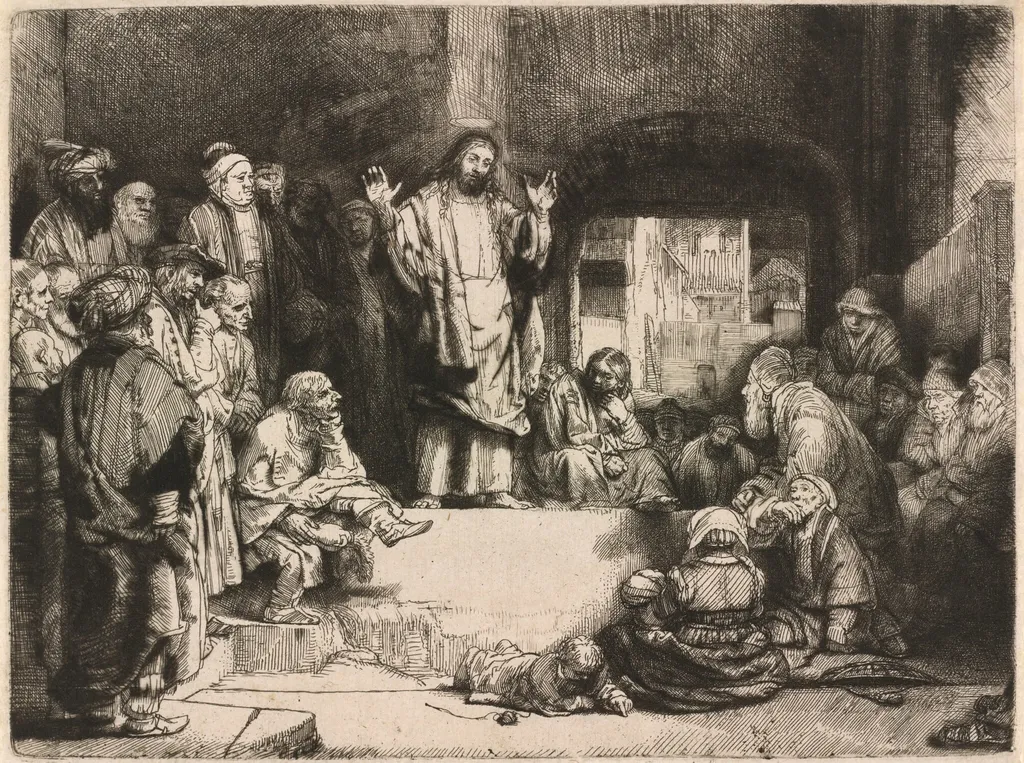
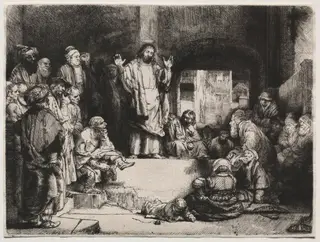
Christ Preaching (La petite Tombe) is an ink print by the Baroque artist Rembrandt van Rijn. It dates from 1652 and is held in the collection of the National Gallery of Art.
About this work
Overview
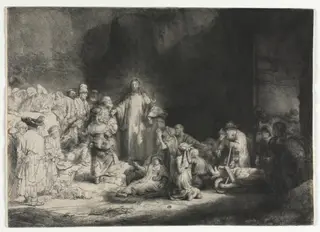
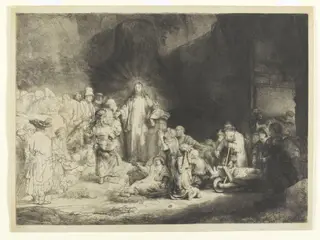
The composition centers on Christ standing before a gathered congregation within a dimly lit interior, his arms outstretched in a gesture of teaching.
Christ Preaching (La petite Tombe), created by Rembrandt van Rijn in 1652, is a complex print combining etching, engraving, and drypoint. The composition centers on Christ standing before a gathered congregation within a dimly lit interior, his arms outstretched in a gesture of teaching. Rembrandt employs dramatic chiaroscuro, using deep shadows to model the figures and direct the viewer's attention to the illuminated preacher.
The surrounding audience displays a variety of reactions; some lean forward with rapt attention, while others appear weary or distracted, resting their heads on their hands. This work is part of Rembrandt's extensive series of biblical prints produced during the 1650s, a period marked by his mature exploration of light and psychological depth. The title La petite Tombe refers to the small tomb-like structure visible in the background, a specific architectural element that distinguishes this state from other versions of the subject.
The print demonstrates Rembrandt's technical mastery in layering different intaglio techniques to achieve rich tonal variations and a sense of atmospheric density, solidifying his reputation as a printmaker who could convey profound narrative and emotional intensity on a small scale.
Subject & Meaning
The central figure, presumed to be Christ, stands with outstretched arms, delivering a sermon to a mixed group of listeners. Some participants appear attentive, while others rest their heads on their hands, suggesting fatigue or contemplation. The varied postures convey a sense of personal engagement with the spoken word, inviting viewers to consider themes of spiritual instruction and human response.
Technique & Style
Rembrandt employed a layered approach, beginning with etched lines for the overall composition, then adding engraved details for sharper edges, and finishing with drypoint to achieve velvety, deep blacks in the shadows. Fine hatching renders the texture of clothing, skin, and the rough wall, while the interplay of light and dark creates a dramatic, almost theatrical atmosphere typical of his mature prints.
History & Provenance
The print was produced in the early 1650s, a period when Rembrandt was experimenting with complex print techniques to achieve greater tonal depth. It is catalogued among his religious series and has been held in several major collections, including the Rijksmuseum and the British Museum, reflecting its importance within his oeuvre.
Context
Created during Rembrandt’s later years, the work reflects his continued interest in biblical subjects and his mastery of print media as a means of disseminating religious narratives. The intimate setting and the focus on individual reactions align with the artist’s broader shift toward psychological depth in his portrayals of sacred themes.
Own this work as a print
Artist & collection

Artist
Rembrandt Harmenszoon van Rijn, known mononymously as Rembrandt, was a Dutch Golden Age painter, printmaker, and draughtsman.