Artwork
Jacob's Ladder
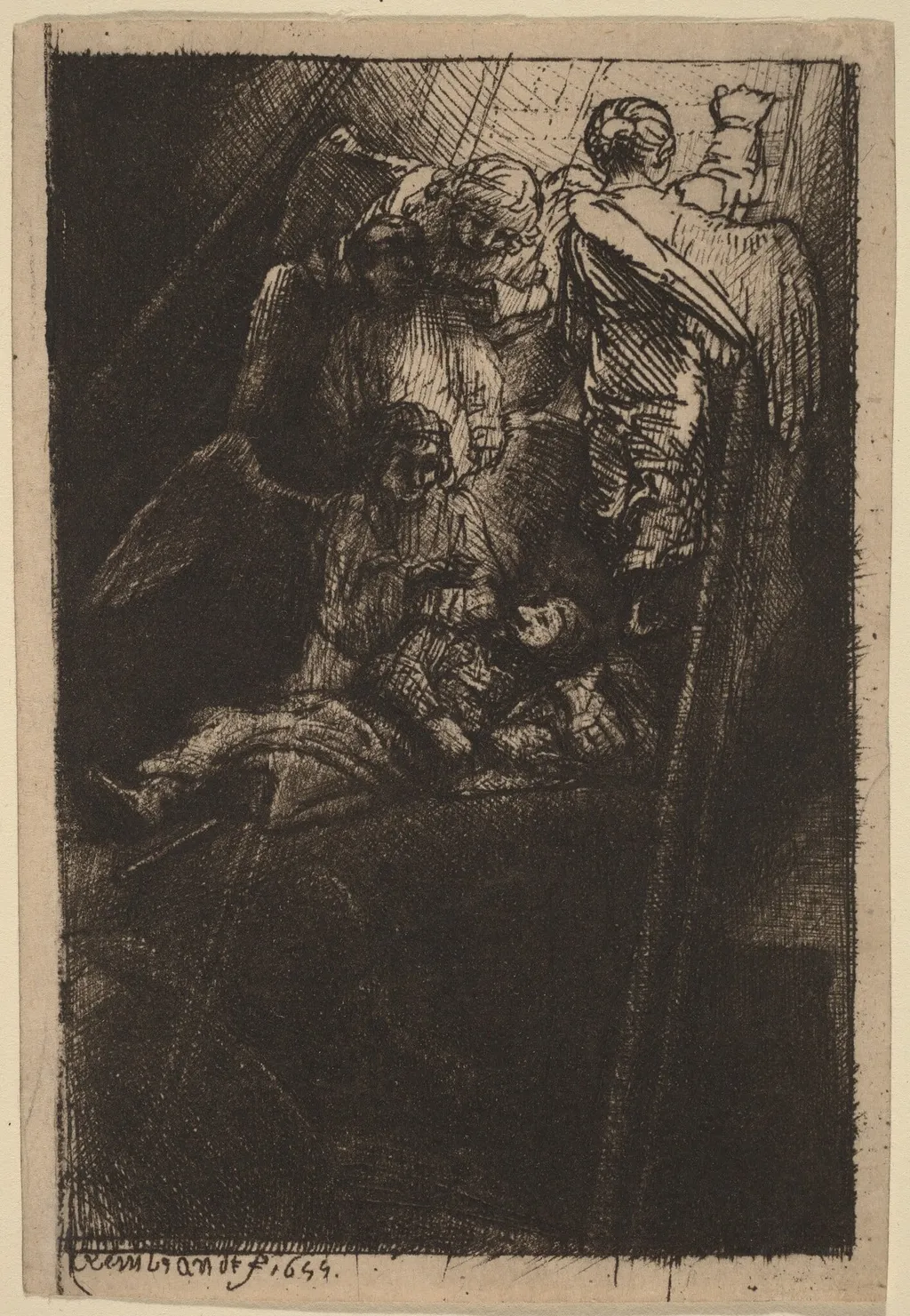
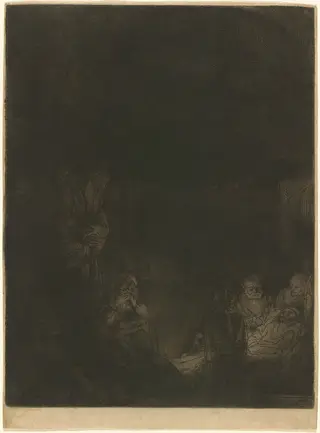
Jacob's Ladder is an ink print by the Baroque artist Rembrandt van Rijn. It dates from 1655 and is held in the collection of the National Gallery of Art.
- Inscription
- Inscribed:in plate, in margin below image at bottom left: Rembrandt f 1655; verso, top center, in brown ink, by a later hand: J.B [John Barnard collector's mark (Lugt 1419)] 2 / Harding; center, in graphite, by a later hand: 3rd Impr [?] / same as larger plates [?] / B.36 c II / c.13966/ 2 Imp [struckthrough]
About this work
Overview
At the base, a cluster of figures looks upward, their faces turned toward the light that seems to emanate from beyond the darkness surrounding the structure.
Rembrandt’s 1655 etching titled “Jacob’s Ladder” presents a stark composition in which a solitary ladder ascends toward an unseen source of illumination. At the base, a cluster of figures looks upward, their faces turned toward the light that seems to emanate from beyond the darkness surrounding the structure. The work is executed in black ink on paper, emphasizing contrast between light and shadow.
Subject & Meaning
The scene evokes the biblical story of Jacob’s dream, in which a ladder links earth and heaven, populated by angels. Here, the ladder functions as a visual conduit, drawing the viewer’s eye upward and suggesting a spiritual ascent. The gathered figures, rendered in subdued tones, appear contemplative, reinforcing themes of yearning, divine revelation, and the human quest for transcendence.
Technique & Style
Rembrandt employed a combination of etching, burin work, and drypoint to achieve a rich tonal range. The fine lines of the burin define the ladder’s rungs, while drypoint adds velvety, deep shadows to the surrounding darkness. This layered approach creates a dramatic chiaroscuro effect, characteristic of Rembrandt’s mature printmaking, where light seems to emerge from within the ink itself.
History & Provenance
The print was produced in the mid‑seventeenth century, a period when Rembrandt was exploring complex religious subjects through print media. Original impressions were likely pulled from a copper plate owned by the artist, and surviving copies have appeared in several European collections, reflecting the work’s circulation among connoisseurs of Dutch graphic art.
Context
Created during the later phase of Rembrandt’s career, the etching reflects his deepening interest in biblical narratives and the interplay of light as a symbolic device. The work aligns with contemporary Dutch Calvinist sensibilities, which favored sober, introspective depictions of scriptural themes, while also showcasing the artist’s technical mastery of printmaking.
Legacy
“Jacob’s Ladder” remains a reference point for scholars studying Rembrandt’s print oeuvre, illustrating his ability to convey narrative depth within a monochrome medium. The piece continues to be reproduced in academic publications and exhibited in museums, serving as an example of how printmaking can achieve the same psychological intensity as his painted works.
Own this work as a print
Artist & collection

Artist
Rembrandt Harmenszoon van Rijn, known mononymously as Rembrandt, was a Dutch Golden Age painter, printmaker, and draughtsman.

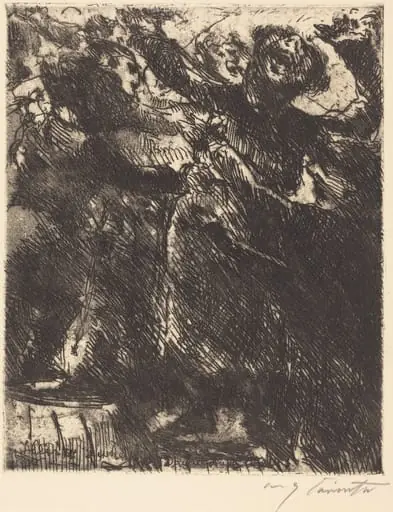 Kapuzinerpredigt—"Hetzt sich lieber herum mit der Dirn'" (The Capuchin's Sermon—"He Prefers to Run Around with a Girl")
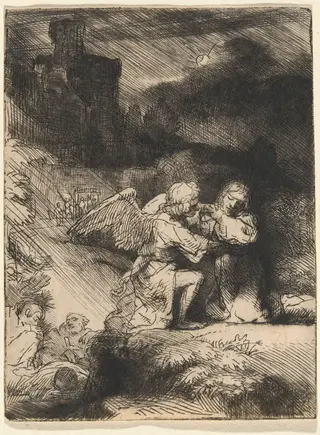 The Agony in the Garden
 The Entombment
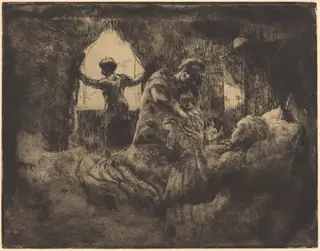 Greeting Grandmother (Le Bonjour à la Grand-mère)
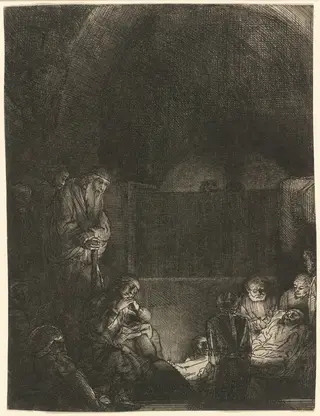 The Entombment
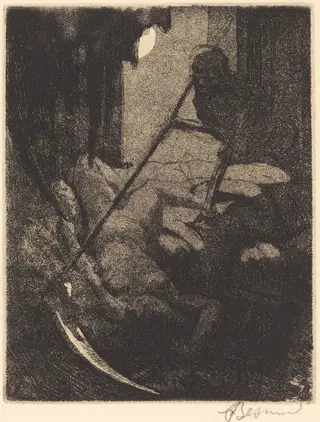 The Mystery (Le mystère)
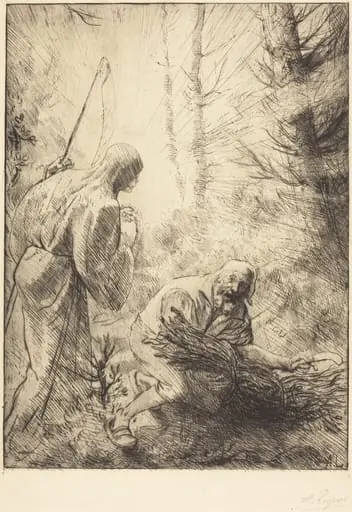 Death and the Woodcutter, 2nd plate (La mort et le bucheron)
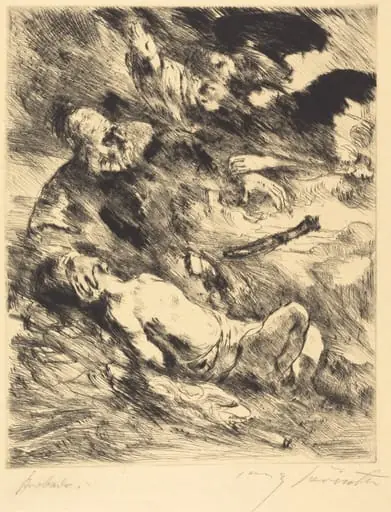 Die Opferung Isaacs (The Sacrifice of Isaac)
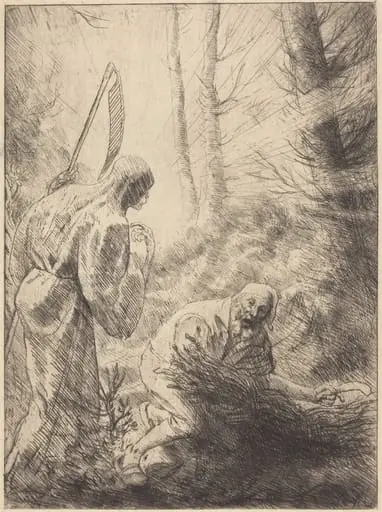 Death and the Woodcutter, 2nd plate (La Mort de le bucheron)