Artwork
Head of a Young Girl
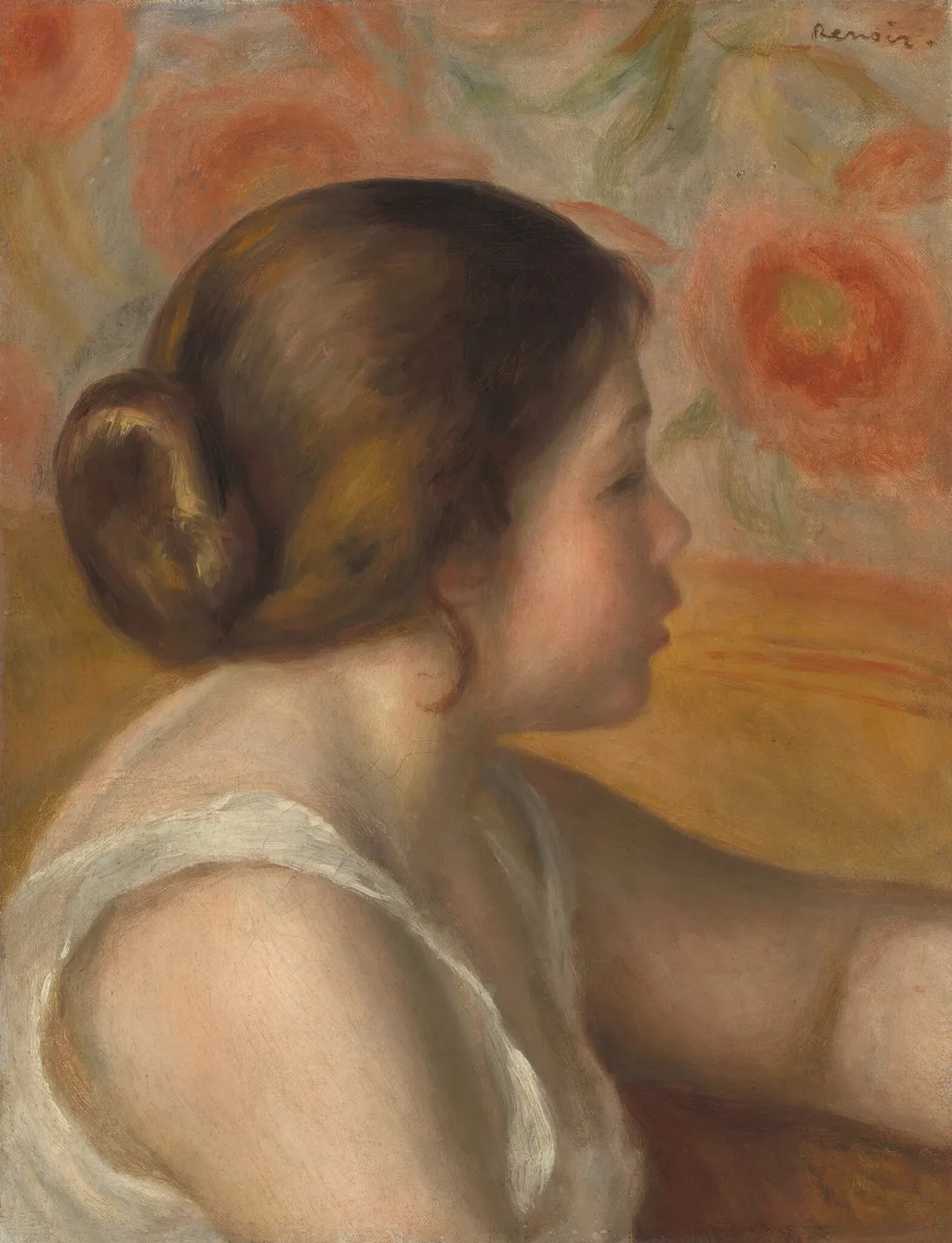
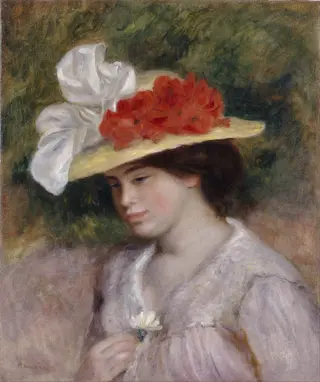
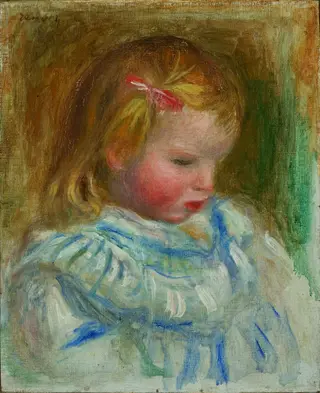
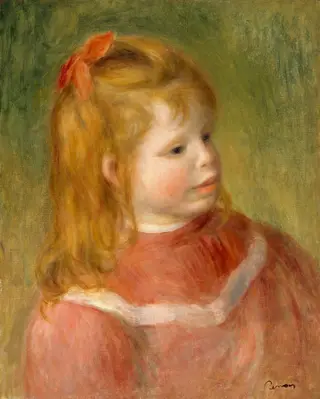
Head of a Young Girl is an oil painting by the Impressionist artist Pierre-Auguste Renoir. It dates from 1890 and is held in the collection of the National Gallery of Art. Created around 1890, this oil on canvas presents a close-up portrait of a young girl.
- Inscription
- Inscribed:upper right: Renoir.
About this work
Technique & Style
Head of a Young Girl is an oil painting executed on canvas, a medium consistent with Renoir's portrait practice of the period.
Head of a Young Girl is an oil painting executed on canvas, a medium consistent with Renoir's portrait practice of the period. The work measures 42.6 cm in height by 33.3 cm in width, a modest, intimate scale suited to a closely cropped head study. Classified as a portrait, it presents the bust-length format typical of Renoir's late-1880s and early-1890s figural compositions, in which the sitter's face and upper shoulders fill the picture plane against an undefined ground.
The handling falls within Renoir's characteristic painterly approach of the era, with soft, blended brushwork used to model the features of the young subject and to render flesh tones with warm, layered transitions rather than linear definition.
The painting is held in the National Gallery of Art in Washington, D.C., having entered the collection as a 1948 gift from Vladimir Horowitz.
History & Provenance
Auguste Renoir completed this oil on canvas portrait in 1890. The artist retained ownership until June 26, 1900, when he sold the work to the dealers Durand-Ruel in Paris and New York. It likely entered the collection of Alexandre Berthier, Prince de Wagram, in Paris, though it may have been repurchased by Durand-Ruel following the sale of the Prince's heirs' collection through Étienne Bignou and Alex Reid & Lefèvre.
Durand-Ruel subsequently sold the painting to Chester Dale of New York on October 23, 1926. After Dale's death, the work was sold at Parke-Bernet Galleries in New York on March 16, 1944, passing through the Dalzell Hatfield Galleries in Los Angeles and the Gabriel Schneider Gallery in New York. The pianist Vladimir Horowitz acquired the piece in New York and donated it to the National Gallery of Art in Washington, D.C., in 1948.
Head of a Young Girl is held by the National Gallery of Art in Washington, D.C. Its accession number is 1948.10.1. The work entered the collection as a 1948 gift from Vladimir Horowitz. It was previously sold by his heirs through Étienne Bignou in Paris to Alex Reid & Lefèvre in London, and later acquired by the National Gallery of Art in 1948.
Context
Critical reception of Renoir's Head of a Young Girl is anchored in its provenance and exhibition history, with scholarly attention focused on its journey from Pierre-Auguste Renoir's studio to collectors like Alexandre Berthier, Prince de Wagram, and Chester Dale, before its acquisition by the National Gallery of Art in 1948. The work's placement in art history is underscored by its attribution to Renoir, its classification as an 1890 oil portrait, and its inclusion in catalogues raisonnés that document its stylistic significance within the artist's late portraiture, reflecting broader Impressionist trends in intimate figure studies.
Overview
Created around 1890, this oil on canvas presents a close-up portrait of a young girl. She is shown in three‑quarter view, her dark hair gathered back and a simple white dress framing her shoulders. The background blends warm pink, orange and yellow tones, providing a gentle contrast to the softly illuminated face.
Subject & Meaning
The work captures a moment of quiet contemplation, the girl's expression calm and serene. The subdued lighting emphasizes the delicate modeling of her cheeks and chin, suggesting an intimate, private glimpse rather than a formal pose. The composition focuses on the individuality of the child, inviting viewers to consider youthful innocence and introspection.
Own this work as a print
Artist & collection

Artist
Pierre-Auguste Renoir was a French artist who was a leading painter in the development of the Impressionist style.