Artwork
Woman with a Cat
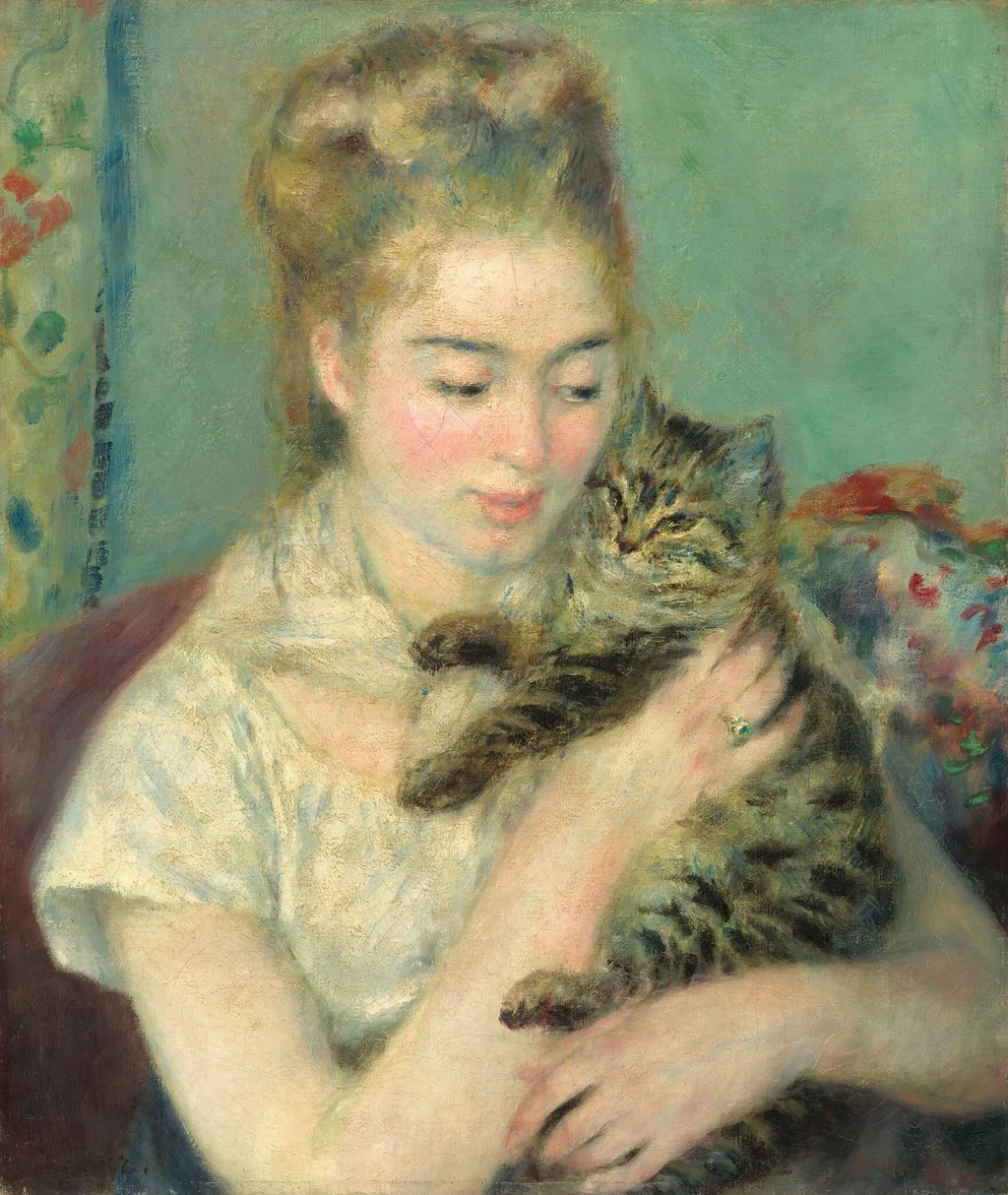
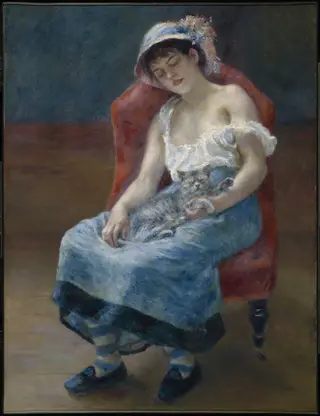
Woman with a Cat is an oil painting by the Impressionist artist Pierre-Auguste Renoir. It dates from 1875 and is held in the collection of the National Gallery of Art.
- Inscription
- Inscribed:lower left: Renoir.
About this work
Subject & Meaning
She is positioned in a softly lit, flower‑adorned space, her hand gently clasping the animal while a simple ring with an emerald appears on her finger.
The painting shows a young woman seated in an interior, cradling a domestic cat in her lap. She is positioned in a softly lit, flower‑adorned space, her hand gently clasping the animal while a simple ring with an emerald appears on her finger. The composition emphasizes a quiet, intimate moment between the sitter and her pet, suggesting themes of domestic tranquility and feminine autonomy. The delicate brushwork and careful rendering of light underscore the ordinary yet personal narrative captured by Renoir.
Technique & Style
Woman with a Cat (1875) is executed in oil on canvas, measuring 56 by 46.4 centimeters. Renoir’s technique emphasizes soft, fluid brushwork, characteristic of his Impressionist approach, which captures luminous effects and subtle tonal shifts. The handling is delicate yet assured, particularly in the rendering of the woman’s skin, the cat’s fur, and the textured fabric of her garment, where individual brushstrokes remain visible but coalesce into a cohesive whole.
The composition balances intimacy and spontaneity, with the subject seated in a floral interior, her face tilted toward the cat in an affectionate gesture. The interplay of light and shadow, along with the careful delineation of forms, such as the woman’s emerald ring and the cat’s striped coat, demonstrates Renoir’s attention to both structural precision and atmospheric effect. The painting’s condition, as housed in the National Gallery of Art, remains stable, preserving its original vibrancy.
History & Provenance
Woman with a Cat was painted by Pierre-Auguste Renoir in 1875, during the early phase of his Impressionist practice.
The work entered the market through Ernest Hoschedé, who owned it until his 1878 Paris sale, where it was bought by Count de Rasty. After the countess sold the painting in 1825/1826, it passed to Paul Rosenberg & Co., Paris, and by 1932 was with Benjamin E. Levy in Paris and Ridgefield, Connecticut. In 1950 Mr. and Mrs. Levy donated the painting to the National Gallery of Art, Washington, D.C.
The painting Woman with a Cat is held in the permanent collection of the National Gallery of Art in Washington, D.C., where it has resided since 1950. The work was accessioned as a gift from Mr. and Mrs. Benjamin E. Levy, who had acquired it in Paris by 1932. Prior to its arrival at the gallery, the painting passed through the collections of Ernest Hoschedé, Count de Rasty, and Countess de Rasty, the latter of whom sold it to Paul Rosenberg and Co. before it reached the Levys.
While the sources confirm the gallery location, accession date, and previous owners, they do not provide specific inventory numbers or a record of the work's exhibition history.
Context
Painted in 1875, the work is an oil on canvas portrait of a young woman cradling a cat while seated in an interior adorned with floral motifs. Renoir’s interest in everyday domestic scenes and his fascination with pets are reflected in this piece, which belongs to the broader Impressionist tendency to capture informal leisure activities. The painting’s provenance traces a path from its first owner, Ernest Hoschedé, through a Parisian sale in 1878 to Count de Rasty, later passing to Benjamin E. Levy, who gifted it to the National Gallery of Art in Washington, D.C., in 1950.
Its inclusion in the museum’s collection underscores the recognition of Renoir’s portraiture within the canon of 19th‑century French art.
Overview
Pierre-Auguste Renoir's 1875 oil on canvas, Woman with a Cat, captures a quiet domestic scene. The painting depicts a young woman seated, cradling a black cat in her lap. Renoir's characteristic loose brushwork defines the forms, with light playing across the figures.
This work exemplifies the artist's approach to informal portraiture during a pivotal period in his career. It is housed at the National Gallery of Art.
Own this work as a print
Artist & collection
Artist
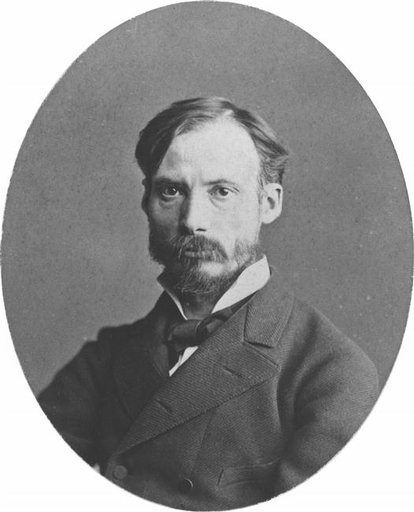
Pierre-Auguste Renoir was a French artist who was a leading painter in the development of the Impressionist style.