Artwork
The poet crowned by two apes at the feast of the animals
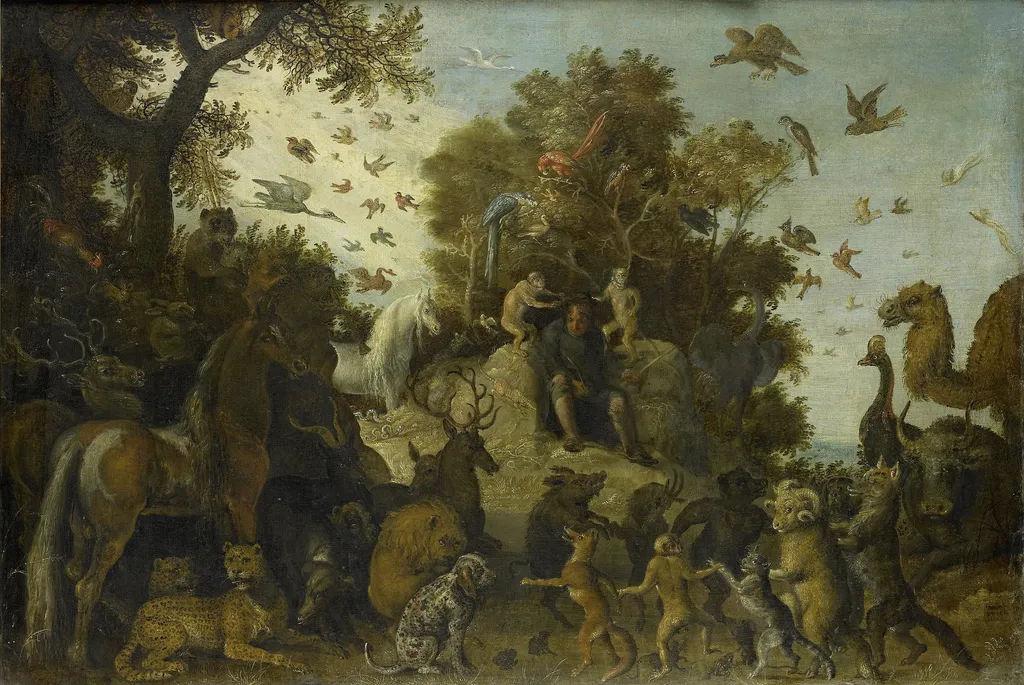
The poet crowned by two apes at the feast of the animals is an oil painting by the Dutch Golden Age artist Roelant Savery. It dates from 1623 and is held in the collection of the Rijksmuseum.
About this work
Subject & Meaning
He is surrounded by a crowd of native and exotic animals, including a bear playing bagpipes and others on flutes, with a group dancing in the foreground.
The painting depicts a seated man holding a quill and staff while two monkeys place a laurel wreath on his head. He is surrounded by a crowd of native and exotic animals, including a bear playing bagpipes and others on flutes, with a group dancing in the foreground. While the scene recalls Roelant Savery's Orpheus themes, the central figure is passive while the animals make music, suggesting a satirical intent regarding the crowning by apes.
Art historian Maarten Wurfbain interpreted the work as a self-portrait of Savery being honored by imitators. Alternatively, Kurt Müllenmeister views the composition as a parody of Apollo and the Muses, citing the nine dancing animals and the laurel wreath. Despite these theories, the precise meaning of the iconography remains unknown.
Technique & Style
The work is an oil painting executed on canvas, measuring 56.5 by 82 cm. It is signed and dated in the lower right corner with the inscription '·ROELAND· / SAVERY / [FE] 16[23]', indicating a date of 1623.
Stylistically, the composition departs from Roelant Savery's typical manner: the arrangement and handling differ enough from other works attributed to him that the attribution to Savery himself is considered uncertain. The painting is thought to belong to a group of works from the 1620s in which Savery depicted Orpheus charming the animals, though here the animals rather than the central figure make music, lending the scene a satirical edge reinforced by the monkeys' act of crowning the poet. One art historian has read a curiously coiled serpent left of center as concealing the letters S and E, a detail used to argue for alternative authorship by followers rather than Savery himself.
History & Provenance
The painting is signed and dated 1623 by Roelant Savery, though its attribution remains debated; some scholars propose workshop collaborators such as Quirijn van Slingelant and Aernout Elsevier, or even Hans Savery the Younger, based on stylistic divergences from Savery’s typical works.
It entered the collection of the Rijksmuseum Amsterdam in 1875, purchased from L. Hamming for 350 gulden. In 1999 the Rijksmuseum transferred the work on long-term loan to the Bonnefantenmuseum in Maastricht, where it remains.
The painting is currently held by the Bonnefanten Museum in Maastricht, where it has been on loan since 1999. Prior to this transfer, the work was part of the collection of the Rijksmuseum in Amsterdam. The Rijksmuseum originally acquired the piece in 1875 from a seller identified as L. Hamming for the sum of 350 guilders.
While the work is associated with both institutions in records, its physical location and current custodianship reside with the Bonnefanten Museum.
Context
Scholarly debate surrounds the authorship and meaning of The Poet Crowned by Two Apes at the Feast of the Animals. Some art historians propose that the work was produced not by Roelant Savery himself but by followers such as Quirijn van Slingelandt and Aernout Elsevier, citing stylistic divergences and an inscription interpreted as the letters S and E in a coiled snake as evidence.
Interpretations of iconography vary: Maarten Wurfbain suggested a satirical reading in which Savery is crowned by imitators, while Kurt Müllenmeister proposed a parodic inversion of Apollo and the Muses, noting the nine dancing animals and laurel crown. The painting’s alignment with Savery’s Orpheus-themed works of the 1620s underscores its engagement with animal music and human subordination within a broader tradition of allegorical landscape.
Overview
Created in 1623 by the Flemish‑born Dutch painter Roelant Savery, this oil on canvas belongs to the landscape tradition of the Dutch Golden Age. The work is part of the Rijksmuseum’s collection and depicts a fantastical gathering in which a robed figure is crowned by two apes while a multitude of animals observe the ceremony.
Own this work as a print
Artist & collection
Artist
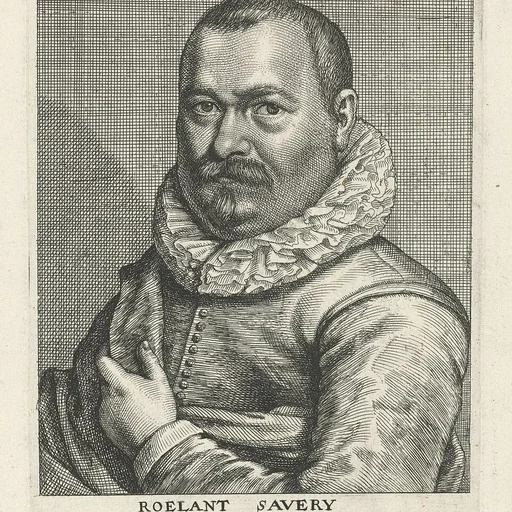
Roelant Savery (or Roeland(t) Maertensz Saverij, or de Savery, or many variants; 1576 – buried 25 February 1639) was a Flanders-born Dutch Golden Age painter.

 Große Landschaft mit Tieren
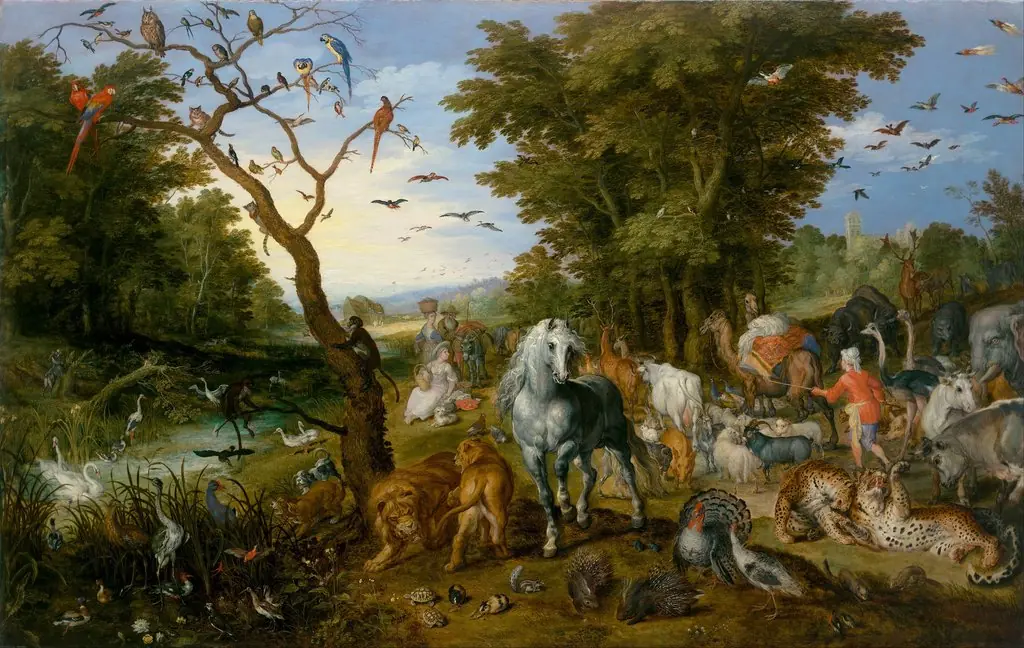 The Entry of the Animals into Noah's Ark
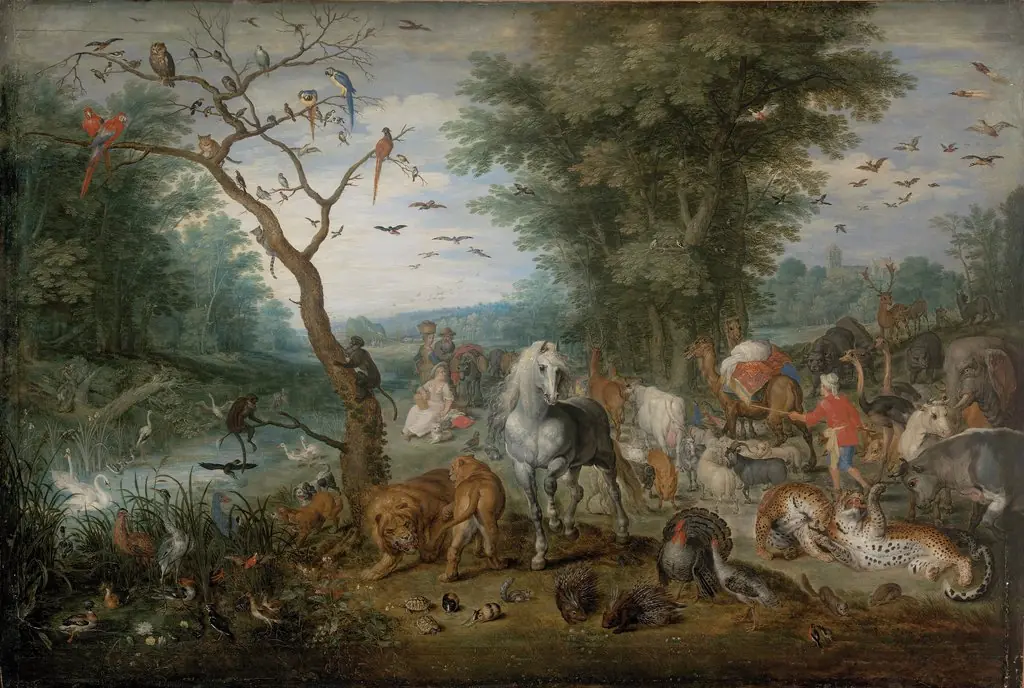 Paradise Landscape with Animals
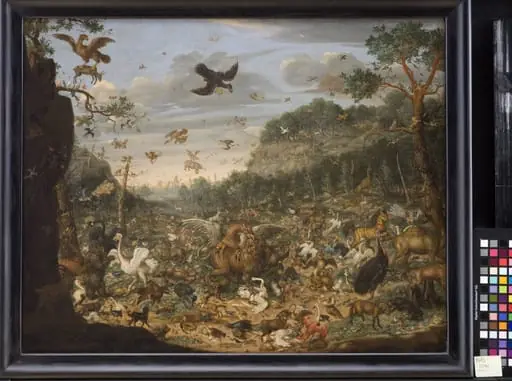 The Earth after the Fall of Man
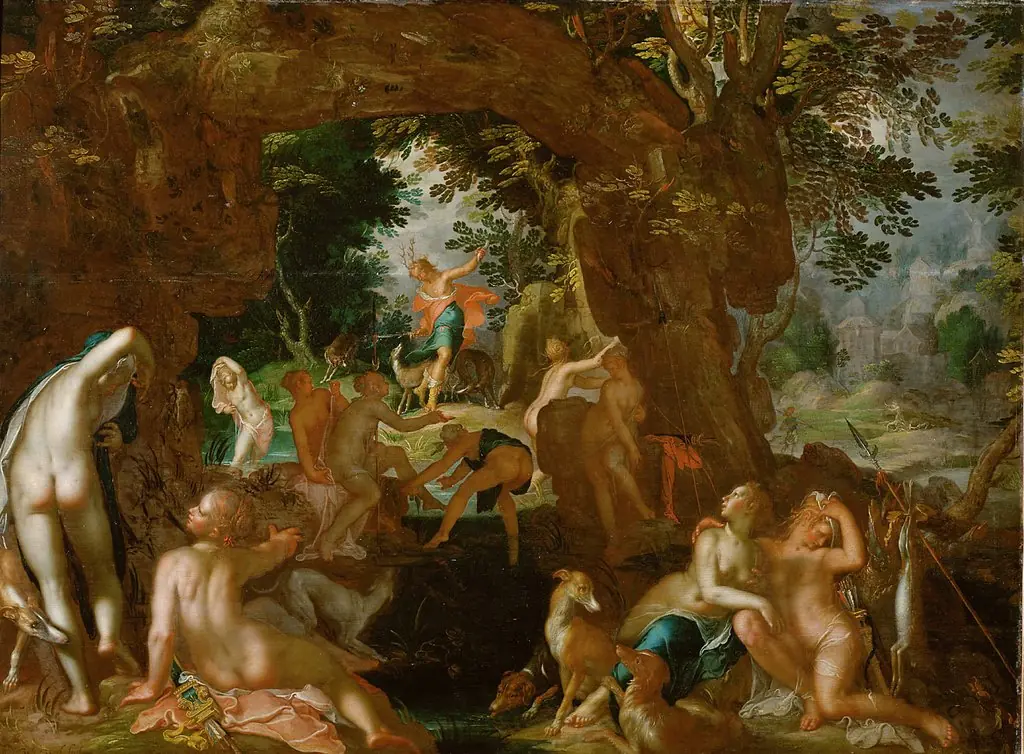 Actaeon is changed into a stag and killed by his own dogs
 Landscape with a rainbow
 Die Erde (aus der Folge der Vier Elemente)
 The Triumph of Bacchus
 Landscape with Diana and Acteon