Artwork
Self-Portrait with a Harp
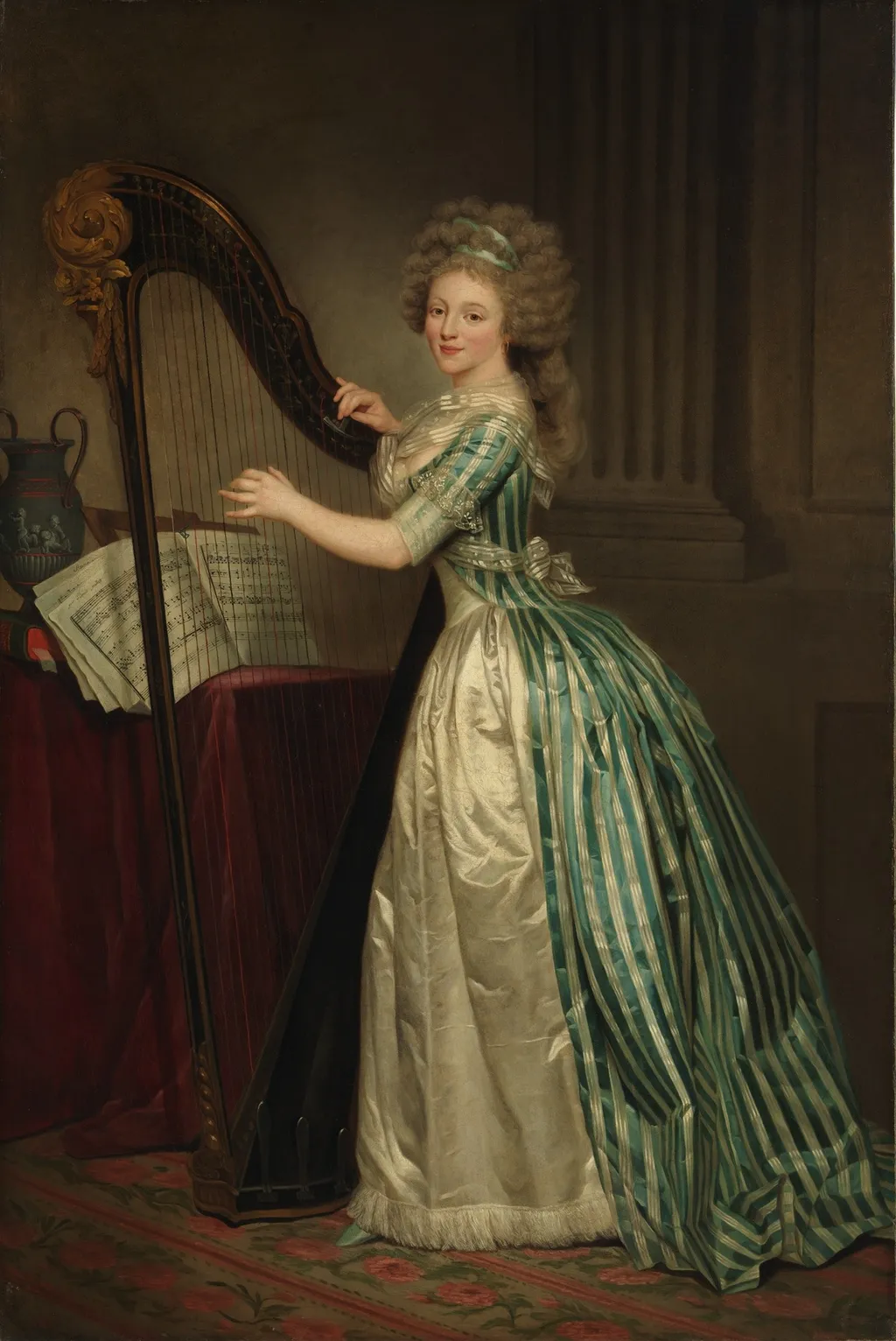
Self-Portrait with a Harp is an oil painting by the Academic Art artist Rose-Adélaïde Ducreux. It dates from 1796 and is held in the collection of the Metropolitan Museum of Art.
About this work
At the 1791 Paris Salon, Rose-Adelaide Ducreux showed a life-size self-portrait, seated at an ebony harp with gilt-bronze fittings, fingers on the strings and rich fabrics around her. The oil on canvas stands nearly two meters high. She trained in her father Joseph Ducreux's studio and worked as both painter and musician.
Subject & Meaning
The harp functions as a symbol of feminine accomplishment and musical skill, reinforcing the genteel qualities prized in women of her era.
Self‑Portrait with a Harp shows Rose‑Adélaïde Ducreux standing life‑size, dressed in an elegant silk gown, as she plays a harp while a sheet of music, a decorative vase and a book lie on a nearby table. The harp functions as a symbol of feminine accomplishment and musical skill, reinforcing the genteel qualities prized in women of her era. The sheet music and the book signal her education and intellectual refinement, and the vase adds a note of cultivated taste.
Rendered in a Neoclassical style, the portrait presents the artist not merely as a beautiful sitter but as a talented musician and educated woman, using her beauty, charm and artistic ability to claim a respected place in a profession then dominated by men.
Technique & Style
Executed in 1791, this life-sized standing portrait is an oil painting on canvas created in the Neoclassical style. The composition features the artist draped in a luxurious silk gown, with the rendering of the fabric noted by contemporary critics for its realism. The harp functions as a prop to highlight the female form, while a tuning hammer is included to emphasize the subject's musical proficiency rather than her painting skills.
Additional elements such as a decorative vase, a novel, and sheet music identified as a romance by Benoit Pollet enhance the depiction of enlightenment and refinement. Although the work dates to 1791, the somewhat outdated style of the harp and the clothing has led some scholars to suggest the image may have been conceived prior to its Salon exhibition. The artist did not sign the piece, leading to historical misattributions before its correct identification.
History & Provenance
Created in 1791 by Rose-Adélaïde Ducreux, this self-portrait debuted at the Salon of the Louvre that year, marking one of her first public exhibitions following the opening of the Salon to non-Académie members. Although initially misattributed to Antoine Vestier during an 1898 sale and later to Élisabeth Vigée Le Brun by dealer Nathan Wildenstein in 1902, Joseph Baillio correctly identified Ducreux as the artist based on 1791 Salon records. The work appeared in a 1902 London exhibition of French and English painters before entering the private collection of David H. King Jr. in 1905.
It remained with King until 1938, when it was sold to Susan Dwight Bliss. Some scholars suggest the painting may have been executed prior to its 1791 exhibition date due to the depicted harp's older style and the subject's attire.
The painting Self-Portrait with a Harp is held by the Metropolitan Museum of Art in New York, where it is listed in the museum’s collection. It was first shown publicly at the 1791 Salon of the Louvre, displayed alongside a work by the artist’s father. The work later appeared in the 1902 exhibition “Selection of Works by French and English Painters of the Eighteenth Century” at the Art Gallery of the Corporation of London.
After that exhibition it was sold to David H. King Jr. in 1905 and, in 1938, entered the collection of Susan Dwight Bliss before eventually joining the Met’s holdings.
Context
Rose-Adélaïde Ducreux, trained by her father Joseph Ducreux, portraitist of Marie Antoinette, debuted at the Salon of the Louvre in 1791, the year the Salon opened to non-Académie artists, exhibiting Self-Portrait with a Harp alongside her father. Contemporary critics received the self-portrait favorably, citing the realism of the fabric drawing and the artist's graceful bearing. Because Ducreux did not sign her paintings, the work was initially misattributed to Antoine Vestier at an 1898 sale, then to Élisabeth Vigée Le Brun when sold by dealer Nathan Wildenstein in 1902, before Joseph Baillio correctly reattributed it through the 1791 Salon description.
Scholar Albert Pomme de Mirimonde identified the sheet music as a romance by Benoit Pollet and, noting the harp's outdated form, argued the canvas was painted well before its 1791 exhibition. Painted in a Neoclassical style, the work stands as a key example of female self-representation in late-eighteenth-century French art.
Legacy
Self-Portrait with a Harp has secured a lasting place in the study of women artists of the eighteenth century. Long unattributed to Ducreux, the painting was initially credited to Antoine Vestier at its 1898 sale and later to Élisabeth Vigée Le Brun when offered by dealer Nathan Wildenstein in 1902; scholar Joseph Baillio subsequently reassigned it to Ducreux by matching it to the 1791 Louvre Salon description. The work's Neoclassical depiction of a female painter-musician has made it a frequently cited example of how women constructed a feminine artistic persona in an era when painting was considered a masculine pursuit.
It is held today in the Metropolitan Museum of Art and continues to be referenced in scholarship on Ducreux and on women in academic art.
Overview
Rose-Adélaïde Ducreux's Self-Portrait with a Harp, painted in 1791, presents the artist in a formal pose. This oil on canvas work, now part of the Metropolitan Museum of Art's collection, served as a significant public statement. It debuted at the influential Paris Salon, where Ducreux introduced herself as both a skilled painter and an accomplished musician through this large-scale self-representation.
Own this work as a print
Artist & collection
Artist
Rose-Adélaïde Ducreux (1761 – July 26, 1802) was a French painter and musician, born in Paris.

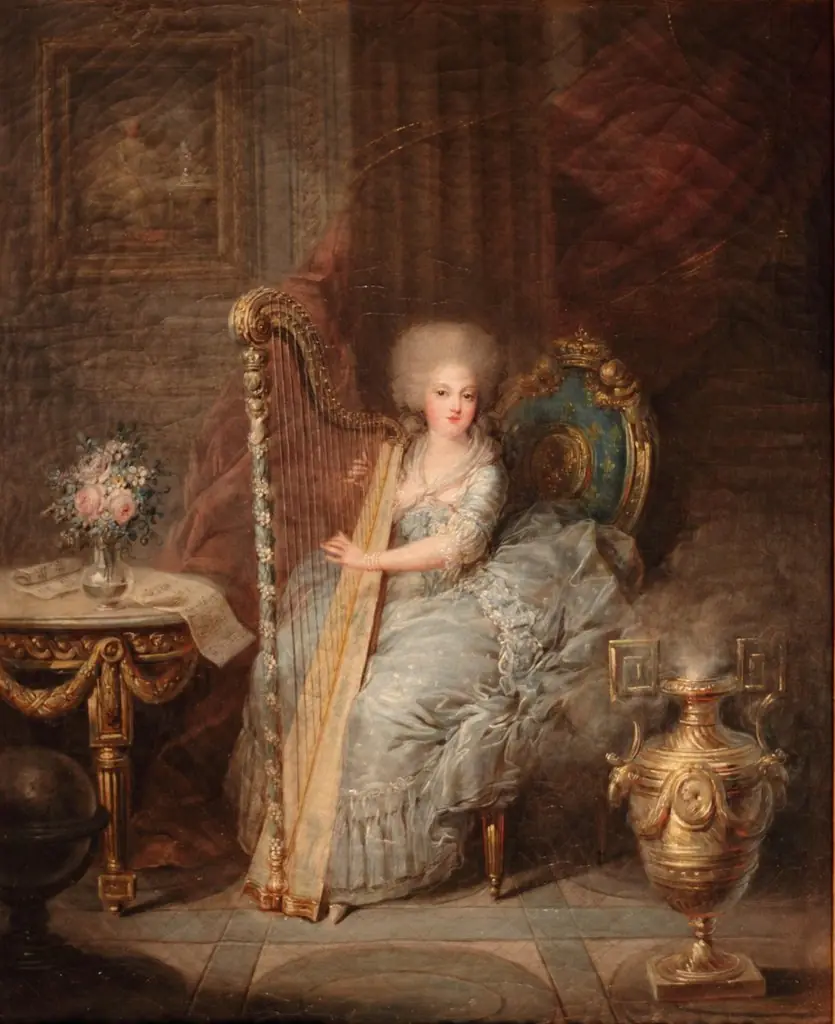
- Élisabeth of France seated at her Harp
 Madame Desroches
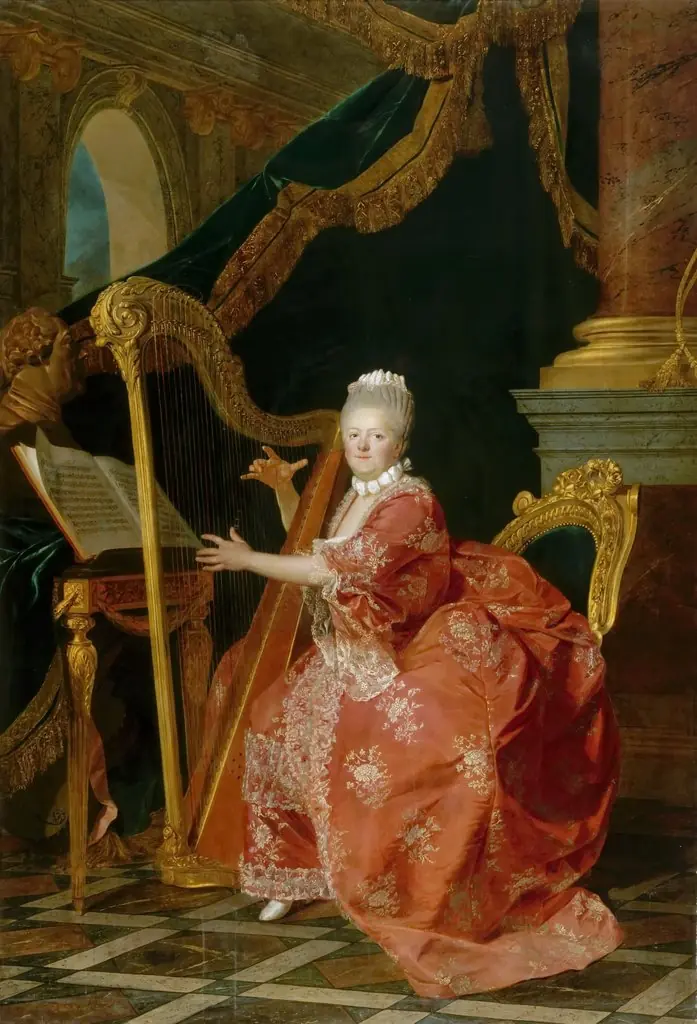 Portrait of Princess Victoire of France playing her harp
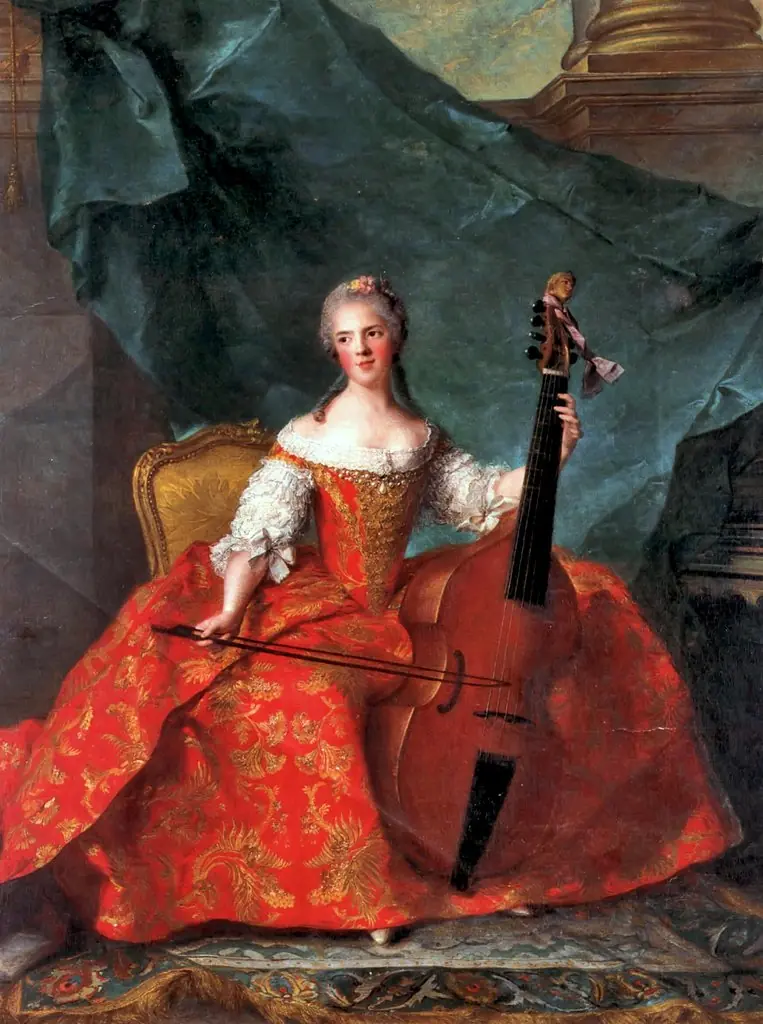 Anne-Henriette de France
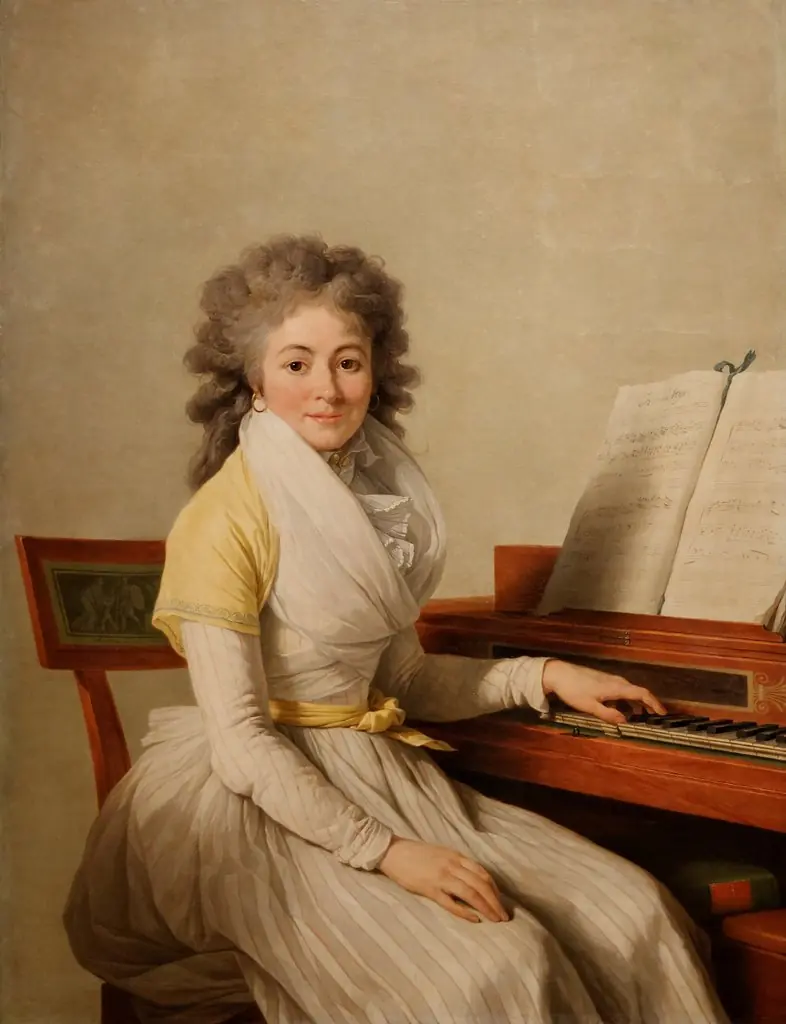 Portrait de Mademoiselle Duplant
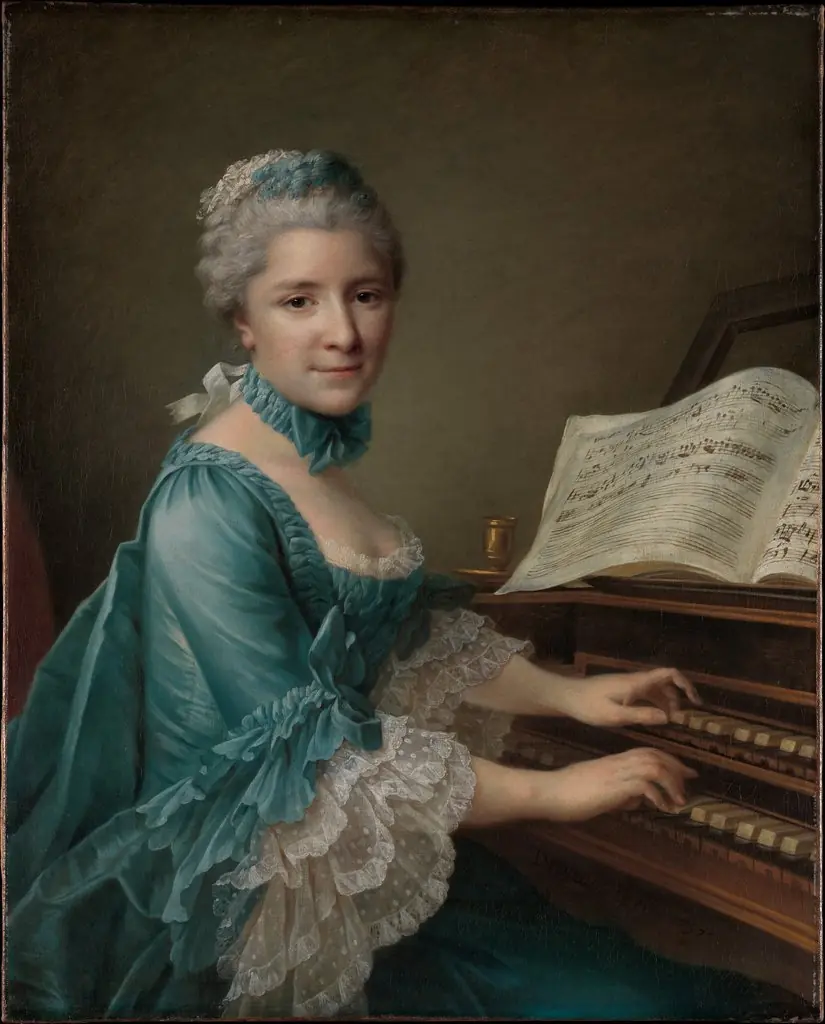 Portrait of a Woman, Said to be Madame Charles Simon Favart (Marie Justine Benoîte Duronceray, 1727–1772)
 Maria Luisa of Parma (1751–1819), Later Queen of Spain
 Madame Clotilde playing the guitar
 Madame Louise of France
 Portrait of Marianne Dorothy Harland (1759–1785), Later Mrs. William Dalrymple
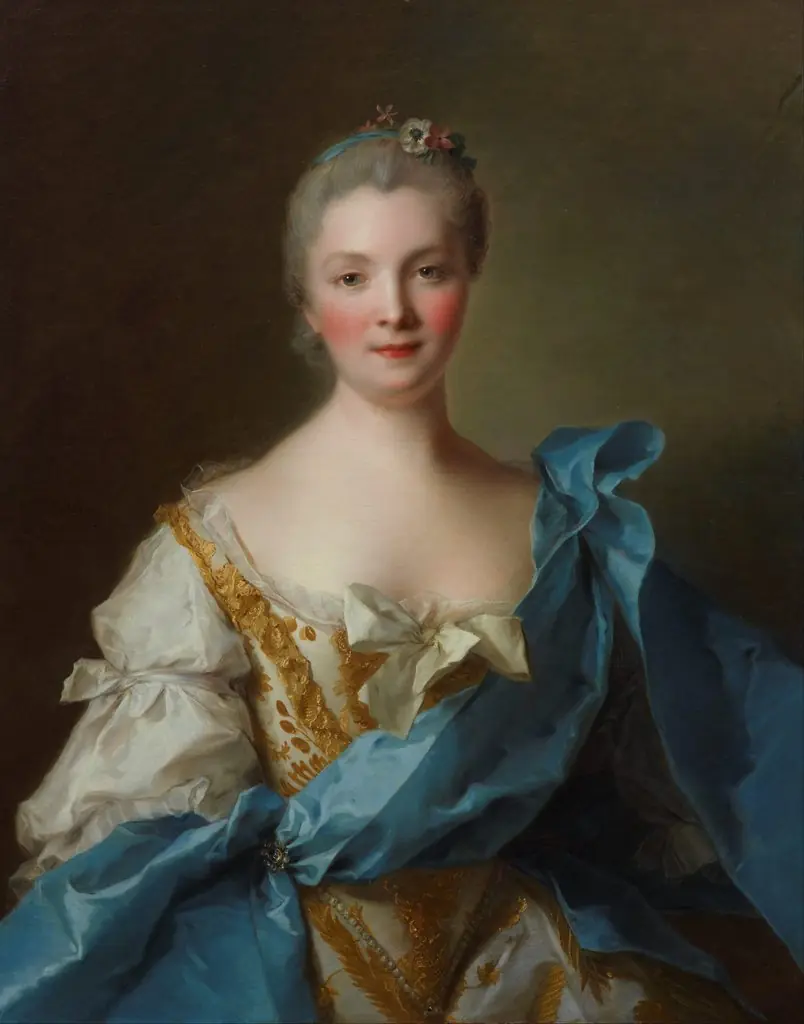 Madame de La Porte
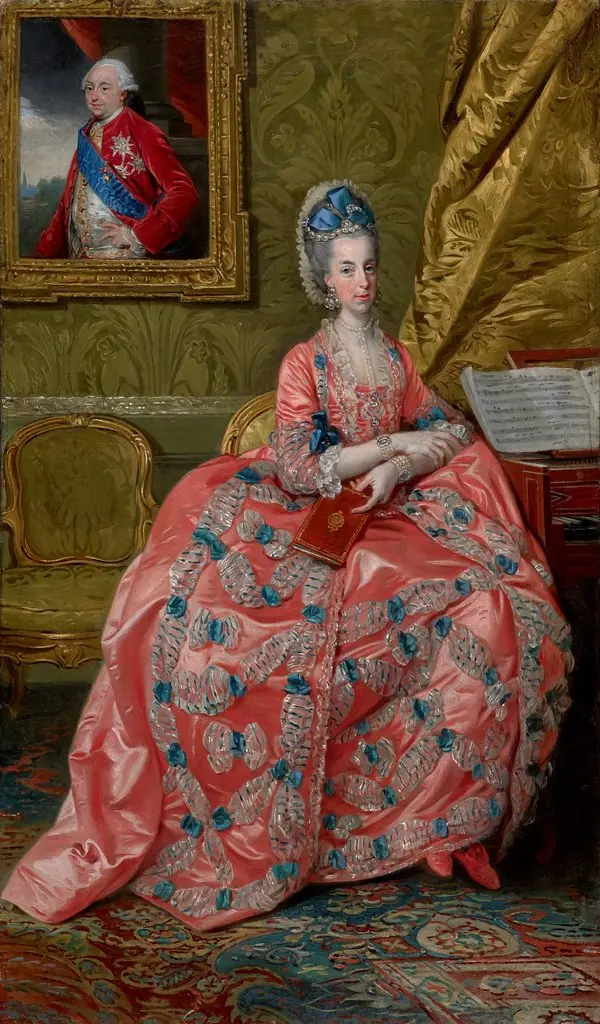 Portrait of the Archduchess Maria Amalia of Austria, Duchess of Parma