Artwork
Bridge to Cox's Farm, Ashopton
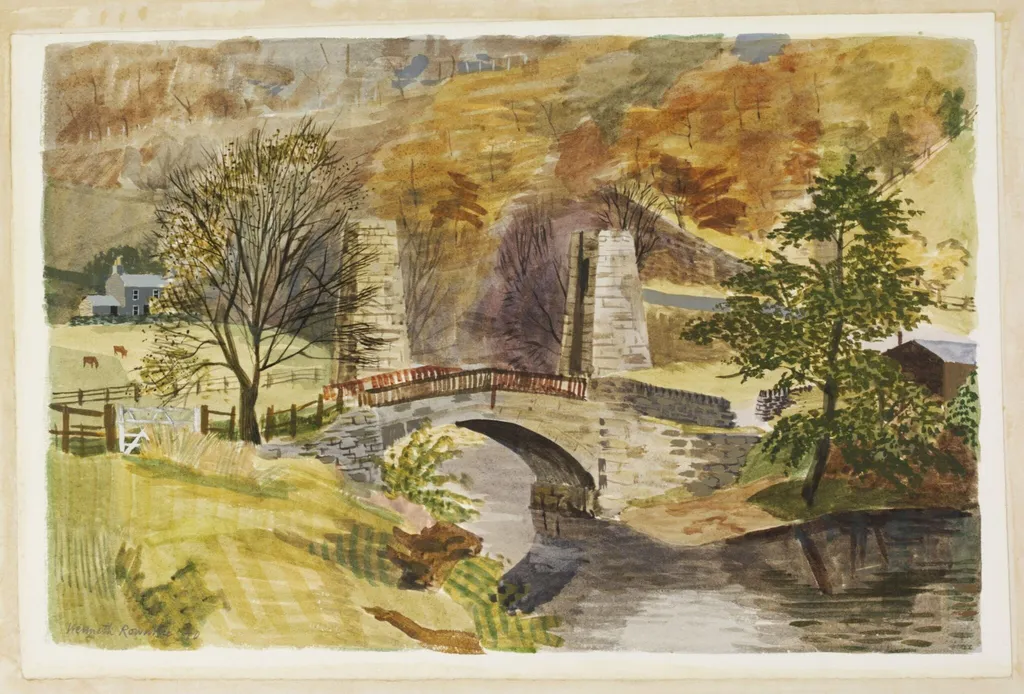
Bridge to Cox's Farm, Ashopton is a watercolor work on paper by the Regionalist artist Rowntree. It dates from 1940 and is held in the collection of the Victoria and Albert Museum.
About this work
Overview
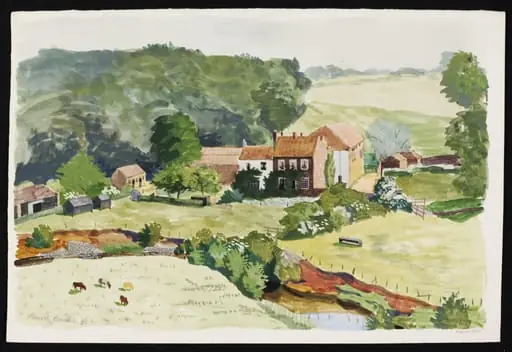
Bridge to Cox's Farm, Ashopton is a 1940 watercolour by Rowntree, capturing a serene rural scene in Ashopton, featuring a stone bridge, Cox's Farm, and surrounding wooded hills.
Subject & Meaning
The painting portrays a tranquil landscape with a bridge over a small stream, flanked by trees (one bare), leading the viewer's eye to Cox's Farm in the background, where horses graze in a field against rolling hills. The warm color palette evokes a crisp autumn day, conveying coziness and tranquility.
Technique & Style
Rowntree's watercolour technique in this piece emphasizes soft, warm hues to create a sense of serenity, characteristic of traditional British landscape painting, with attention to detail in the natural setting.
History & Provenance
Commissioned under the 'Recording Britain' project (1940), led by Sir Kenneth Clark, funded by the Pilgrim Trust, and administered by the Ministry of Labour and National Service, to document Britain's changing landscape during WWII.
Context
Part of a broader effort to preserve visual records of rural Britain, perceived as vulnerable to wartime changes and modernization, alongside works by other artists in the project, now often compared to collections like the Victoria and Albert Museum's landscape holdings.
Legacy
Contributes to the historical visual archive of Britain's wartime landscape, reflecting the project's goal of capturing traditional settings, with its style and subject matter aligning with the broader tradition of British landscape art.
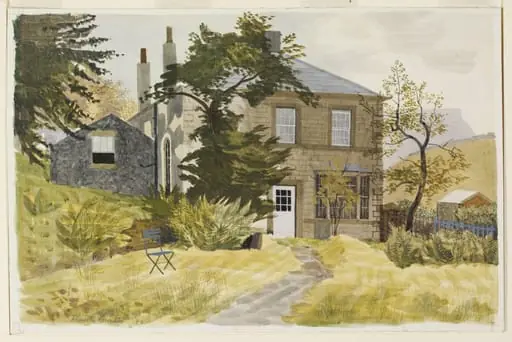
Artist & collection

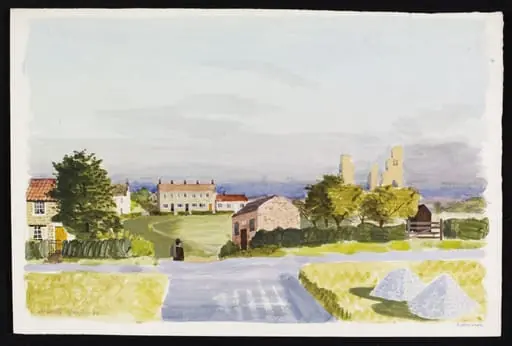
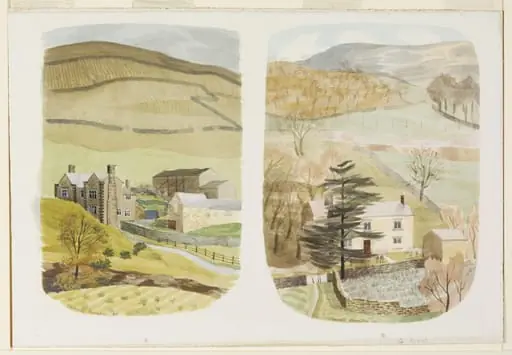
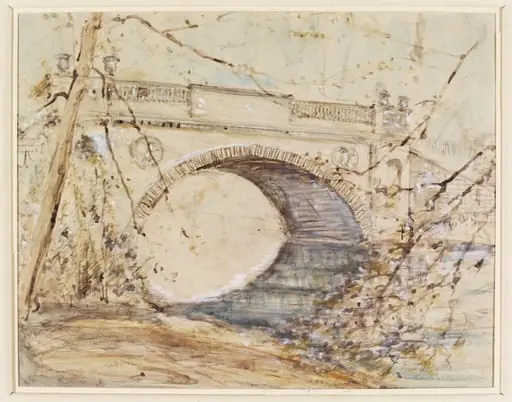 The Bridge in Chiswick House Grounds
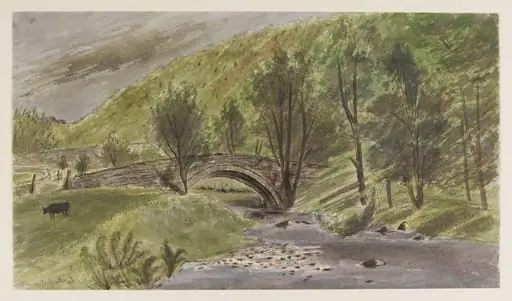 Dol-y-moch Bridge in the Maentwrog Valley, Merionethshire
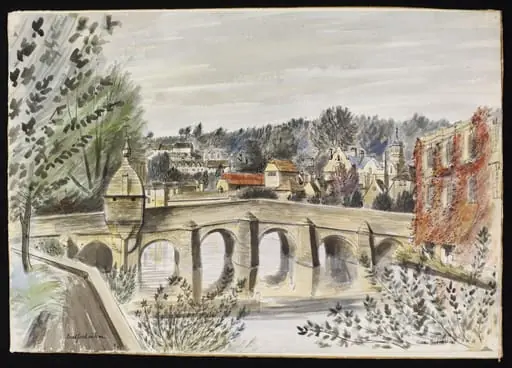 View of Bradford-on-Avon, with the bridge in the foreground
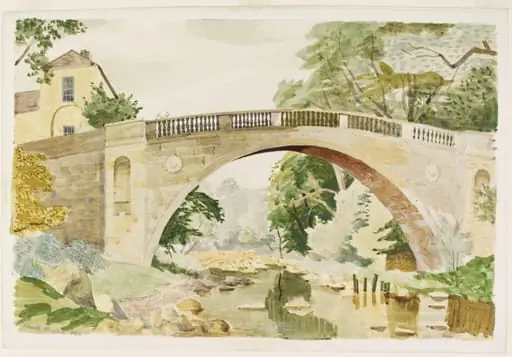 Greta Bridge
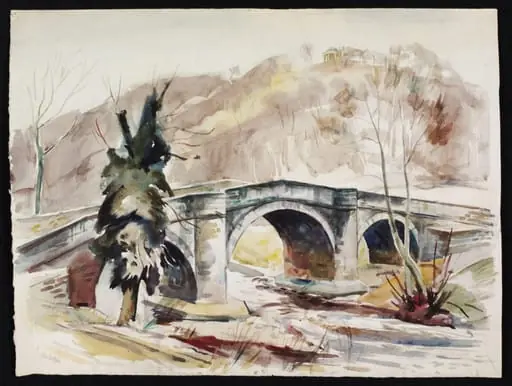 Ashberry Bridge (South side), Rievaulx
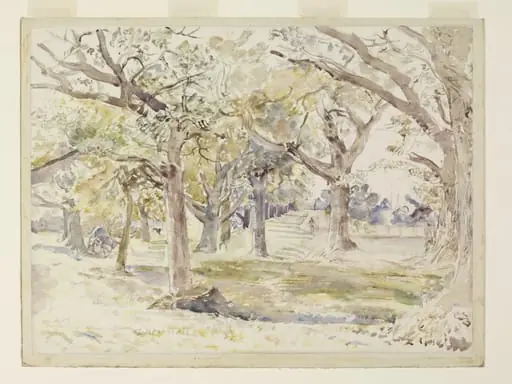 The Avenue, Bucklebury
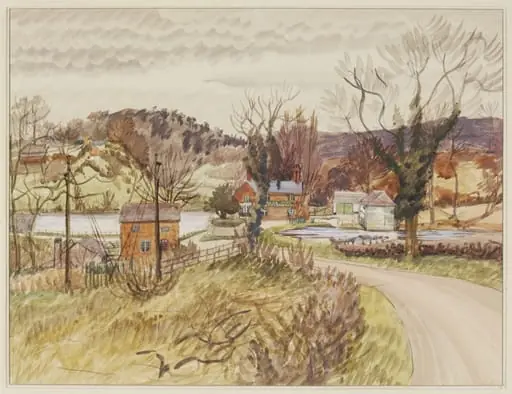 Looking towards The Boar Inn, near Modishall
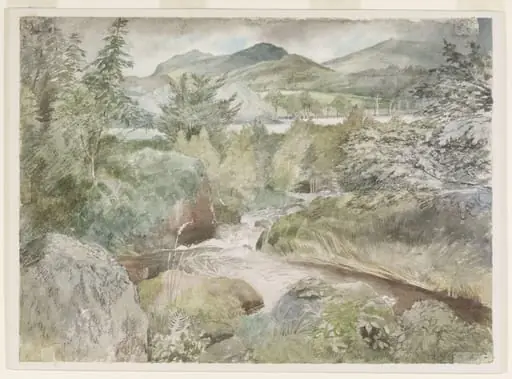 Garn Dolbenmaen, Caernarvonshire
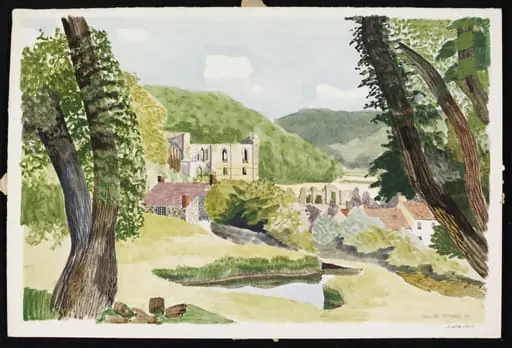 Distant view of Rievaulx Abbey
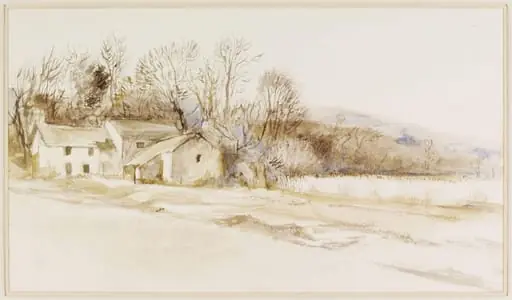 Old Mill, Clynne Valley, Gower, Glamorganshire