Artwork
Untitled
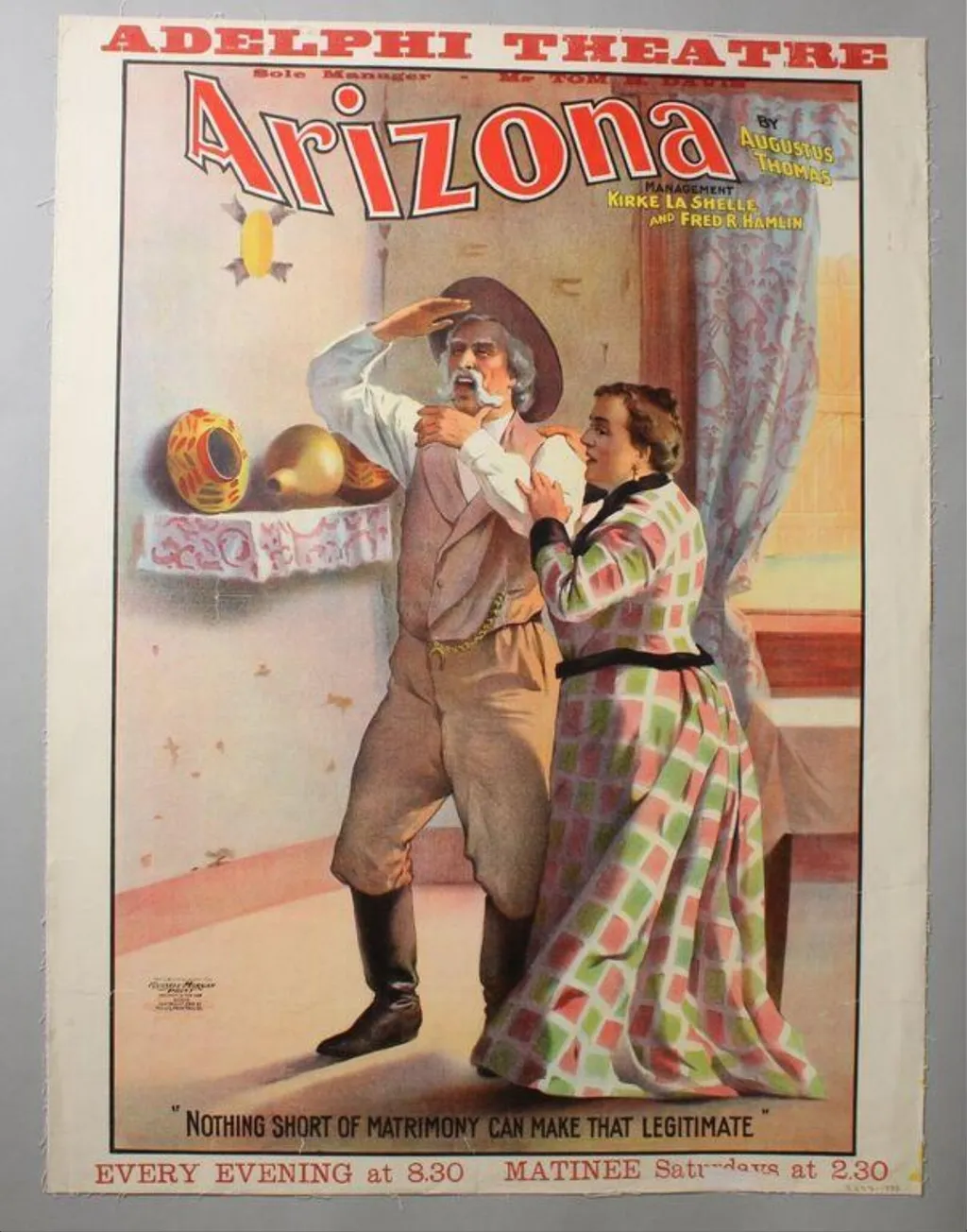
Untitled is a poster by Russell-Morgan Print. It dates from 1903 and is held in the collection of the Victoria and Albert Museum. This 1903 poster promotes the London staging of Augustus Thomas’s play Arizona at the Theatre Royal, Adelphi.
About this work
Overview
This 1903 poster promotes the London staging of Augustus Thomas’s play Arizona at the Theatre Royal, Adelphi. Designed as a commercial advertisement, it pairs a vivid scene of two figures in a sunlit outdoor setting with a provocative textual hook. The composition uses bold typography and illustrative detail to capture attention, typical of early 20th-century theatrical advertising in Britain.
Subject & Meaning
The accompanying phrase, 'Nothing short of matrimony can make that legitimate,' alludes to the play’s narrative around social norms and marital legitimacy.
The poster depicts a man and woman in a moment of intimate proximity, their posture suggesting a social or romantic tension. The accompanying phrase, 'Nothing short of matrimony can make that legitimate,' alludes to the play’s narrative around social norms and marital legitimacy. The imagery avoids literal representation of the plot, instead evoking its central moral dilemma through gesture and context.
Technique & Style
The design employs flat, saturated colors and simplified forms to create a lively, accessible image. The figures are rendered with clear outlines and decorative patterning on the woman’s skirt, while the background suggests a rustic outdoor space with minimal detail. Text is integrated as a structural element, not an add-on, with bold lettering framing the scene to guide the viewer’s eye.
History & Provenance
Produced for the 1903 London run of Arizona, the poster was likely printed in limited quantities for display around the Adelphi Theatre district. It reflects the era’s growing use of color lithography in theatrical promotion. The poster is now held in the Victoria and Albert Museum’s collection, where it contributes to the study of early modern graphic design and performance culture.
Context
In early 1900s Britain, theater posters were key tools for attracting urban audiences. This design aligns with trends favoring narrative suggestion over literal depiction, balancing visual appeal with textual intrigue. The play itself, set in the American Southwest, tapped into contemporary fascination with frontier romance and social propriety, themes mirrored in the poster’s suggestive imagery.
Legacy
The poster stands as an example of how commercial art began to merge storytelling with visual design in public advertising. Its preservation in institutional collections highlights its value as a cultural artifact, illustrating the intersection of theater, gender norms, and graphic communication at the dawn of the 20th century.
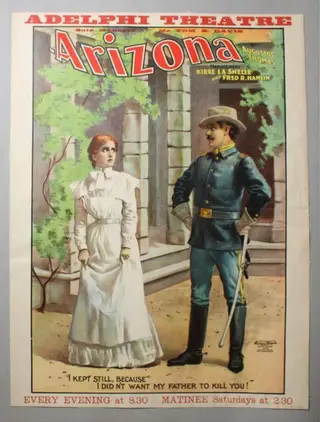
Artist & collection
Artist
This artist created bold, graphic posters at the turn of the 20th century. Their untitled works from 1902 to 1904 use striking colors and sharp contrasts, likely advertising products or events with clean, eye-catching…

 H Beard Print Collection
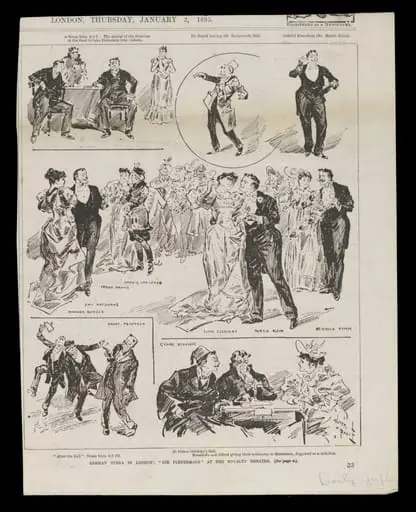 H Beard Print Collection
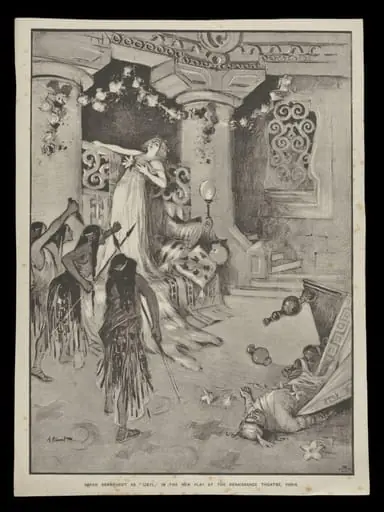 H Beard Print Collection
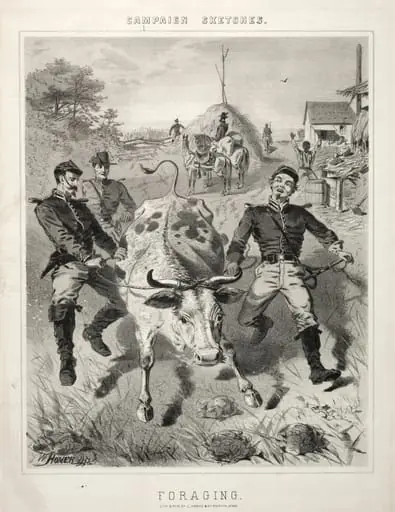 Campaign Sketches: Foraging
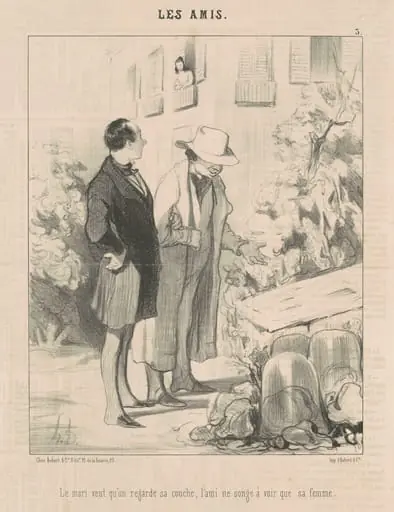 Le mari veut qu'on regarde sa couche ...
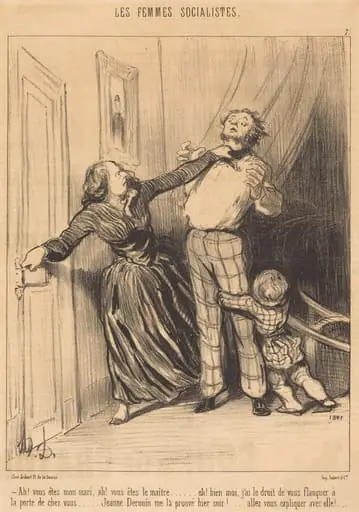 Ah! vous êtes mon mari, ah! vous êtes le maître...
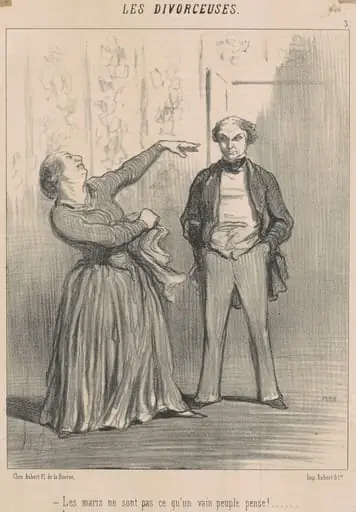 Les maris ne sont pas ce qu'un vain peuple pense!
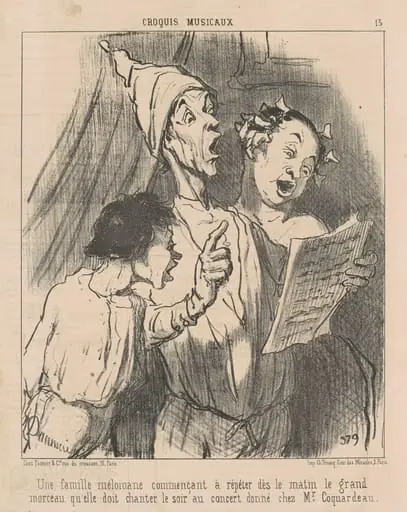 Une famille mélomane ...
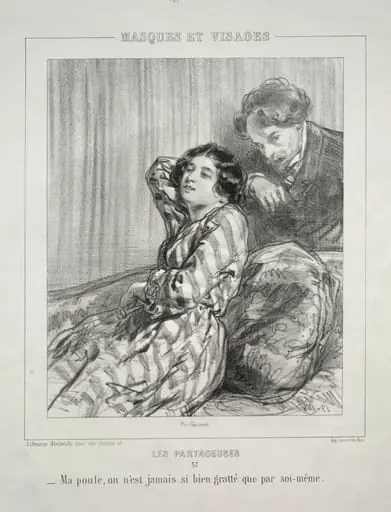 Les Partageuses
 H Beard Print Collection