Artwork
Darieu
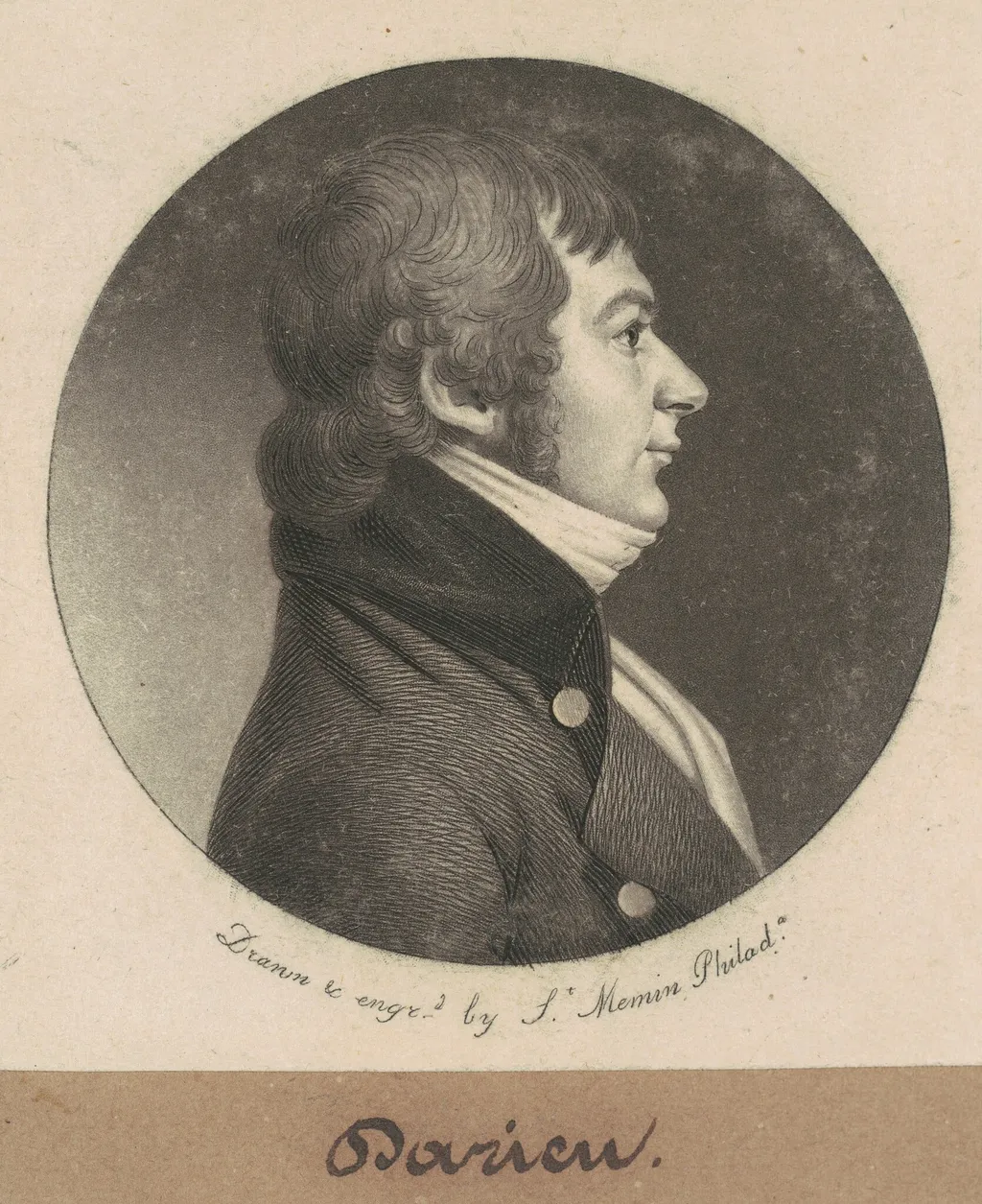
Darieu is an ink print by the Romanticist artist Charles B. J. Févret de Saint-Mémin. It dates from 1800 and is held in the collection of the National Gallery of Art. Created in 1800 by Charles B.
- Inscription
- Inscribed:lower center in plate: Drawn & engrd. by St. Memin Philada.; lower center mount in black ink by unknown hand: Darieu.
About this work
Overview
Measuring just over five and a half centimeters in both dimensions, it belongs to the National Gallery of Art’s collection.
Created in 1800 by Charles B. J. Févret de Saint-Mémin, 'Darieu' is a small portrait print in black ink on wove paper, mounted to a brown wove support. Measuring just over five and a half centimeters in both dimensions, it belongs to the National Gallery of Art’s collection. The work combines mezzotint and engraving techniques, a method Saint-Mémin employed to achieve fine tonal gradations and precise linear detail in portrait miniatures.
Subject & Meaning
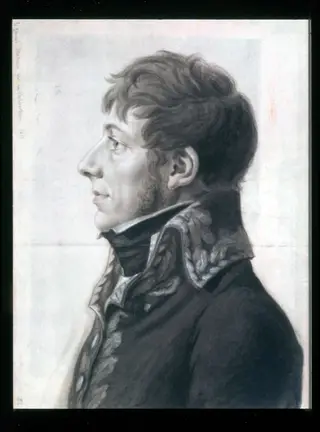
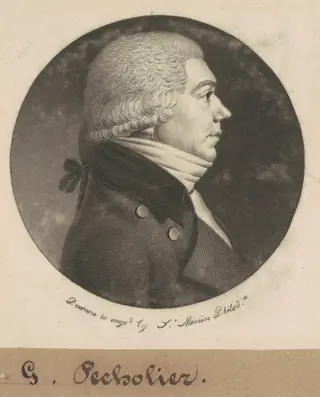
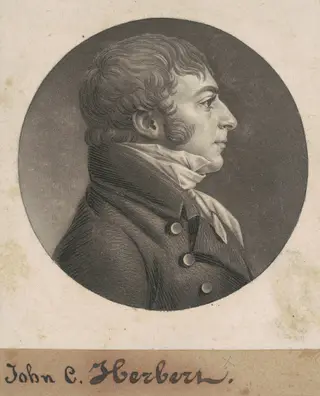
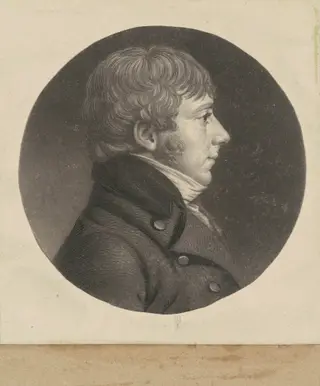
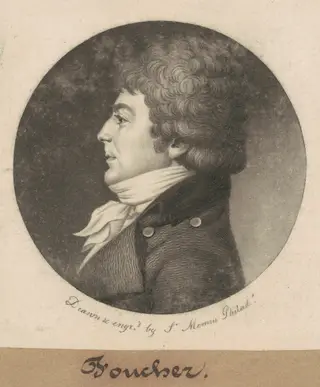
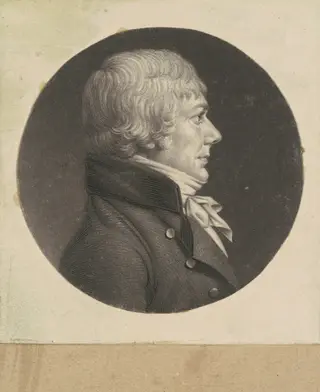
The portrait depicts a man named Darieu, rendered in strict profile, a convention often used for formal identification in the early 19th century. The lack of contextual elements focuses attention solely on the sitter’s facial structure and demeanor. No inscription or symbolic attributes accompany the image, suggesting its purpose was likely personal or archival rather than commemorative.
Technique & Style
Saint-Mémin used mezzotint to create soft tonal transitions across the sitter’s skin and hair, while engraving defined sharp contours and fine details such as the collar and the edge of the profile. The combination allowed for both atmospheric depth and crisp delineation within a miniature format. The print’s small scale and monochrome palette reflect the precision demanded by the medium and the artist’s training in scientific portraiture.
History & Provenance
The print entered the National Gallery of Art’s collection as part of a broader acquisition of Saint-Mémin’s graphic works. Its provenance prior to institutional ownership is not publicly documented, but its condition and mounting suggest careful preservation since its creation. As a product of Saint-Mémin’s American period, it aligns with his practice of producing portrait prints for elite patrons in the early United States.
Context
In the early 1800s, profile portraits in print were widely used for personal and institutional records, especially before photography. Saint-Mémin, a French émigré, became known in the U.S. for his technical precision and use of mechanical aids like the physiognotrace. 'Darieu' exemplifies this trend, reflecting a cultural emphasis on accurate, reproducible likenesses among educated elites.
Legacy
Saint-Mémin’s prints, including 'Darieu,' remain significant for their technical innovation and role in early American visual culture. Though not widely exhibited, they are studied for their fusion of artistic skill and mechanical reproduction. The work contributes to understanding how portraiture functioned as both art and documentation in a pre-photographic era.
Own this work as a print
Artist & collection
Artist
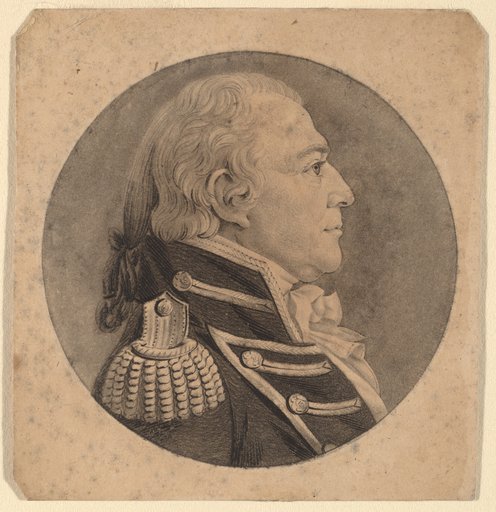
Charles B. J. Févret de Saint-Mémin
Charles Balthazar Julien Févret de Saint-Mémin (French pronunciation: ; 1770–1852) was a French portrait painter and museum director.