Artwork
Thorndyke
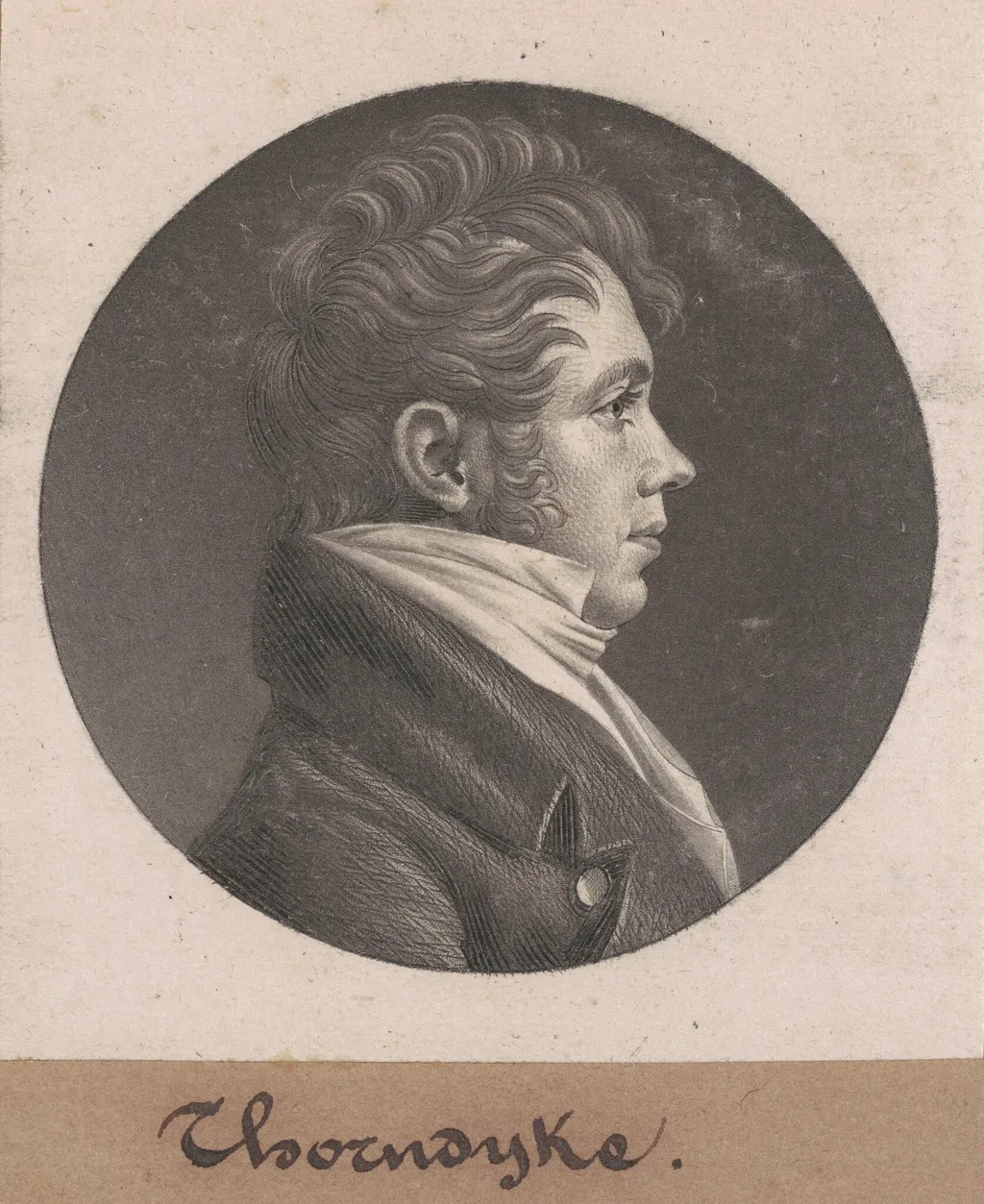
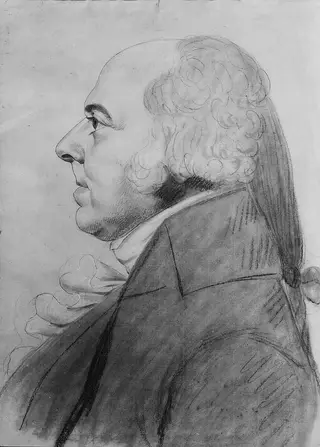
Thorndyke is an ink print by the Romanticist artist Charles B. J. Févret de Saint-Mémin. It dates from 1803 and is held in the collection of the National Gallery of Art.
- Inscription
- Inscribed:lower center mount in black ink by unknown hand: Thorndyke
About this work
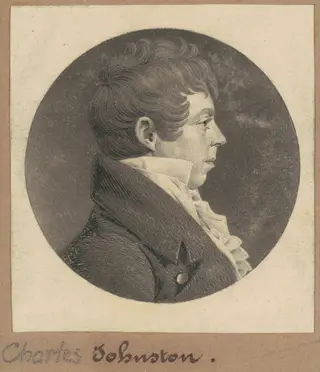
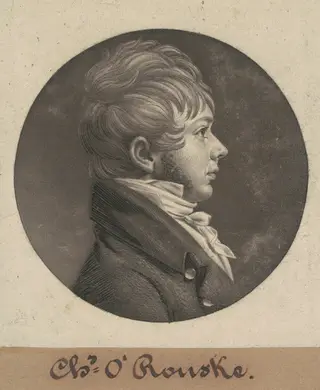
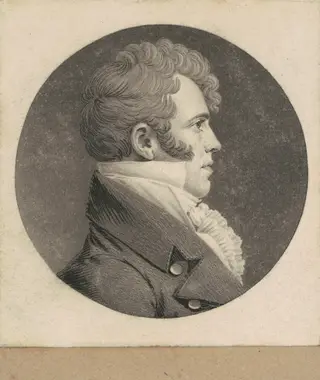
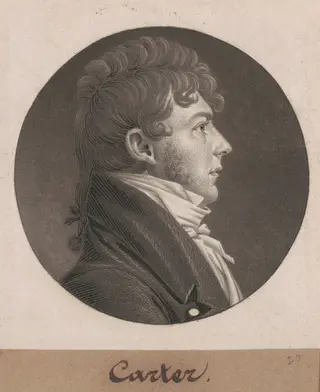
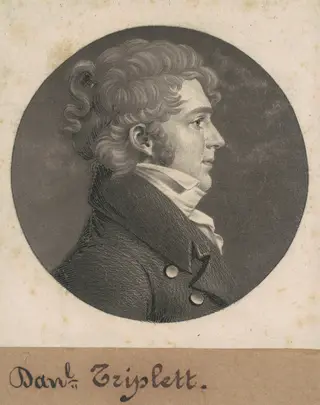
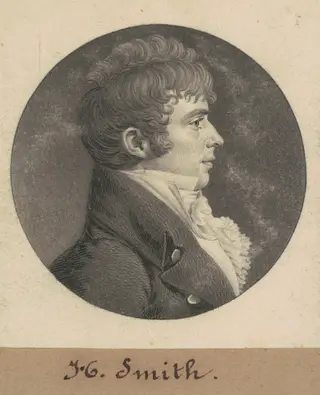
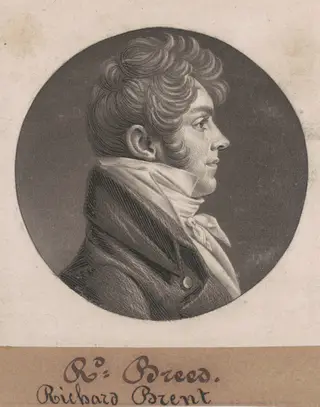
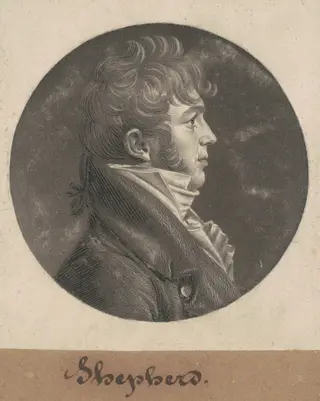
The print shows a man’s head in shadow, three-quarter view, white ruffled collar popping against dark coat.
The print shows a man’s head in shadow, three-quarter view, white ruffled collar popping against dark coat. His gaze drifts past the frame, giving him quiet authority. A single stroke of cross-hatching deepens the shadow under his jaw.
Saint-Mémin only made about 200 prints like this, all from life sittings in Washington around 1803. He traced each face onto a copper plate, then cut and smoothed the metal with hand tools.
Look at another of his faces next. Saint-Mémin, Charles B. J. Févret de
Overview
Created in 1803, 'Thorndyke' is a mezzotint and engraving by Charles B. J. Févret de Saint-Mémin, executed in black ink on wove paper and mounted to a brown backing. The work depicts a male subject in a three-quarter profile, characterized by the artist's distinctive neoclassical style which emphasizes sharp contours and dramatic chiaroscuro. The sitter's face is partially cast in shadow, contrasting with a bright, ruffled white collar that stands out against a dark coat.
His gaze is directed away from the viewer, lending the portrait a sense of quiet authority and introspection. Saint-Mémin produced this piece as part of a limited series of approximately 200 prints made directly from life during his tenure in the United States. Rather than relying on imagination, the artist utilized a physiognotrace to trace the subject's profile, a technique that allowed for precise anatomical accuracy before he applied the mezzotint and engraving to render the tonal values and textures.
This print exemplifies Saint-Mémin's contribution to American portraiture, bridging European printmaking traditions with the demand for accurate likenesses in the early republic.
Subject & Meaning
The image presents a three‑quarter portrait of a man whose face is partially obscured by shadow. He wears a white, ruffled collar contrasting with a dark coat, and his gaze looks beyond the picture’s edge, conveying a restrained sense of authority. A brief cross‑hatching beneath the jaw enhances the depth of the shadow.
Technique & Style
Saint‑Mémin produced the portrait by first tracing the sitter’s features onto a copper plate, then manually cutting and smoothing the metal. He applied mezzotint to achieve rich tonal gradations and added engraving lines for detail, employing cross‑hatching to deepen shadows. The result is a finely rendered, tonal portrait typical of his early American work.
History & Provenance
The print is one of roughly two hundred portraits Saint‑Mémin created during a brief period in Washington, D.C., around 1803, when he worked from live sittings. After its creation, the work entered the Corcoran Collection, where it remains documented as part of the museum’s holdings.
Own this work as a print
Artist & collection
Artist
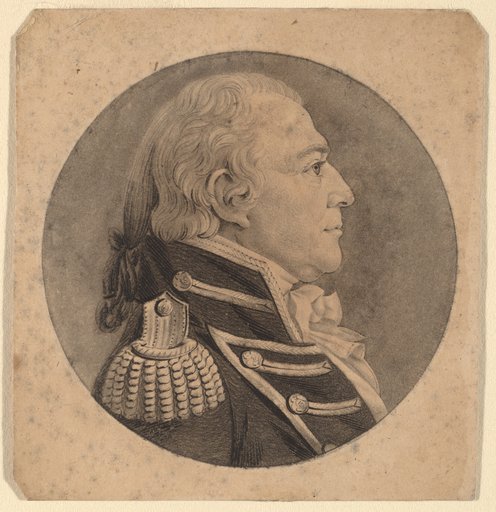
Charles B. J. Févret de Saint-Mémin
Charles Balthazar Julien Févret de Saint-Mémin (French pronunciation: ; 1770–1852) was a French portrait painter and museum director.