Artwork
William Hewson
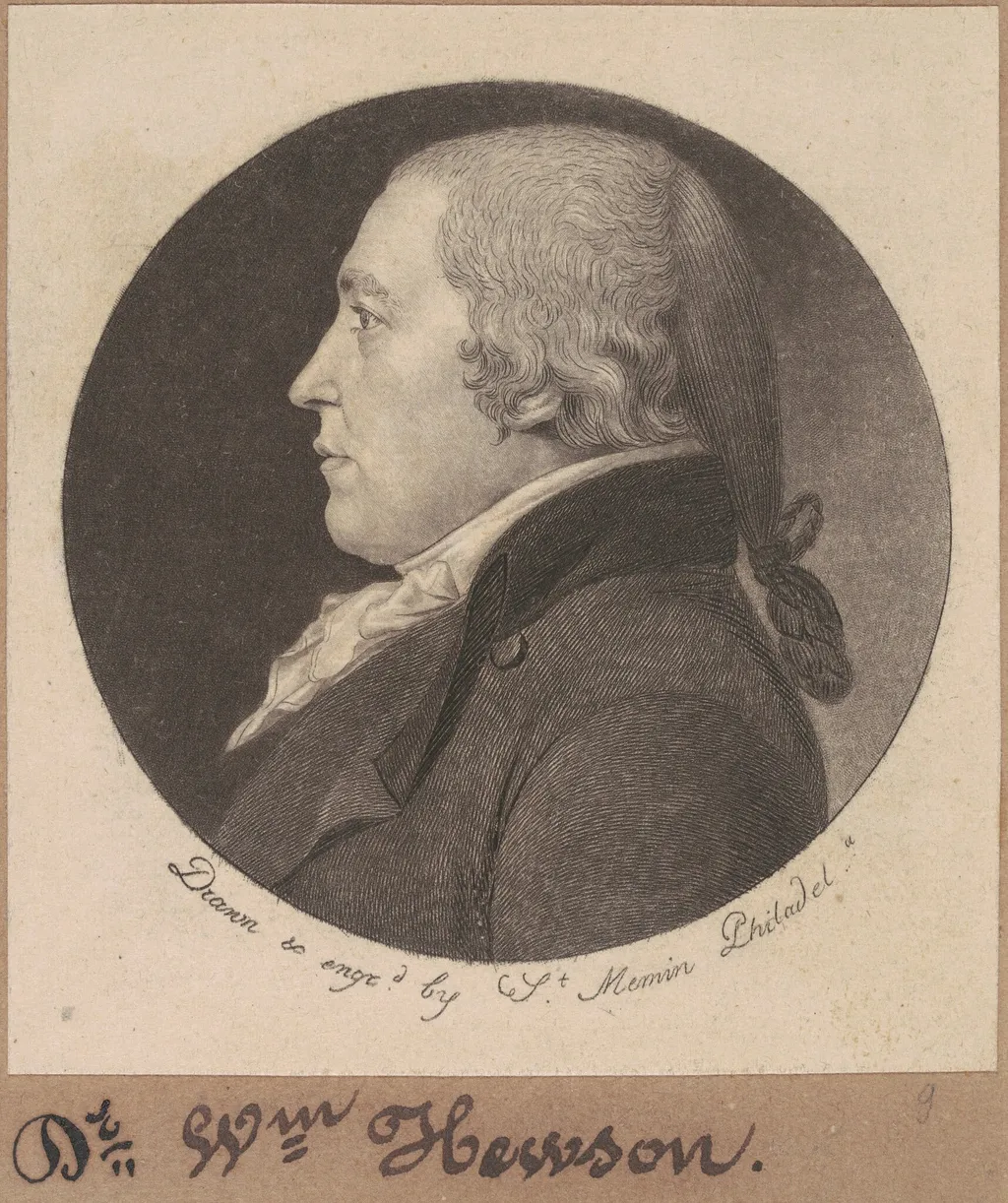
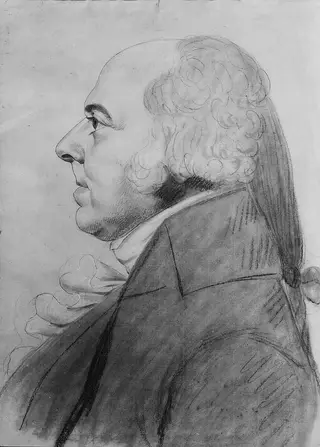
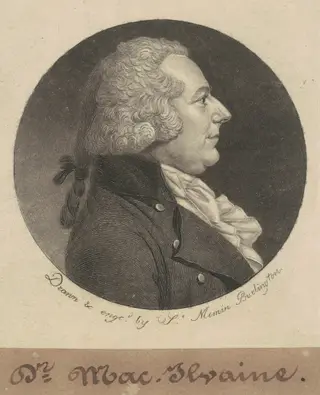
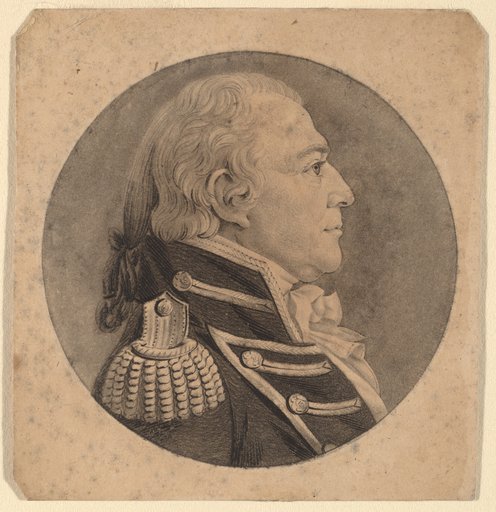
William Hewson is an ink print by the Romanticist artist Charles B. J. Févret de Saint-Mémin. It dates from 1798 and is held in the collection of the National Gallery of Art.
- Inscription
- Inscribed:lower center in plate: Drawn & engrd. by St Memin Philadela.; lower center mount in black ink by unknown hand: Dr. Wm. Hewson.
About this work
Overview
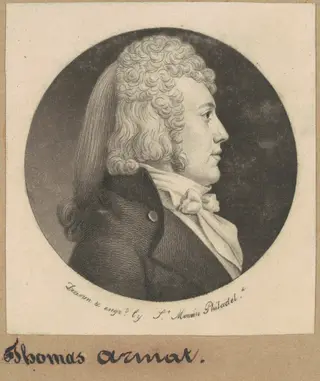
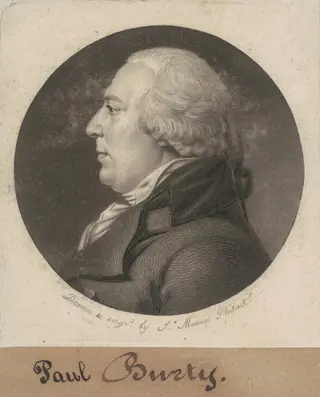
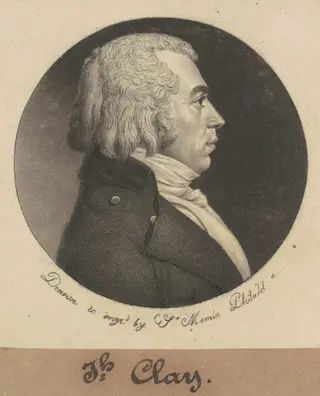
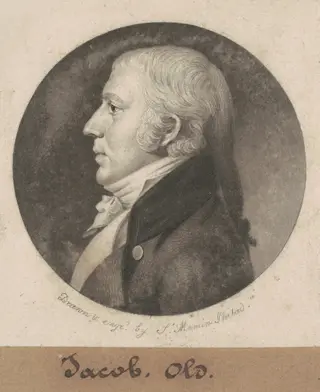
The composition presents the subject in strict left profile, framed within a circular border, emphasizing clarity and restraint.
This print is a profile portrait of William Hewson, executed in 1798 by Charles B. J. Févret de Saint-Mémin. It combines mezzotint and engraving techniques on wove paper, mounted to a brown wove support. The composition presents the subject in strict left profile, framed within a circular border, emphasizing clarity and restraint. The work reflects the precision and formal discipline characteristic of late 18th-century American portraiture.
Subject & Meaning
William Hewson, an English anatomist and surgeon, is depicted with quiet dignity. His rounded face, prominent chin, and tightly curled hair suggest both individuality and composure. The absence of ornate attire or symbolic elements directs focus to his physiognomy, aligning with Enlightenment ideals that valued rationality and personal character over social display. The portrait serves as a record of a respected scientific figure.
Technique & Style
Saint-Mémin employed mezzotint for subtle tonal gradations and engraving for fine linear detail, particularly in the hair and facial contours. The circular frame and minimalist background reflect neoclassical aesthetics, drawing from ancient Roman medallions and early modern portrait medals. The monochrome palette and controlled lighting enhance the sculptural quality of the face, reinforcing a sense of timeless formality.
History & Provenance
Created during Saint-Mémin’s time in the United States, the print was likely made from a life drawing or plaster cast. Hewson, who had emigrated to America and contributed to medical education, was among the intellectual figures the artist documented. The work entered institutional collections in the 19th century, preserved for its historical and technical significance rather than as a decorative object.
Context
In the late 1790s, profile portraits were favored in America and Europe as symbols of civic virtue and scientific inquiry. Saint-Mémin, a French émigré, became known for his precise likenesses of prominent Americans. His method, transferring drawn profiles to copper plates, allowed for multiple impressions, making such portraits accessible to a broader audience beyond elite patrons.
Legacy
This print remains a representative example of Saint-Mémin’s contribution to American portraiture. His technique influenced later artists working in reproductive printmaking. Hewson’s image, though not widely circulated, endures as a document of early American scientific culture, illustrating how portraiture served both personal commemoration and intellectual identity in the post-Revolutionary era.
Own this work as a print
Artist & collection
Artist
Charles B. J. Févret de Saint-Mémin
Charles Balthazar Julien Févret de Saint-Mémin (French pronunciation: ; 1770–1852) was a French portrait painter and museum director.