Artwork
Paulownias and Chrysanthemums
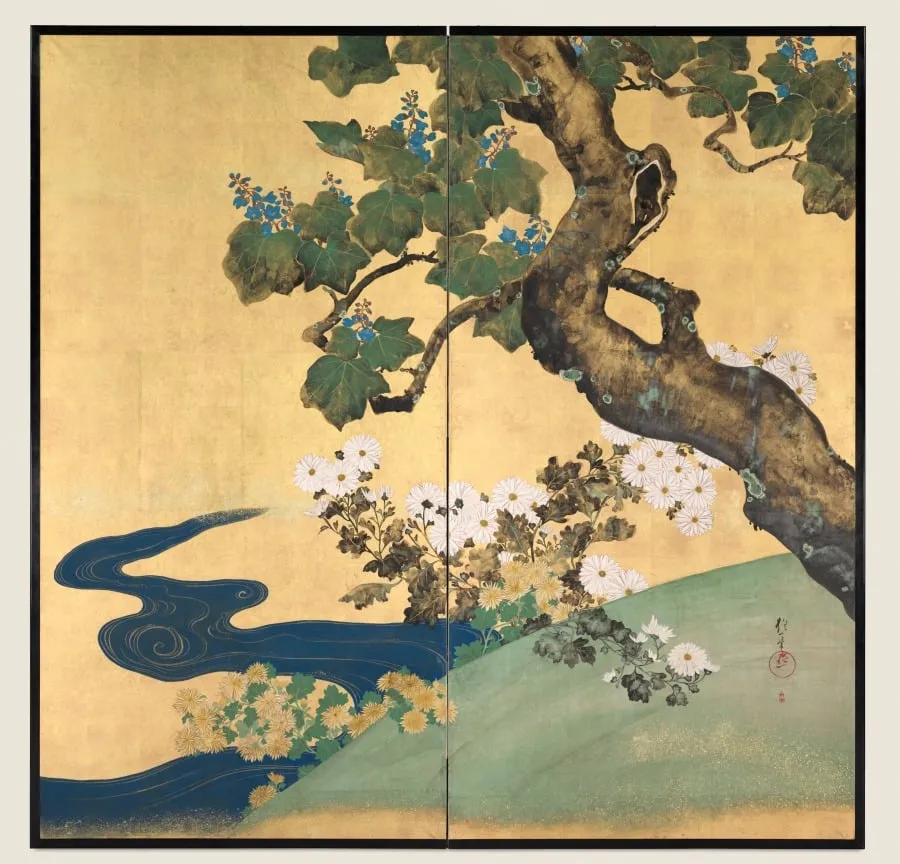
Paulownias and Chrysanthemums is an unspecified painting by the Nihonga artist Sakai Hōitsu. It dates from 1804 and is held in the collection of the Cleveland Museum of Art.
- Accession no.
- 1964.386
- Credit line
- Gift of the American Foundation for the Maud E. and Warren H. Corning Botanical Collection
About this work
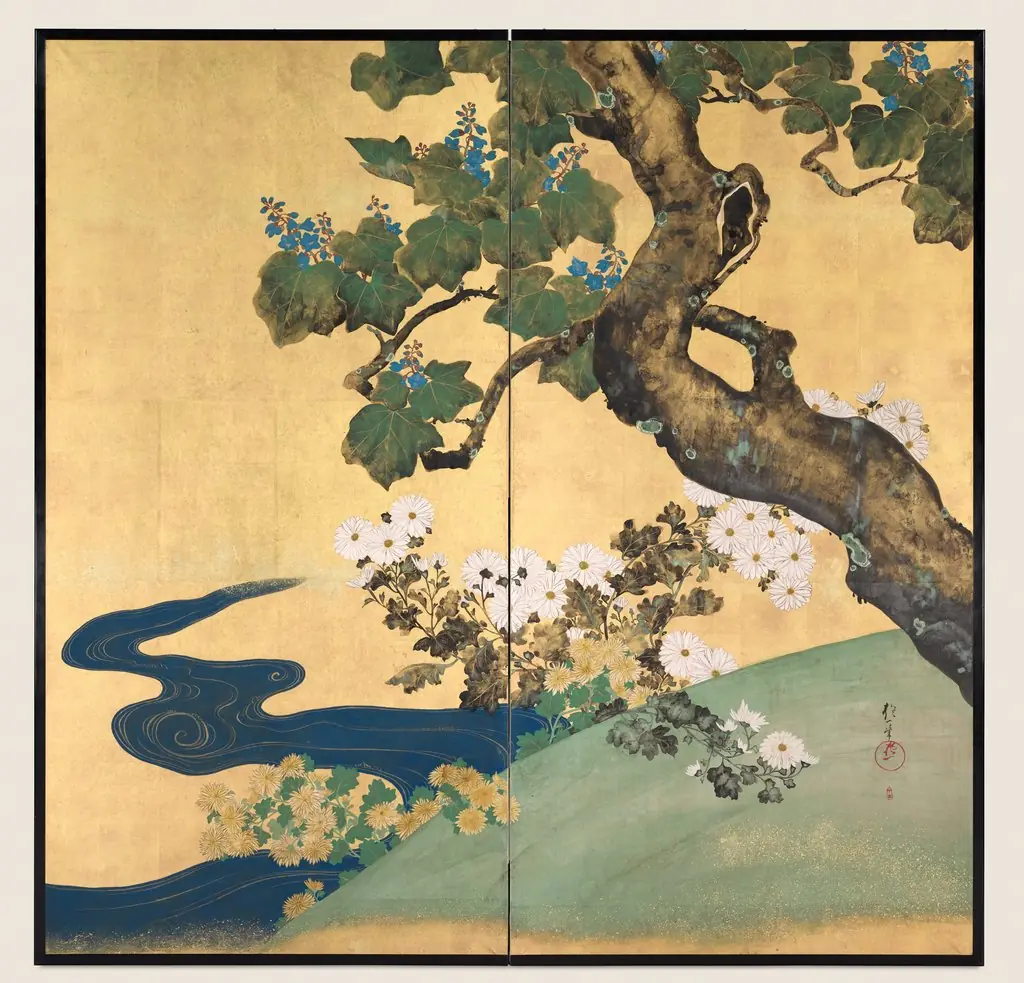
This painting shows a branch of paulownia leaves and white chrysanthemums. The artist used a Japanese trick called tarashikomi. He let ink and color drip on the paper. This made the leaves and bark look bumpy and real.
Paulownia means strength. Chrysanthemums mean autumn. The work is from the early 1800s, during Japan’s Edo period.
Try looking up Sakai Hōitsu (Japanese, 1761–1828) next.
Overview
This early‑19th‑century screen by Sakai Hōitsu depicts a branch of paulownia leaves alongside white chrysanthemums. Executed in the Edo period, the work combines ink and pigment on paper, presenting a delicate botanical study that references seasonal change and courtly symbolism.
Subject & Meaning
The paulownia branch and chrysanthemum blossoms serve as visual markers of late spring and early autumn. In Japanese tradition the paulownia is linked to resilience and medicinal use, while the chrysanthemum conveys notions of good governance and is associated with the imperial family.
Technique & Style
Hōitsu employed the tarashikomi method, allowing ink and color to drip and pool on the surface before drying. This controlled bleeding creates textured, lichen‑like bark and subtly rippled chrysanthemum leaves, lending the composition a tactile, almost three‑dimensional quality.
History & Provenance
Created sometime in the early 1800s, the screen belongs to the later phase of Hōitsu’s career, a period when he revived the Rinpa aesthetic. Its provenance traces through several private collections before entering a public museum, where it is displayed as part of the Edo‑period decorative arts holdings.
Context
During the Edo era, screen paintings often functioned as decorative partitions in aristocratic interiors. The choice of paulownia and chrysanthemum reflects the period’s penchant for integrating courtly symbols into everyday objects, reinforcing social hierarchy through visual motifs.
Artist & collection


 Flowers and Trees of the Four Seasons (right screen)
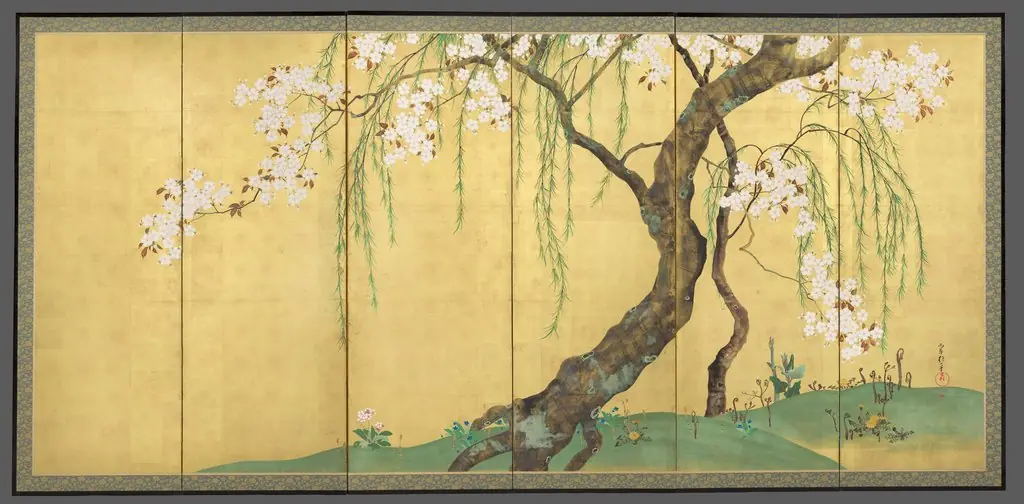 Cherry and Maple Trees
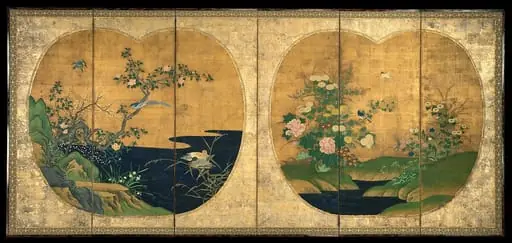 狩野周信筆 秋冬花鳥図屏風|Birds and Flowers of Autumn and Winter
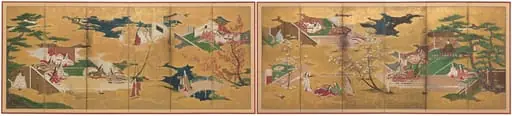 The Tale of Genji
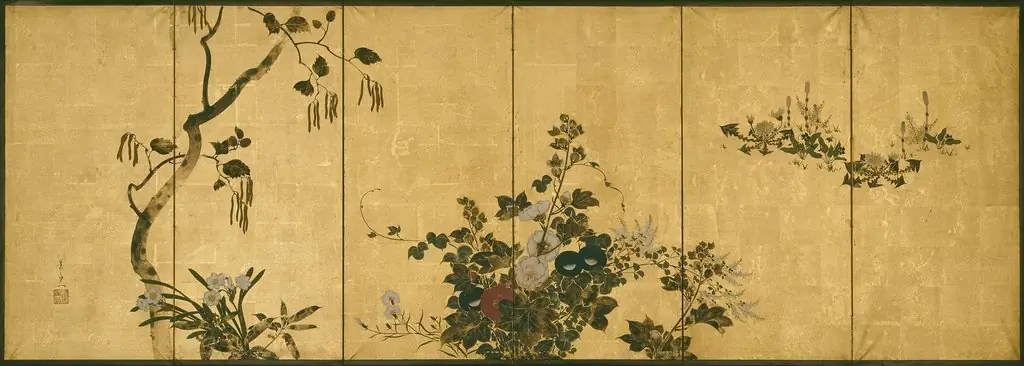 Flowers of Autumn and Winter
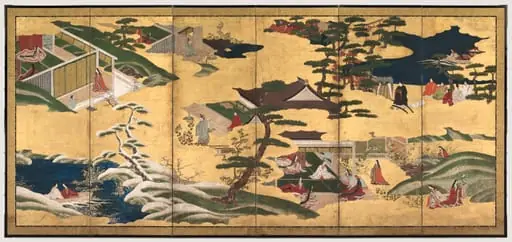 Scenes from the Tale of Genji
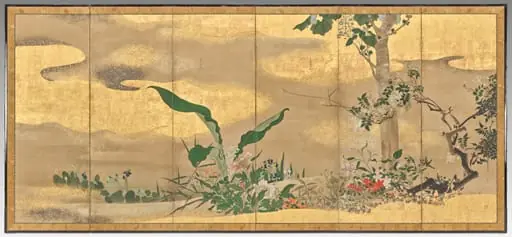
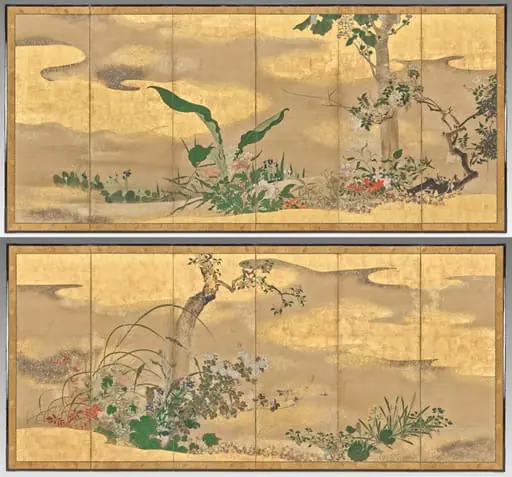 Flowers and Trees of the Four Seasons
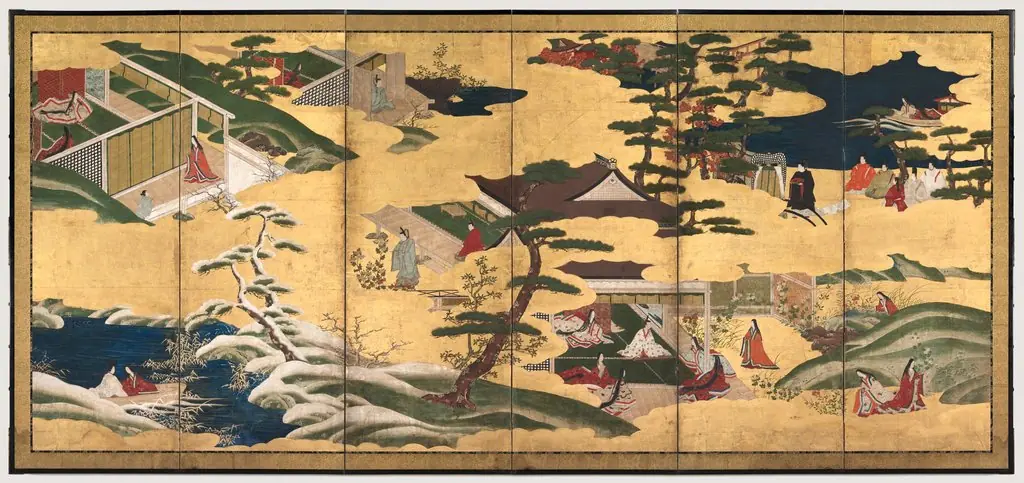 Scenes from the Tale of Genji
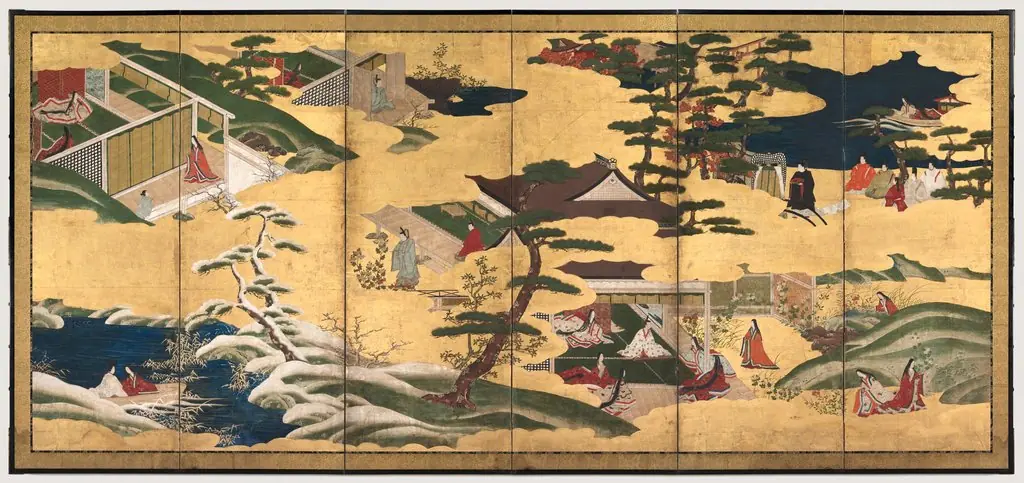 Scenes from the Tale of Genji
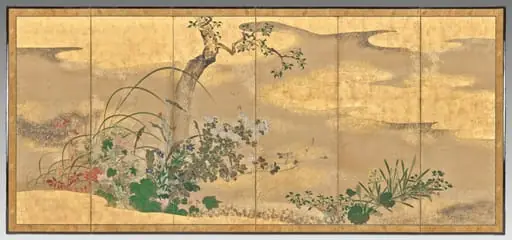 Flowers and Trees of the Four Seasons (left screen)
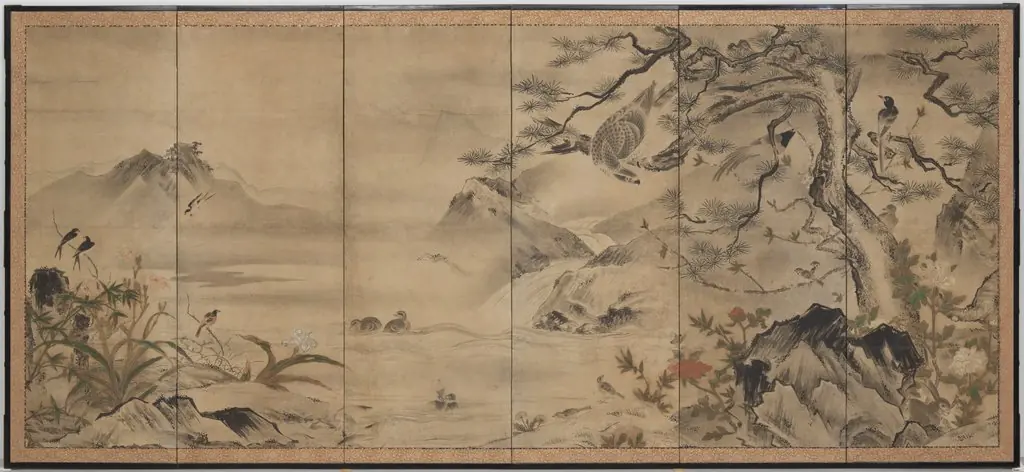 Flowers and Birds
- Paulownias and Chrysanthemums