Artwork
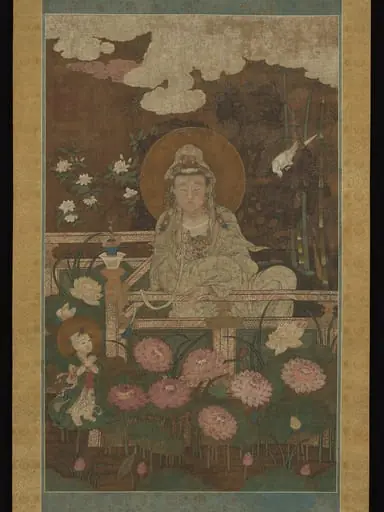
Willow Kannon
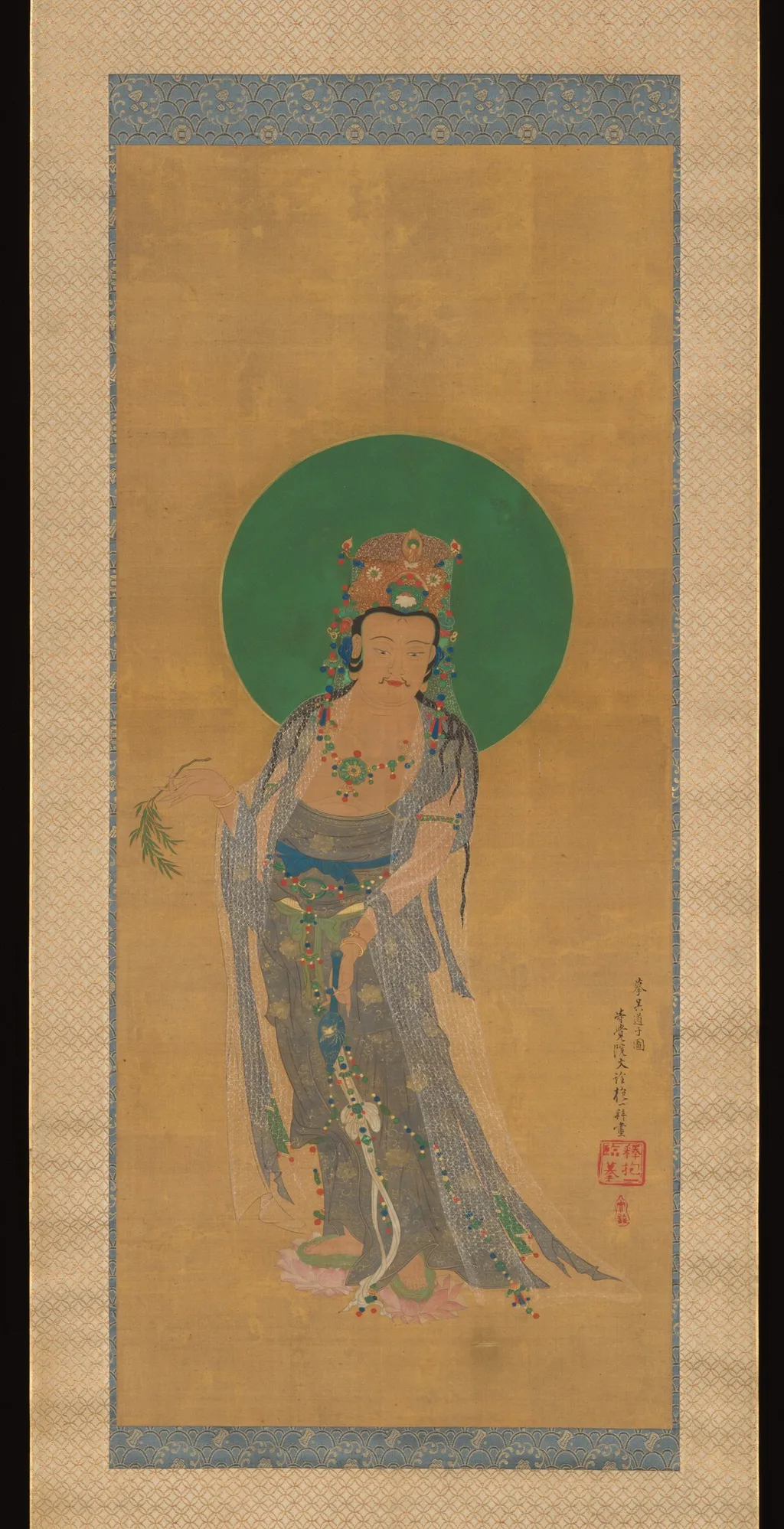
Willow Kannon is an unspecified painting by the Rinpa school artist Sakai Hōitsu. It dates from 1814 and is held in the collection of the Metropolitan Museum of Art.
About this work
Overview
Willow Kannon, painted in 1814 by the Japanese artist Sakai Hōitsu, is part of the collection at the Metropolitan Museum of Art. The work presents a solitary female figure rendered in a calm, composed manner, set against a muted, light‑brown backdrop framed by a decorative blue border. The composition conveys a quiet elegance through its restrained palette and balanced arrangement.
Subject & Meaning
The central figure is a woman dressed in a long, flowing robe adorned with vivid floral motifs. She holds a slender willow branch in her right hand and gazes downward, suggesting introspection or reverence. A stylized crown rests atop her hair, while a green circular halo behind her head adds a subtle symbolic emphasis, possibly indicating purity or spiritual presence.
Technique & Style
Hōitsu employs the Rinpa aesthetic, characterized by flat areas of color, decorative patterns, and a focus on line over modeling. The robe’s intricate designs are rendered with delicate brushwork, while the background’s plain earth tone provides contrast to the vivid blues of the border. The painting’s smooth surface and lack of deep shading highlight the artist’s mastery of surface decoration.
History & Provenance
Created during the late Edo period, Willow Kannon reflects Hōitsu’s revival of classical Rinpa motifs. The painting entered the Metropolitan Museum of Art’s collection through acquisition in the 20th century, where it has been displayed as an example of early 19th‑century Japanese courtly portraiture. Its provenance traces back to private Japanese collections before reaching the museum.
Artist & collection


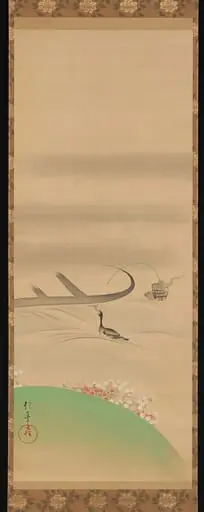
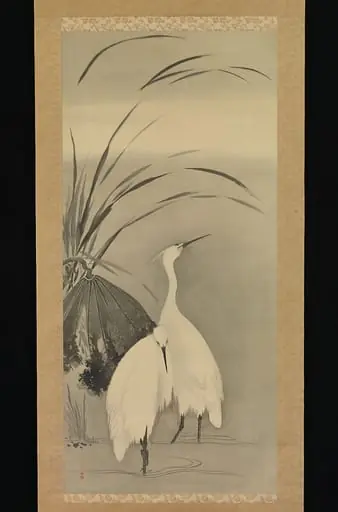
 Untitled
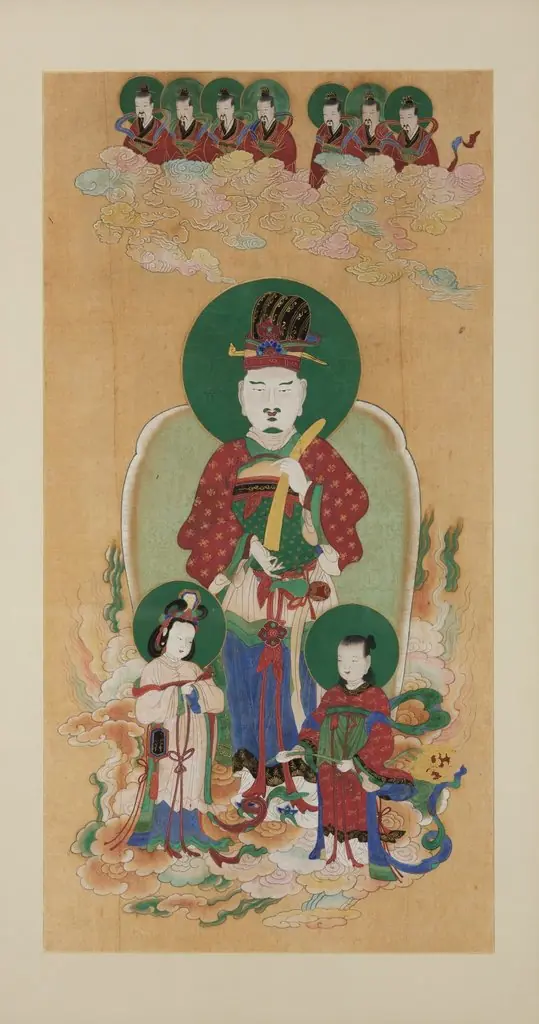 Daoist Official of Heaven with Seven Stars and Jade Maidens
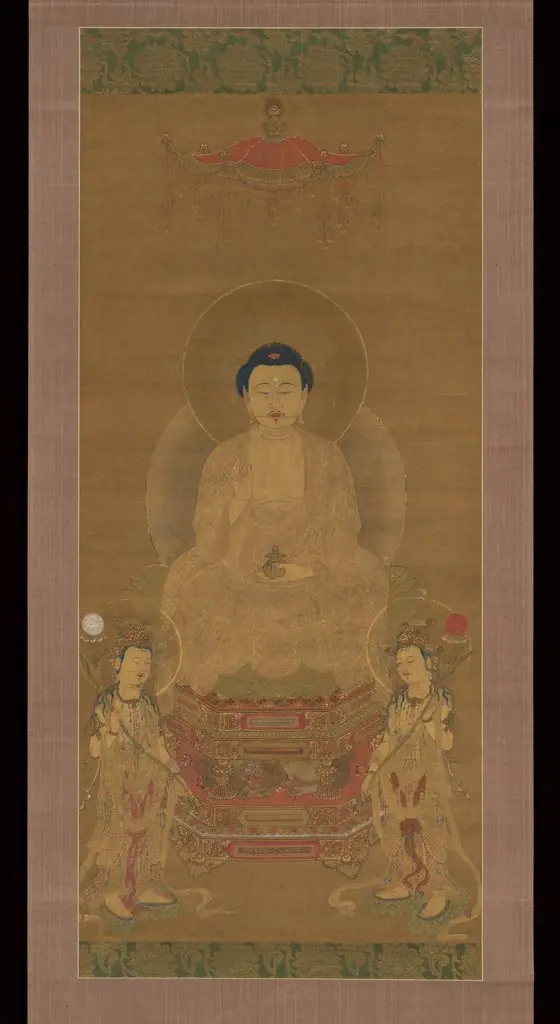 Triad of the Medicine Master Buddha Yakushi (Bhaisajya Buddha)
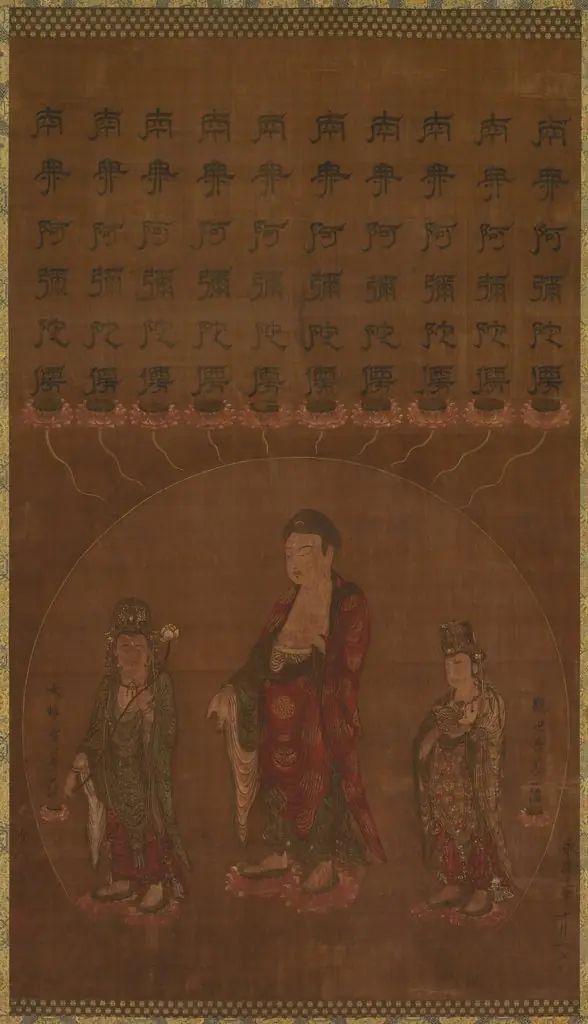 Buddha Amitābha with Two Attending Bodhisattvas
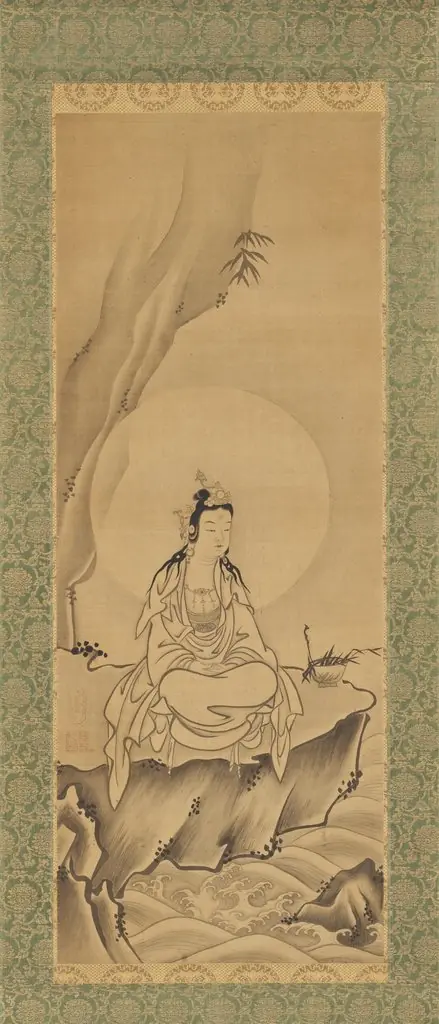 Kannon Bosatsu (Princess Teruko)
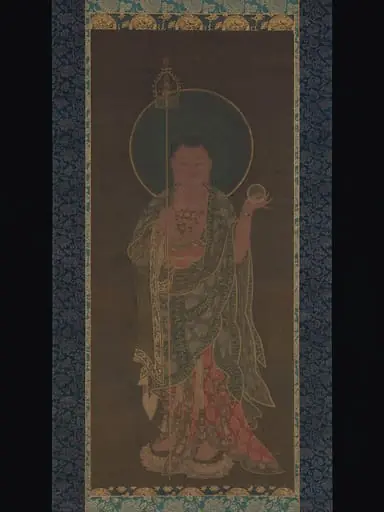 지장보살도 고려|地藏菩薩圖 高麗|Kshitigarbha
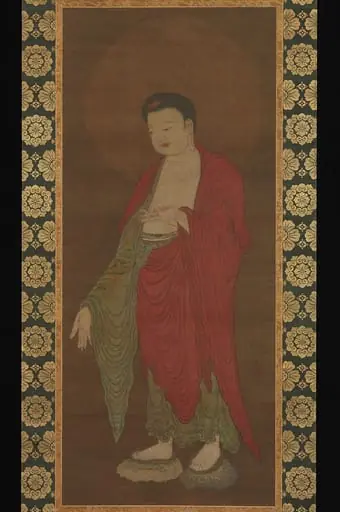 南宋 佚名 阿彌陀佛圖 軸|Buddha Amitabha Descending from his Pure Land
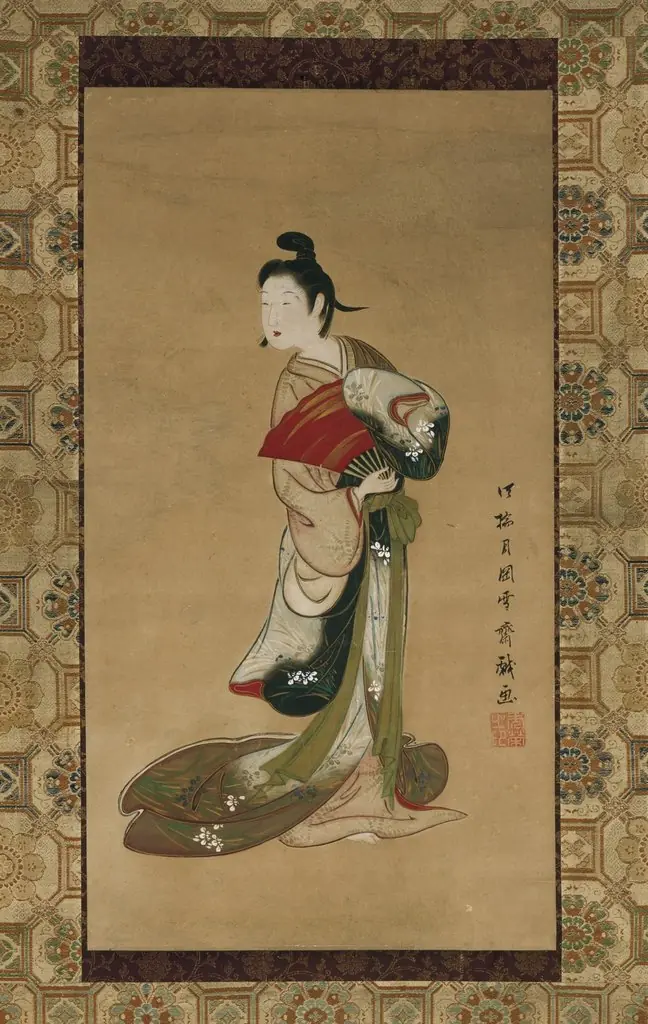 Courtesan