Artwork
Sant'Ambrogio Altarpiece
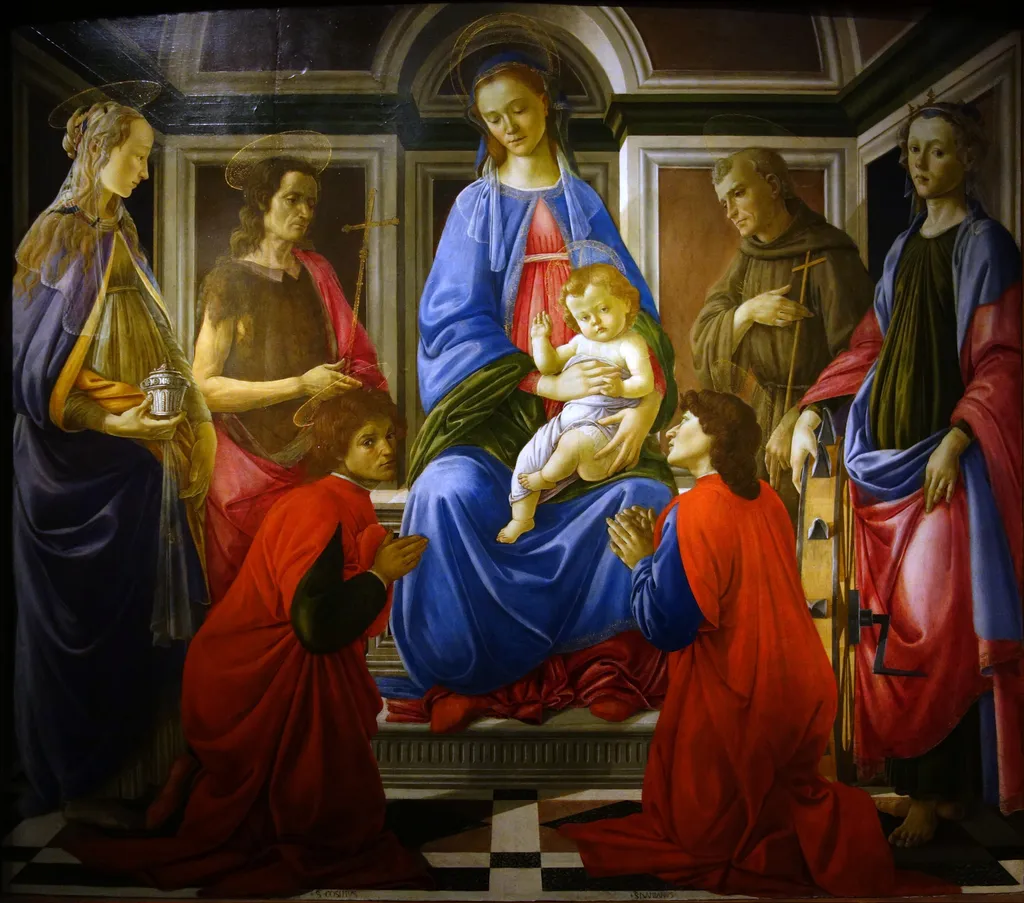
Sant'Ambrogio Altarpiece is a tempera painting by the Early Renaissance artist Sandro Botticelli. It dates from 1470 and is held in the collection of the Uffizi Gallery.
About this work
Subject & Meaning
The arrangement invites viewer participation, with specific saints directing their gaze outward to connect the celestial assembly with the earthly observer.
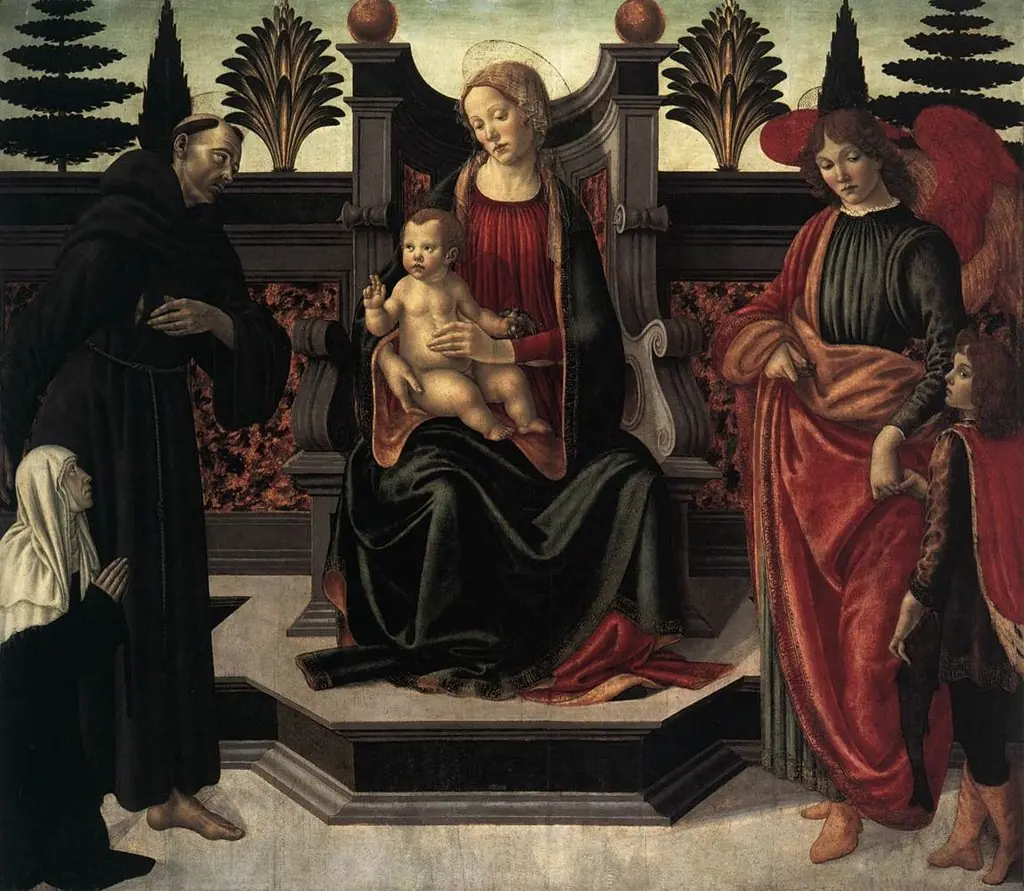
The Sant'Ambrogio Altarpiece depicts a sacra conversazione, a sacred conversation where the Virgin Mary and Christ Child are enthroned within a unified architectural space surrounded by saints. The composition features standing figures including Mary Magdalene, identifiable by her ointment jar; John the Baptist with his reed cross; Francis of Assisi holding a staff; and Catherine of Alexandria beside her martyr's wheel. Kneeling prominently in the foreground are Saints Cosmas and Damian, patrons of the Medici family and the physicians' guild, who are widely interpreted as portraits of Lorenzo and Giuliano de' Medici.
Although the altarpiece is named after the church of Sant'Ambrogio where it was originally housed, the titular saint is absent from the scene. The arrangement invites viewer participation, with specific saints directing their gaze outward to connect the celestial assembly with the earthly observer.
Technique & Style
The Sant'Ambrogio Altarpiece is executed in tempera on panel, measuring 170 by 194 cm, and incorporates plaster as a material component;. Botticelli derived his approach from several predecessors: the composition echoes Fra Angelico's San Marco Altarpiece, with a raised marble throne flanked by standing saints and kneeling figures in foreshortening that emphasizes perspectival depth. The color and pronounced plasticity reflect the influence of Filippo Lippi, his early master, while the "wet drapery" effect visible in the Virgin's sleeves and undergarment derives from Verrocchio;.
The scene is set within a monumental arcaded interior illuminated from the upper left, with carefully ordered floor tiles and architectural elements such as columns and capitals reinforcing linear perspective. The composition follows a symmetrical scheme, with each figure framed by the architecture and engaged in a circular visual exchange with the viewer. In the sixteenth century the work suffered extensive overpainting, particularly affecting the Virgin and Child, which prompted long-standing attribution disputes; a 1992 restoration removed these non-original additions;.
History & Provenance
Finished around 1470, this tempera panel is an early work by Sandro Botticelli. The presence of Saints Cosmas and Damian, patrons of the Medici family and the physicians' guild, strongly suggests the altarpiece was commissioned by the Medici or their corporation. Some scholars have proposed that the kneeling saints are portraits of Lorenzo de' Medici and his brother Giuliano.
Originally housed in the church of Sant'Ambrogio in Florence, the painting remained there until the religious suppressions of 1808. It was subsequently transferred to the Galleria dell'Accademia before moving to its current location at the Uffizi Gallery. The work's title derives from this supposed original placement, although Saint Ambrose is not depicted.
During the 16th century, the panel underwent various retouches that altered the Virgin and Child, leading to centuries of attribution disputes until H. Ulmann definitively reassigned it to Botticelli. A restoration in 1992 removed these non-original overpaints.
The Sant’Ambrogio Altarpiece is held in the Galleria degli Uffizi, Florence, where it is inventoried as inv. 1067.
It was transferred there after earlier stops: first to the Accademia in Florence following church suppressions in 1808, and before that it had been installed in the church of Sant’Ambrogio, Florence, from which its title derives.
Context
The Sant'Ambrogio Altarpiece is regarded as one of the early major commissions of the young Sandro Botticelli, dating to around 1470, and is a key example of the sacra conversazione format in Early Renaissance Florentine painting. Its composition draws on Fra Angelico's earlier San Marco Altarpiece, adopting the raised marble throne of the Madonna flanked by standing saints and kneeling donors in foreshortened perspective, while the linear tension of the Virgin's drapery recalls Botticelli's own Fortezza panel. Stylistic influence is traced to Filippo Lippi, his first master, for the idealized yet melancholy facial type and sculptural color, and to Verrocchio for the "wet drapery" effect visible in the Virgin's sleeves and undergarment.
The work's critical history is complicated by sixteenth-century overpainting, especially on the Madonna and Child, which prompted misattributions: Fantozzi assigned it to Ghirlandaio, Cavalcaselle and Crowe to Andrea del Castagno, and Morelli to Botticelli's school. H. Ulmann was the first to restore the work unanimously to Botticelli, a judgment subsequently accepted by international scholarship. A 1992 restoration removed the non-original repaint.
The presence of Saints Cosmas and Damian, patrons of the Medici and of the Arte dei Medici e Speziali, has suggested a Medici or guild commission, and the kneeling figures may even be portraits of Lorenzo and Giuliano de' Medici.
Overview
This small tempera painting, known as the Sant'Ambrogio Altarpiece or The Madonna and Child with Six Saints, was completed by Sandro Botticelli around 1470. It depicts the Virgin Mary enthroned with the Christ Child, flanked by a group of six saints. This work exemplifies the sacra conversazione genre, where holy figures from different eras are depicted together in a unified sacred space. Today, it is housed in the Galleria degli Uffizi in Florence.
Own this work as a print
Artist & collection
Artist
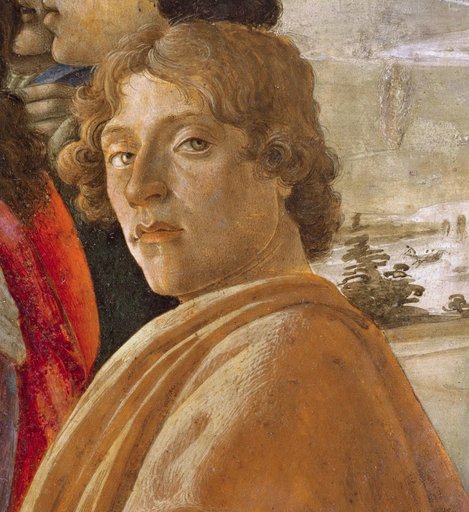
Alessandro di Mariano di Vanni Filipepi, better known as Sandro Botticelli or simply Botticelli, was an Italian painter of the Early Renaissance.

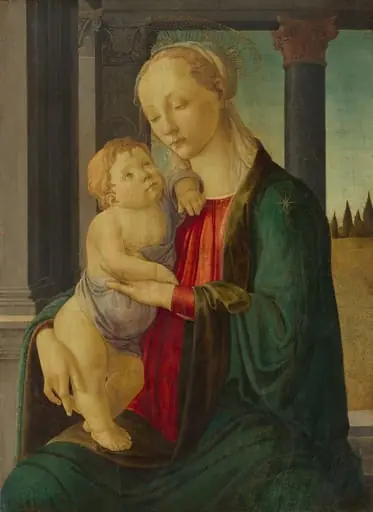
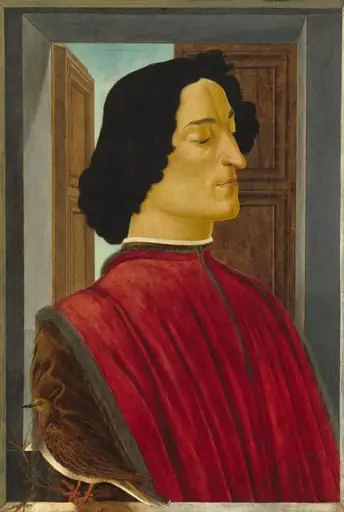
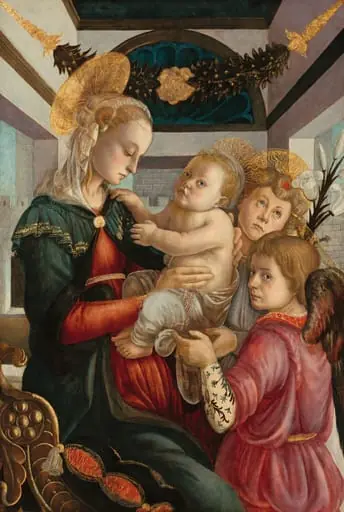
- Decemviri Altarpiece
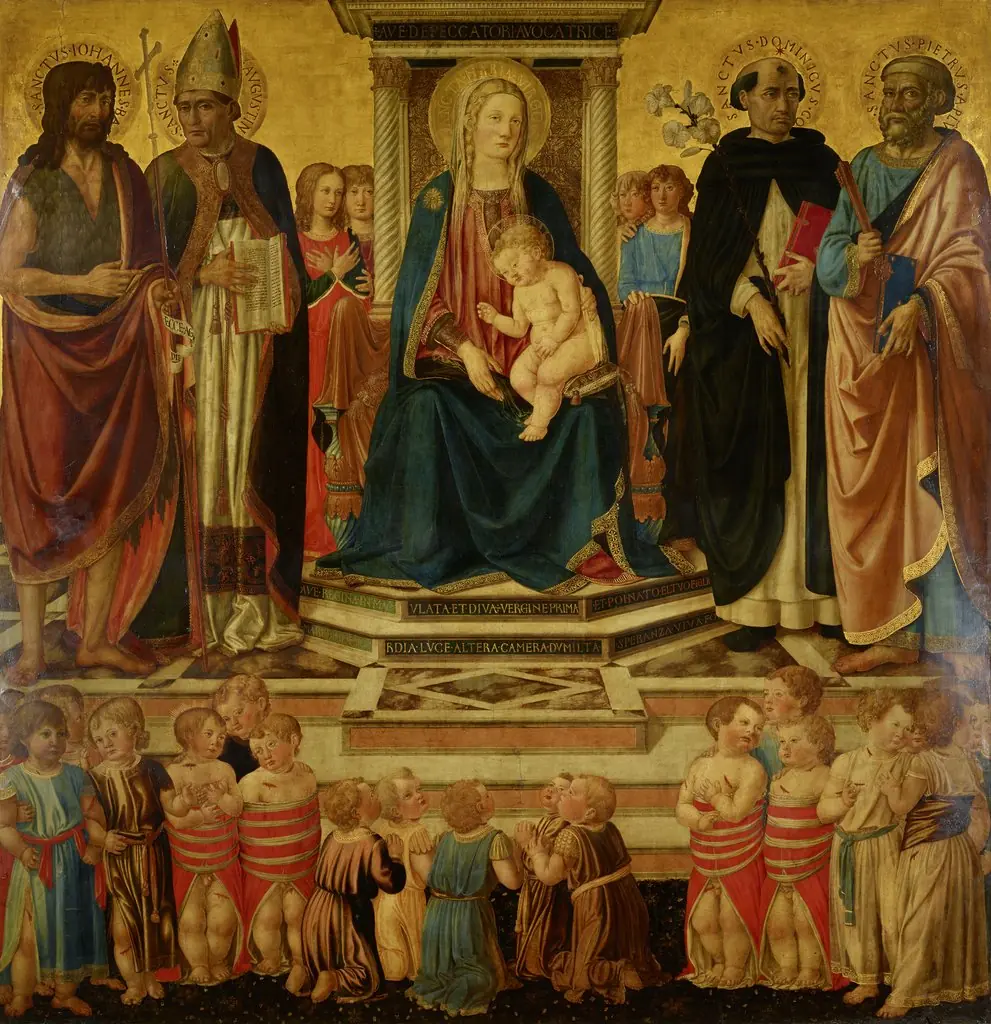 The Virgin and Blessing Child Enthroned with Sts. John, Augustine, Dominic, Peter and Victims of the bethemitic Child Murder
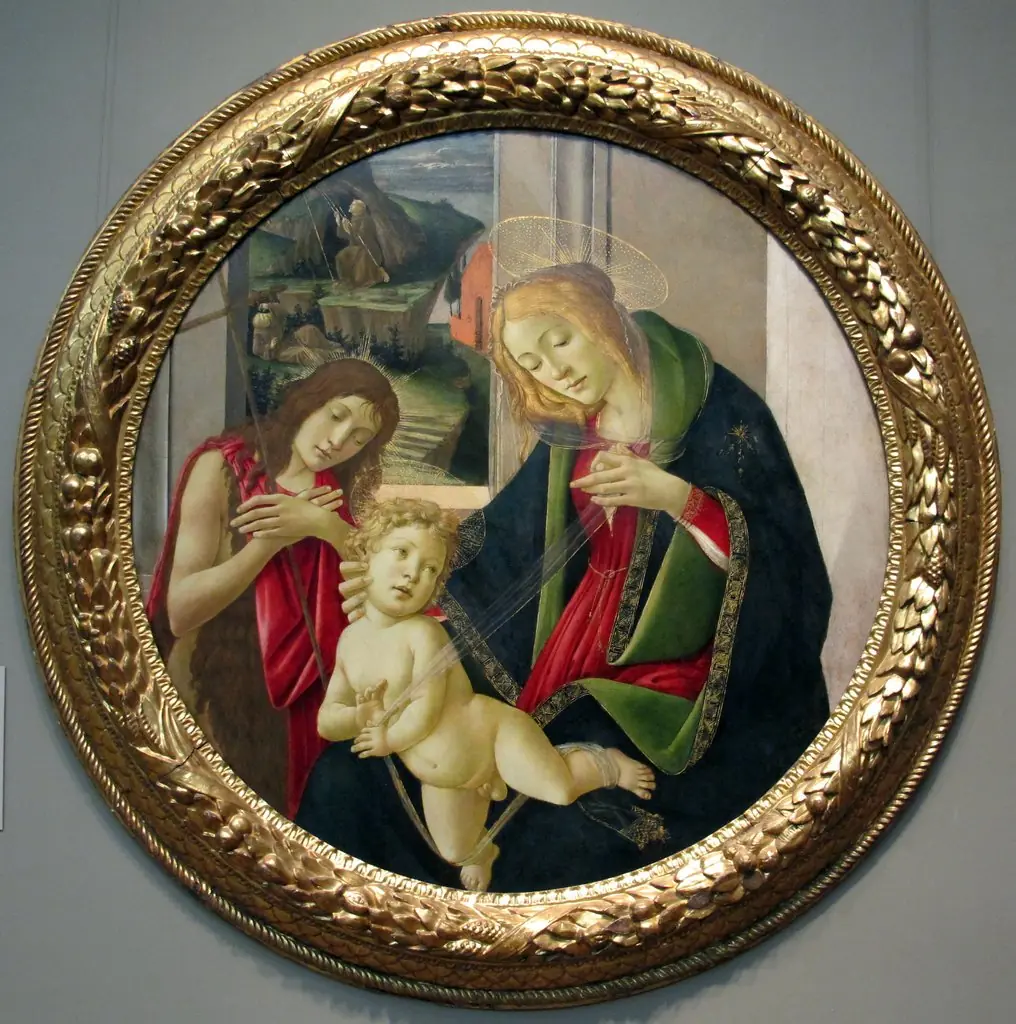 Madonna and Child with Saint John
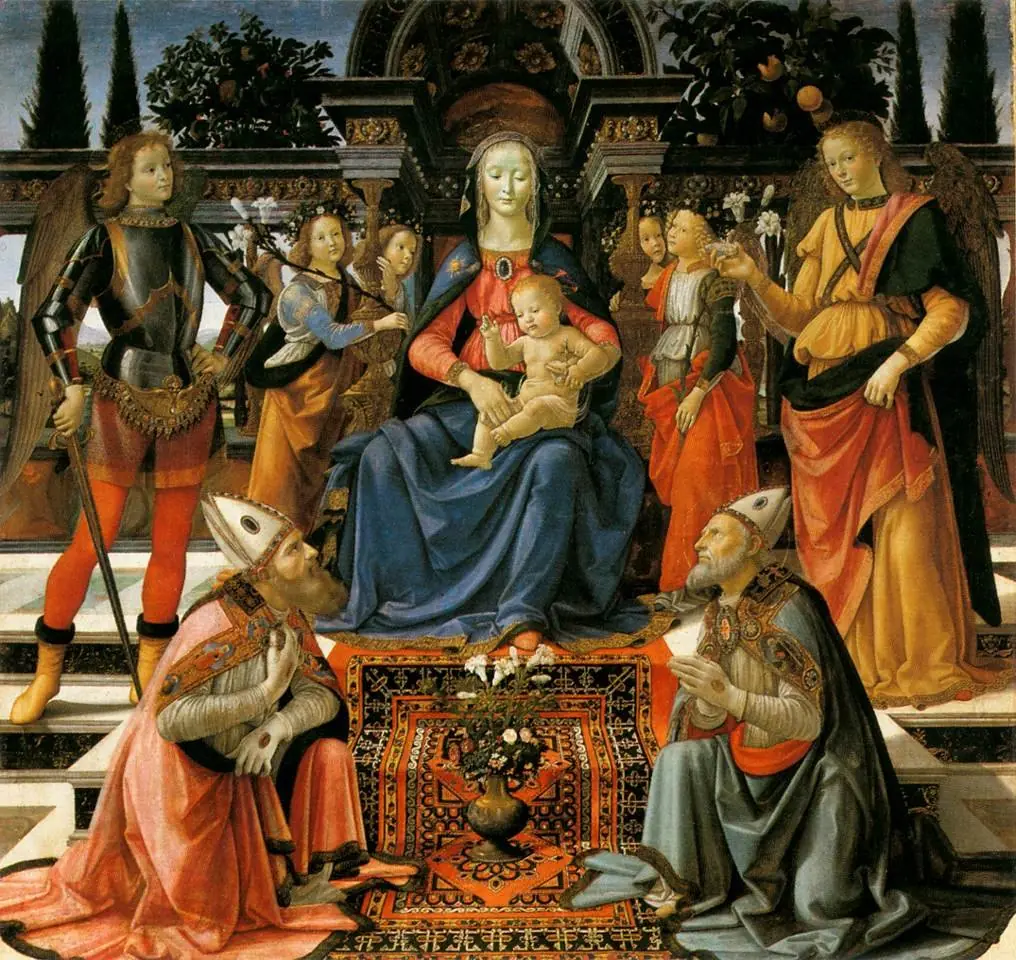 Madonna and Child Enthroned with Saints
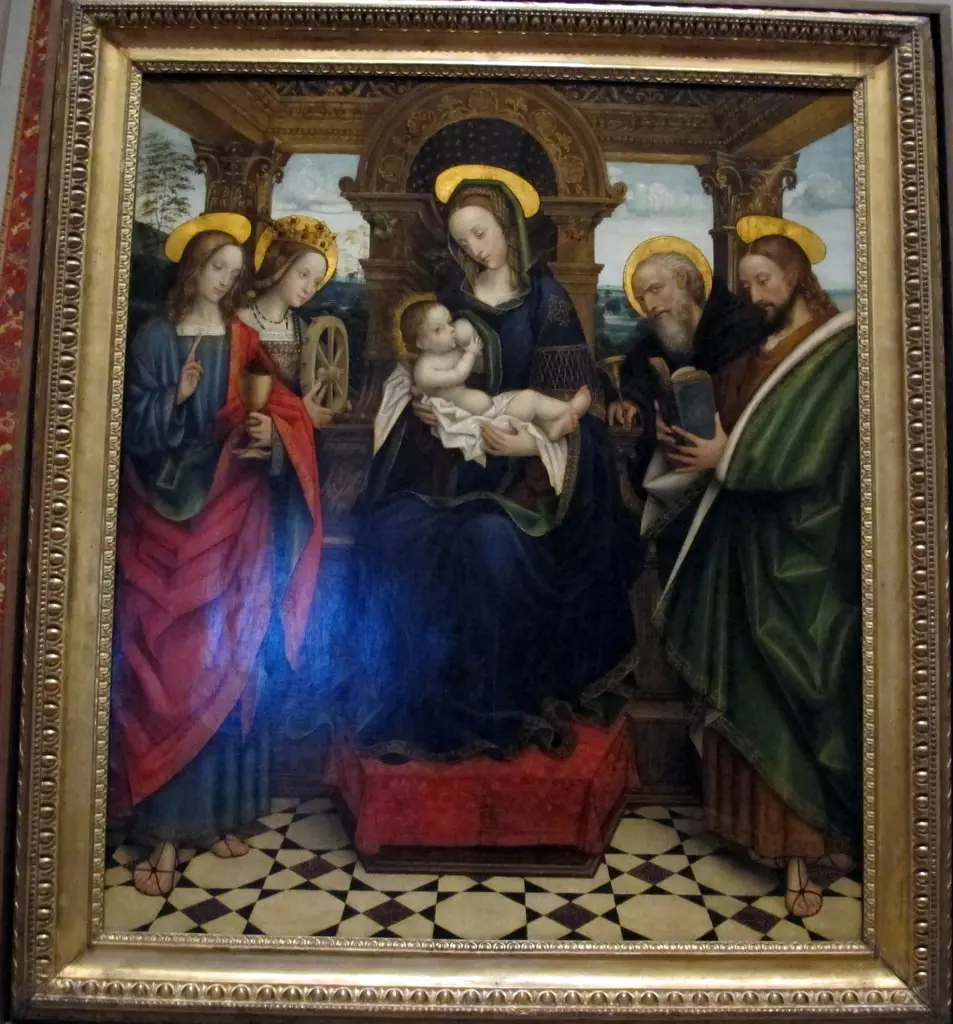 Enthroned Virgin and Child, with Saints John the Evangelist, Catherine of Alexandria, and Anthony Abbot, and a Saint Reading a Book
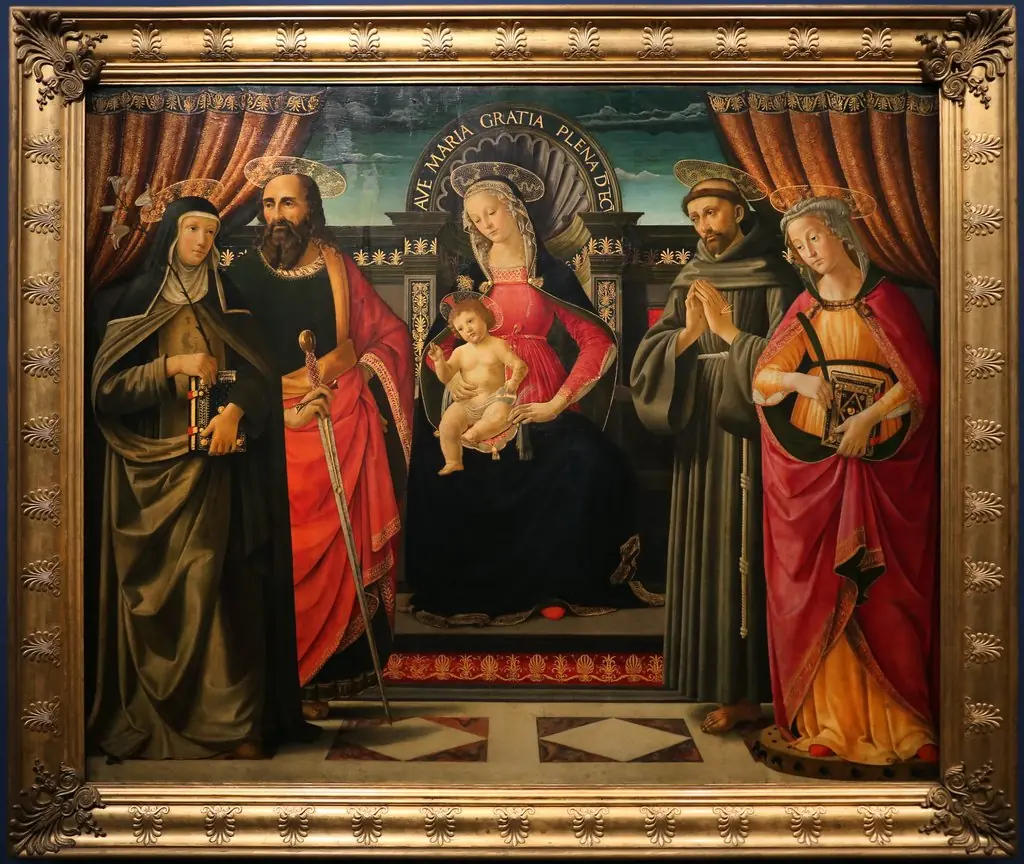 The Virgin with Blessing Child Enthroned and Saints
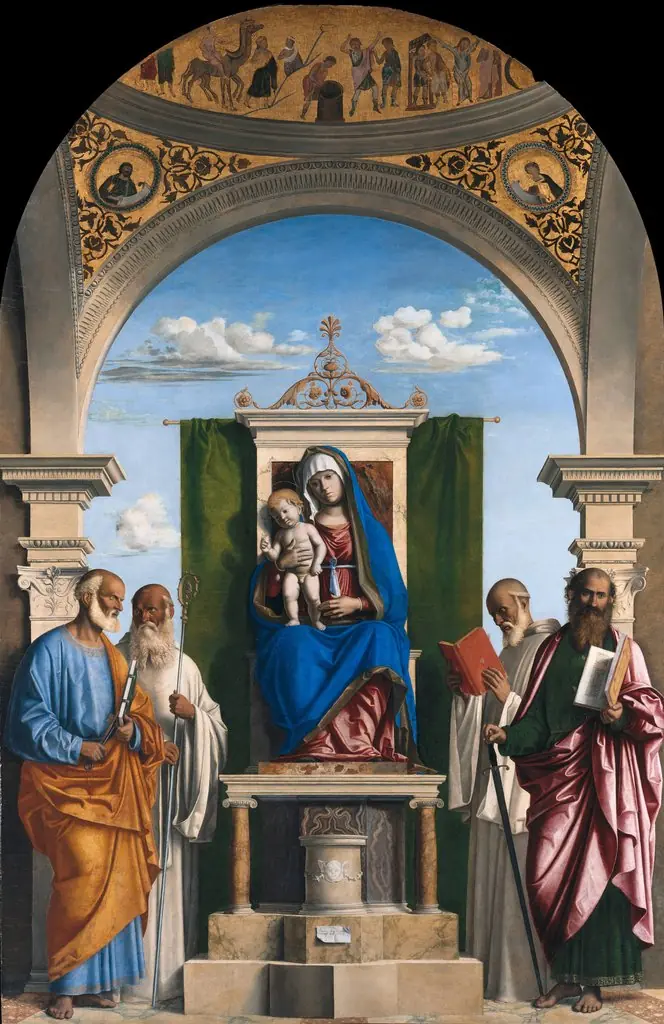 Madonna and Child Enthroned with Saints
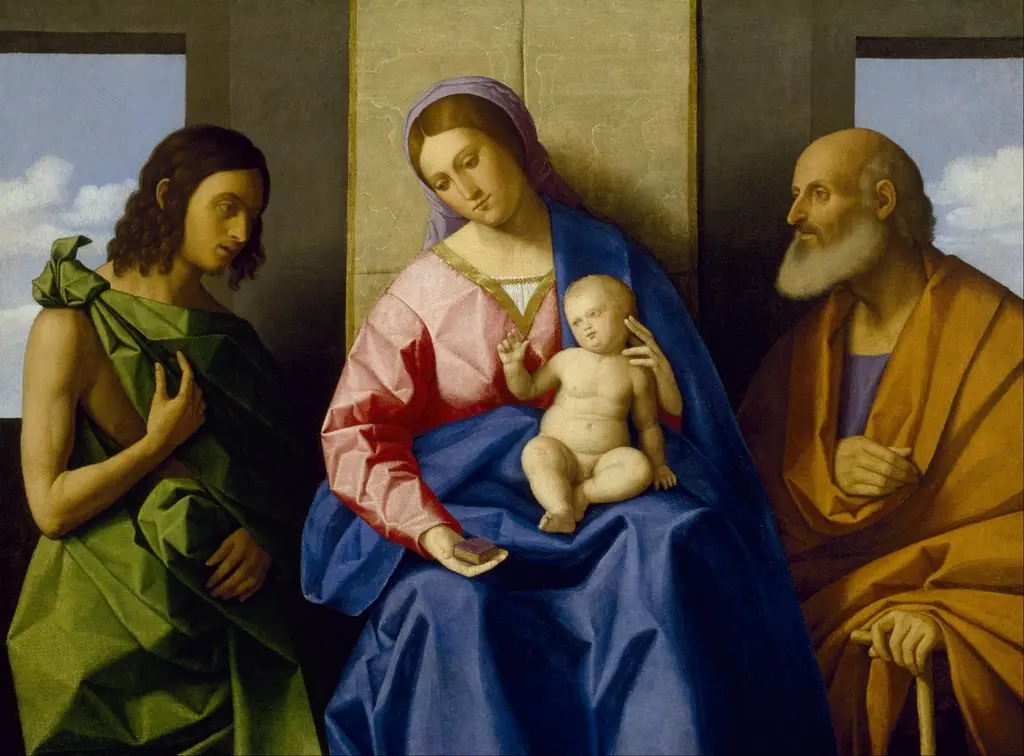 Virgin and Child with Saints John the Baptist and Joseph
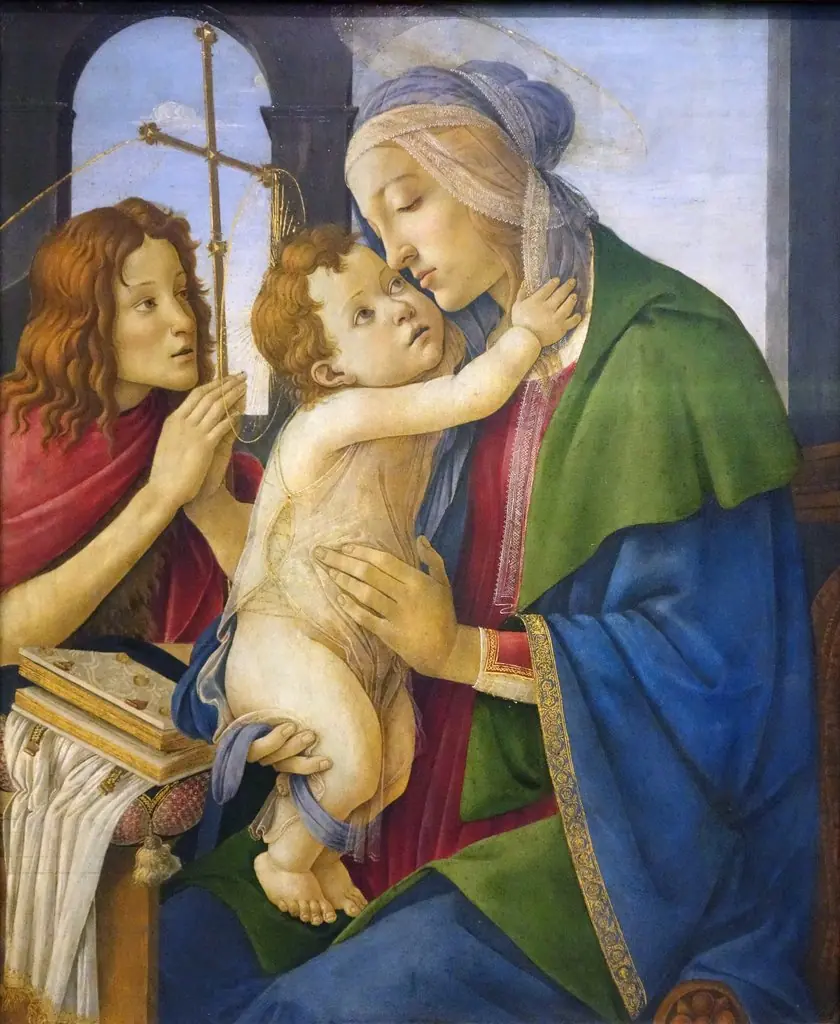 The Virgin and Child with the Young Saint John the Baptist
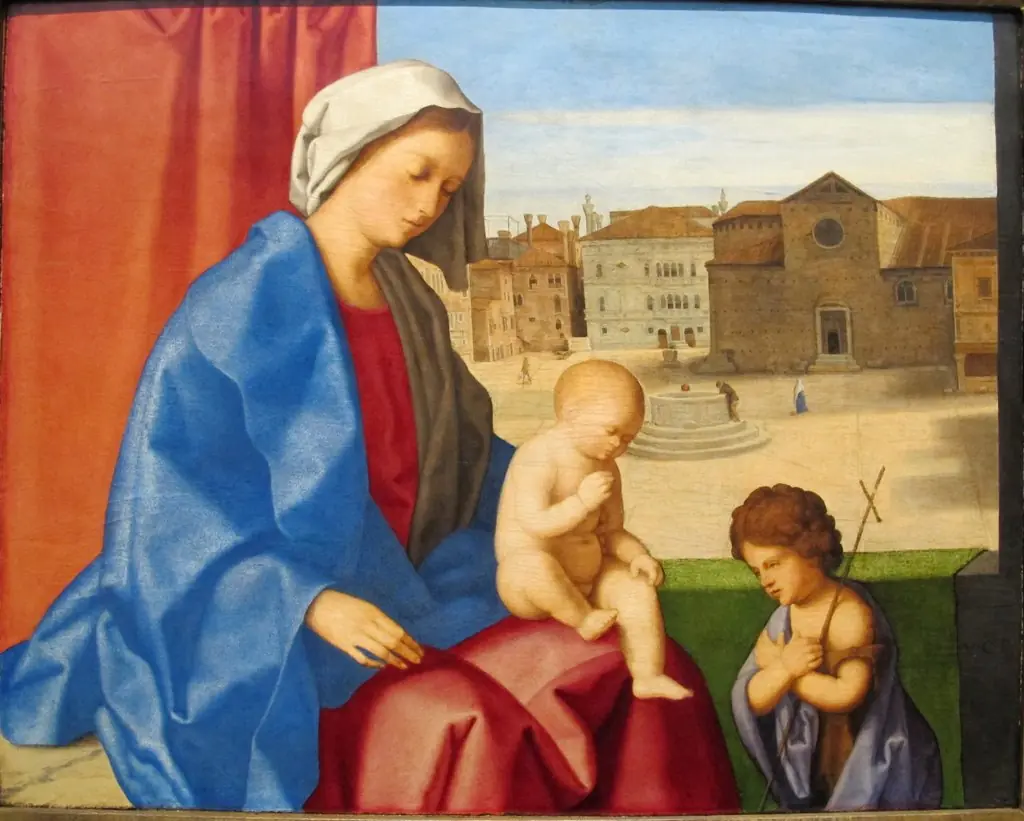 The Madonna and Child with the Infant Saint John the Baptist
 Madonna and Child Enthroned
 madonna in trono col bambino e santi