Artwork
Giuliano de' Medici
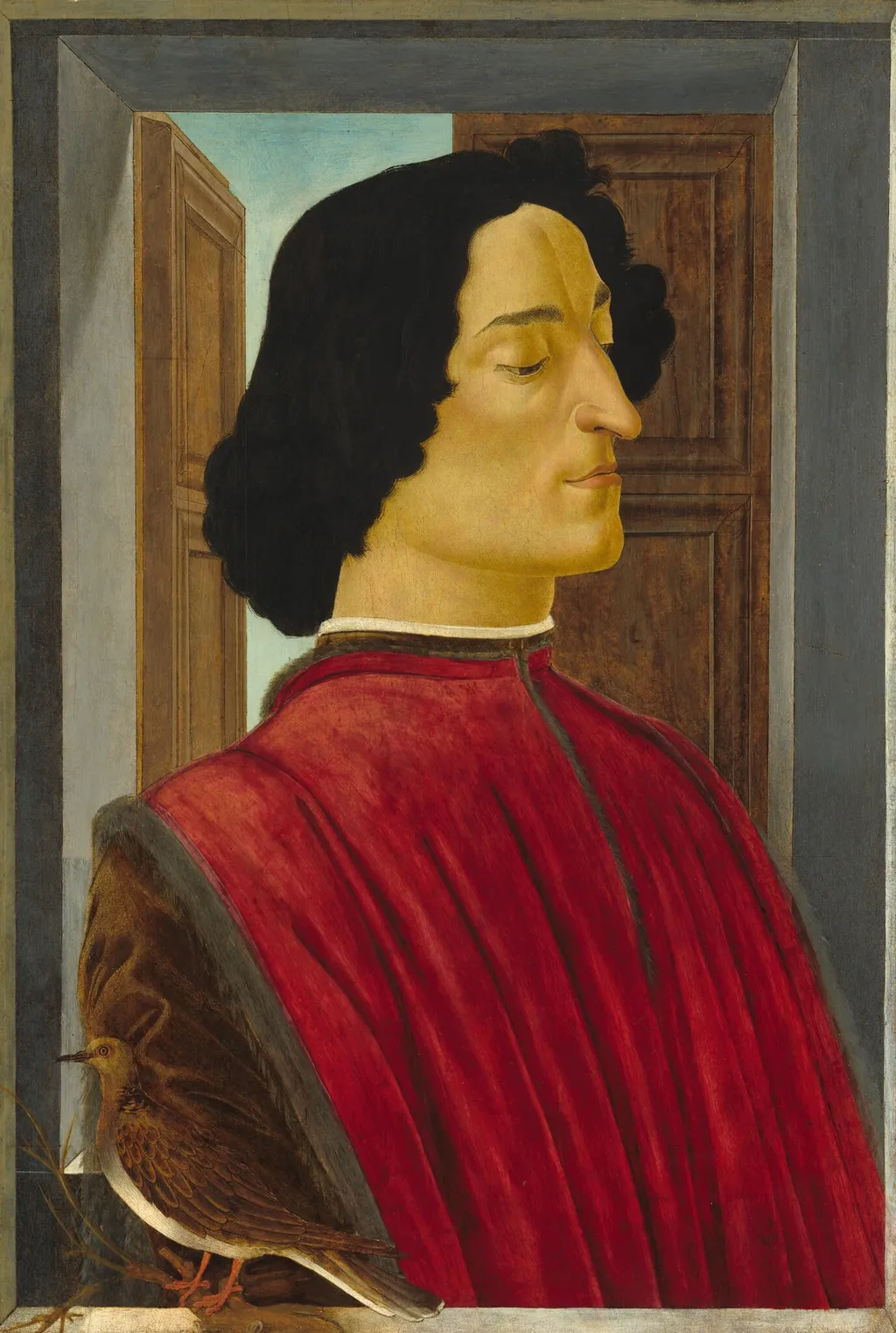
Giuliano de' Medici is a tempera painting by the Early Renaissance artist Sandro Botticelli. It dates from 1479 and is held in the collection of the National Gallery of Art.
About this work
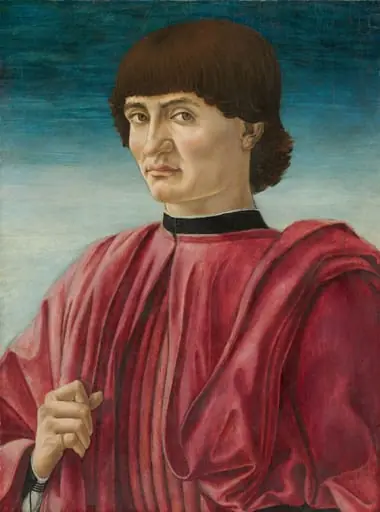
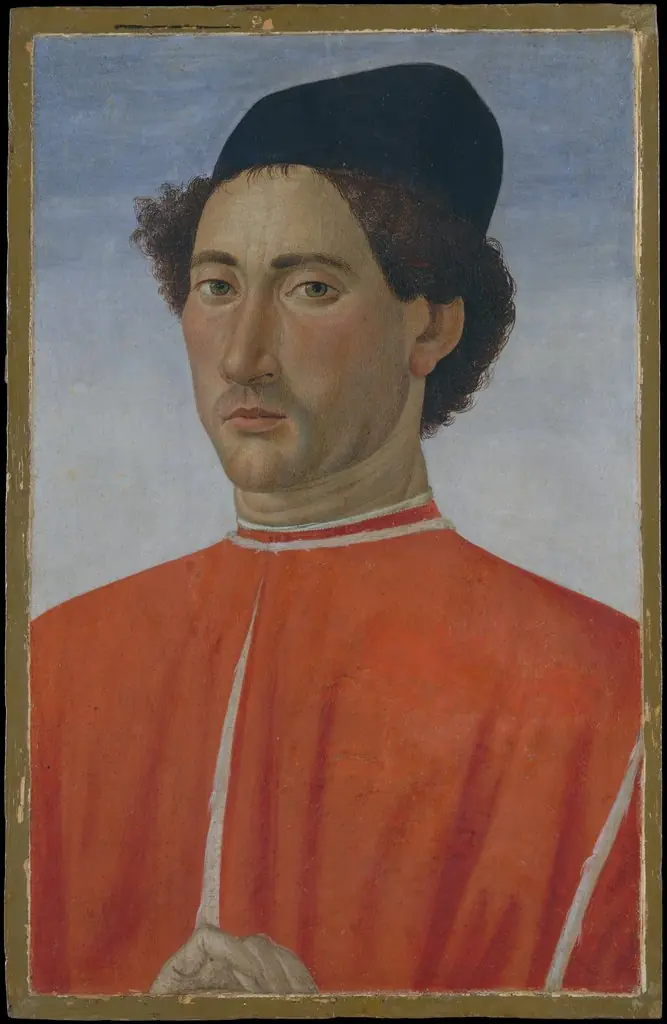
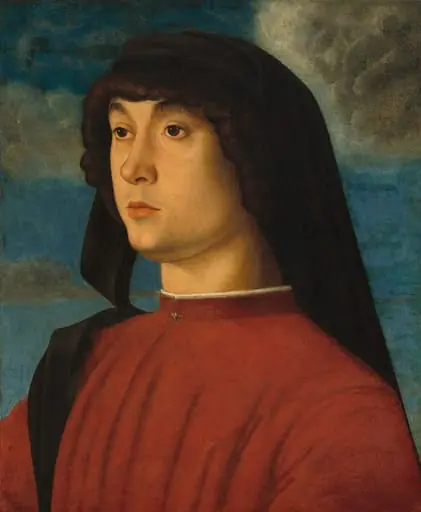
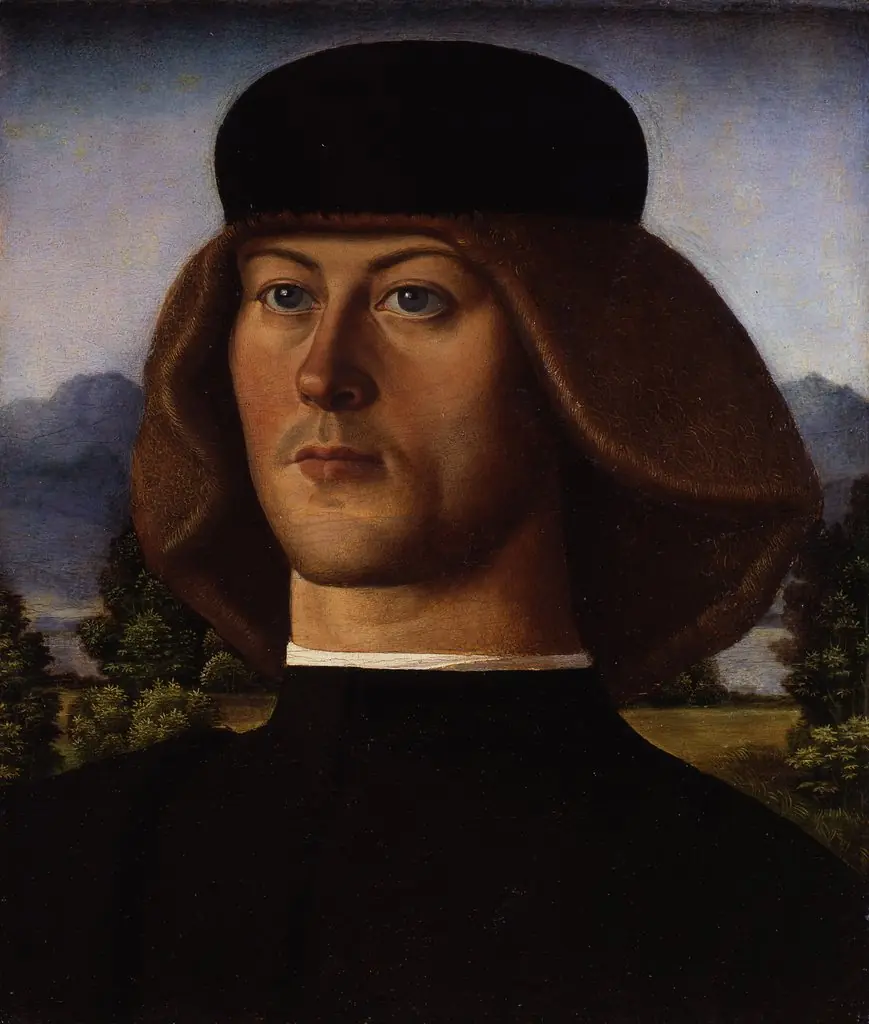
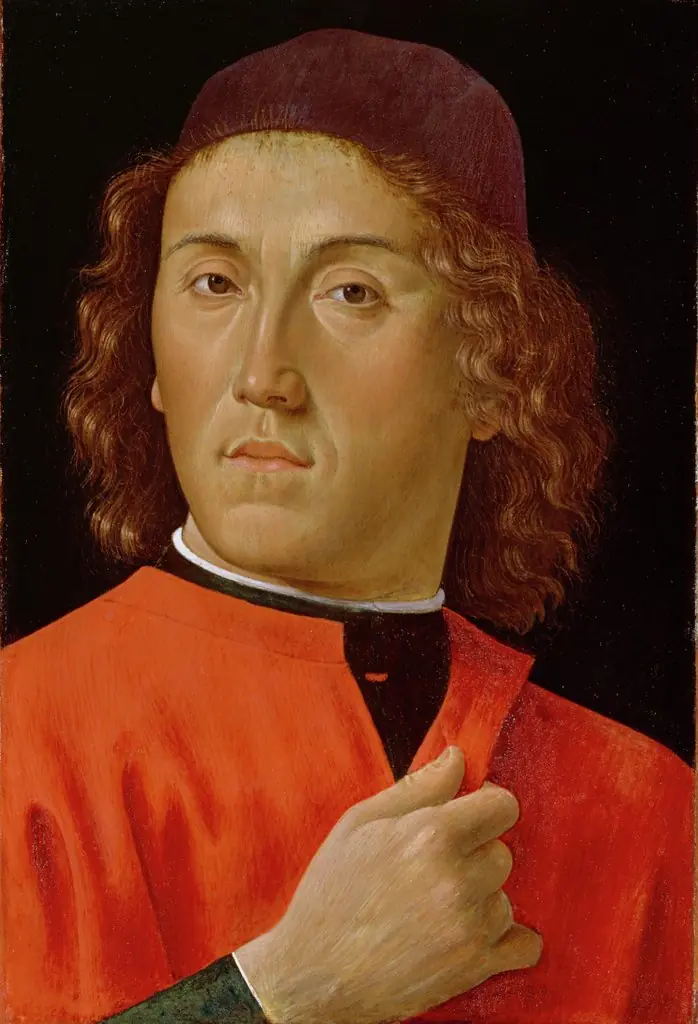
A young man with a serious expression, dressed in fine clothes and a hat. The pose and the careful detail in his garments stand out. Botticelli painted Giuliano de' Medici, a member of one of Italy's most powerful families, in 1479.
Subject & Meaning
The dove, traditionally a sign of fidelity, is placed on a withered twig, alluding to Giuliano’s premature death and his plighted promise to Simonetta Vespucci.
The painting shows Giuliano de' Medici, younger son of Piero de' Medici and brother of Lorenzo the Magnificent, who was assassinated during the Pazzi conspiracy of 1478. Botticelli renders him in three‑quarter view, his head turned sharply to the right, with a half‑open window and a dry branch bearing a dove. The dove, traditionally a sign of fidelity, is placed on a withered twig, alluding to Giuliano’s premature death and his plighted promise to Simonetta Vespucci.
The window’s partially open frame symbolizes the passage from life to death, a motif linked to Neoplatonic thought. Together these elements convey a memorial portrait that commemorates the fallen Medici figure.
Technique & Style
Executed circa 1478–1480, this portrait utilizes tempera paint on a poplar wood panel, a support considered superior to canvas during the Early Renaissance. The Washington version, measuring approximately 75.6 by 52.6 cm, is the largest and most detailed of three known iterations. Botticelli applied the fast-drying medium in multiple layers, a technique demanding significant technical expertise to achieve the work's subtle modeling.
The composition features a bust-length figure framed by a stone parapet against a background containing a window with one open shutter revealing a pale blue sky. A turtledove perched on a withered branch rests on the ledge. Stylistically, the subject is depicted in a three-quarter view turned nearly to profile, with downcast, half-closed eyes and a melancholic expression that suggests a posthumous rendering, possibly derived from a death mask.
The figure wears a red velvet tunic with fur trim over a brown shirt, conveying an air of haughty self-awareness typical of Florentine elite portraiture.
History & Provenance
The portrait is a tempera on panel by Sandro Botticelli, dated to 1479 (or c. 1478–1480 in other accounts). The identity of the original commissioner is not securely established, though Lorenzo il Magnifico has been suggested as a possible patron seeking to commemorate his brother after the 1478 Pazzi conspiracy, in which Giuliano was killed. At least one version was likely painted during Giuliano's lifetime, with further versions possibly produced posthumously using a death mask, as suggested by the lowered eyelids.
The Washington panel can be traced to the collection of Grand Duke Ferdinand I de' Medici (1551–1609) in Florence, identified through a queen-bee emblem on the reverse that also appears on an 1588 medal by Michele Mazzafirri. It passed to Marchese Alfonso Tacoli Canacci by 1796, descending through the Tacoli and Bellincini Bagnesi families in Modena. In 1940 it was sold through Zelindo Bonaccini to Count Vittorio Cini in Venice, then to Wildenstein & Co. in New York around 1948.
The Samuel H. Kress Foundation acquired it in June 1949 and gifted it to the National Gallery of Art in 1952.
Botticelli's portrait of Giuliano de' Medici is held by the National Gallery of Art in Washington, D.C., as part of the Samuel H. Kress Collection. Its documented provenance begins with Grand Duke Ferdinand I de' Medici in Florence, passing by 1796 to Marchese Alfonso Tacoli Canacci and descending through the Tacoli and Bellincini Bagnesi families in Modena. In 1940 it was sold through Zelindo Bonaccini to Count Vittorio Cini in Venice, then acquired by Wildenstein & Co. in New York around 1948.
The Samuel H. Kress Foundation purchased it in June 1949 and gifted it to the NGA in 1952. The sources do not record a specific exhibition history for the painting.
Context
The portrait of Giuliano de' Medici, painted by Sandro Botticelli in tempera on panel around 1479, is one of three known versions that document the brief life of the younger Medici brother, whose assassination in the 1478 Pazzi conspiracy gave the work a commemorative function; scholars note its complex symbolism, a half‑open window, a dove on a barren branch, and a medallion emblem, reflecting neoplatonic themes of life and death and linking the image to Botticelli’s broader use of emblematic motifs in Medici patronage. Critical literature, including analyses by Shearman and Langedijk, emphasizes the painting’s heightened spatial depth and psychological nuance compared with the Berlin and Bergamo counterparts, positioning it as a pivotal example of early Renaissance portraiture that blends private commemoration with public political resonance.
Legacy
The portrait of Giuliano de' Medici, painted by Botticelli circa 1478‑1480, quickly acquired a symbolic role as a memorial to the Medici brother killed in the 1478 Pazzi conspiracy; scholars note its likely commission by Lorenzo as a post‑humous tribute and its incorporation of motifs such as the half‑open window and the dove, which convey themes of fidelity and the transition from life to death. These iconographic choices have been cited in art‑historical studies as influential for later Medici portraiture, reinforcing Giuliano’s reputation as a charismatic yet tragic figure. The work’s inclusion in the Samuel H. Kress Collection and its 1952 donation to the National Gallery of Art amplified scholarly attention, cementing its status as a key example of Early Renaissance portraiture and contributing to the broader legacy of Botticelli’s Medici imagery.
Overview
This painting, titled Giuliano de' Medici, is a tempera portrait by Sandro Botticelli, created around 1479. It depicts Giuliano de' Medici, a prominent figure of his era. The work is characteristic of the Early Renaissance period, showcasing the artistic developments and cultural interests of late 15th-century Italy.
Own this work as a print
Artist & collection
Artist
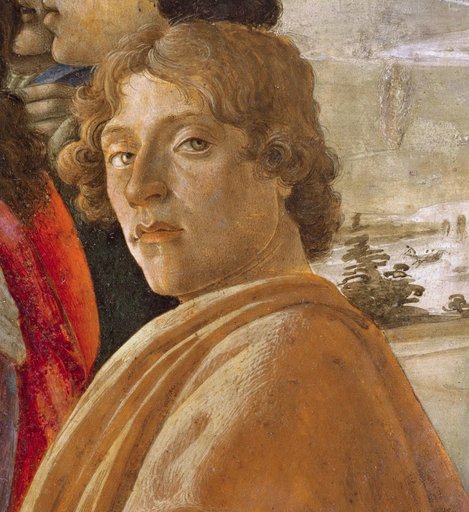
Alessandro di Mariano di Vanni Filipepi, better known as Sandro Botticelli or simply Botticelli, was an Italian painter of the Early Renaissance.