Artwork
Peasant Family Going to Market
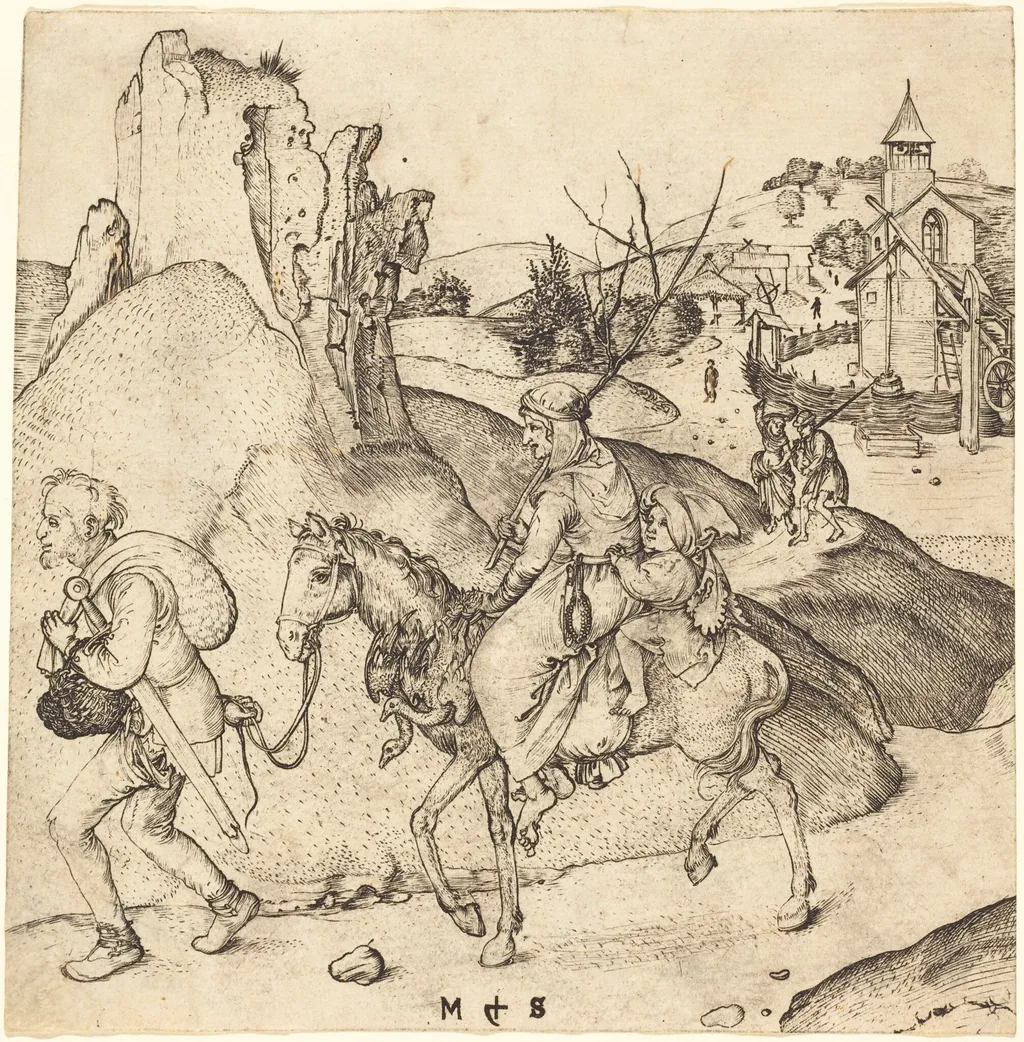
Peasant Family Going to Market is an ink print by the Renaissance artist Martin Schongauer. It dates from 1472 and is held in the collection of the National Gallery of Art.
About this work
Overview
The work belongs to the Northern Renaissance, a movement that emphasized close observation of ordinary life through detailed, small-scale imagery.
Created around 1472, this engraving on laid paper by Martin Schongauer captures a rural family journeying to market. As one of 116 known engravings by the Alsatian artist, it exemplifies his mastery of fine-line technique and his role as a leading printmaker in northern Europe before Dürer. The work belongs to the Northern Renaissance, a movement that emphasized close observation of ordinary life through detailed, small-scale imagery.
Subject & Meaning
The scene portrays a peasant family traveling along a dirt path: the father leads a small donkey, the mother carries an infant, and a child walks beside them. Behind, a village with a church and windmill suggests their place of origin. The composition avoids idealization, presenting daily labor and movement with quiet dignity. No overt symbolism is present, its significance lies in its unembellished depiction of common existence.
Technique & Style
Schongauer employed fine, controlled engraving lines to render textures, rough ground, coarse woolen garments, and the donkey’s shaggy coat, with remarkable precision. His goldsmith training informed his handling of metal tools, allowing subtle gradations of tone and intricate detail within a small format. The horizon is minimal, focusing attention on the figures and path, while the sky is reduced to a narrow band, enhancing the earthbound intimacy of the scene.
History & Provenance
The print emerged during Schongauer’s active years in Colmar, where he produced engravings for widespread distribution. Though no early ownership records are documented for this specific impression, similar works circulated across Europe through print dealers. Its survival in multiple copies reflects the growing demand for affordable, portable images of daily life in the late 15th century.
Context
In the decades before Dürer’s rise, Schongauer’s engravings helped establish printmaking as a serious artistic medium in northern Europe. While Italian artists focused on classical ideals, northern contemporaries turned to rural and domestic subjects. This print aligns with a broader trend of observing peasant life not as caricature, but as a legitimate subject for artistic representation.
Legacy
Schongauer’s technical rigor influenced generations of printmakers, including Dürer, who studied his engravings closely. This work contributed to the legitimization of genre scenes in print form, expanding the scope of what could be rendered in fine art. Its enduring presence in collections underscores its role in the evolution of Northern Renaissance visual culture.
Own this work as a print
Artist & collection
Artist
Martin Schongauer (c. 1450–1453, Colmar – 2 February 1491, Breisach), also known as Martin Schön ("Martin beautiful") or Hübsch Martin ("pretty Martin") by his contemporaries, was an Alsatian engraver and painter. He…

- The Good Samaritan Placing the Traveler on a Mule
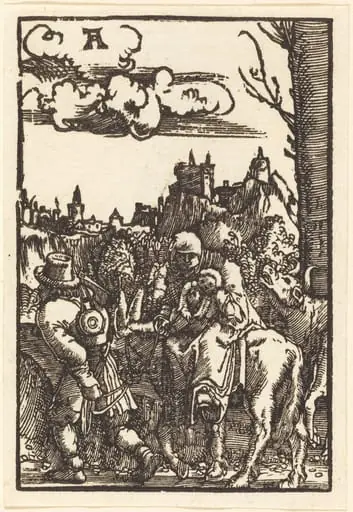 The Flight into Egypt
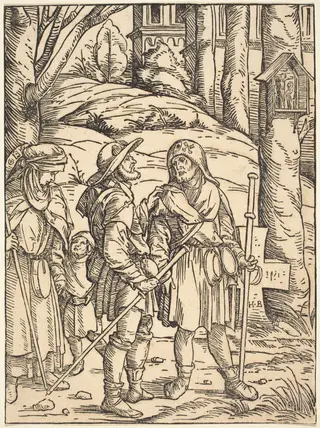 Pilgrims at a Wayside Shrine
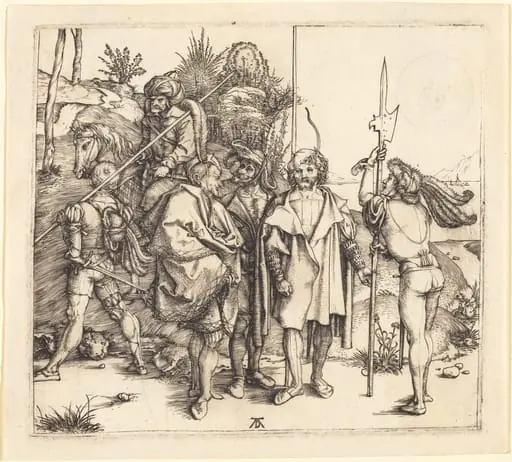 Five Soldiers and a Turk on Horseback
 Five Soldiers and a Turk on Horseback
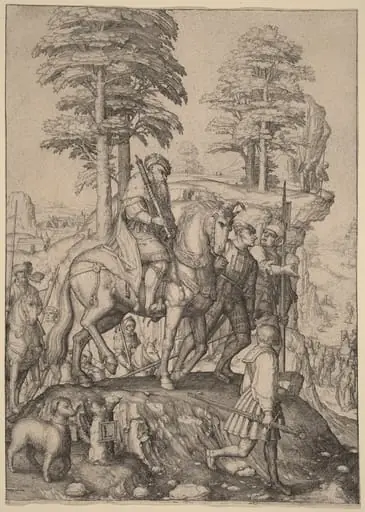 Abigail and David
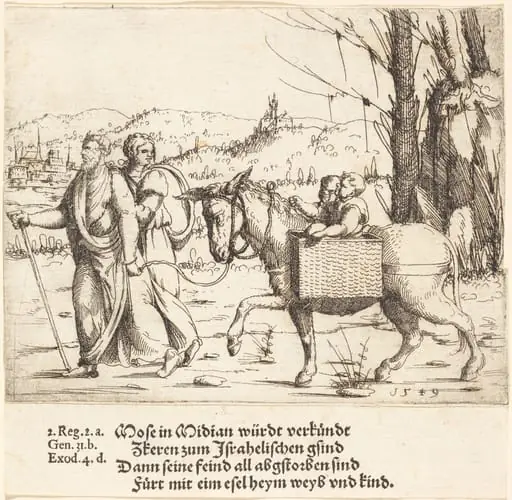 Moses Returns to Egypt from Midian
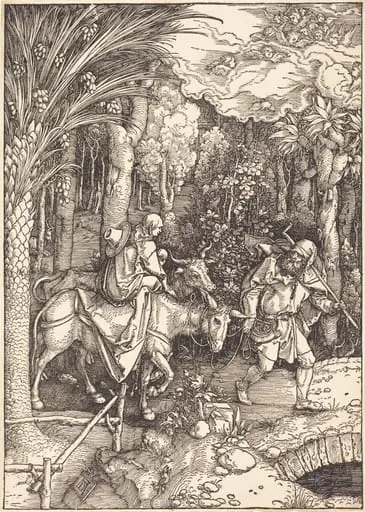 The Flight into Egypt
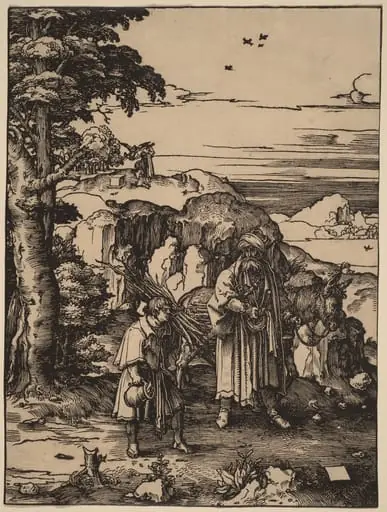 Abraham Going to Sacrifice Isaac
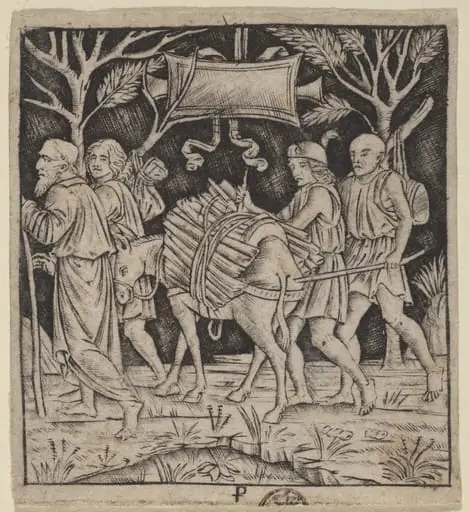 Abraham and Isaac on Their Way to Mount Moriah
 The Holy Family Returns from Egypt
 The Fall and Redemption of Man: The Flight into Egypt