Artwork
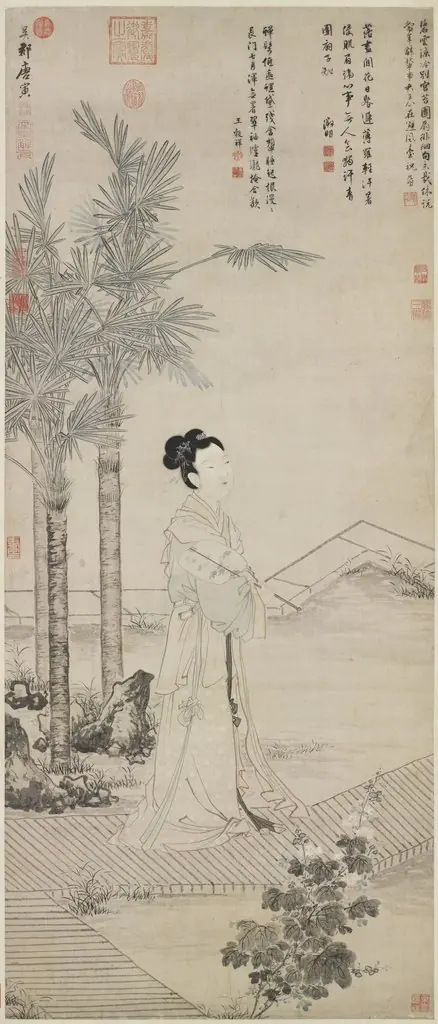
明 沈碩 仿仇英文玉圖 軸|Lady in a Bamboo Grove after Qiu Ying
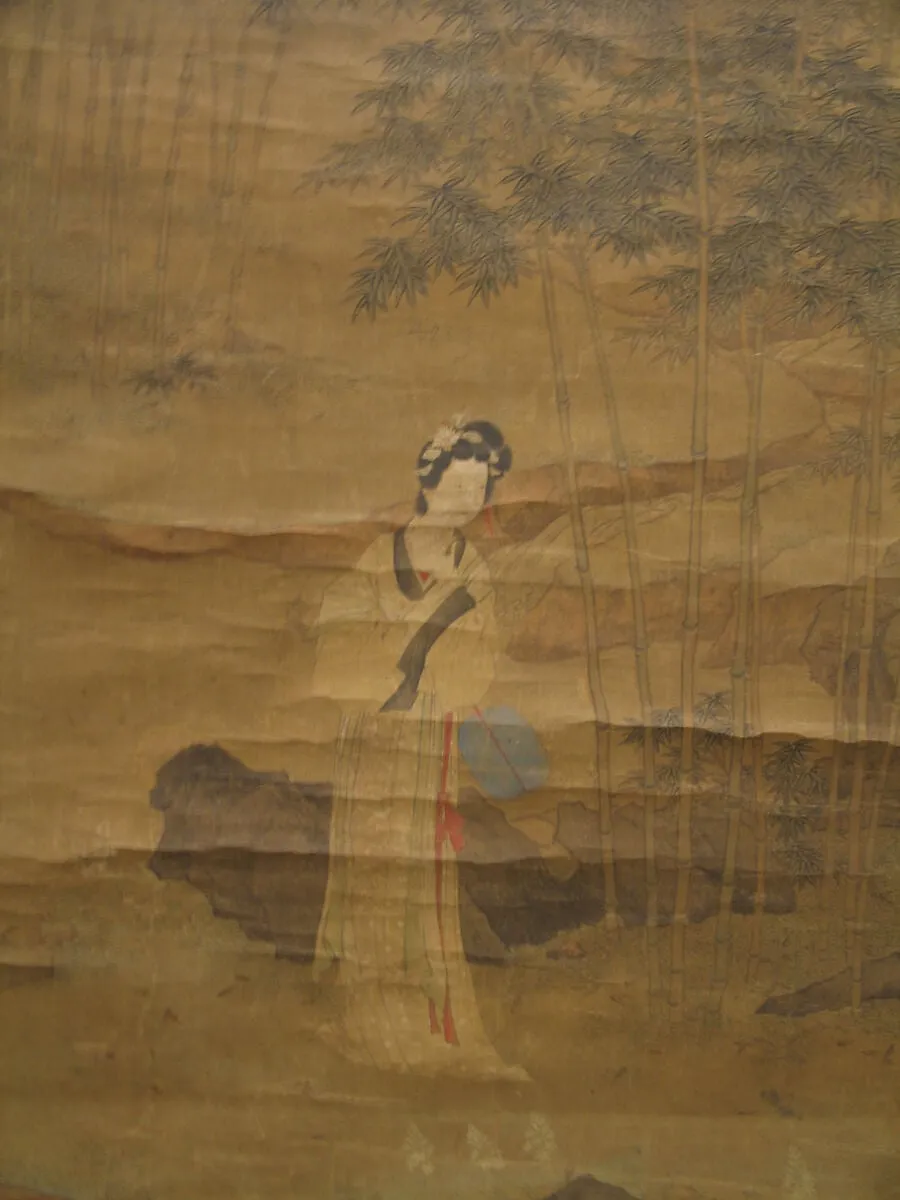
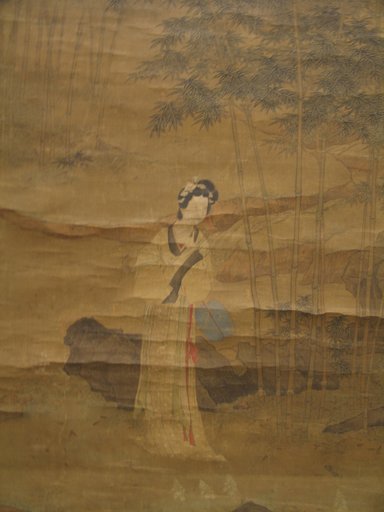
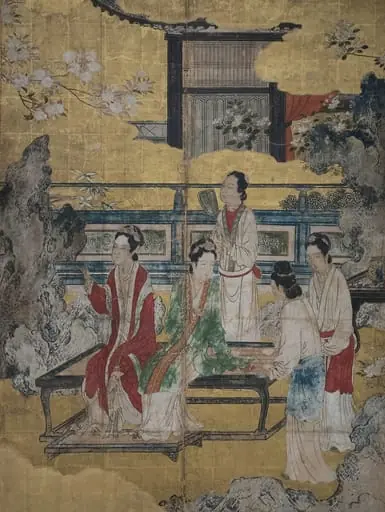
明 沈碩 仿仇英文玉圖 軸|Lady in a Bamboo Grove after Qiu Ying is an ink painting by the Ming dynasty painting artist Shen Shuo. It dates from 1594 and is held in the collection of the Metropolitan Museum of Art.
About this work
Technique & Style
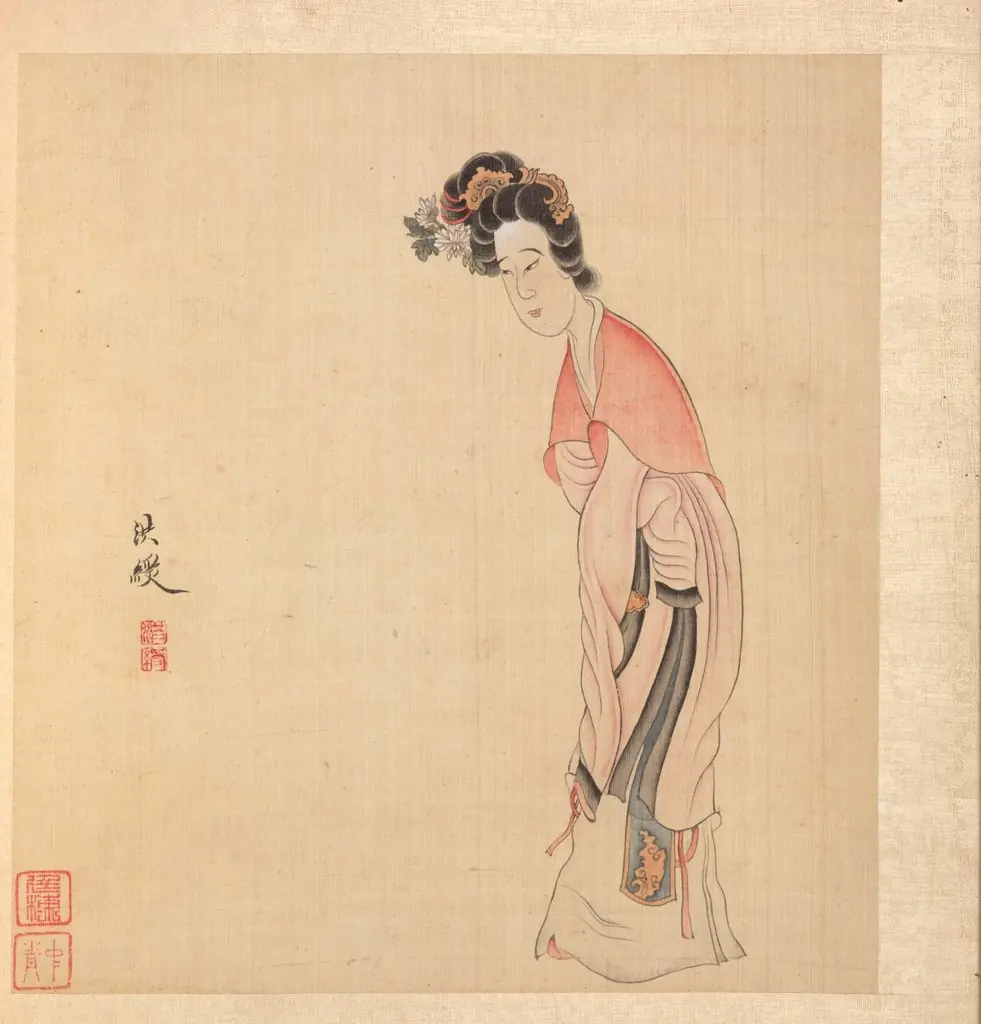
The composition formally depicts a solitary woman situated within a grove of bamboo, aligning with landscape genre conventions.
Executed in 1594 by Shen Shuo, this work is a hanging scroll painted with ink and color on a silk support. The composition formally depicts a solitary woman situated within a grove of bamboo, aligning with landscape genre conventions. Stylistically, the piece functions as an imitation of Qiu Ying, as indicated by its title, suggesting the artist adopted the specific brushwork and aesthetic approach characteristic of that master.
The application of color alongside ink on the smooth silk surface allows for the detailed rendering of the foliage and figure, creating a refined visual texture typical of Ming dynasty courtly or literati-inspired painting techniques.
History & Provenance
Created in 1594 in China, this hanging scroll titled Lady in a Bamboo Grove after Qiu Ying was executed by the artist Shen Shuo. The work, rendered in ink and color on silk, functions as a stylistic homage to the earlier master Qiu Ying, as indicated by its title. The painting depicts a female figure situated within a bamboo grove.
The work is held by The Metropolitan Museum of Art, New York, where it is catalogued under accession number 1987.231. It came to the Museum from the C. C. Wang family collection; earlier ownership prior to that is not documented in the available sources.
Legacy
The hanging scroll by Shen Shuo, dated 1594 and depicting a woman amid bamboo, is part of the Metropolitan Museum of Art’s collection, a placement that reflects its value for the study of late Ming painting. Its presence in a major museum allows scholars to examine how the artist reinterpreted the compositional formulas of Qiu Ying, contributing to the ongoing assessment of Shen Shuo’s work within late‑Ming visual culture.
Overview
Painted in 1594 by Shen Shuo, 'Lady in a Bamboo Grove after Qiu Ying' is a hanging scroll executed in ink and color on silk. The work depicts a solitary female figure standing amidst a dense grove of slender bamboo. She wears a long blue robe, her hands concealed within her sleeves, presenting a demeanor of quiet composure.
The composition focuses on the verticality of the bamboo stalks, which frame the central figure. Shen Shuo employs quick, light brushstrokes for the foliage, a technique reminiscent of calligraphy that conveys movement and texture. While the title explicitly acknowledges the influence of the earlier Ming master Qiu Ying, Shen Shuo adapts this legacy to create a distinct visual statement.
The painting reflects the late Ming tradition of emulating past masters while asserting individual artistic identity. Created during a period of significant artistic revival in China, this work serves as a testament to the enduring appeal of Qiu Ying's style and Shen Shuo's skill in interpreting it through the lens of late sixteenth-century aesthetics.
Subject & Meaning
The painting features a woman dressed in a long blue robe, standing composedly amidst a grove of slender bamboo stalks. Her hands are folded within her sleeves, and her expression conveys tranquility. The depiction of a solitary figure in nature, particularly with bamboo, often alludes to virtues such as resilience and purity in Chinese artistic traditions.
Context
This painting exemplifies the Ming dynasty practice of artists reinterpreting the works of their predecessors, a method of both homage and individual expression. The theme of women depicted in natural settings, often with symbolic plants like bamboo, was a recurring motif in Chinese painting, inviting contemplation on human virtues and the natural world.
Artist & collection