Artwork
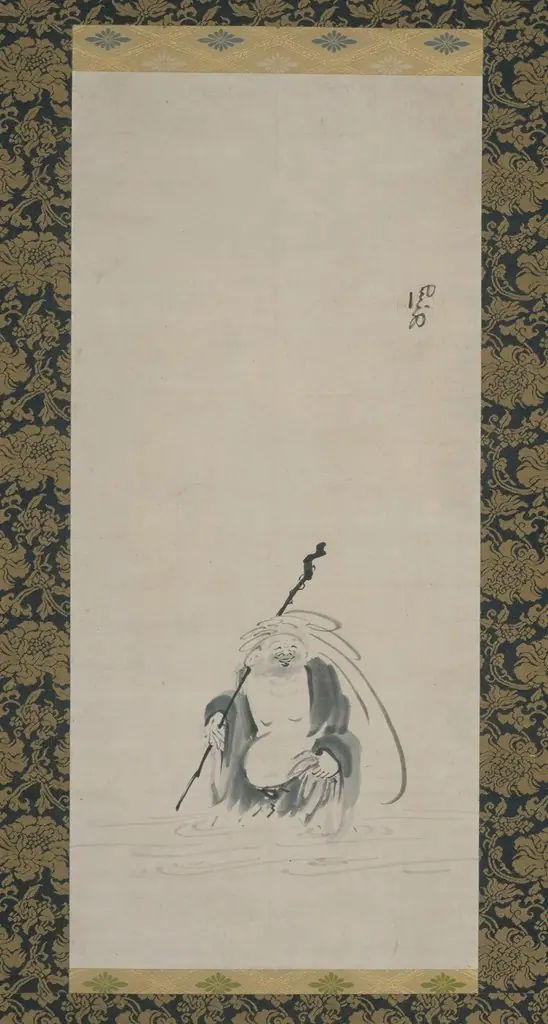
曽我蕭白筆 太公望図|Tōkaibō with a Fishing Basket
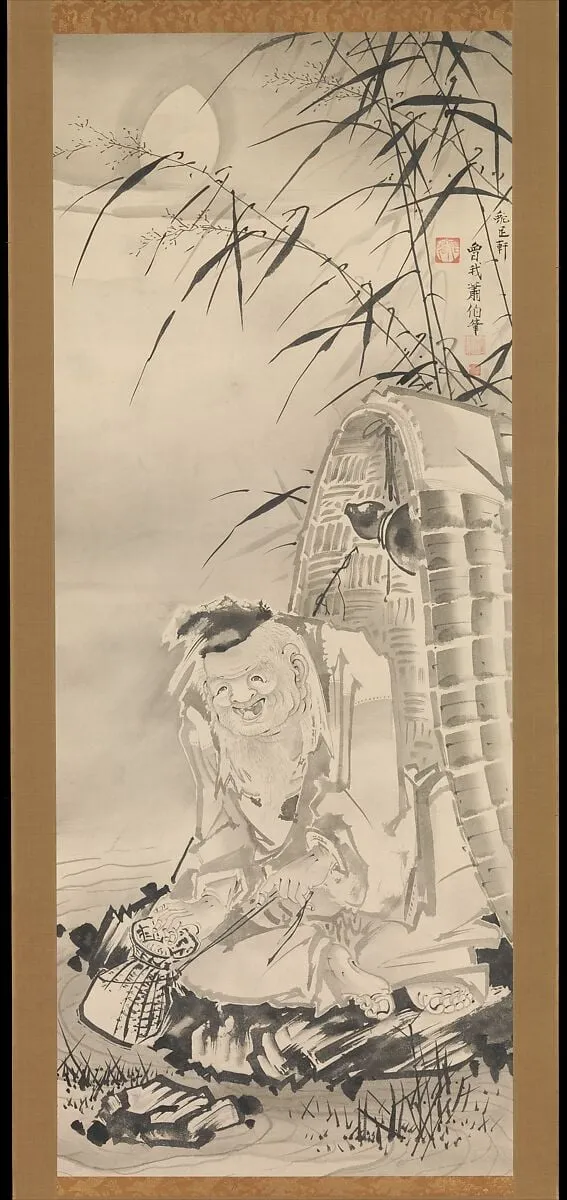
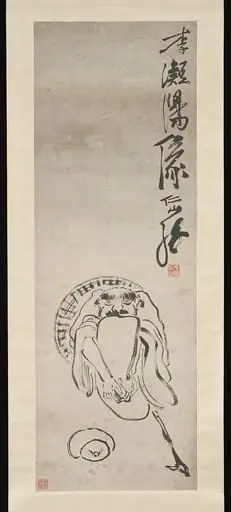
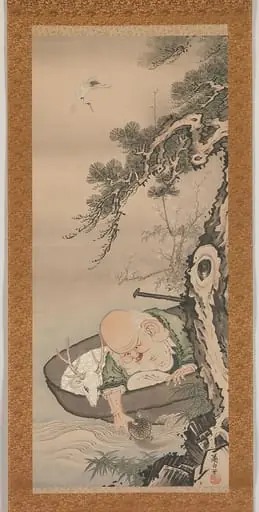
曽我蕭白筆 太公望図|Tōkaibō with a Fishing Basket is an ink painting by the Nanga artist Soga Shōhaku. It dates from 1768 and is held in the collection of the Metropolitan Museum of Art.
About this work
Technique & Style
The work is executed as a hanging scroll using ink on paper, employing the suiboku-ga (water-ink) technique characteristic of late Edo-period literati-inspired painting. The composition relies on bold, calligraphic brushwork to delineate the seated figure’s robes and features, with ink wash modulating tonal depth across the figure and background. Stylistically, the painting emphasizes expressive line over naturalistic detail, aligning with Shōhaku’s tendency to distill form into graphic, almost abstract patterns that heighten the subject’s presence.
History & Provenance
It was first exhibited as part of the museum’s collection of Japanese paintings, with the work remaining on view in the Asian art galleries through the present.
Soga Shōhaku painted 曽我蕭白筆 太公望図|Tōkaibō with a Fishing Basket in 1768 as a hanging scroll in ink on paper, depicting a man in the portrait genre. The work entered the collection of the Metropolitan Museum of Art, where it remains on display.
The painting was created in Japan and has been part of the museum’s holdings since its acquisition, reflecting a continuous ownership chain from the artist to the institution.
The hanging scroll by Soga Shōhaku depicting a man was acquired by the Metropolitan Museum of Art and is cataloged under its current accession. It was first exhibited as part of the museum’s collection of Japanese paintings, with the work remaining on view in the Asian art galleries through the present.
Overview
Soga Shōhaku’s hanging scroll, titled “Tōkaibō with a Fishing Basket,” dates to around 1768 and is executed in ink on paper. The work presents a solitary figure, a man in a straw hat and ragged garments, positioned beside a fishing pole. The composition is rendered in a single, unadorned plane, emphasizing the figure’s presence within a sparse setting.
Subject & Meaning
The figure is identified as the legendary Chinese hermit known as Taigong Wang, a symbol of rustic wisdom and detachment from courtly life. Shōhaku’s portrayal, however, accentuates a mischievous, almost feral expression, suggesting a reinterpretation that foregrounds the hermit’s untamed spirit rather than serene enlightenment.
Artist & collection

Artist
Shōhaku spent his life in Kyoto, the creative heart of Japan, where he painted scrolls and screens that looked nothing like the soft landscapes of his day.