Artwork
Lin Heqing and Plum Blossoms
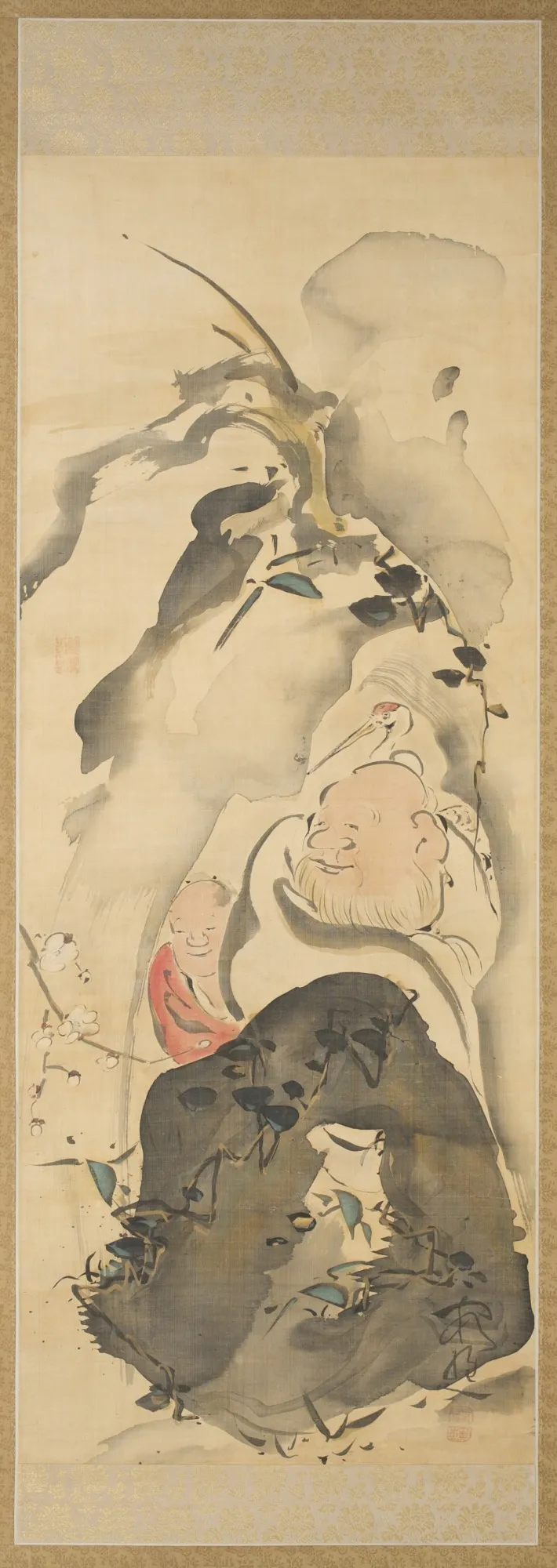
Lin Heqing and Plum Blossoms is an unspecified painting by the Nanga artist Ike Taiga. It dates from 1759 and is held in the collection of the Detroit Institute of Arts.
About this work
Overview
This style, influenced by Chinese literati ideals, emphasized personal expression and scholarly themes over formal technique.
Ike no Taiga painted Lin Heqing and Plum Blossoms circa 1759, during the Edo period, as part of the bunjinga tradition. This style, influenced by Chinese literati ideals, emphasized personal expression and scholarly themes over formal technique. Taiga, alongside Yosa Buson, helped define this movement in Japan by blending Chinese literary references with distinctive Japanese brushwork and compositional freedom.
Subject & Meaning
The painting portrays Lin Heqing, a Tang-dynasty Chinese scholar famed for his love of plum blossoms and reclusive lifestyle. Depicted reclining peacefully beneath blooming branches, he embodies the literati ideal of harmony with nature and quiet contemplation. The falling petals suggest transience, reinforcing themes of impermanence central to both Chinese poetry and Japanese aesthetic thought.
Technique & Style
Taiga employed loose, expressive ink washes and delicate line work to render the figure and blossoms. The plum petals vary in tone from pale pink to near-white, suggesting depth without heavy modeling. The background is softly graded, avoiding detail to enhance the sense of stillness. His brushwork balances spontaneity with restraint, characteristic of bunjinga’s emphasis on personal gesture over polished finish.
History & Provenance
Created in the mid-18th century, the work reflects Taiga’s engagement with Chinese literary culture during a time when Japanese artists increasingly looked to China for intellectual inspiration. While its early ownership is undocumented, it entered institutional collections in the 20th century, where it is now preserved as a representative example of Edo-period literati painting.
Context
During the Edo period, urban elites cultivated an interest in Chinese scholarship and aesthetics, leading to the rise of bunjinga as a distinct Japanese art form. Taiga’s work responded to this trend by reimagining Chinese historical figures through a local lens. Unlike official court art, these paintings valued individuality and poetic allusion, appealing to educated amateurs who saw art as an extension of literary life.
Legacy
Taiga’s integration of Chinese themes with Japanese brush sensibilities influenced later generations of literati painters. Lin Heqing and Plum Blossoms remains a quiet exemplar of how cultural exchange shaped Edo-period art, not through imitation, but through reinterpretation. Its enduring presence in collections underscores its role in defining a uniquely Japanese approach to classical Chinese ideals.
Artist & collection

 Pijany Zhong Kui - Władca demonów
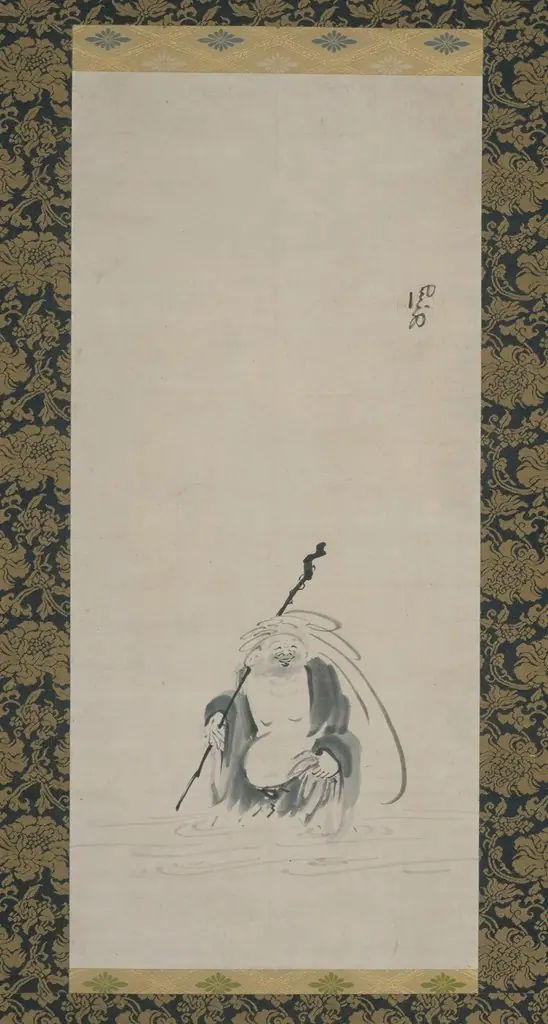 Hotei Crossing a Stream
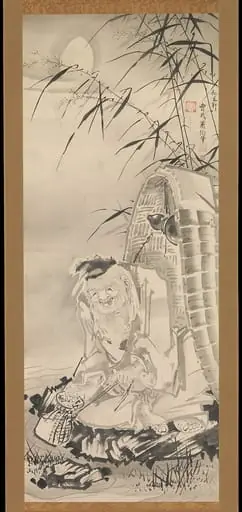 曽我蕭白筆 太公望図|Tōkaibō with a Fishing Basket
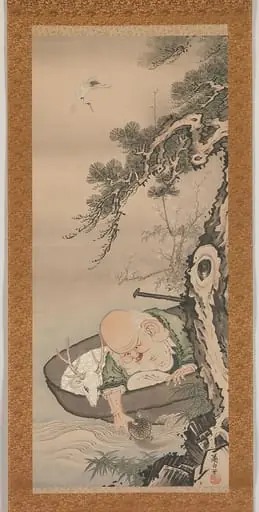 曽我蕭白筆 寿老人図|The God of Good Fortune Jurōjin
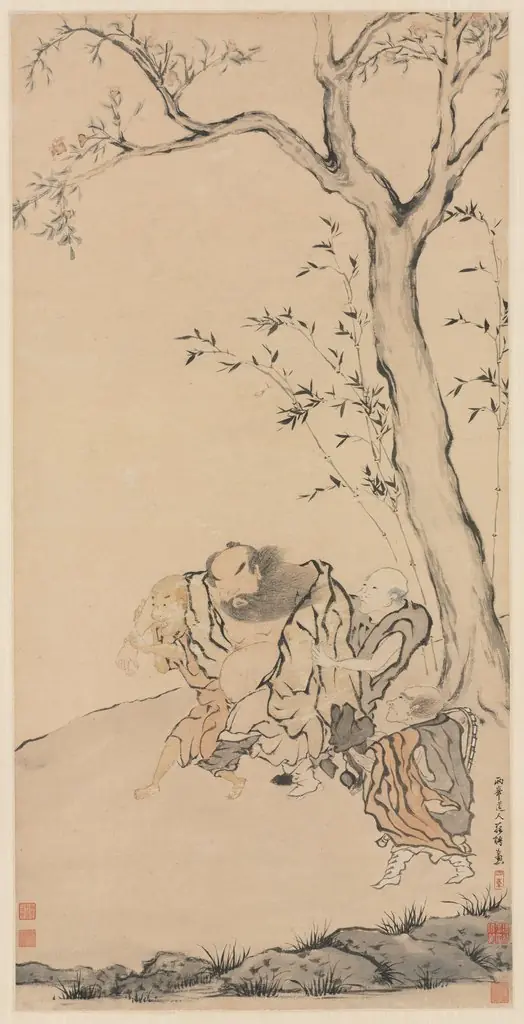 Zhong Kui Supported by Ghosts
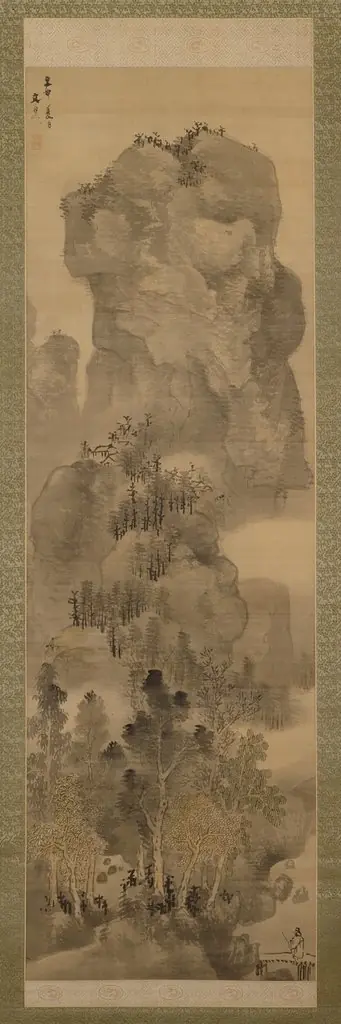 Summer Landscape
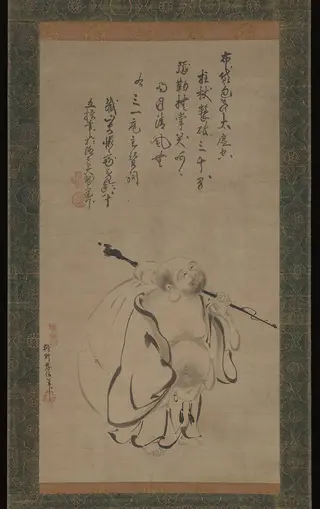 狩野孝信筆 布袋図「拄杖擊破三千界。彌勒撫掌笑呵呵,明月清風無。」|Hotei
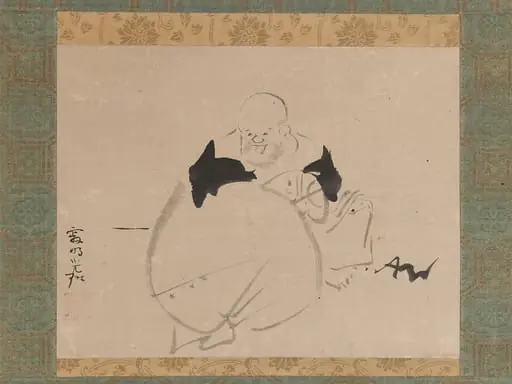 Untitled
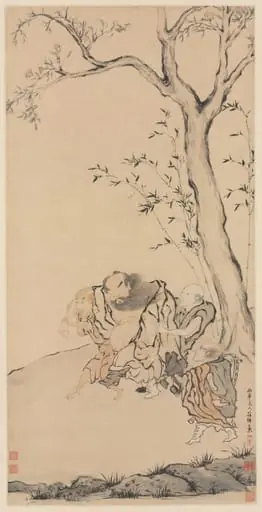 Zhong Kui Supported by Ghosts
 壺天聚樂圖|Merry Gatherings in the Magic Jar
 Plum Trees
- Autumn Landscape 秋景山水 図 (Shūkei sansui zu)