Artwork
曽我蕭白筆 峨山南宗賛 天台山石橋図|Lions at the Stone Bridge of Mount Tiantai
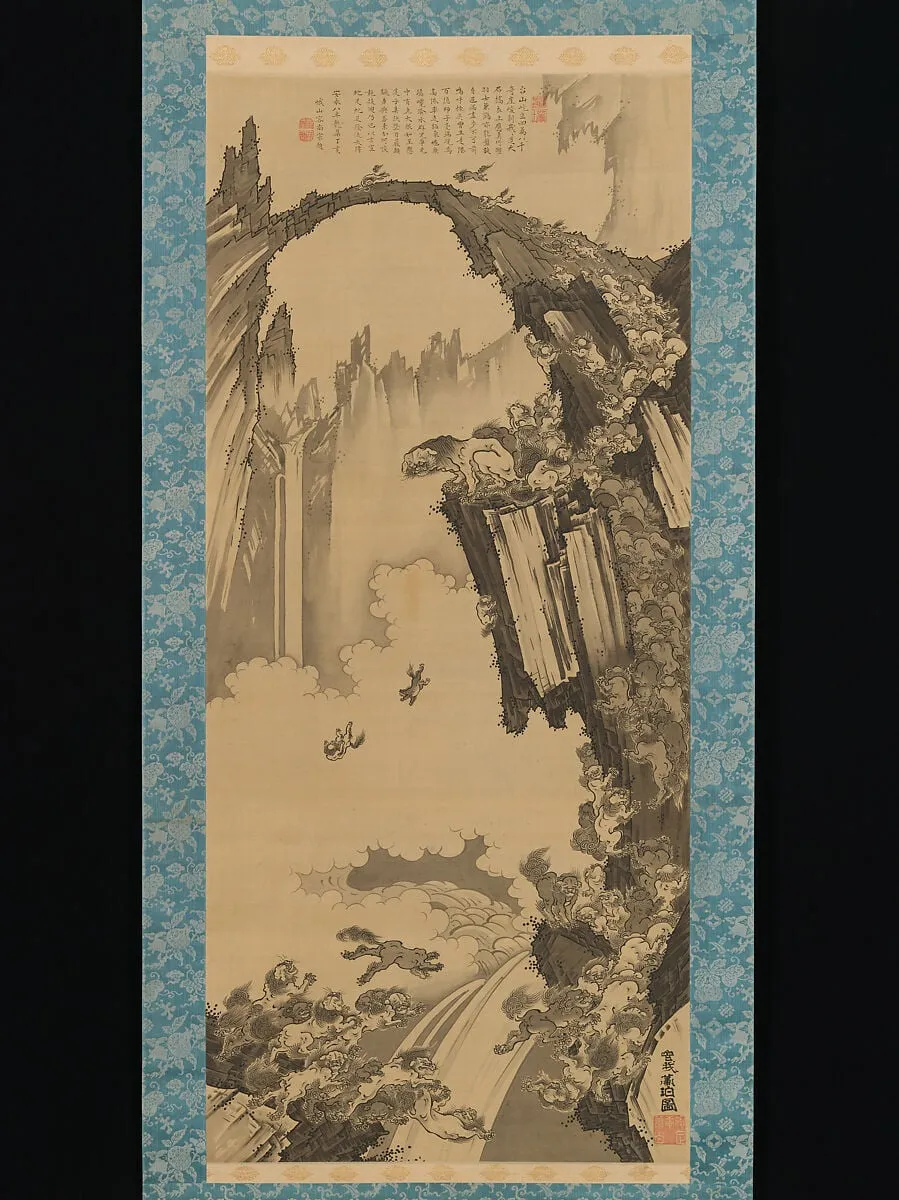
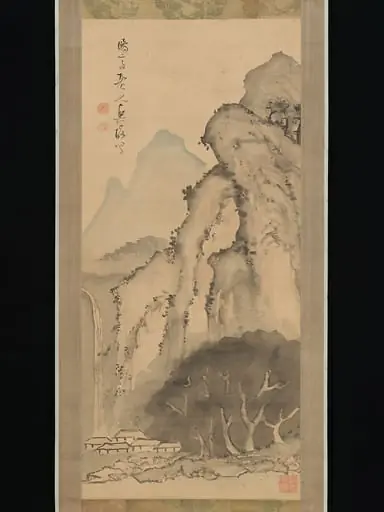
曽我蕭白筆 峨山南宗賛 天台山石橋図|Lions at the Stone Bridge of Mount Tiantai is an ink painting by the Baroque artist Soga Shōhaku. It dates from 1779 and is held in the collection of the Metropolitan Museum of Art.
About this work
The bridge is famous in Buddhist stories, a place where the earthly and spiritual worlds almost touch.
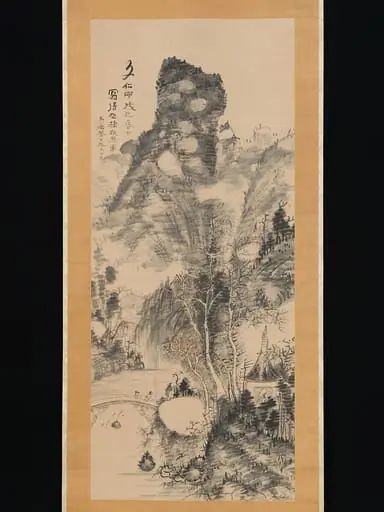
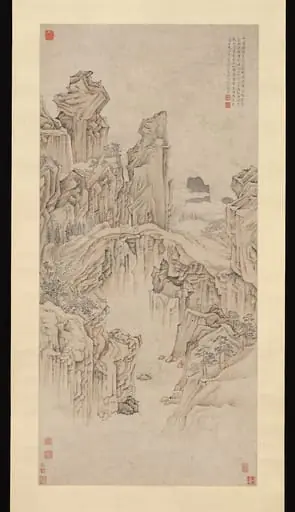
You see two lions crossing a narrow stone bridge high on a misty mountain. One lion looks back, the other stares ahead, their bodies drawn in quick, bold ink strokes.
Shōhaku painted this in 1779, but he wasn’t copying real lions, he probably never saw one. He worked from old Chinese paintings and his own wild imagination. The bridge is famous in Buddhist stories, a place where the earthly and spiritual worlds almost touch.
If you like the energy of ink lines, look up the technique called cross-hatching.
Technique & Style
Executed in 1779 by Soga Shōhaku, this work is a hanging scroll featuring ink applied directly onto a silk support. The composition depicts a landscape scene centered on the Stone Bridge of Mount Tiantai, incorporating motifs of lions and mountainous terrain. As a monochromatic ink painting, the piece relies on the interaction between the fluid medium and the woven texture of the silk to define form and atmosphere.
The classification as a landscape genre piece highlights its focus on natural elements and specific legendary locations. The use of ink on silk was a prevalent method for such hanging scrolls in eighteenth-century Japan, allowing for the dynamic brushwork characteristic of Shōhaku's style.
History & Provenance
Soga Shōhaku created Lions at the Stone Bridge of Mount Tiantai in Japan in 1779. Executed as a hanging scroll using ink on silk, the work dates from late in the artist's career. The painting's title includes a reference to Gasan Nansō, indicating it was inscribed or commissioned in association with him, though specific details regarding the original patron or early ownership are not recorded in the available sources. The artwork eventually entered the collection of the Metropolitan Museum of Art, where it is currently housed.
Overview
This hanging scroll, titled Lions at the Stone Bridge of Mount Tiantai, was created by the Japanese artist Soga Shōhaku in 1779. Executed with ink on silk, the painting presents a dramatic landscape scene. It features two powerful lions navigating a precarious stone bridge, set high amidst a misty, mountainous environment. The work exemplifies Shōhaku's distinctive approach to traditional subjects.
Subject & Meaning
The artwork portrays two lions traversing a narrow stone bridge, a motif deeply rooted in Buddhist narratives. This "Stone Bridge of Mount Tiantai" is a legendary site, often understood as a symbolic boundary where the mundane and spiritual realms converge. One lion gazes backward, while the other looks forward, perhaps suggesting a journey or a moment of transition within this significant mythological landscape.
Context
Shōhaku's depiction of lions and the legendary Mount Tiantai bridge reflects a long-standing tradition in East Asian art. Rather than relying on direct observation, the artist drew inspiration from existing Chinese paintings that featured similar mythical beasts and sacred landscapes. This approach allowed Shōhaku to combine historical precedents with his unique, often unconventional, artistic sensibility, producing a work that is both traditional and distinctly personal.
Artist & collection

Artist
Shōhaku spent his life in Kyoto, the creative heart of Japan, where he painted scrolls and screens that looked nothing like the soft landscapes of his day.