Artwork
Emperor Charles V in armour
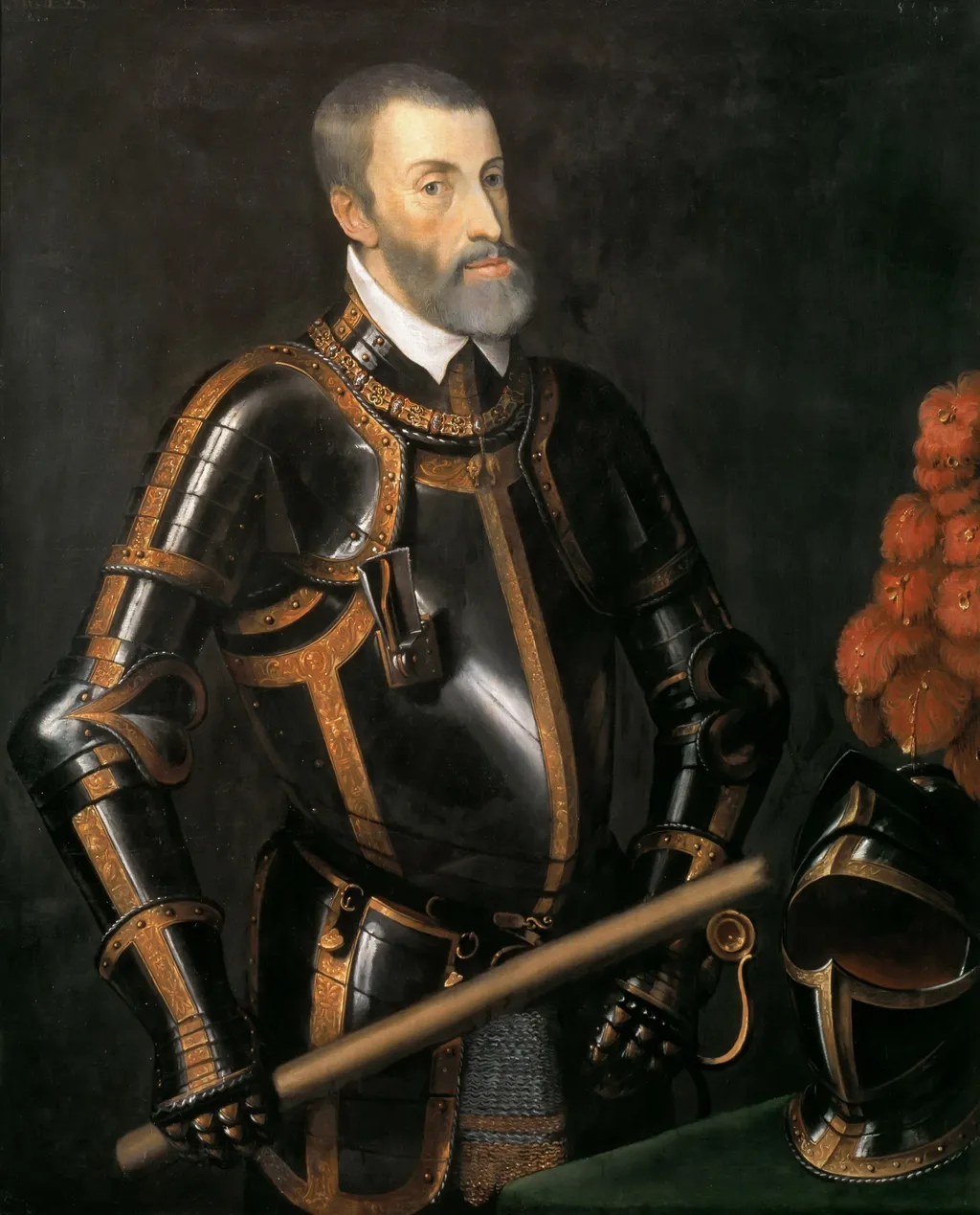
Emperor Charles V in armour is an unspecified painting by the Mannerist artist Unknown. It dates from 1550 and is held in the collection of the Kunsthistorisches Museum. The work is a painted portrait of a man in richly decorated black and gold armor, holding a long brown object in his right hand.
About this work
Subject & Meaning
The depiction thus functions as a visual assertion of his power and dynastic legitimacy.
The painting portrays Charles V wearing the elaborate Helmschmied armour that was crafted for him, presenting the emperor as both a sovereign and a military leader. As an anonymous copy after a lost work by Titian, the image follows the iconographic tradition established by Titian’s imperial portraits, in which armour signifies Charles V’s authority, chivalric virtue, and his role as defender of Christendom. The depiction thus functions as a visual assertion of his power and dynastic legitimacy.
History & Provenance
Created in 1550, this portrait depicts Emperor Charles V wearing Helmschmied armour. The work is executed by an anonymous artist who based the composition on a lost original painting by Titian. Today, the piece is held in the collection of the Kunsthistorisches Museum, where it remains on display.
Context
The painting Emperor Charles V in armour, created circa 1550 and attributed to an anonymous follower of Titian, entered the Kunsthistorisches Museum collection, where it has been studied as a significant example of early Netherlandish portraiture within Habsburg visual propaganda. Scholarship emphasizes its role in shaping imperial iconography, reflecting both the political authority of Charles V and the artistic conventions of 16th-century European portraiture. The work's stylistic proximity to Titian's lost original underscores the transmission of High Renaissance portrait techniques through workshop replication, situating it within broader discussions of authorship and influence in Renaissance art.
Its enduring presence in museum displays highlights its recognized value in tracing the evolution of state portraiture and artistic patronage in early modern Europe.
Overview
The work is a painted portrait of a man in richly decorated black and gold armor, holding a long brown object in his right hand. He is shown wearing a white, collared shirt beneath the cuirass, his short dark hair and gray beard framing a composed, confident expression. The background is rendered in a subdued, dark tone that emphasizes the figure’s solemn presence.
Technique & Style
Executed in oil on canvas, the painting demonstrates meticulous attention to the reflective surfaces of the armor, with gold gilding and intricate embossing rendered through fine brushwork. The contrast between the dark background and the luminous metal highlights the three‑dimensionality of the figure, while the subdued palette and soft modeling of the flesh suggest a Northern Renaissance sensibility.
Artist & collection









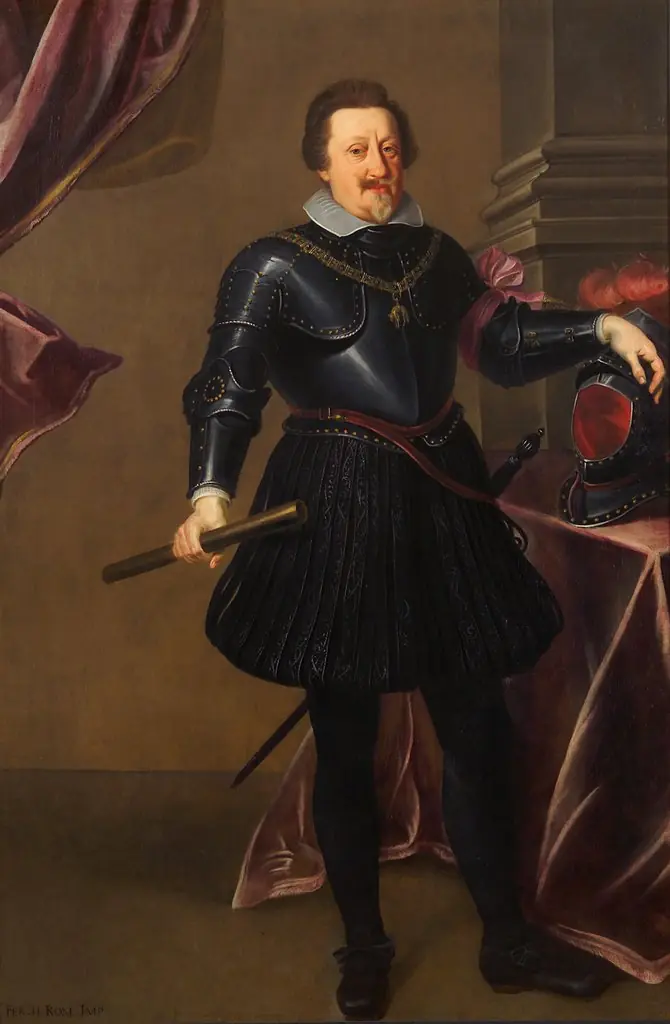 Emperor Ferdinand II. (1578-1637) in black armor, full-length
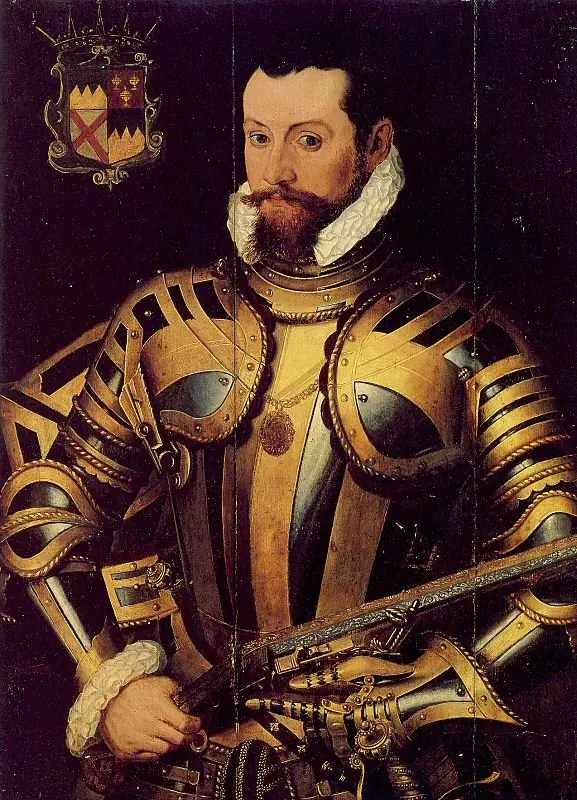 Portrait of Thomas Butler, 10th Earl of Ormonde (1532-1614)
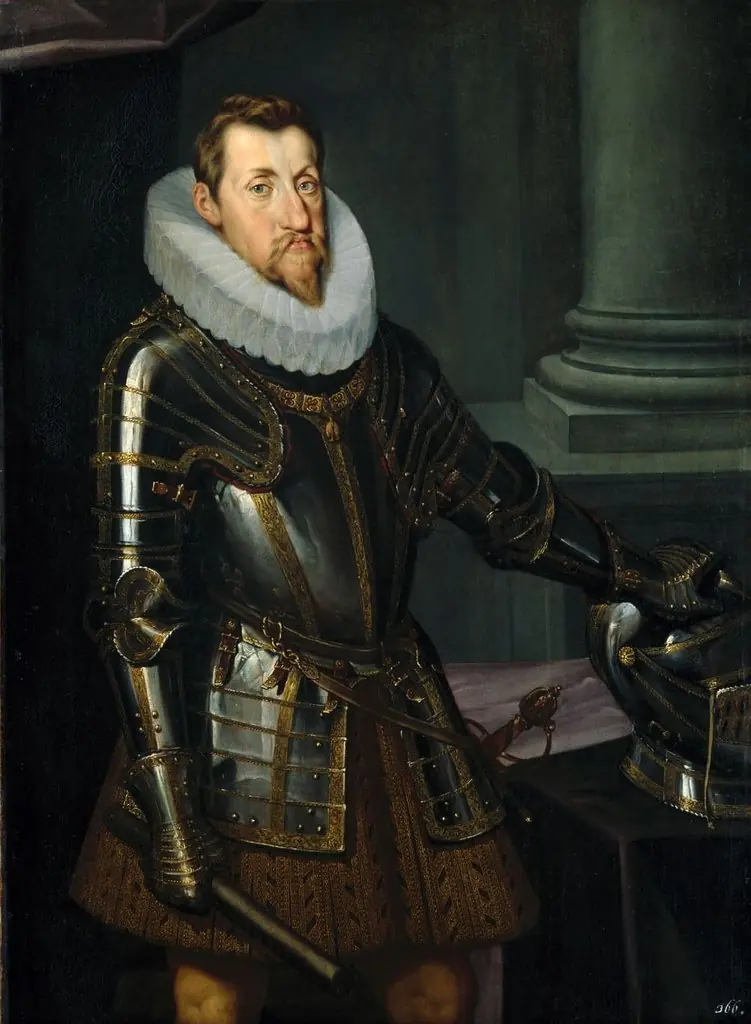 Portrait of Ferdinand II, Holy Roman Emperor (1578-1637)
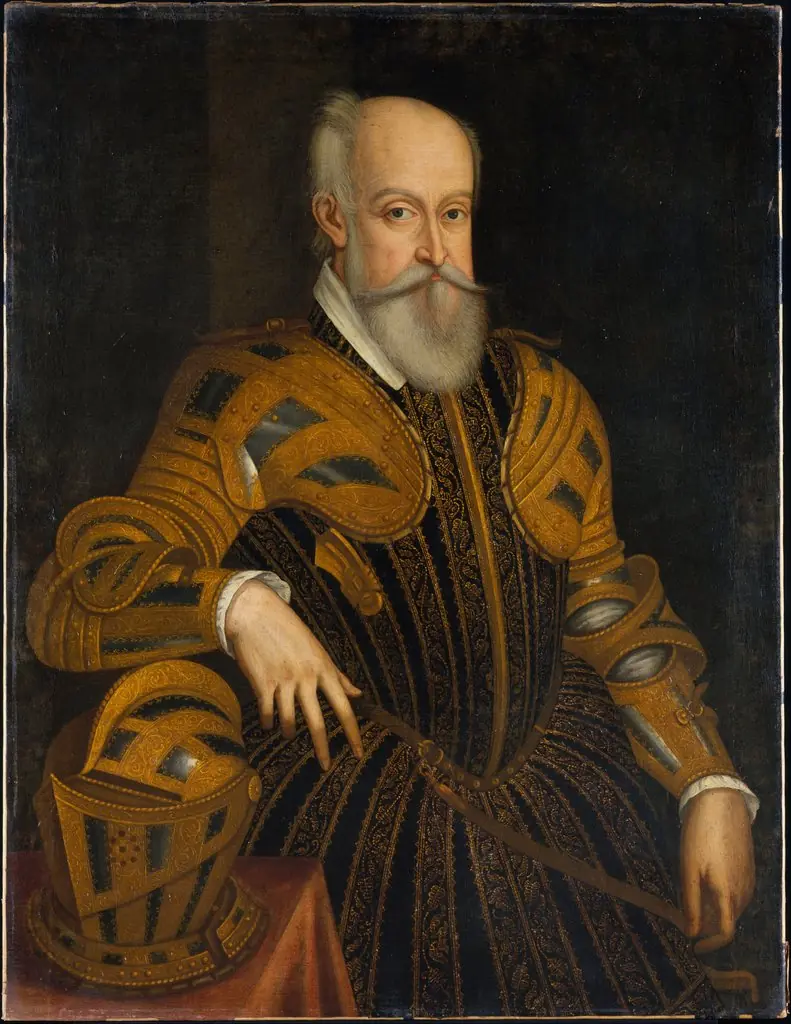 Alfonso II d'Este (1533–1597), Duke of Ferrara
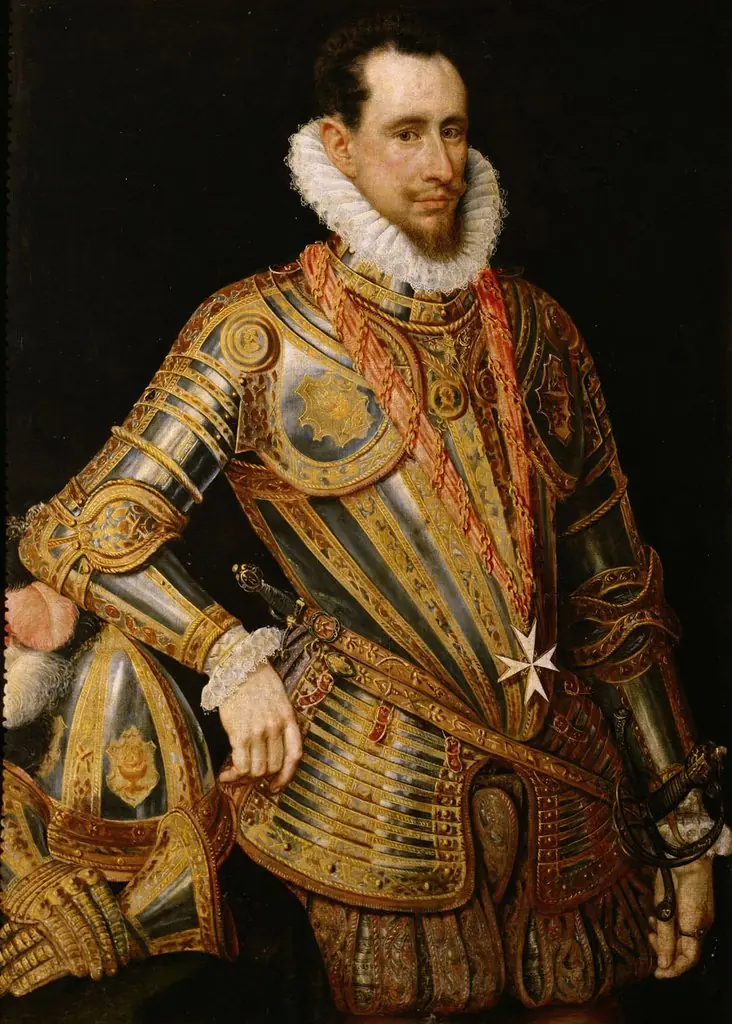 Bildnis eines Malteserritters
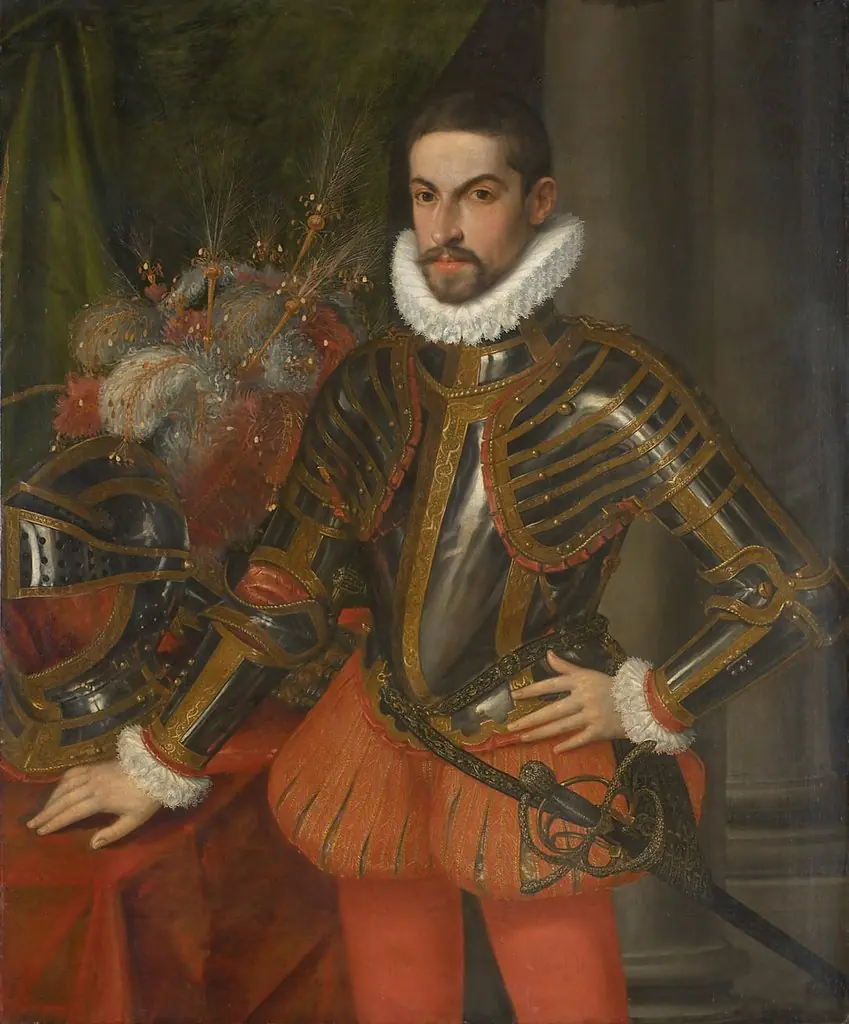 Erzherzog Maximilian III. (1558-1618) im Harnisch, Kniestück
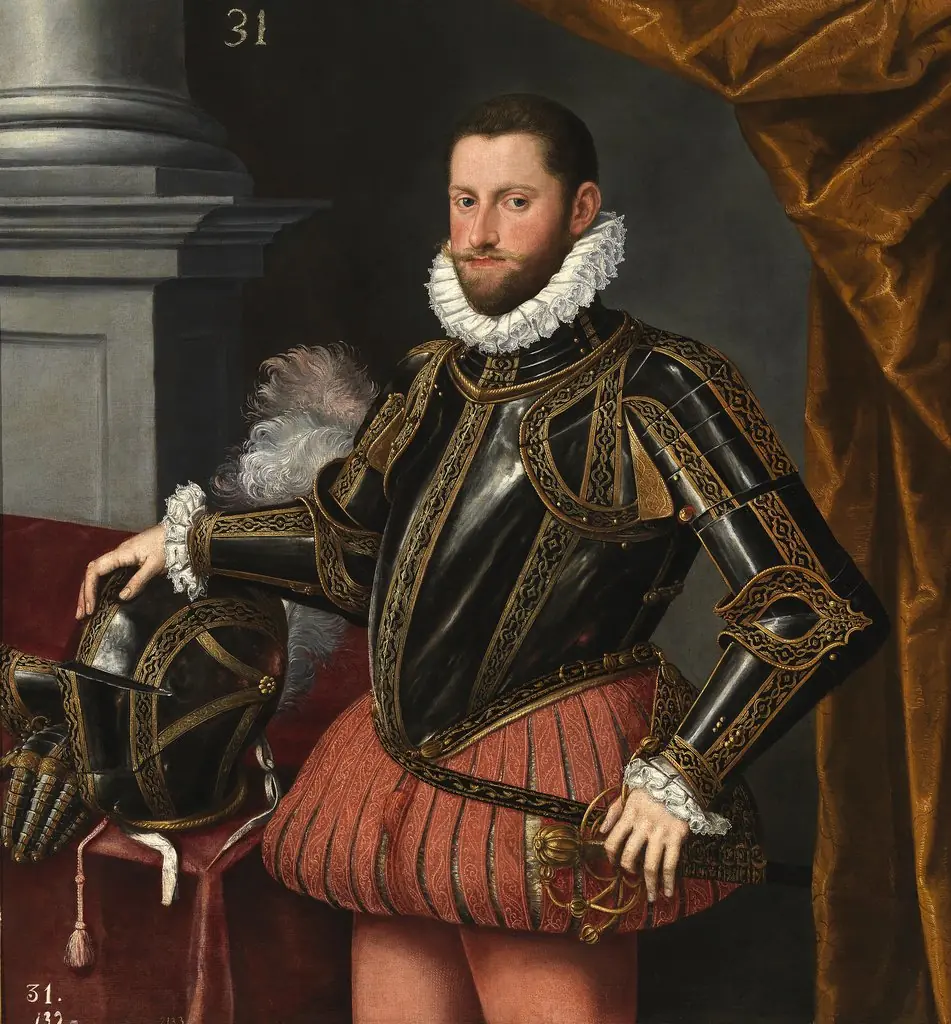 El archiduque Diego Ernesto de Austria
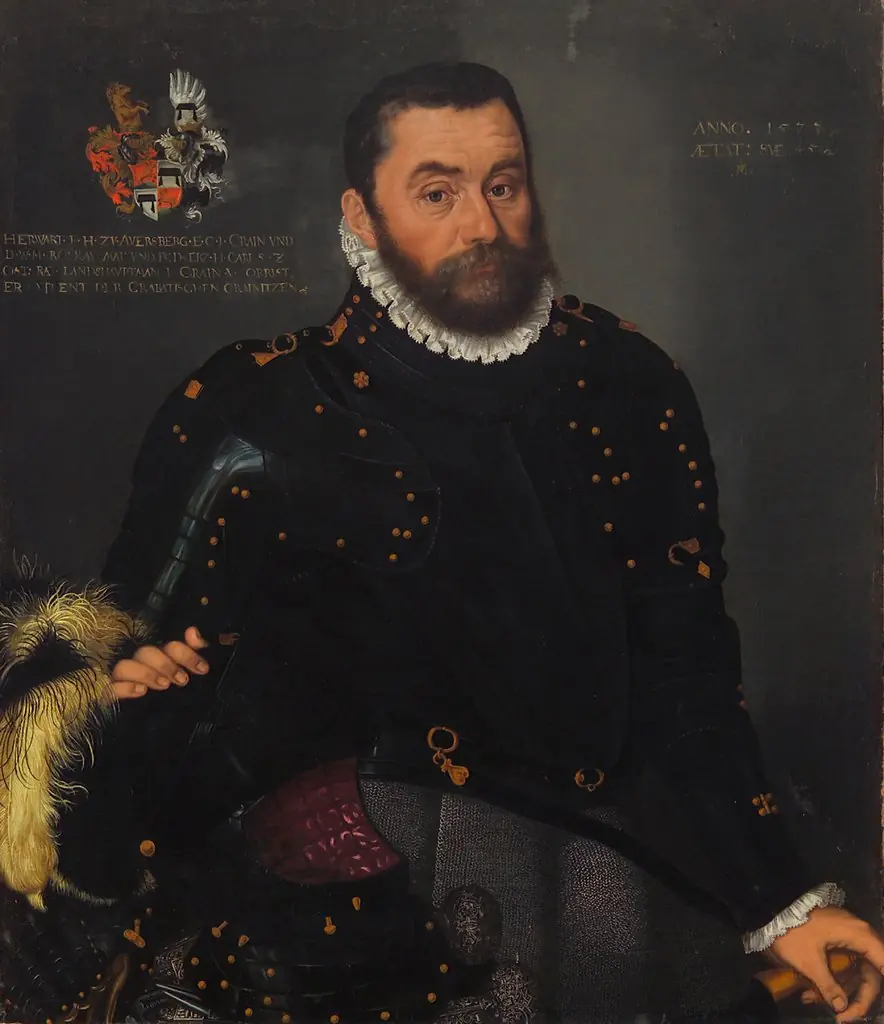 Herwart VIII. Freiherr von Auersperg (1528-1575)
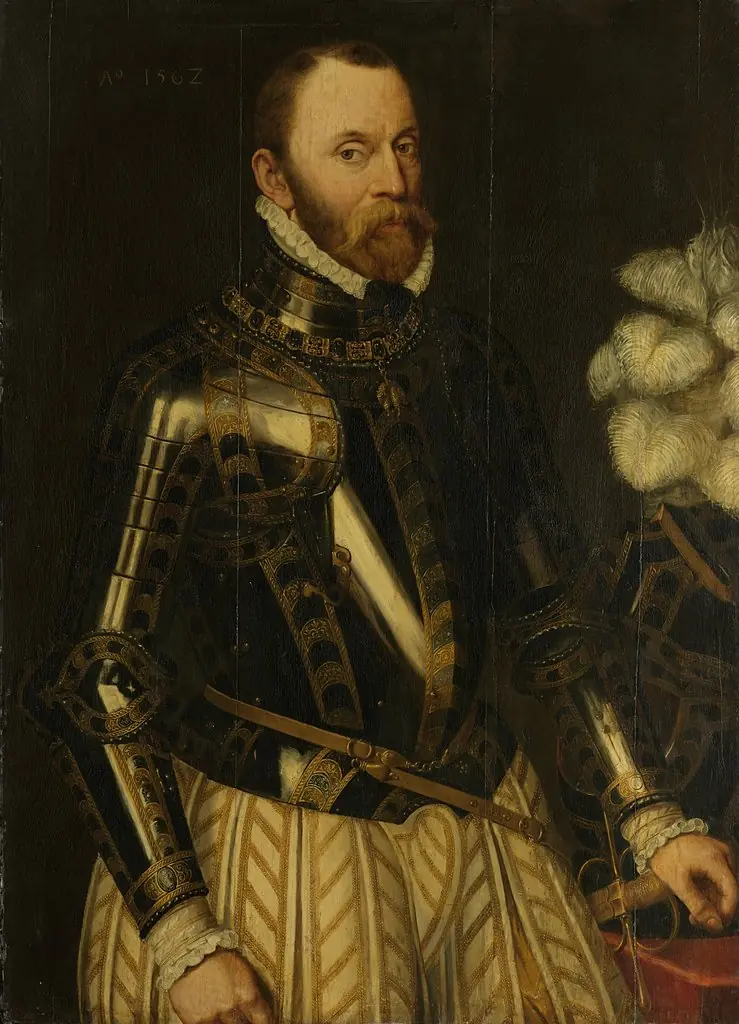 Philippe de Montmorency