Artwork
Catherine Brass Yates (Mrs. Richard Yates)
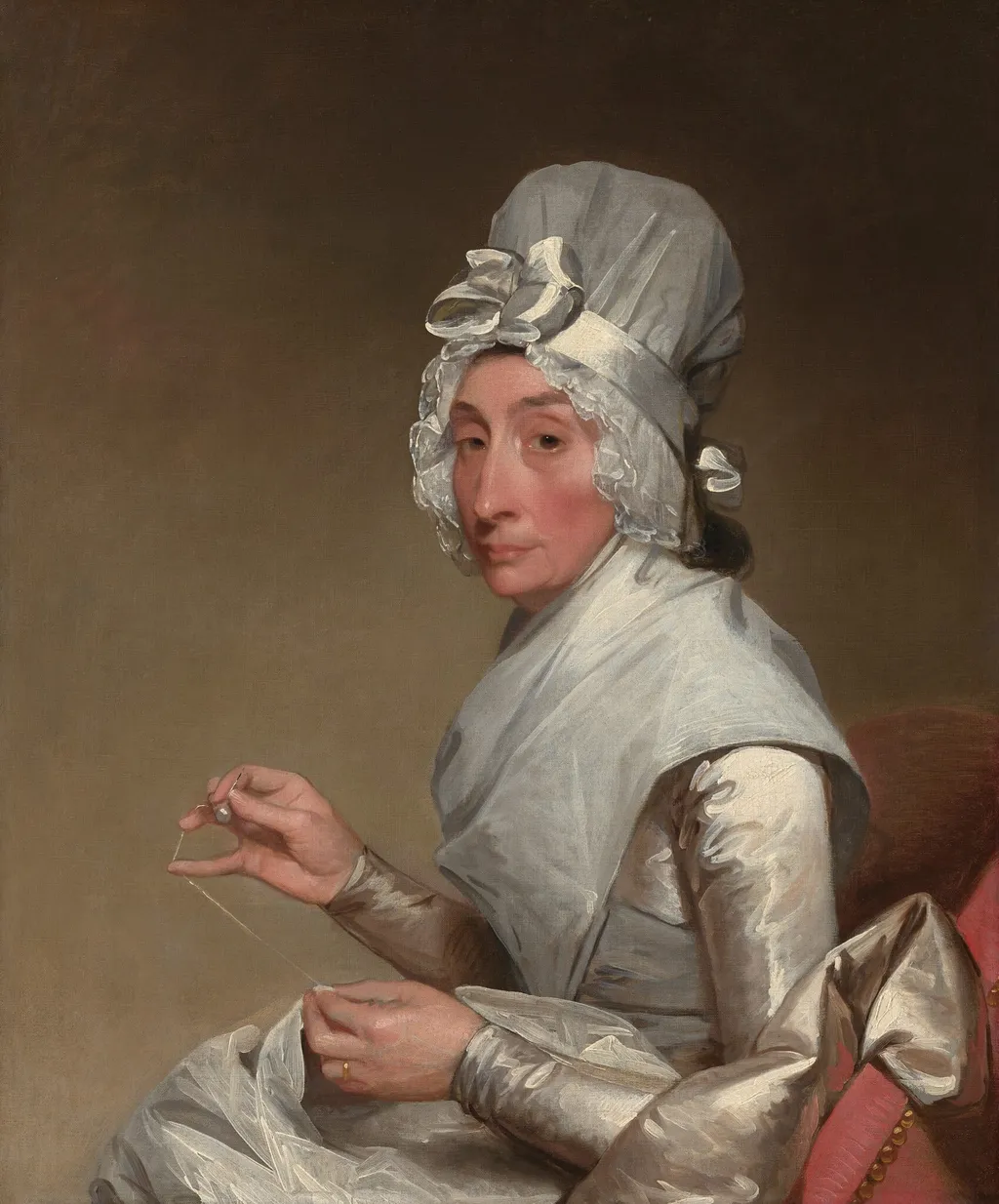
Catherine Brass Yates (Mrs. Richard Yates) is an oil painting by the American Impressionist artist Gilbert Stuart. It dates from 1794 and is held in the collection of the National Gallery of Art.
About this work
Subject & Meaning
The portrait shows Catherine Brass Yates, the wife of New York merchant Richard Yates, painted by Gilbert Stuart in 1793–94.
The portrait shows Catherine Brass Yates, the wife of New York merchant Richard Yates, painted by Gilbert Stuart in 1793–94. Stuart renders her with a bony face, an appraising glance and a preoccupation with sewing, using stiff angular lines that convey her capability and sharpness, while delicate details such as the coral upholstery and wedding ring highlight her domestic role. The composition has been praised as one of Stuart’s most compelling efforts to convey character and as a visual symbol of the early Republic’s rectitude, reflecting both the sitter’s social standing and the emerging national ideals.
The work is part of the National Gallery of Art’s collection, acquired in 1940 from the Clarke collection.
Technique & Style
Executed in oil on canvas in 1793–1794, the portrait is a relatively modest-scale work measuring 76.2 by 63.5 cm. Stuart adapted his technique to suit the realist tastes of his American patrons after returning from England and Ireland, employing different paint mediums and meticulous attention to detail to differentiate the varied surfaces of fabrics, sewing implements, the wedding ring, skin tones, and fingernails. He used the stiff, angular lines of the sitter's silhouette to communicate her capability and sharpness, while the virtuosic handling of paint is evident in the reflections on the coral upholstery. The National Gallery of Art describes the result as one of Stuart's most compelling and unified efforts at conveying character, and Art Conservator editor Timothy Cahill regards it as among the finest American portraits ever made.
History & Provenance
The work, titled Catherine Brass Yates (Mrs. Richard Yates), is an oil‑on‑canvas portrait painted by Gilbert Stuart in 1793–94. It originally descended within the Yates‑Pollock family: after the sitter’s death it passed to her daughter Catherine Yates Pollock and her husband George Pollock, then to their son Carlile Pollock, and subsequently to later relatives until 1911 when it was sold to Isaac Monroe Cline. Cline later acquired it for Thomas B. Clarke, who bought the portrait in January 1918.
Clarke’s estate disposed of it in 1936 through M. Knoedler & Co. to the A.W. Mellon Education and Charitable Trust, which gifted the painting to the National Gallery of Art in 1940.
The painting is held in the collection of the National Gallery of Art in Washington, D.C., as part of the Andrew W. Mellon collection. It was acquired by the museum in 1940 following its purchase in 1936 by the A.W. Mellon Education and Charitable Trust from the estate of Thomas B. Clarke. The work's provenance traces back through Isaac Monroe Cline, who bought it in 1911, and the Pollock and Chiapella families of New Orleans.
While the provided sources detail the artwork's acquisition and ownership history extensively, they do not record specific exhibition dates, venues, or catalog entries for this portrait. Consequently, the documented history focuses on its transfer of title rather than its public display record.
Context
Scholars regard Gilbert Stuart's 1793 portrait of Catherine Brass Yates as one of the finest American portraits ever created. Following his return from Europe, Stuart adapted to the American market's preference for realism, depicting Yates with a bony face and appraising glance that suggests she is too occupied with sewing to pause for the artist. The National Gallery of Art describes the work as a compelling study of character and a visual symbol of the early republic's rectitude, noting how Stuart utilized stiff, angular lines to communicate the sitter's capability and sharpness.
Critics also highlight the painting's technical virtuosity, specifically Stuart's varied handling of fabrics, skin tones, and the reflections on the coral upholstery. Alongside the companion portrait of her husband, this work stands as a major artistic masterpiece within Stuart's oeuvre.
Legacy
The portrait of Catherine Brass Yates has been regarded as among the finest American portraits ever made, according to Timothy Cahill, editor of Art Conservator magazine. The National Gallery of Art describes Stuart's painting as one of his most compelling and unified efforts at conveying character, and as one of America's most famous paintings, valued both as an artistic masterpiece and as a visual symbol of the early republic's rectitude. Critics have highlighted Stuart's use of stiff, angular lines in Mrs. Yates' silhouette to communicate her capability and sharpness, alongside the virtuosic handling of surfaces such as the reflections on the coral upholstery.
Acquired by the National Gallery of Art in 1940 as part of the Andrew W. Mellon Education and Charitable Trust gift, the painting remains a touchstone example of Stuart's American portrait practice following his return from England and Ireland in 1793.
Overview
Gilbert Stuart's 1794 oil on canvas portrait depicts Catherine Brass Yates, the wife of future Illinois Governor Richard Yates. Executed shortly after the artist's arrival in Philadelphia, the work exemplifies his mature style characterized by psychological immediacy and technical refinement. The sitter is presented in a three-quarter view, seated in a mahogany chair with a red damask cushion, wearing a white muslin dress with a high waistline typical of the Federal period.
Stuart employs a restrained palette, utilizing soft transitions of light and shadow to model the face and hands, while the background remains a neutral, dark tone to isolate the figure. The composition balances the detailed rendering of the fabric's texture and the sitter's calm, direct gaze with a sense of informal elegance. This portrait is significant as an early example of Stuart's ability to capture the character of American subjects, establishing the visual language he would later apply to his famous portraits of George Washington.
The work reflects the artist's transition from his earlier British training to a distinctively American approach to portraiture.
Own this work as a print
Artist & collection

Artist
Gilbert Stuart (né Stewart; December 3, 1755 – July 9, 1828) was an American painter born in the Rhode Island Colony who is widely considered one of America's foremost portraitists.


 Mrs. Edward Hutchinson Robbins (Elizabeth Murray)
 Sarah Dupont
 Mrs. Samuel Smith
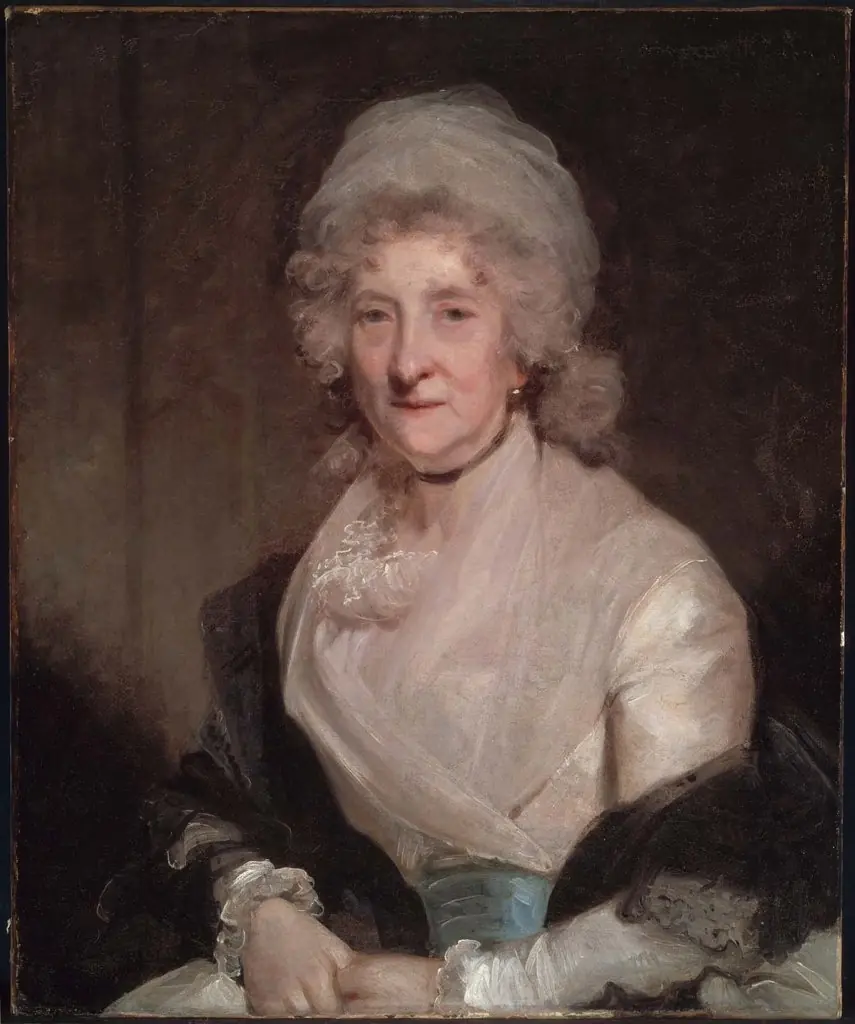 Dorcas, Lady Blackwood (Dorcas Stevenson), Baroness
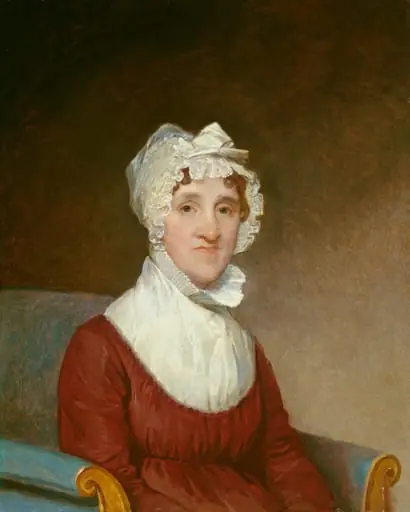 Sarah Homes Tappan (Mrs. Benjamin Tappan)
 Brændevinsbrænder Bagges enke
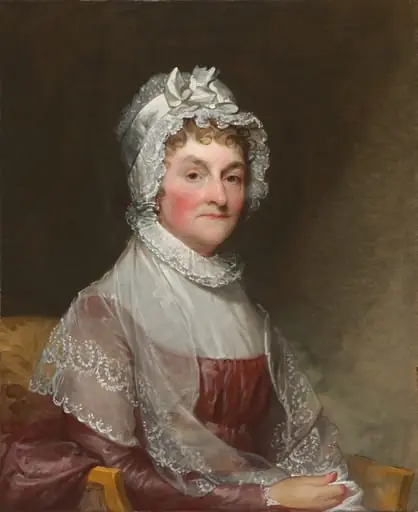 Abigail Smith Adams (Mrs. John Adams)
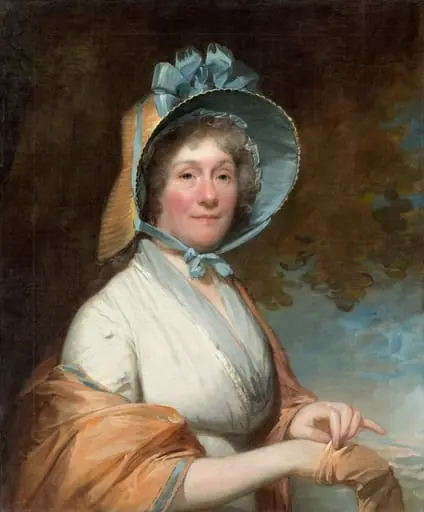 Henrietta Marchant Liston (Mrs. Robert Liston)
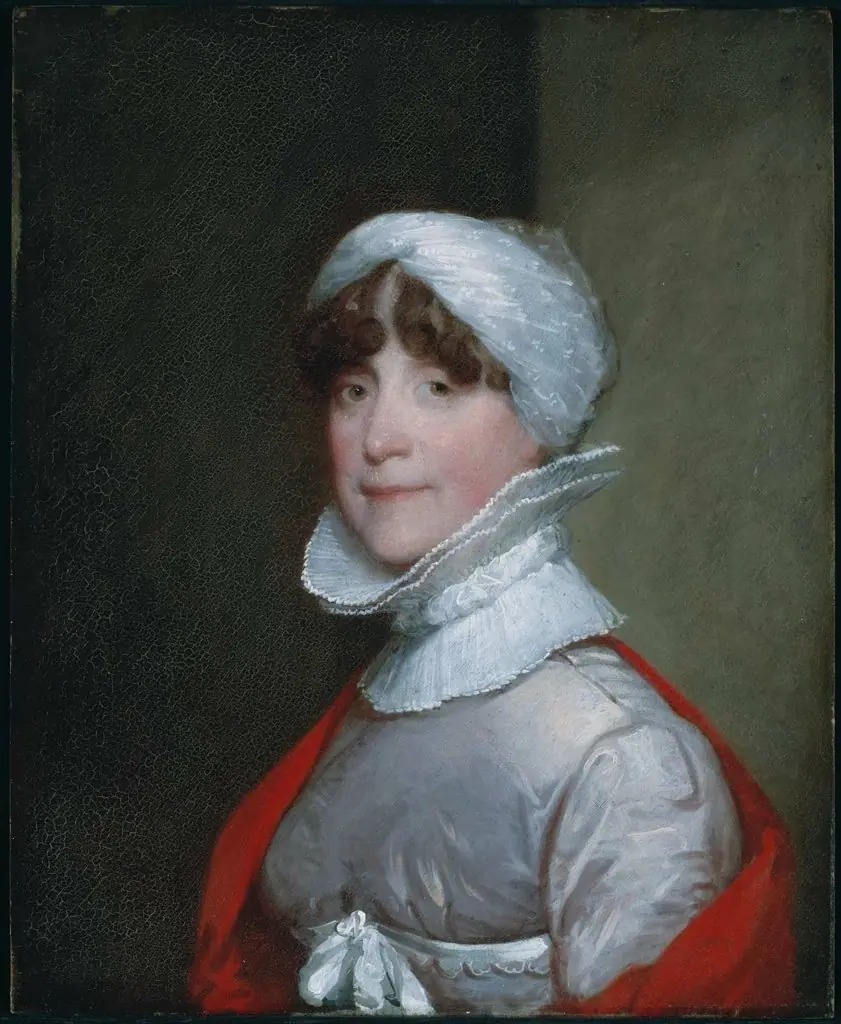 Mrs. John Amory, Jr. (Catherine Willard)
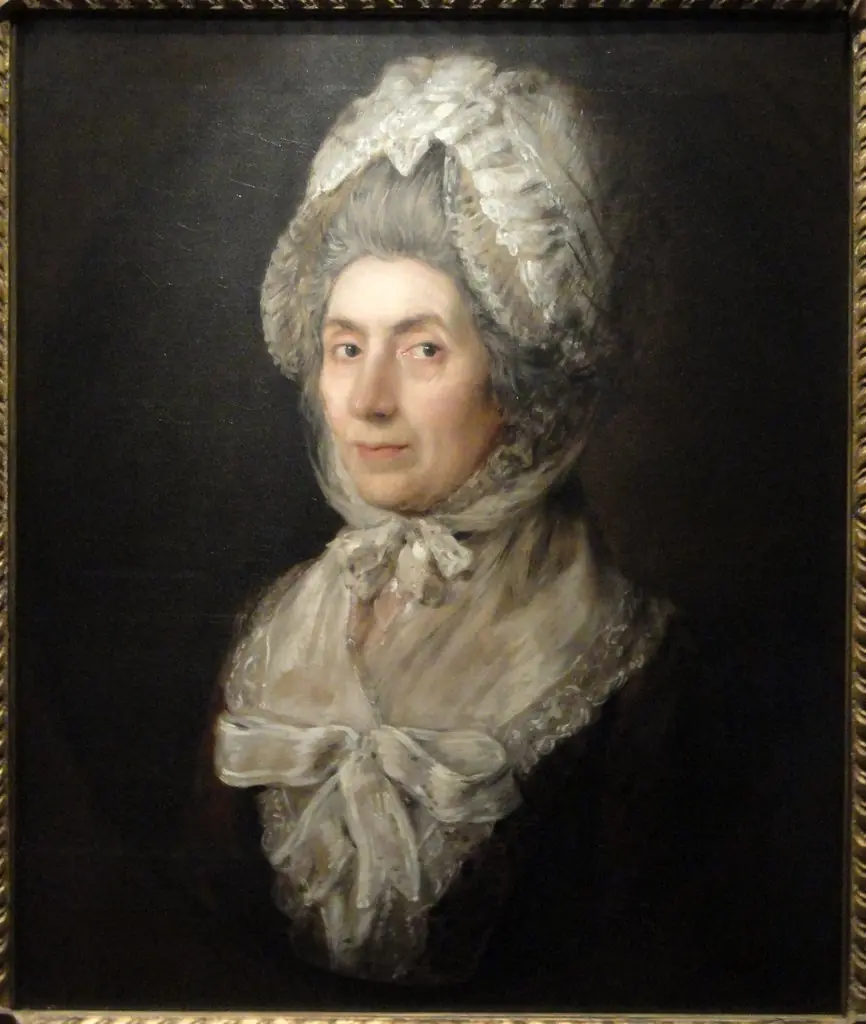 Mrs. Philip Dupont