Artwork
James Madison
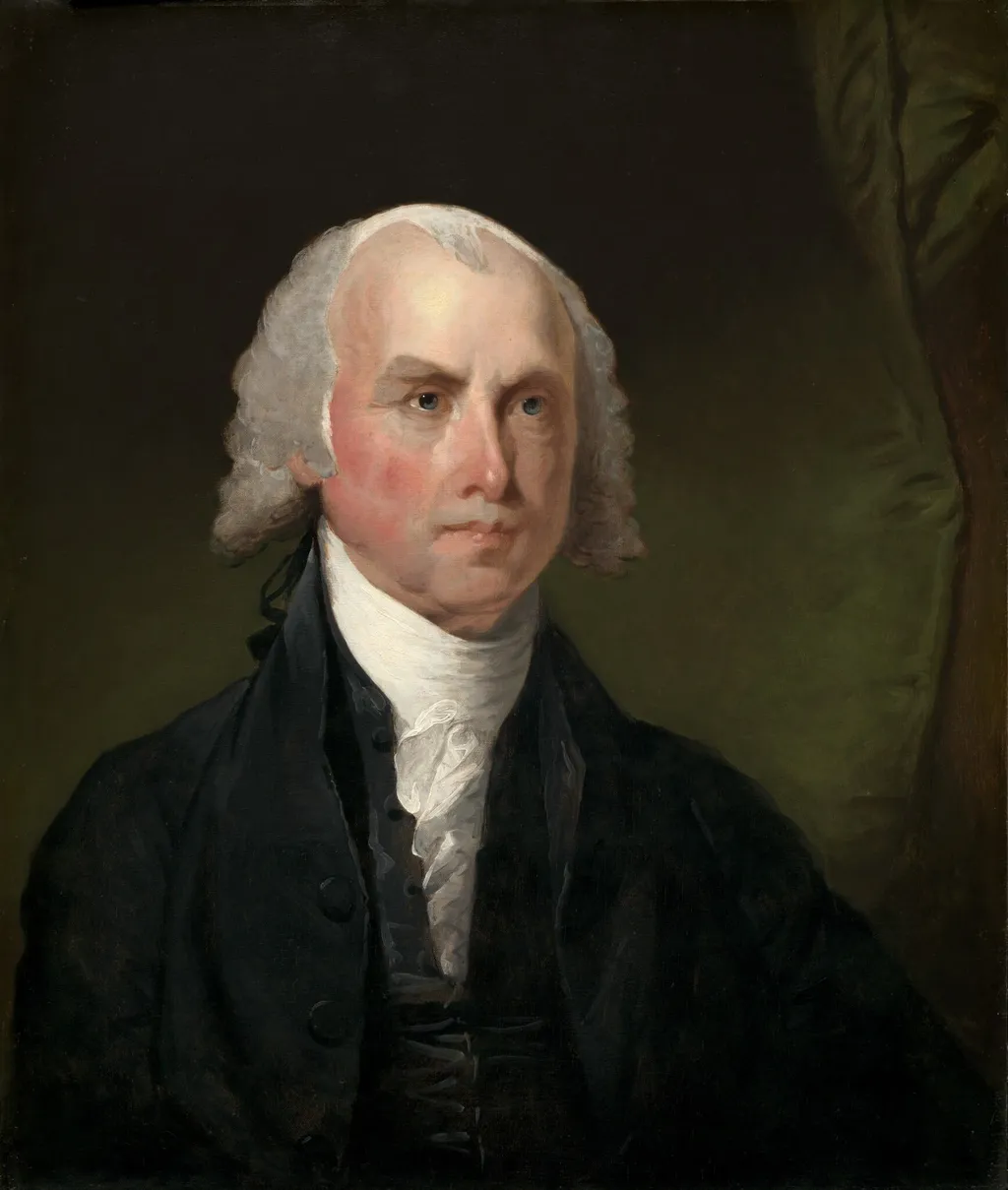
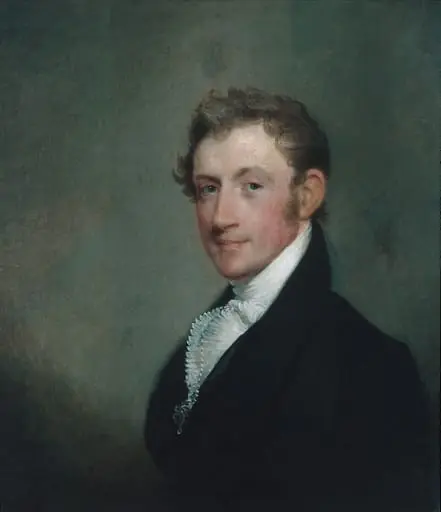
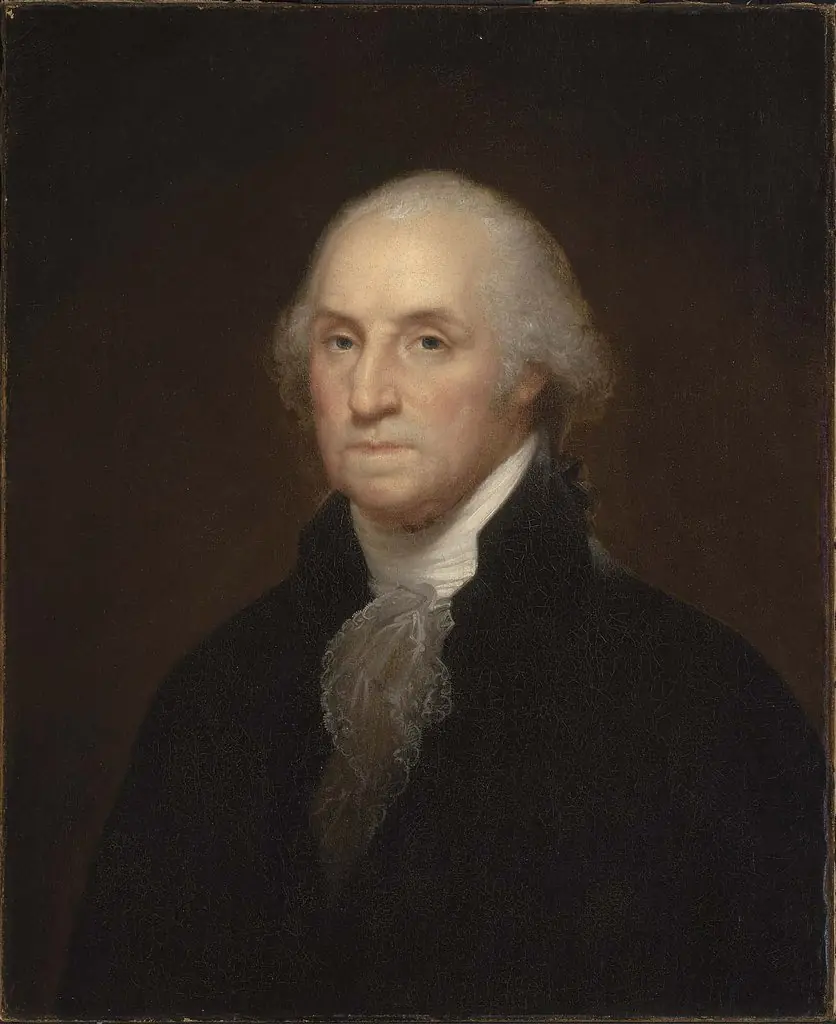
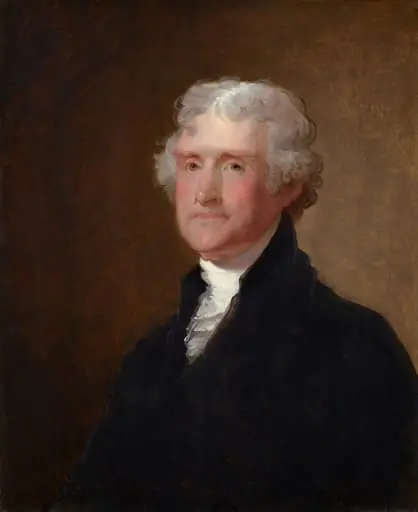
James Madison is an oil painting by the American Impressionist artist Gilbert Stuart. It dates from 1821 and is held in the collection of the National Gallery of Art.
About this work
Subject & Meaning
This representation functions symbolically to memorialize Madison’s contributions to the Constitution and the nation’s early governance.
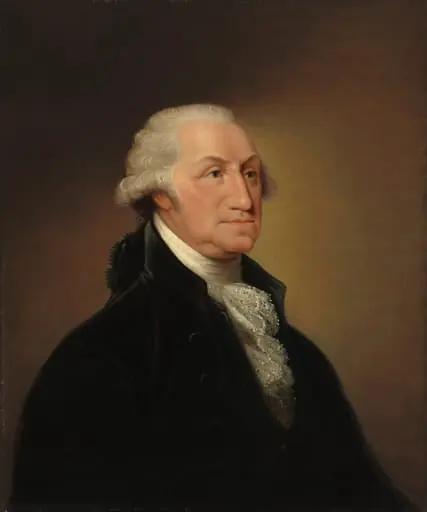
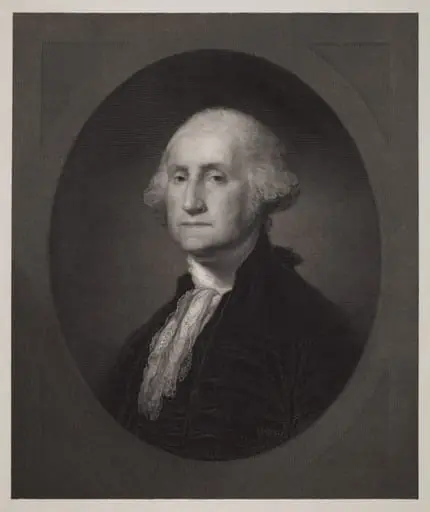
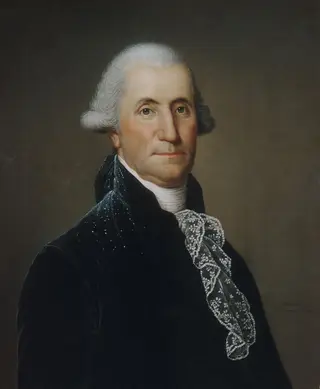
The work is a likeness of James Madison rendered as a formal portrait that conveys his status as a Founding Father and the fourth President of the United States. Painted by Gilbert Stuart in 1821, the oil on panel shows Madison in conventional 19th‑century attire, seated against an indeterminate backdrop that emphasizes his intellectual authority. The composition follows the neoclassical portrait tradition, using muted tones and precise brushwork to suggest both the subject’s political gravitas and the early Republic’s aesthetic ideals.
This representation functions symbolically to memorialize Madison’s contributions to the Constitution and the nation’s early governance. The painting is catalogued in the National Gallery of Art’s collection (National Gallery of Art, Washington, D.C.).
Technique & Style
Executed in 1821, this portrait of James Madison by Gilbert Stuart utilizes oil paint applied to a wood panel support. The work functions as a formal portrait, characterized by its specific dimensions of 65.3 cm in height and 54.3 cm in width. The application of oil on a rigid wooden surface reflects Stuart's established materials for portraiture during this period.
While the precise condition of the paint layer or specific handling techniques are not detailed in the available records, the medium and support define the physical nature of the object. The composition focuses entirely on the depiction of the fourth U.S. President, adhering to the conventions of the portrait genre without extraneous background elements noted in the source data.
History & Provenance
Painted in 1821 by Gilbert Stuart in oil on wood, the portrait of James Madison was first owned by Colonel George Gibbs (1776–1833) of Sunswick Farm in Astoria, New York. After Gibbs's death, the painting passed to his widow, Laura Wolcott Gibbs (1794–1870), in New York. In 1872, Jacob Hart Lazarus, acting as the Gibbs family's agent, sold the portrait to Thomas Jefferson Coolidge (1831–1920) of Boston.
The work subsequently descended through the Coolidge family: to his grandson Thomas Jefferson Coolidge III (1893–1959), then to the latter's son, Thomas Jefferson Coolidge IV, also of Boston. In 1979, Coolidge IV sold the painting to the National Gallery of Art in Washington, D.C., where it remains in the collection.
The portrait of James Madison by Gilbert Stuart has been part of the National Gallery of Art’s collection since 1979, following its acquisition from the Coolidge family lineage that traced back to Colonel George Gibbs and later owners; the work remains on view in the Gallery’s American portrait galleries, and no specific exhibition records are documented in the available sources. Its accession number is not specified in the provided documentation, but the painting is catalogued within the Gallery’s holdings as a 1821 oil on wood panel portrait.
Overview
Painted in 1821, this oil on wood portrait by Gilbert Stuart depicts James Madison, the fourth President of the United States, seated in a formal three-quarter view. Created six years after Madison left office, the work captures the former president in his late seventies, dressed in a dark coat and waistcoat typical of the era's formal attire. Stuart employs his characteristic technique of loose, energetic brushwork to render the texture of the fabric and the subtle modeling of Madison's face, balancing a dignified, static pose with a sense of immediate presence.
The composition focuses tightly on the sitter against a neutral, dark background, directing the viewer's attention to Madison's thoughtful expression and the distinct features of his face. This portrait is part of Stuart's extensive series of presidential likenesses, executed during a period when he sought to document the nation's founding figures. While Stuart painted Madison earlier in his career, this 1821 version reflects the artist's mature style and his ability to convey the character of his subjects with psychological depth.
The work stands as a significant example of early American portraiture, preserving the image of a key architect of the Constitution during the final years of his life.
Own this work as a print
Artist & collection

Artist
Gilbert Stuart (né Stewart; December 3, 1755 – July 9, 1828) was an American painter born in the Rhode Island Colony who is widely considered one of America's foremost portraitists.