Artwork
Sir John Dick
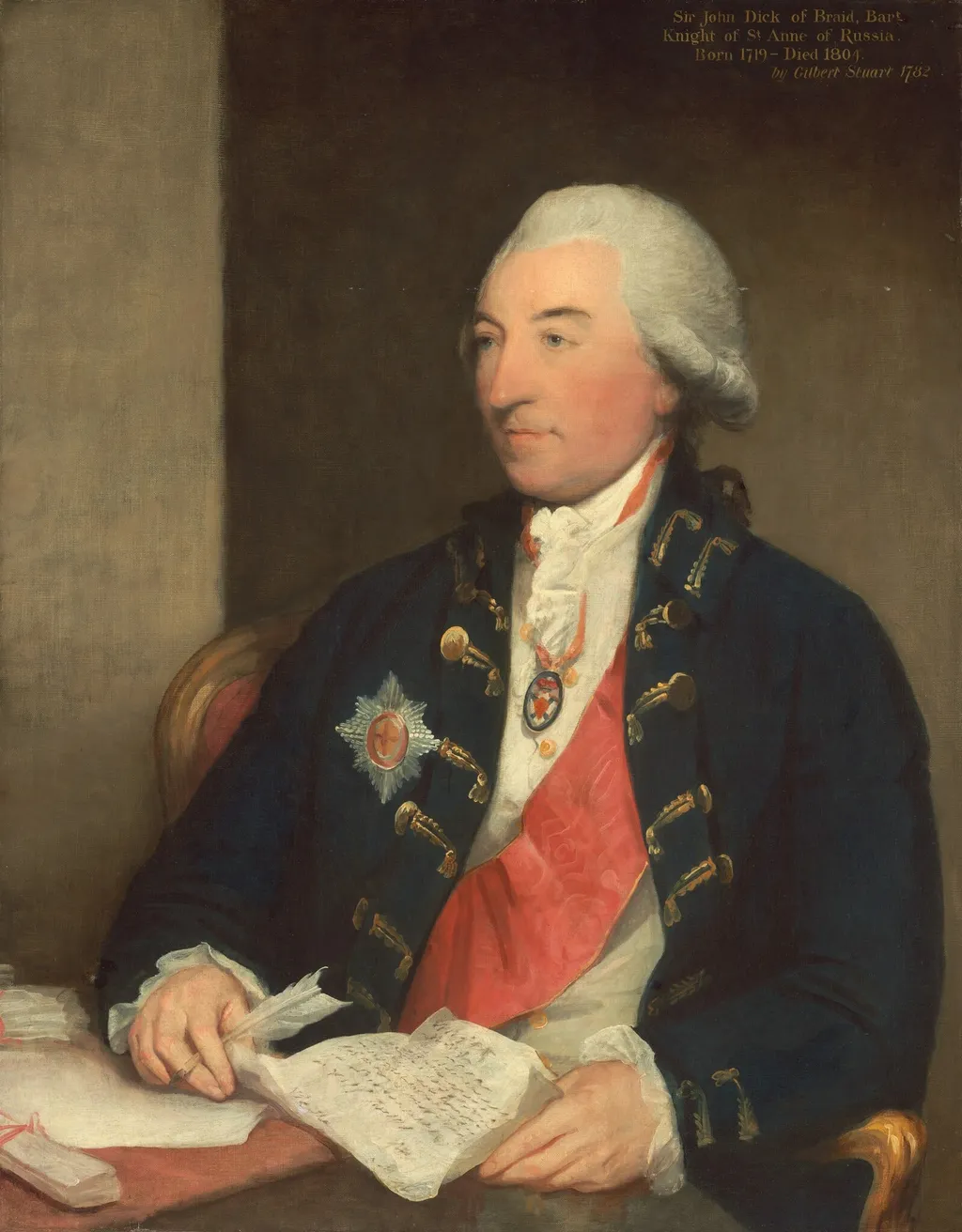
Sir John Dick is an oil painting by the Neoclassicist artist Gilbert Stuart. It dates from 1783 and is held in the collection of the National Gallery of Art.
- Inscription
- Inscribed:in a later hand, upper right: Sir John Dick of Braid, Bart / Knight of St. Anne of Russia. / Born 1719-Died 1804. / by Gilbert Stuart 1782.
About this work
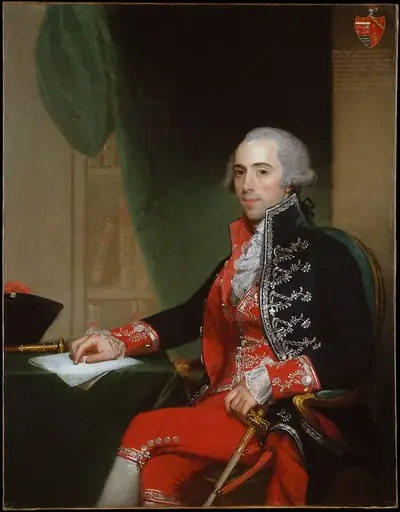
Sir John Dick sits in a chair in period dress, painted in 1783. Stuart handled the face and clothing with a closeness that suggests he knew the man, and the detailed work sets the portrait apart from others of its kind.
Technique & Style
The composition is frontal and symmetrical, focusing attention on Dick’s dignified expression and the quiet authority conveyed by his posture and attire.
Gilbert Stuart’s 1783 portrait of Sir John Dick is executed in oil on canvas, with the paint applied in smooth, blended layers typical of late-eighteenth-century British portraiture. The handling emphasizes refined detail, particularly in the facial modeling and the crisp rendering of the sitter’s wig and lace cravat. The composition is frontal and symmetrical, focusing attention on Dick’s dignified expression and the quiet authority conveyed by his posture and attire.
The canvas support is prepared with a traditional ground layer, allowing the luminous oil paint to achieve its characteristic depth and subtlety. The work remains in good condition, with only minor surface wear and stable varnish, preserving the clarity of Stuart’s technique and the integrity of the original materials.
History & Provenance
Gilbert Stuart executed this oil on canvas portrait in 1783, commissioning the work for Sir Alexander Dick, 3rd Baronet, at Prestonfield, Scotland. The painting remained within the Dick family lineage for over a century, passing to the 3rd Baronet's great-grandson, Sir Robert Keith Alexander Dick-Cunyngham, 9th Baronet, and subsequently to his son, William Stewart Dick-Cunyngham, 10th Baronet. In 1921, the work entered the commercial market through T. H. Robinson of London.
M. Knoedler & Co. acquired a joint share in June of that year before selling the portrait to New York collector Thomas B. Clarke on October 14, 1921. Following Clarke's death, his estate sold the piece via Knoedler to The A. W. Mellon Educational and Charitable Trust on January 29, 1936. The Trust ultimately gifted the painting to the National Gallery of Art in 1954.
The painting is currently held in the collection of the National Gallery of Art in Washington, D.C., as part of the Andrew W. Mellon collection. It entered the institution in 1954 as a gift from the A. W. Mellon Educational and Charitable Trust, which had acquired the work from the Thomas B. Clarke estate in January 1936. Prior to this, the portrait remained within the Dick-Cunyngham family at Prestonfield, Scotland, until 1921, when it passed through dealers T. H. Robinson and M. Knoedler & Co. before being purchased by Clarke.
While the work was included in a 1928 exhibition of Clarke's collection at the Philadelphia Museum of Art, specific records of other public exhibitions are not detailed in the available documentation.
Context
The 1783 portrait of Sir John Dick by Gilbert Stuart exemplifies late‑18th‑century British elite portraiture, depicting a Scottish baronet whose family lineage is documented in the painting’s provenance. The work remained in the Dick‑Cunyngham family before passing through the London dealer T. H. Robinson, the New York firm M. Knoedler & Co., and finally to Thomas B. Clarke, whose collection was acquired by the National Gallery of Art in 1954. Its inclusion in the 1928 Philadelphia Museum of Art exhibition catalogue signals early scholarly interest, and its placement within the Andrew W. Mellon collection underscores the transatlantic circulation of British portraiture.
Legacy
The portrait of Sir John Dick, painted by Gilbert Stuart in 1783, entered the National Gallery of Art through the 1921 acquisition by Thomas B. Clarke and the subsequent 1954 donation of his collection, a route documented in provenance records. Its inclusion in the Andrew W. Mellon collection has ensured ongoing scholarly attention, with the work frequently cited in studies of Stuart’s portraiture and the transatlantic transmission of British aristocratic imagery. The painting’s display at the National Gallery of Art and its representation in catalogues have contributed to the sustained reputation of the sitter and the artist within American museum contexts.
Overview
Gilbert Stuart's oil on canvas painting, titled Sir John Dick, was completed in 1783. This portrait depicts Sir John Dick, shown seated in a chair and dressed in period attire. The work exemplifies Stuart's early career and his approach to capturing individual likenesses through the medium of oil paint.
Subject & Meaning
The painting presents Sir John Dick as a seated figure, his posture and clothing characteristic of the late 18th century. Stuart's rendering emphasizes the subject's facial features and the textures of his garments with considerable precision. This detailed approach suggests an intimate understanding of the sitter, contributing to the portrait's personal quality.
Own this work as a print
Artist & collection

Artist
Gilbert Stuart (né Stewart; December 3, 1755 – July 9, 1828) was an American painter born in the Rhode Island Colony who is widely considered one of America's foremost portraitists.


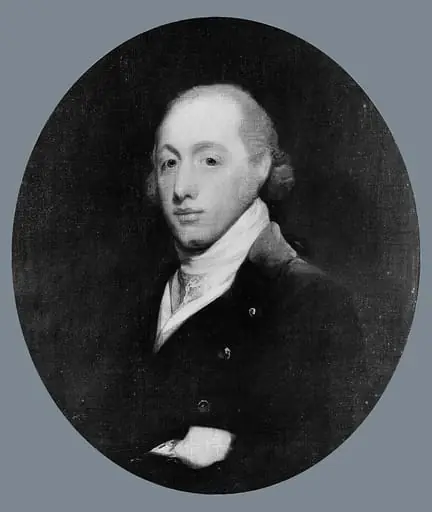
- Mr. Forbes
 Charles-Marie Bonaparte (1746-1785)
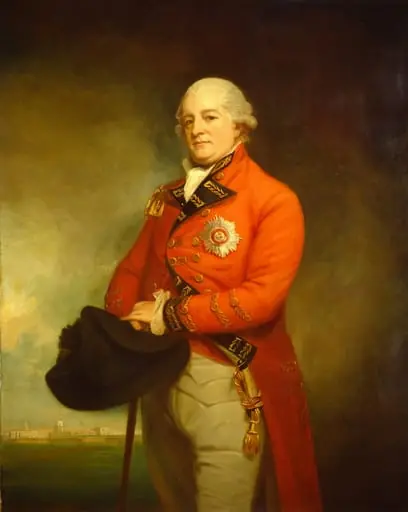 Major-General Sir Archibald Campbell
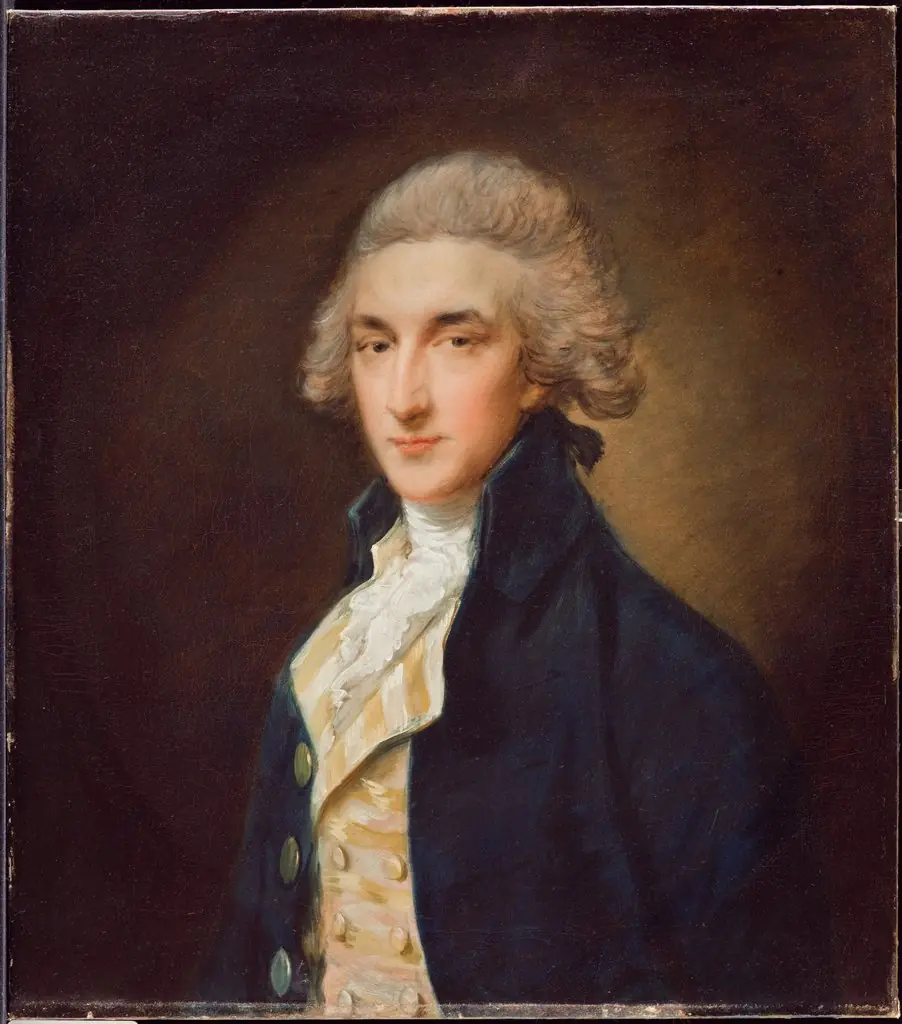 Sir John Edward Swinburne
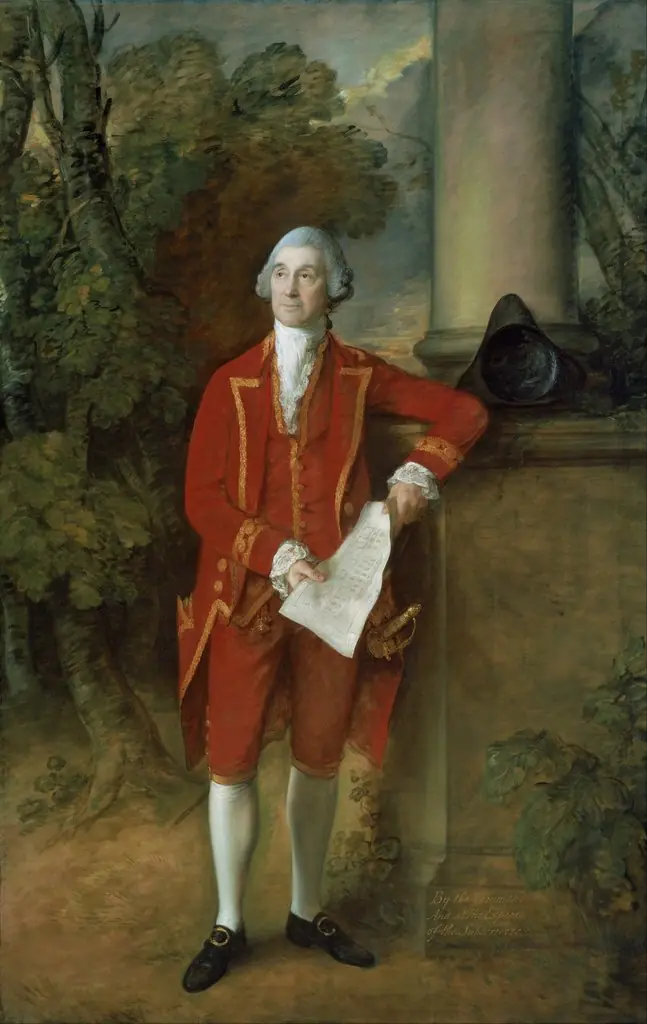 John Eld of Seighford Hall, Stafford
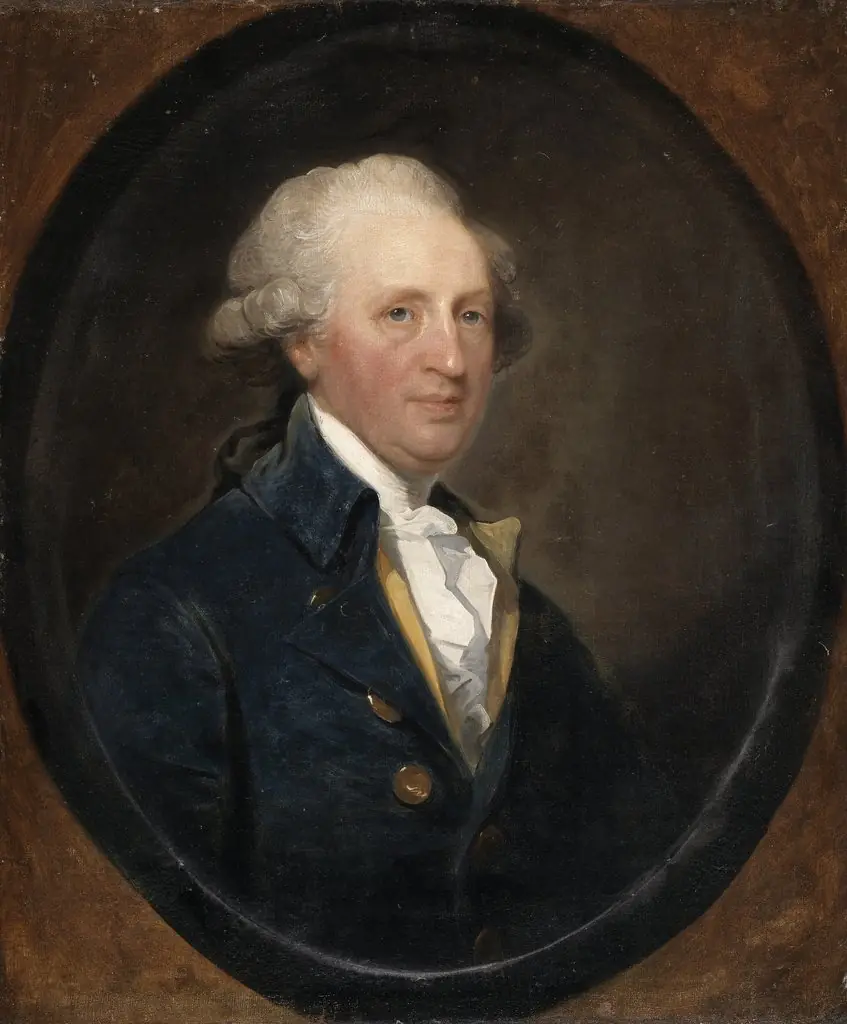 John Beresford (1738-1805), MP
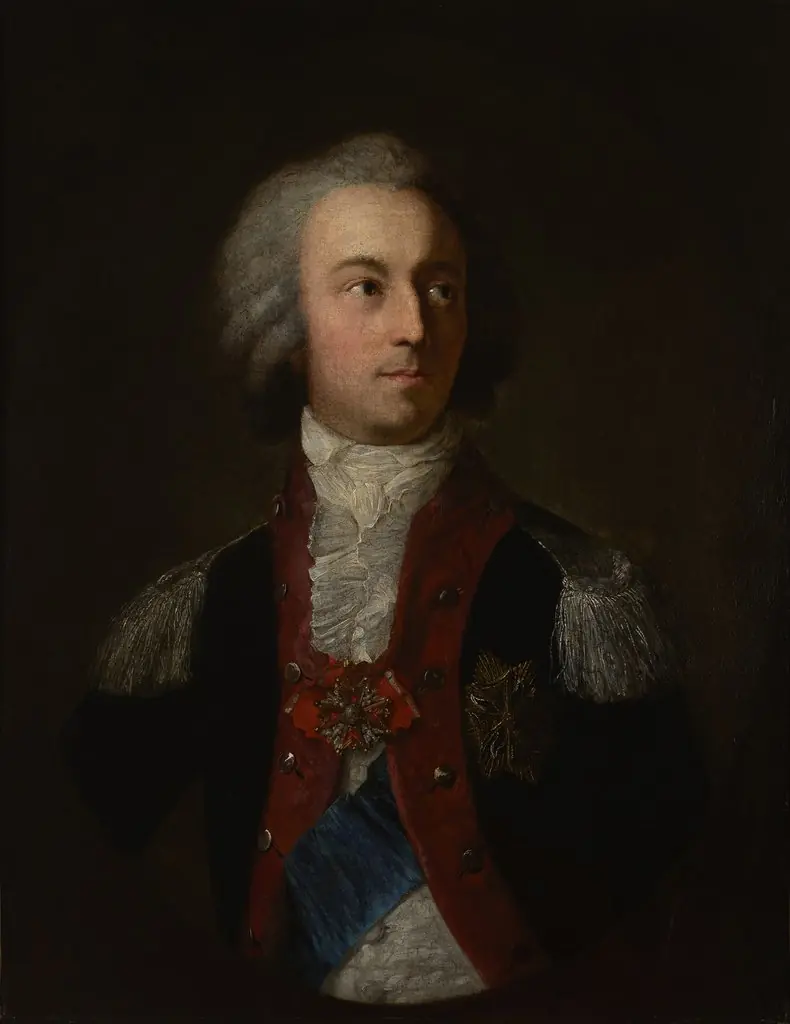 Portrait of Prince Adam Kazimierz Czartoryski (1734–1823) as the Commandant of the Corps of Cadets
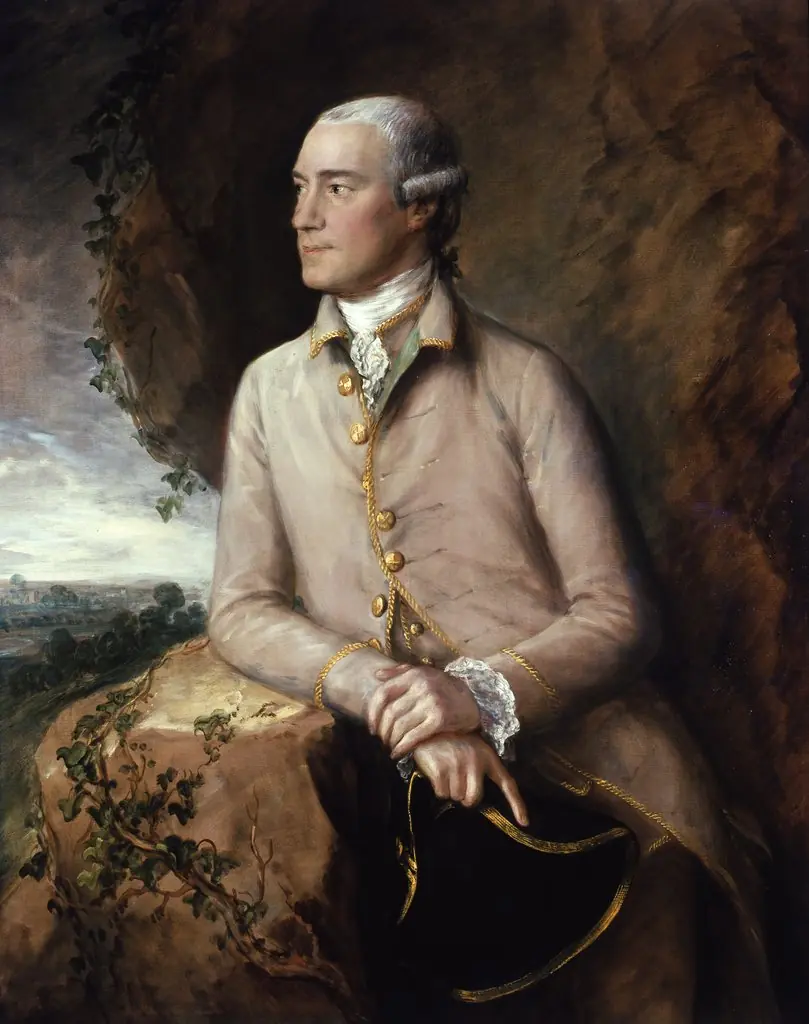 The lawyer Joshua Grigby III (1731-1798)
 William Denison
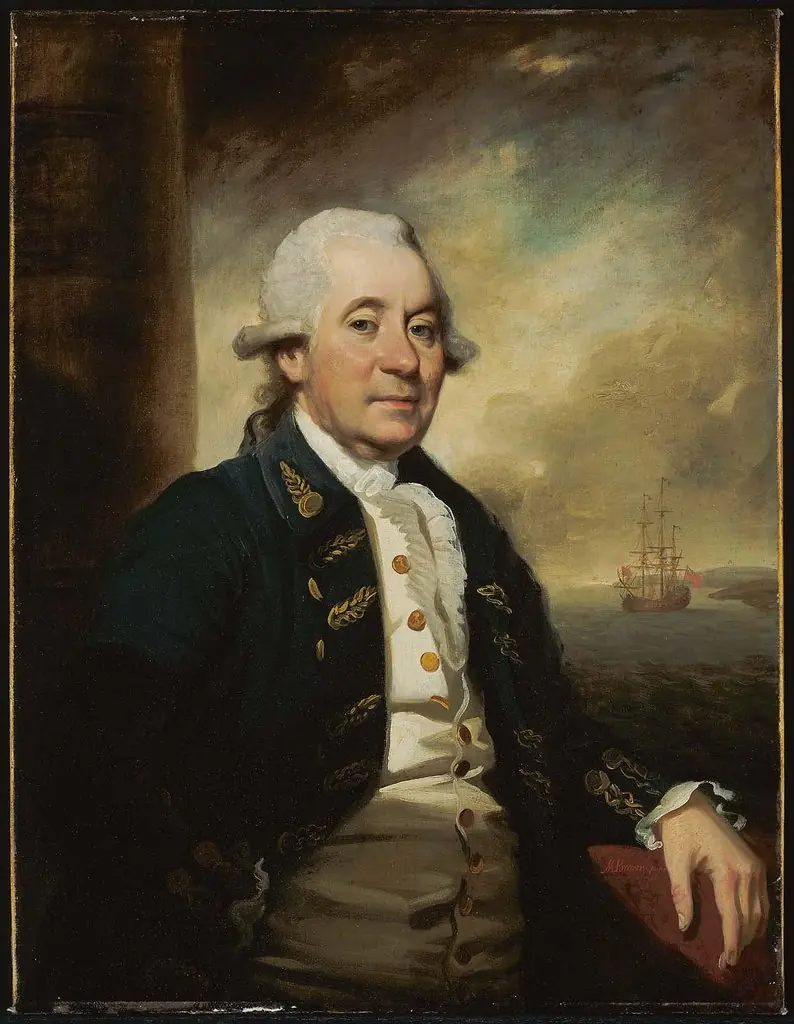 A Commander in the East India Company
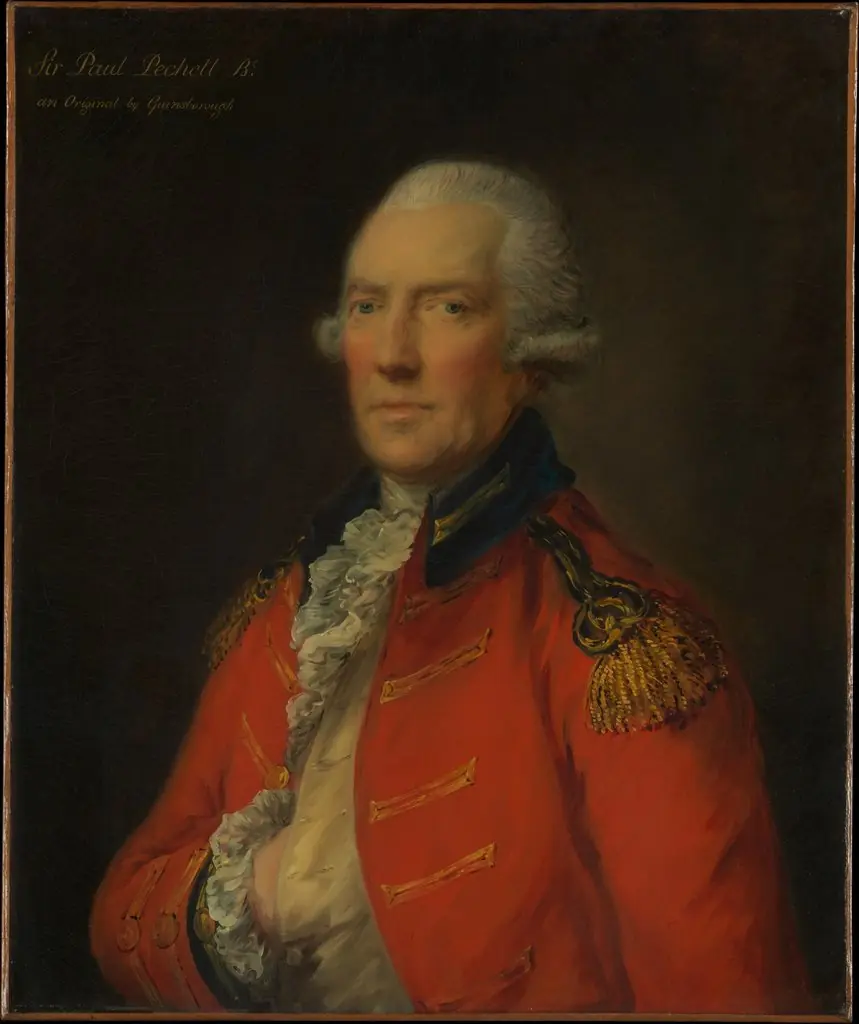 Lieutenant Colonel Paul Pechell (1724–1800)
 Admiral Harry Paulet (1719/20–1794), Sixth Duke of Bolton