Artwork
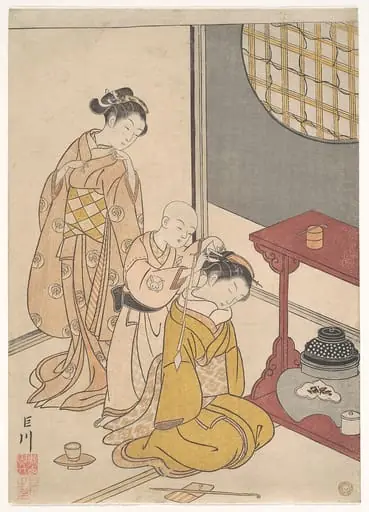
遊女と新造|Courtesan and Shinzō
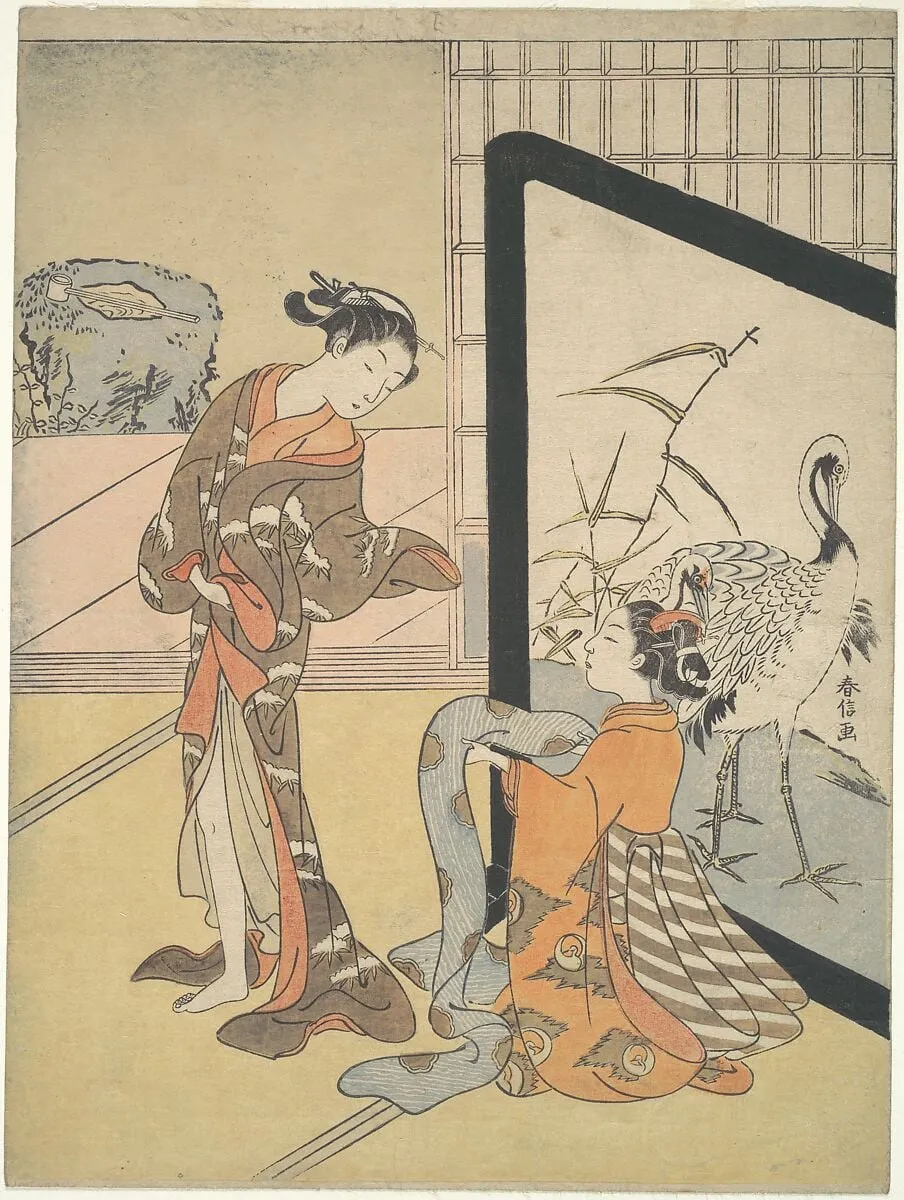
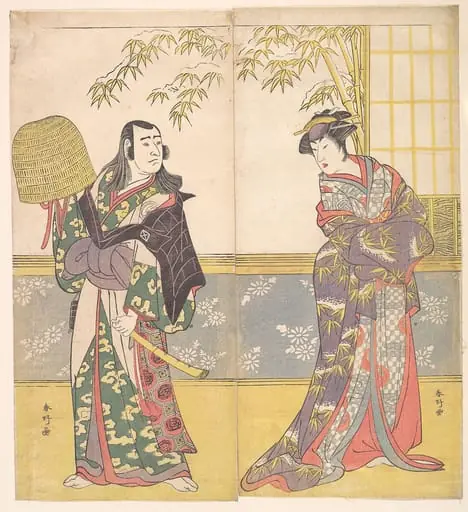
遊女と新造|Courtesan and Shinzō is an ink print by the Baroque artist Suzuki Harunobu. It dates from 1750 and is held in the collection of the Metropolitan Museum of Art.
- Accession no.
- JP2777
- Credit line
- Henry L. Phillips Collection, Bequest of Henry L. Phillips, 1939
About this work
Subject & Meaning
As a bijin-ga (picture of beautiful people) in the ukiyo-e tradition, the print focuses on the portraiture of these women and their immediate environment.
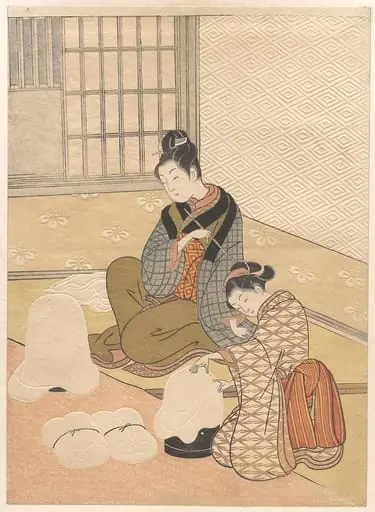
The artwork depicts a courtesan (yūjo) accompanied by a shinzō, a young apprentice or attendant, within a domestic interior setting. The composition includes specific interior elements such as a portable partition, shōji screens, a chōzubachi (basin), and a cassotte, alongside the figure's obi sash. As a bijin-ga (picture of beautiful people) in the ukiyo-e tradition, the print focuses on the portraiture of these women and their immediate environment.
The inclusion of the portable partition and specific furnishings situates the subjects within the private quarters of the pleasure district, highlighting the daily life and spatial arrangements of the courtesan house.
Technique & Style
The print is executed in nishiki-e (brocade print), a polychrome woodblock technique pioneered by Harunobu in the 1760s, though this work is dated 1750. It uses multiple carved blocks to apply delicate mineral and vegetable pigments, including a pale green for the courtesan’s outer robe and a deeper indigo for the shōji panel. The paper support is thin washi, sized to receive the layered colors without bleeding.
Compositionally, the scene is arranged along a sharp diagonal from the standing shinzō to the seated courtesan, with the obi knot and portable partition providing rhythmic accents. The figures are rendered in soft kara-e (唐絵) contours, and the interior setting is suggested through minimal lines rather than detailed perspective, emphasizing the quiet intimacy of the moment.
History & Provenance
The woodblock print Courtesan and Shinzō was created by Suzuki Harunobu in 1750. Classified as a nishiki-e and bijin-ga within the ukiyo-e genre, the work depicts a yūjo alongside various domestic elements such as a portable partition and shōji. The Metropolitan Museum of Art currently holds the piece in its collection.
No specific details regarding the original commission, the chain of ownership prior to the museum, or the precise creation process beyond its classification as a color woodblock print on paper are provided in the available records.
Overview
Suzuki Harunobu’s woodblock print, dated around 1750, portrays a courtesan in a vivid kimono leaning against a shoji screen, accompanied by a younger girl in modest attire kneeling nearby. The scene is set against an open view where cranes glide across the sky, creating a tranquil domestic moment.
Context
The work reflects the burgeoning popularity of ukiyo‑e subjects that focused on the pleasure districts, known as yūjo imagery. Harobun’s approach influenced a generation of artists who adopted full‑color techniques to depict similar scenes of courtesans and daily rituals.
Artist & collection

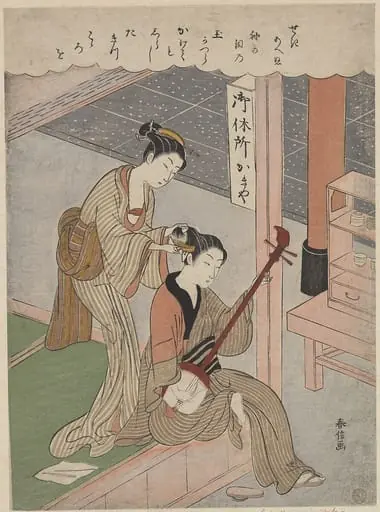
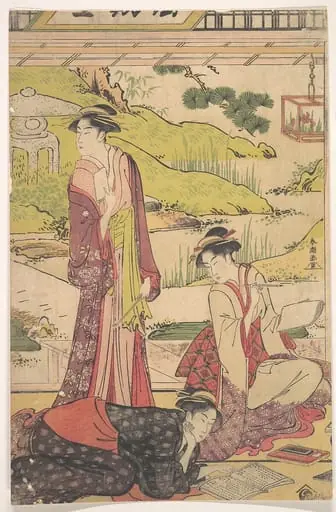
- あやめ燈籠図|Three Women Enjoying Literary Pursuits
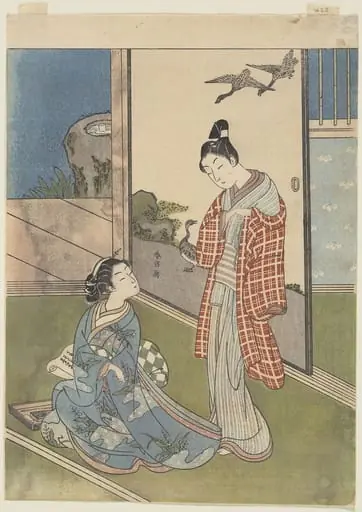 Untitled
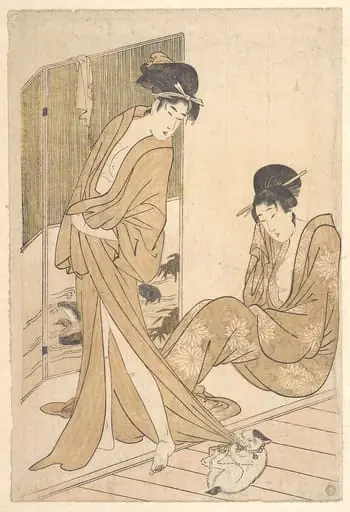 Untitled
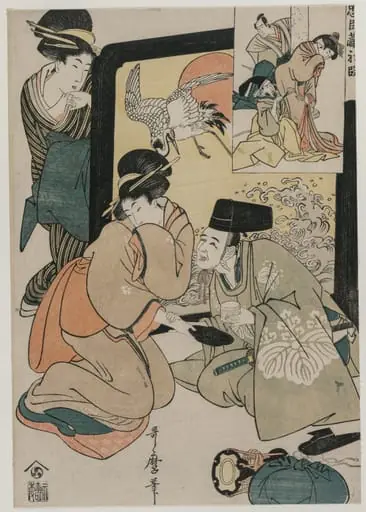 Chushingura: Act I of The Storehouse of Loyalty
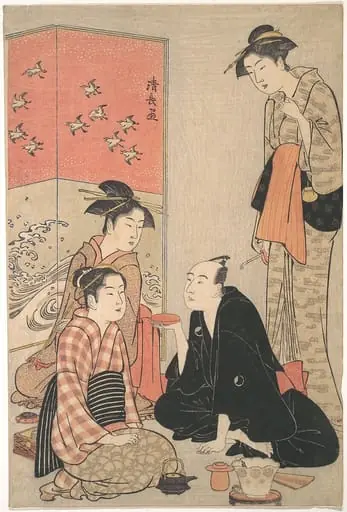 三代目沢村宗十郎と遊女|The Kabuki Actor Sawamura Sōjūrō III and Courtesans
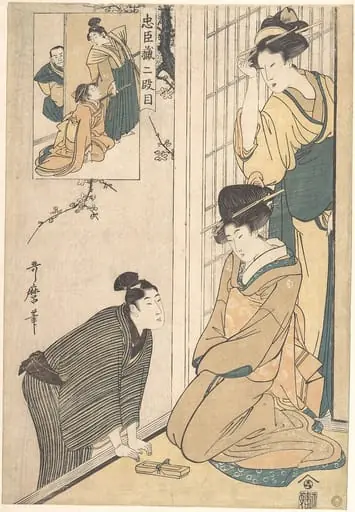 忠臣蔵二段目|A Young Man at the Side of a House
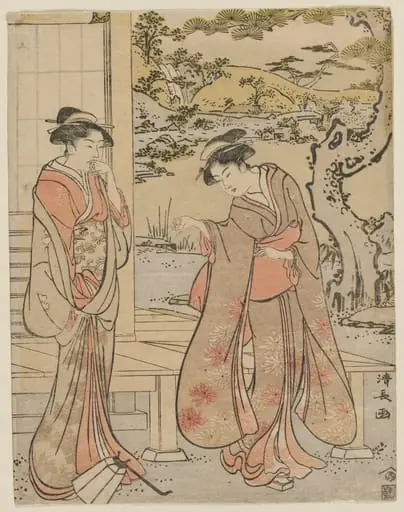 Woman Dropping a Lantern by a Porch
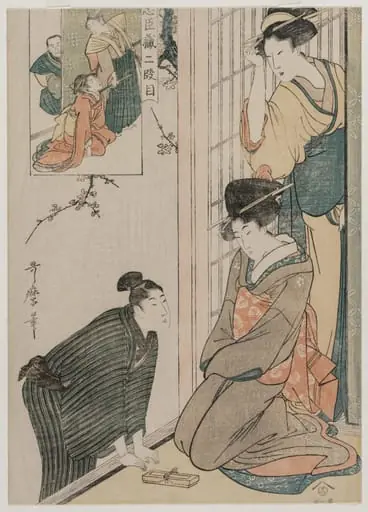 Chushingura: Act II of The Storehouse of Loyalty
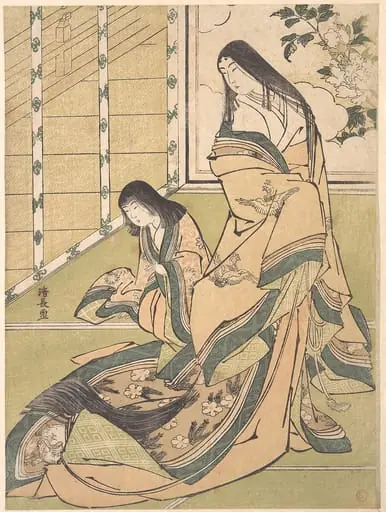 Untitled
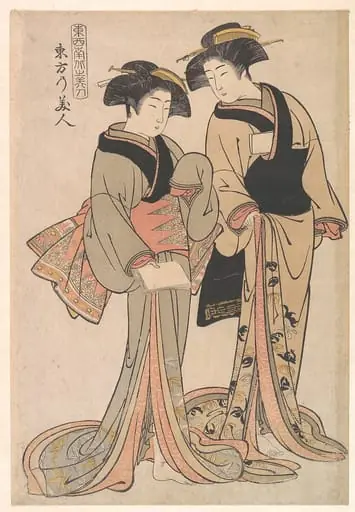 Untitled
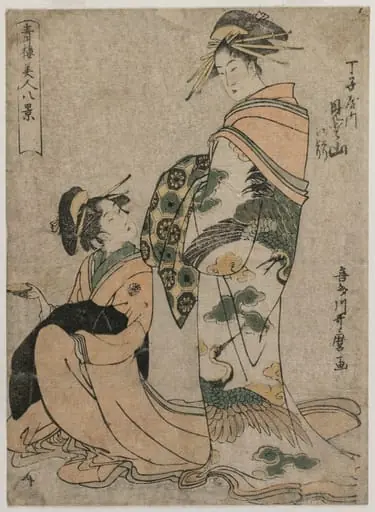 The Courtesan Misyama of Chojiya (from the series Eight Views of Beautiful Women of the Green Houses)
 勝川春好画 三代目澤村宗十郎 三代目佐野川市松 |Kabuki Actors Sawamura Sōjūrō III and Sanogawa Ichimatsu III in "A Courtesan’s Mirror for the Eastern Provinces" (Keisei Azuma kagami)