Artwork
Untitled
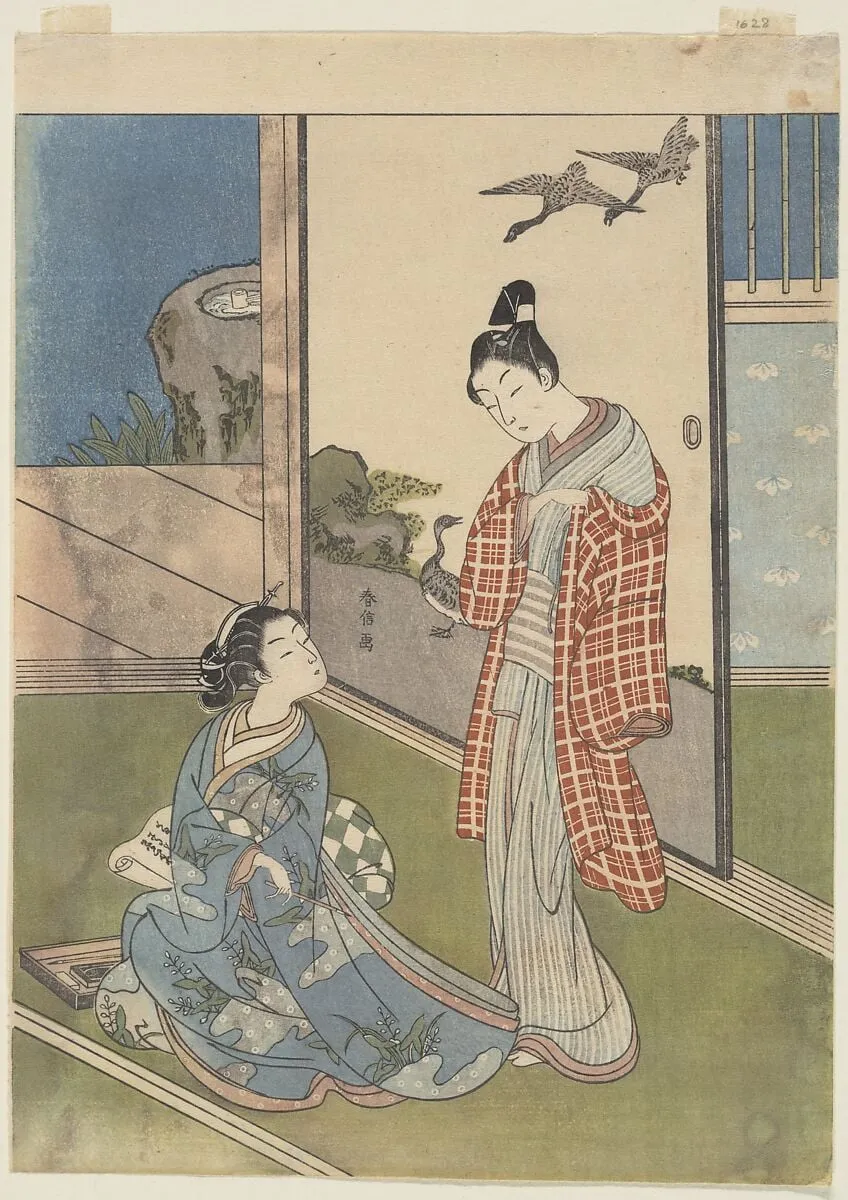
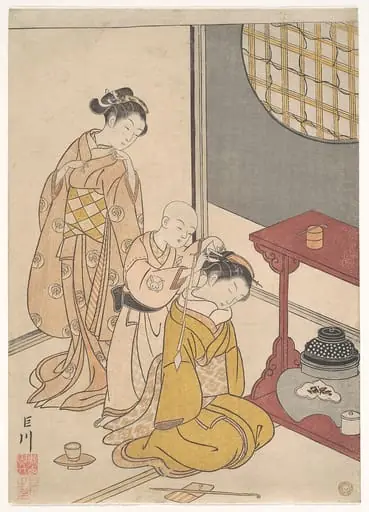
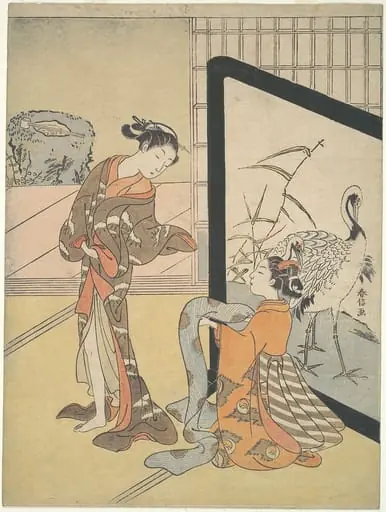
Untitled is an ink print by the Romanticist artist Suzuki Harunobu. It dates from 1767 and is held in the collection of the Metropolitan Museum of Art.
About this work
Subject & Meaning
A chōzubachi (hand-washing basin) and a cassotte (water jar) appear nearby, signaling the domestic environment of a wealthy household.
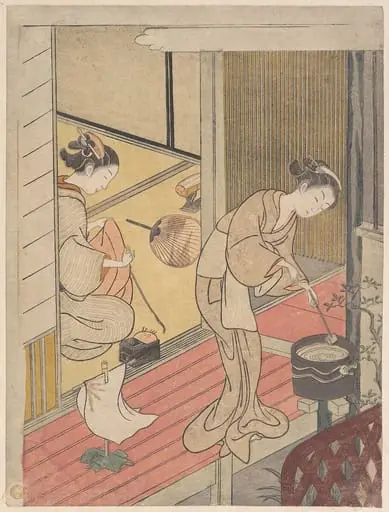
The print depicts a courting couple exchanging a letter in an elegant veranda setting, framed by sliding doors. A chōzubachi (hand-washing basin) and a cassotte (water jar) appear nearby, signaling the domestic environment of a wealthy household. The man’s posture and the woman’s gentle handling of the missive suggest a scene of romantic pursuit or secret correspondence, a common theme in Harunobu’s mid-eighteenth-century ukiyo-e works.
The presence of the letter and the couple’s intimate interaction convey themes of longing and epistolary courtship, while the refined interior underscores the cultural milieu of Edo-period pleasure quarters and fashionable urban life.
Technique & Style
Created in 1767, this work is a nishiki-e woodblock print by Suzuki Harunobu, executed with ink and color on paper. As a representative example of the ukiyo-e genre, the piece employs the full-color printing technique characteristic of the mid-Edo period. The composition depicts a couple on a veranda alongside domestic items such as a chōzubachi, a cassotte, and a fusuma, with a love letter serving as a central narrative element.
The handling of the medium allows for the detailed rendering of these figures and objects within a traditional domestic setting.
Overview
Created in 1767, this untitled woodblock print by Suzuki Harunobu is a seminal work in the development of nishiki-e, or full-color printing. The composition depicts a quiet domestic scene featuring two young women in vibrant kimonos leaning over a stone water basin, while a man in black attire observes them from behind a sliding door. Harunobu's use of delicate, soft colors and his ability to capture a fleeting, intimate moment distinguish this piece from earlier monochromatic or limited-color ukiyo-e prints.
This work exemplifies the artist's pivotal role in transitioning Japanese printmaking toward complex, multi-block color techniques that defined the late Edo period. The image reflects the ukiyo-e movement's focus on the "floating world" of everyday life and leisure, presenting a narrative snapshot that balances human interaction with architectural framing. As one of the earliest examples of full-color printing, it marks a significant technological and aesthetic milestone in Harunobu's career and the broader history of Japanese art.
History & Provenance
As one of the earliest examples of full‑color woodblock printing, the piece reflects the mid‑Edo period’s growing demand for richly colored images. While specific ownership records are scarce, the print has been documented in several museum collections that specialize in Japanese ukiyo‑e works.
Context
The depiction of ordinary domestic life aligns with the broader ukiyo‑e interest in everyday scenes, moving beyond the theatrical and mythological subjects that dominated earlier prints. Harunobu’s innovative use of color influenced subsequent artists, helping to establish nishiki‑e as a standard practice in Japanese printmaking.
Artist & collection

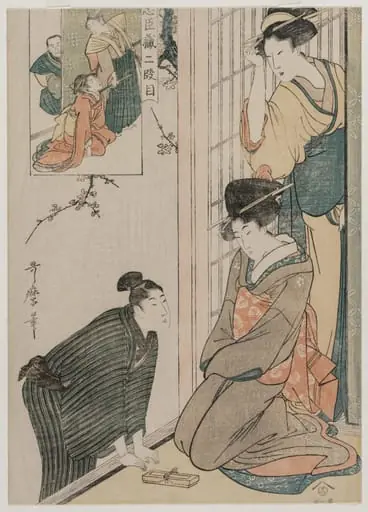
- Chushingura: Act II of The Storehouse of Loyalty
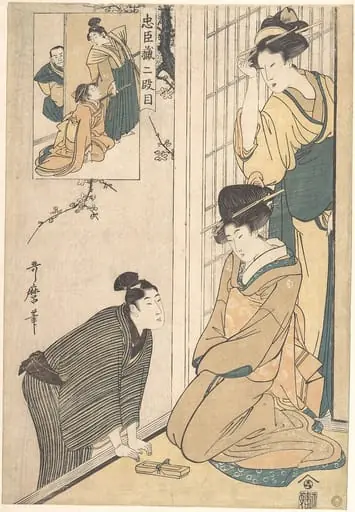 忠臣蔵二段目|A Young Man at the Side of a House
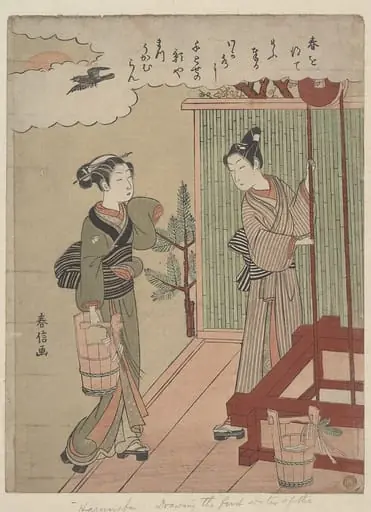 鈴木春信画 若水を汲む男女|Drawing the First Water of the New Year
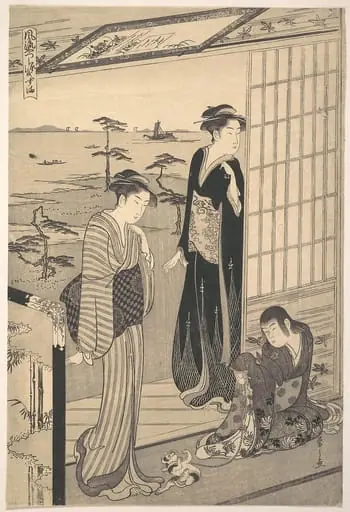 鳥文斎栄之画 「風流やつし源氏 須磨」|Genji in Exile at Suma, from the series Genji in Fashionable Modern Guise (Fūryū yatsushi Genji: Suma)
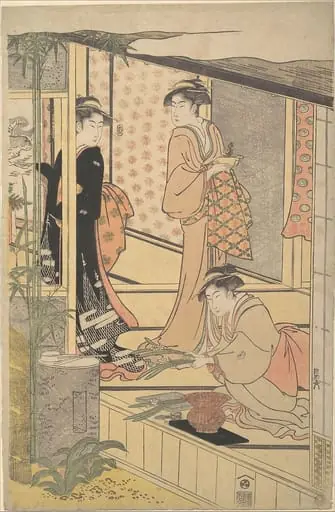 細田栄之画 正月準備|Preparing New Year Decorations
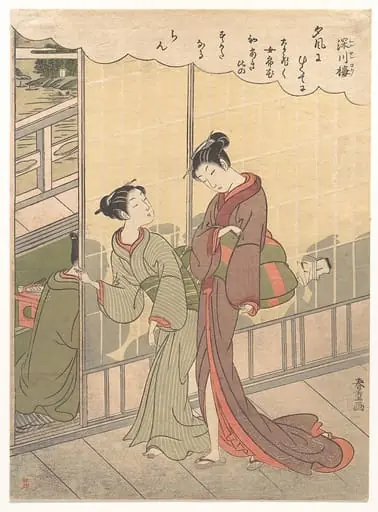 Untitled
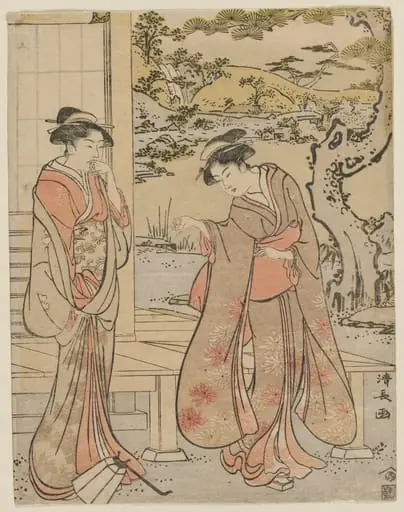 Woman Dropping a Lantern by a Porch
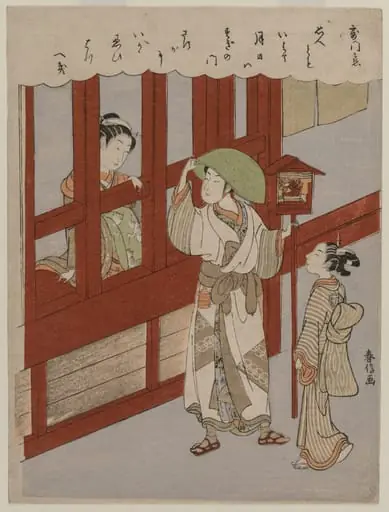 Love at the Brothel Gate
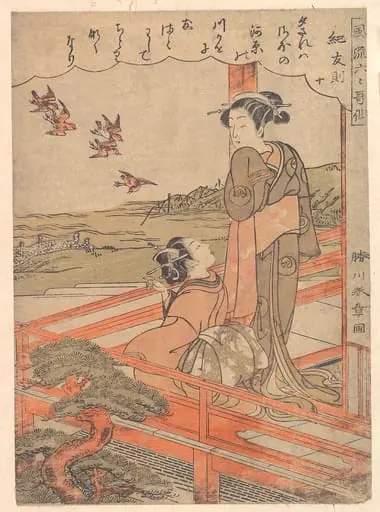 「風流六く歌仙紀友則 十」|“Two Young Women on a Verandah Watching Plovers,” from the series Stylish Six Poetic Immortals (Fūryū rokkasen: Ki no Tomonori, jū)
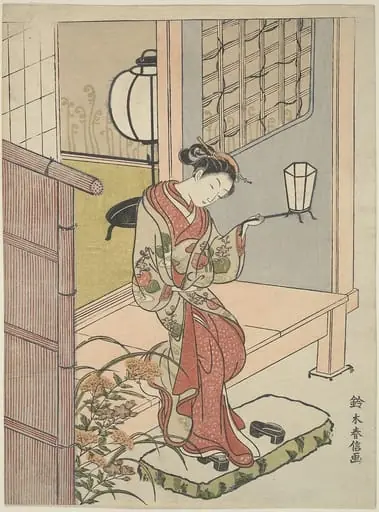 Untitled
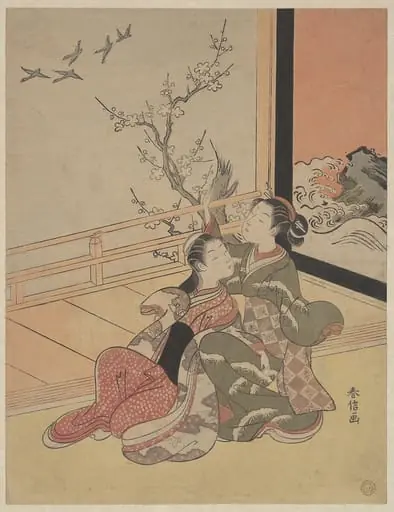 Untitled
 遊女と新造|Courtesan and Shinzō