Artwork
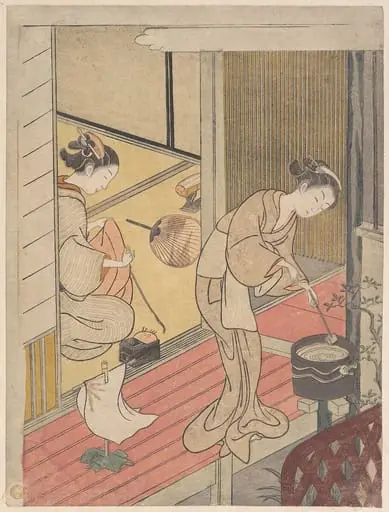
鈴木春信画 若水を汲む男女|Drawing the First Water of the New Year
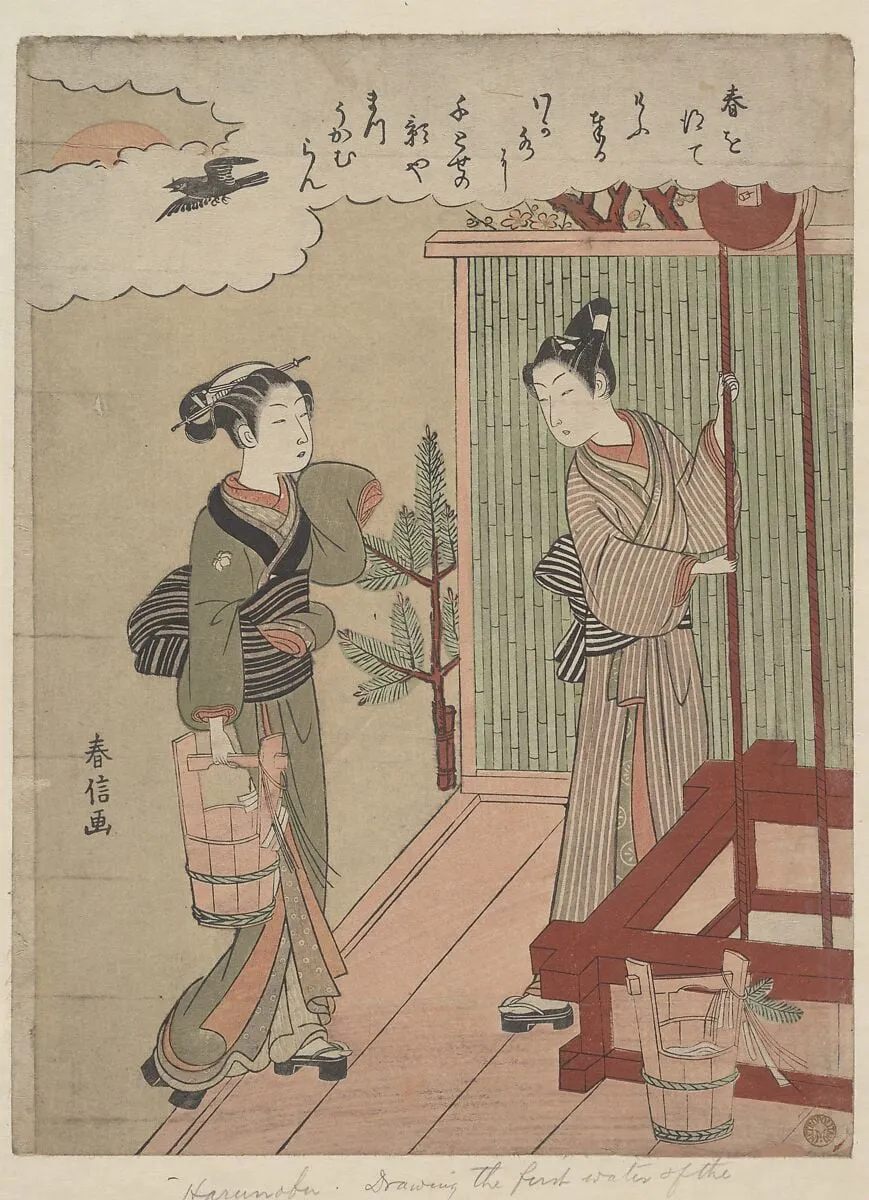
鈴木春信画 若水を汲む男女|Drawing the First Water of the New Year is an ink print by the Romanticist artist Suzuki Harunobu. It dates from 1770 and is held in the collection of the Metropolitan Museum of Art.
- Accession no.
- JP156
- Credit line
- Rogers Fund, 1914
About this work
Subject & Meaning
This early spring print by Suzuki Harunobu depicts a man and a woman at a well on New Year’s morning, ladling fresh water for the first drawing of the year.
This early spring print by Suzuki Harunobu depicts a man and a woman at a well on New Year’s morning, ladling fresh water for the first drawing of the year. The kadomatsu, paired pine and bamboo boughs, set beside the well signals the season’s rites of purification and renewal. The couple’s shared task underscores the communal practice of hatsu-mizu, when households fetched water believed to carry heightened spiritual efficacy at the year’s start.
Technique & Style
Created in 1769, this work is a woodblock print executed in ink and color on paper. As a nishiki-e, it exemplifies the full-color printing techniques characteristic of the ukiyo-e genre during the late 18th century. The image depicts a couple engaged in the New Year's ritual of drawing the first water, featuring specific elements such as a water well, a tub, and a kadomatsu.
The composition captures the figures interacting with a bucket near the well, rendered through the layered precision of the woodblock medium.
History & Provenance
The woodblock print was created by Suzuki Harunobu in 1769, as recorded in the work's cataloguing data and corroborated by its Wikidata entry.
It is held in the collection of the Metropolitan Museum of Art, which is identified as the owning institution in the Wikidata record. The sources do not provide further details about a commission, prior ownership, or chain of custody prior to the museum's acquisition.
The woodblock print Drawing the First Water of the New Year by Suzuki Harunobu is held in the collection of the Metropolitan Museum of Art. Created in 1769, this nishiki-e work depicts a couple drawing water from a well, surrounded by festive elements such as a kadomatsu.
While the artwork's inclusion in the museum's holdings is documented, specific inventory or accession numbers are not provided in the available records. Furthermore, no detailed exhibition history for this particular print is currently cited in the source material.
Legacy
The print's enduring appeal stems from its vivid depiction of a traditional New Year's ritual, which has informed scholarly studies of ukiyo-e social symbolism and inspired subsequent artists to reinterpret the theme of communal renewal in woodblock media. Contemporary exhibitions at major institutions have highlighted its role in shaping visual narratives of seasonal customs, reinforcing its status within the broader canon of Edo-period popular art.
The work's composition and iconography have been cited in art historical literature as exemplars of the genre's capacity to encode seasonal rites within everyday scenes, influencing later prints that celebrate communal rites of passage. Its presence in the Metropolitan Museum of Art's collection has facilitated comparative analyses with other ukiyo-e works, underscoring its significance in the transmission of Edo-period visual culture.
Overview
Suzuki Harunobu's woodblock print, 'Drawing the First Water of the New Year' (1770), depicts a man and a woman collecting the first water of the new year from a wooden well at dawn. This ritual, known as shojaku, was believed to bring good fortune and health for the coming year. The composition centers on the two figures, whose layered kimonos in soft pinks and blues create a harmonious color palette characteristic of Harunobu's mature style.
Their sleeves gently brush against the bucket's rope, emphasizing a quiet intimacy and the stillness of the early morning. Executed in the nishiki-e (full-color) technique, the work showcases the artist's mastery of subtle gradations and delicate line work, moving away from the bolder outlines of earlier ukiyo-e. Created in 1770, the year of Harunobu's death, this print exemplifies his contribution to the development of the bijin-ga (pictures of beautiful women) genre and the broader ukiyo-e movement.
It captures a fleeting moment of domestic ritual with a poetic sensitivity that elevated everyday scenes to high art, influencing subsequent generations of printmakers.
Artist & collection

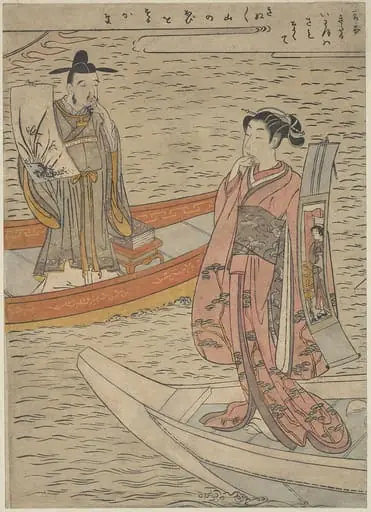
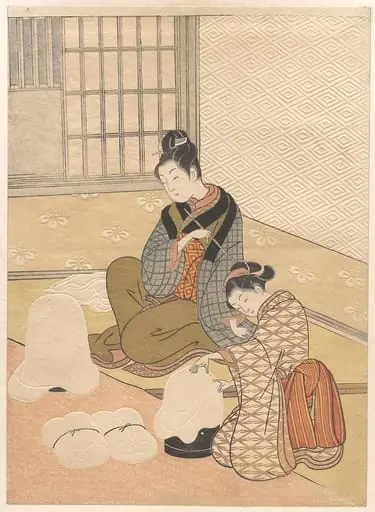
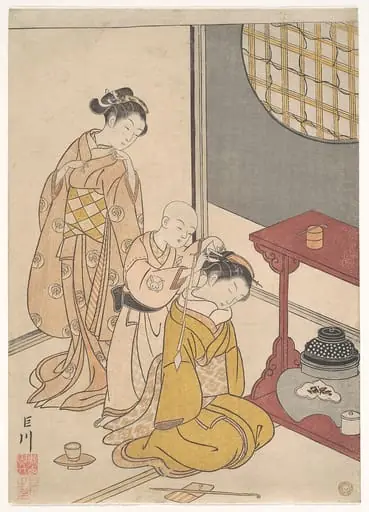
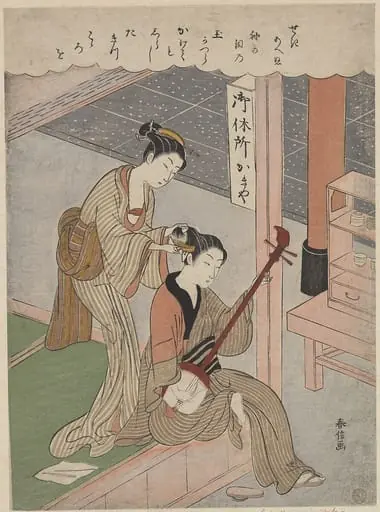
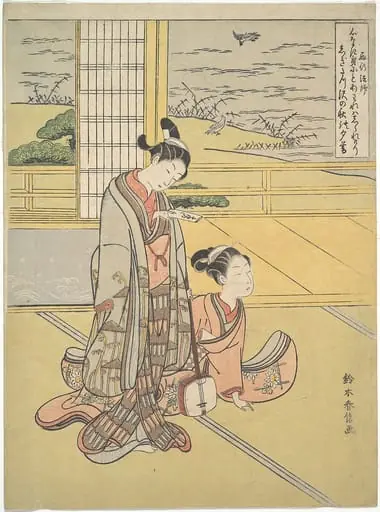 鈴木春信画 見立三夕 「西行法師」|A Young Man and Woman with a Shamisen; Monk Saigyō, from a series alluding to the Three Evening Poems (Sanseki waka)
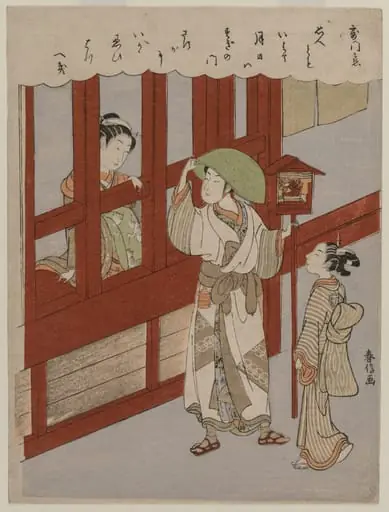 Love at the Brothel Gate
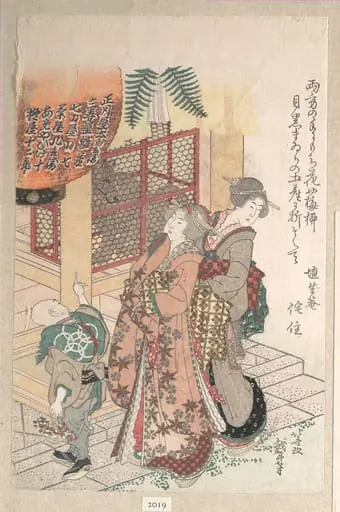 初詣|Young Women Visiting a Shinto Shrine
 Untitled
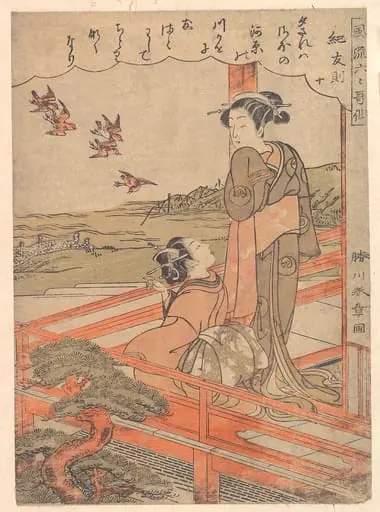 「風流六く歌仙紀友則 十」|“Two Young Women on a Verandah Watching Plovers,” from the series Stylish Six Poetic Immortals (Fūryū rokkasen: Ki no Tomonori, jū)
 Untitled
 Untitled
 Untitled
 Untitled
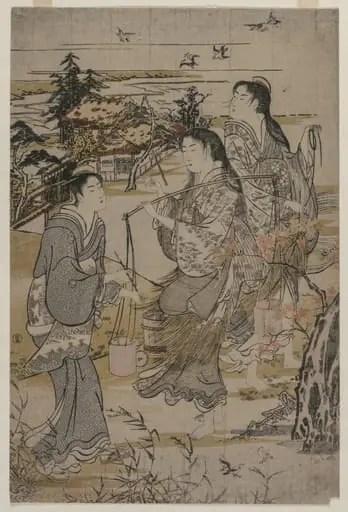 Women with Salt Pails; The Noda Tama River in Mutsu Province, from an untitled series of the Six Tama Rivers
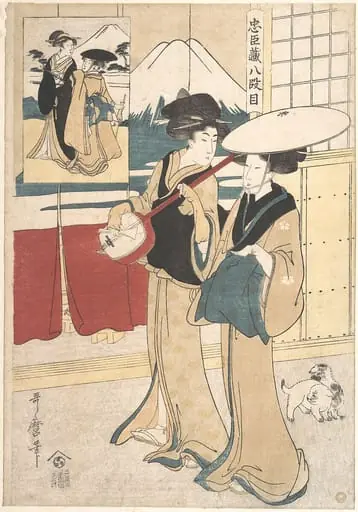 忠臣蔵八段目|Two Tori-oi, or Itinerant Women Musicians of the Eta Class
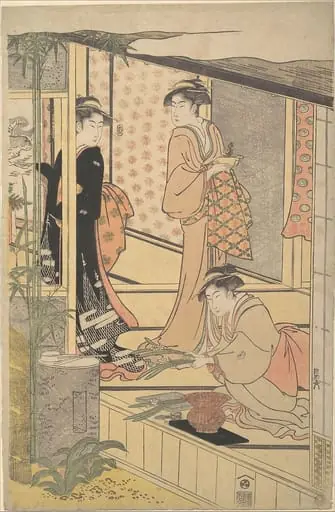
- 細田栄之画 正月準備|Preparing New Year Decorations