Artwork
Untitled
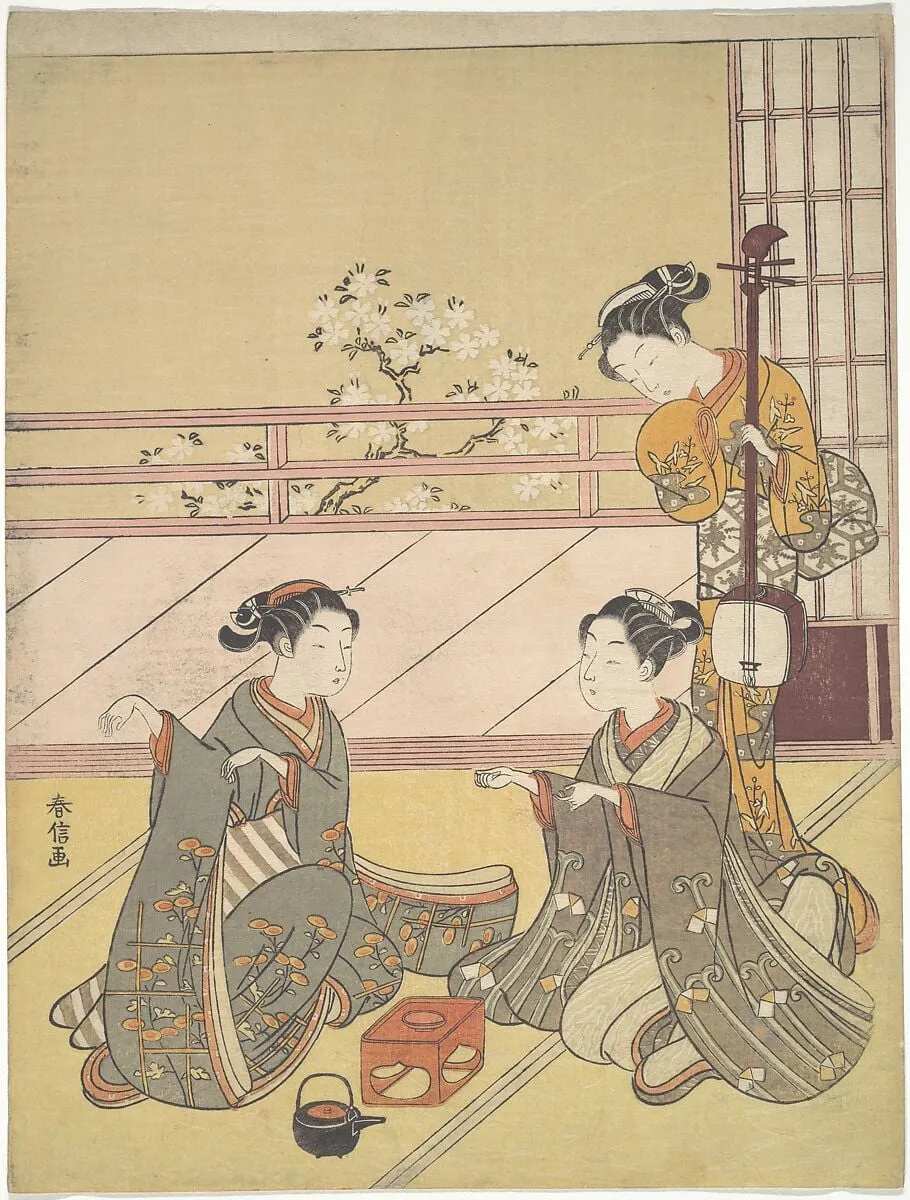
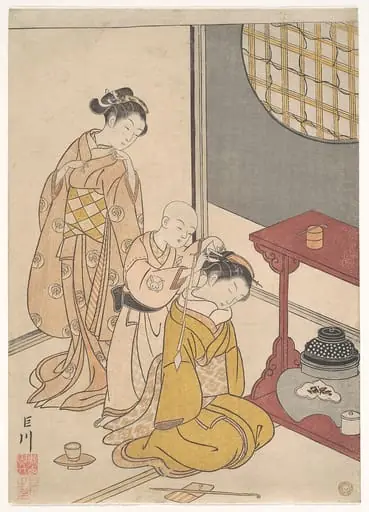
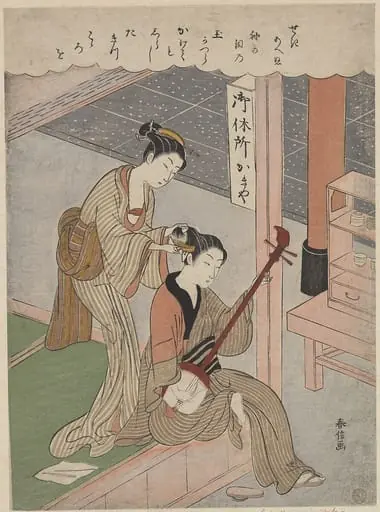
Untitled is an ink print by the Romanticist artist Suzuki Harunobu. It dates from 1768 and is held in the collection of the Metropolitan Museum of Art.
About this work
Subject & Meaning
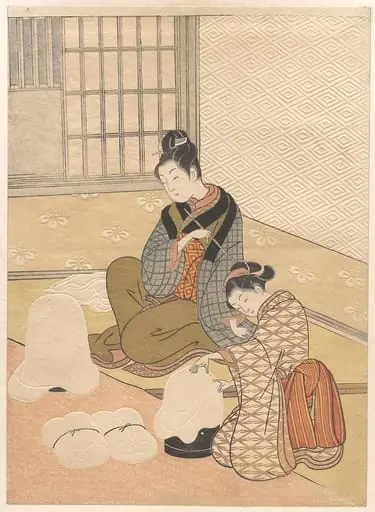
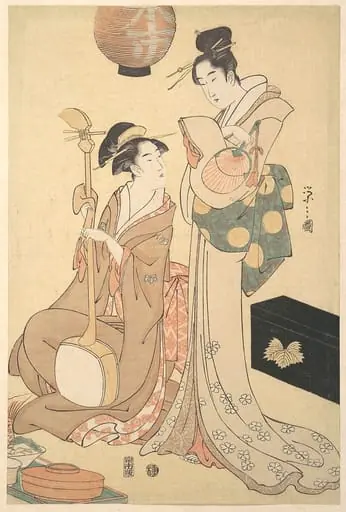
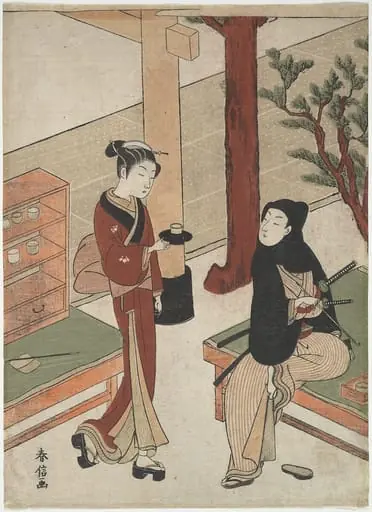
The print shows a geisha and a kagema (a young male attendant) seated together, each holding a shamisen while they play the kitsune ken hand game.
The print shows a geisha and a kagema (a young male attendant) seated together, each holding a shamisen while they play the kitsune ken hand game. The figures are rendered in Harunobu’s delicate line and soft colour, typical of his nishiki‑e technique.
As a bijin‑ga, the work highlights the beauty of the geisha within the context of Edo‑period leisure activities. The shamisen signals musical entertainment, and the kitsune ken, a game of fox, hunter and village, adds a layer of playful wit, together representing the refined pastimes of the pleasure quarters.
Technique & Style
Untitled is a woodblock print executed in ink and color on paper, a medium typical of Suzuki Harunobu’s output. Classified as a print, the work belongs to the ukiyo-e tradition and specifically to the nishiki-e (polychrome) subgenre, indicating that multiple carved blocks were used to build up layered hues. Its bijin-ga focus presents a portrait of a geisha, kagema and shamisen player engaged in the Kitsune ken game, rendered with the delicate line and subtle gradations characteristic of Harunobu’s handling of the medium.
History & Provenance
The work titled Untitled was created in 1768 by Suzuki Harunobu as a woodblock print using ink and color on paper. It belongs to the ukiyo-e genre and depicts a kagema, geisha, and shamisen, reflecting themes associated with Kitsune ken. The print is part of the Metropolitan Museum of Art's collection, which documents its provenance and preservation within the museum's holdings.
The work's creation history is anchored in the year 1768, consistent with the stated inception date in the source. Its medium and classification as a print are confirmed by the documented record, and it is recognized as part of the broader tradition of Japanese portraiture in nishiki-e technique.
No additional details regarding commission, ownership transfers, or exhibition history are provided in the available sources, and thus are not included in this section.
Overview
This untitled woodblock print, created around 1768 by Suzuki Harunobu, is a seminal work in Japanese printmaking, notable for being one of the first to utilize full-color techniques through multiple carved blocks.
Context
Emerging in 18th-century Japan, this print reflects the cultural flourishing of Edo’s pleasure quarters, where geishas, kagema, and games like Kitsune ken were integral to social entertainment.
Legacy
As one of Japan’s first full-color woodblock prints, it influenced the subsequent development of ukiyo-e, paving the way for later generations of printmakers to explore color and composition extensively.
Artist & collection

- Untitled
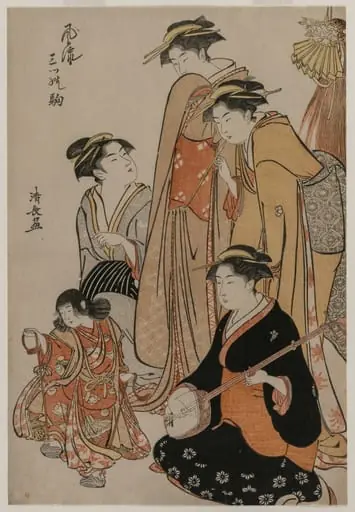 Women Watching a Girl Dance on Shells (From the series Fashionable Presentations of Three Horses)
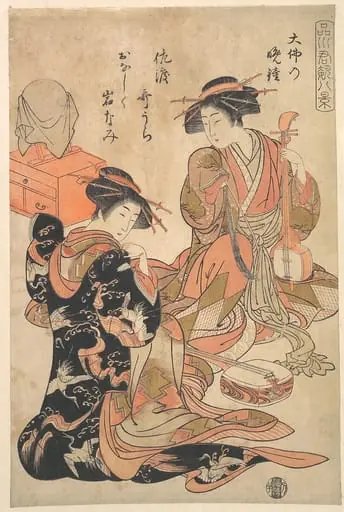 Daibutsu no bansho|Vesper Bell of the Temple of Great Buddha
 回文歌 京 大阪 江戸|Palindromic Poems (Kaibunka): Kyo
 Untitled
 Untitled
 Untitled
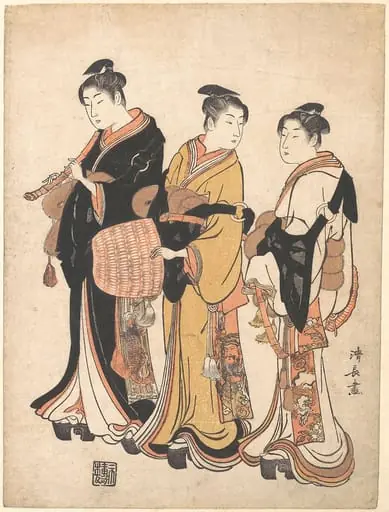 Untitled
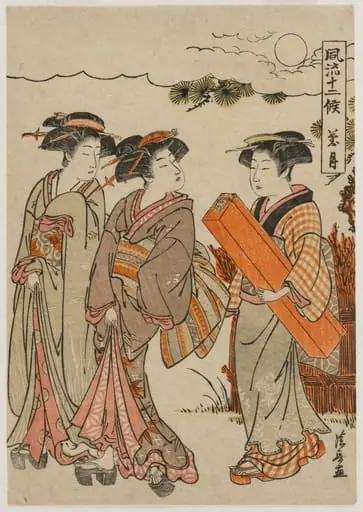 The Eighth Month (from the series Fashionable Presentations of the Twelve Months)
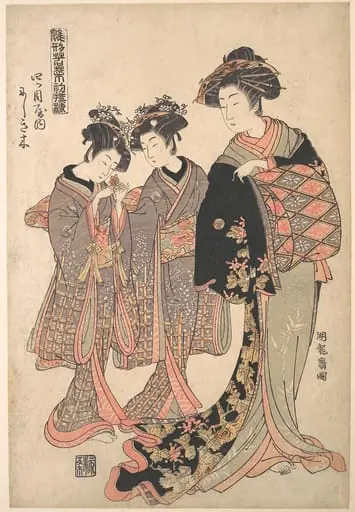 『雛形若菜初模様 四ツ目屋内 にしき木』|The Courtesan Nishikigi of the Yotsumeya Brothel, from the series “A Pattern Book of the Year’s First Designs, Fresh as Spring Herbs” (“Hinagata wakana hatsu moyō”)
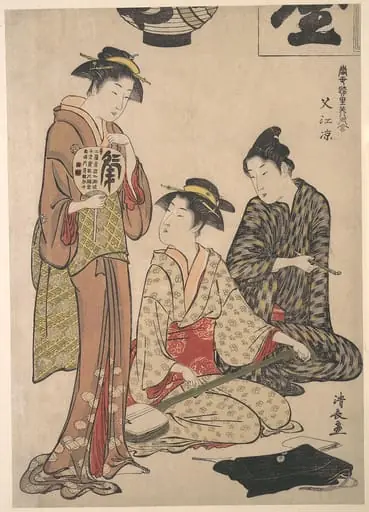 Nakasu no suzumi|Enjoying the Evening Cool at Nakasu
 Untitled