Artwork
Untitled
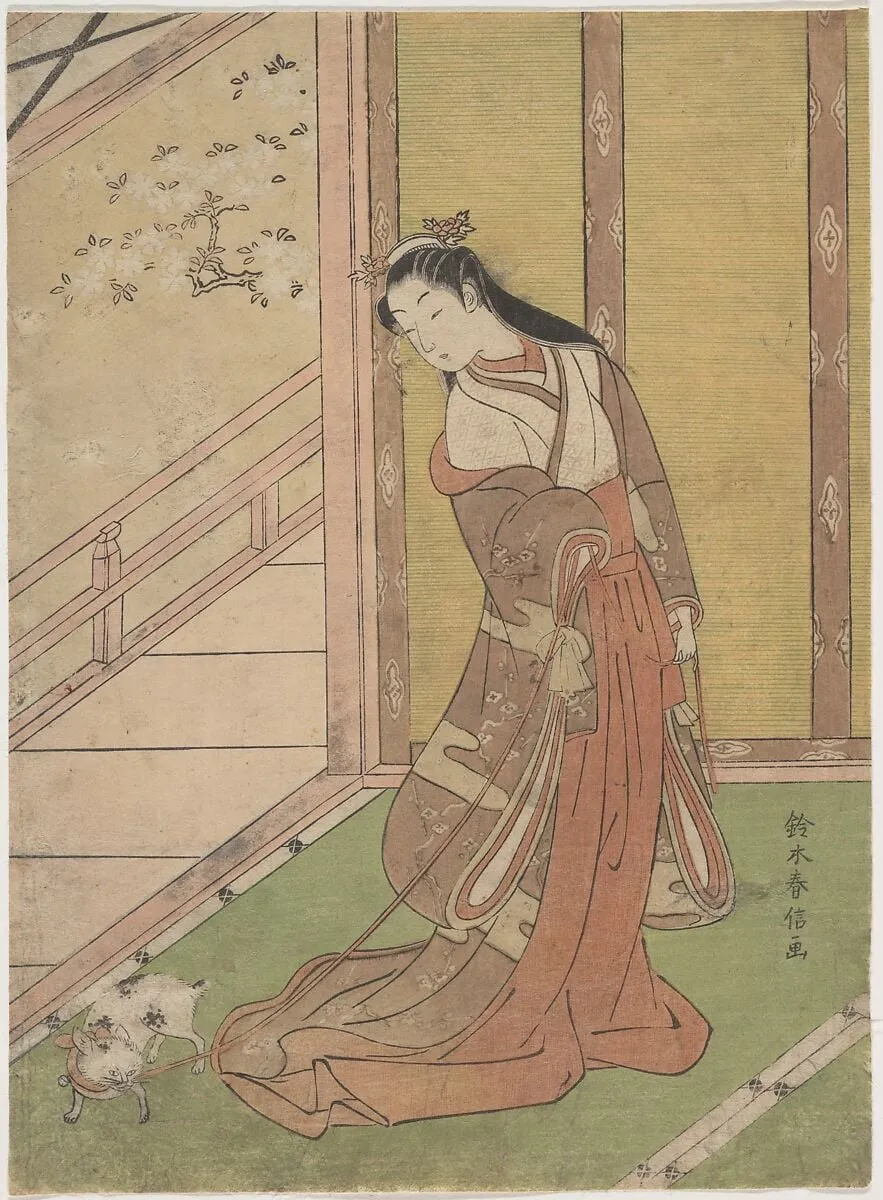
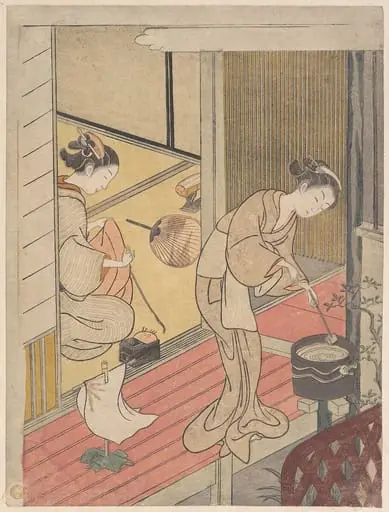
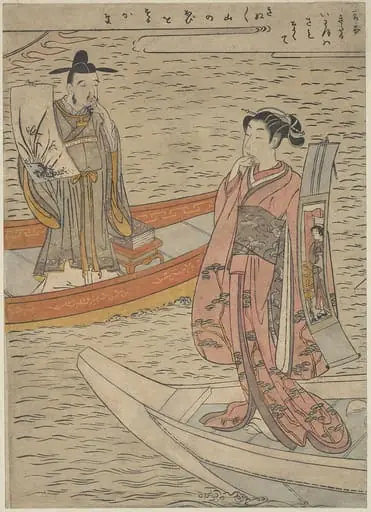
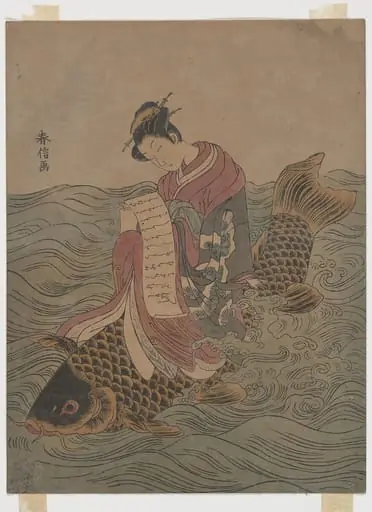
Untitled is an ink print by the Baroque artist Suzuki Harunobu. It dates from 1769 and is held in the collection of the Metropolitan Museum of Art.
About this work
Overview
Untitled is a woodblock print employing ink and color on paper, created by the Japanese ukiyo-e artist Suzuki Harunobu.
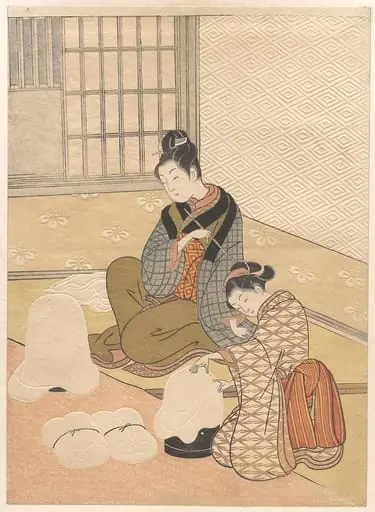
Untitled is a woodblock print employing ink and color on paper, created by the Japanese ukiyo-e artist Suzuki Harunobu. The work is dated to 1800 and belongs to the genres of nishiki-e and bijin-ga, depicting a beautiful woman and a cat. It is held in the collection of the Metropolitan Museum of Art. As a product of Harunobu's workshop, the print exemplifies the polychrome aesthetic that defined the Edo period's floating world imagery, capturing an intimate, everyday moment between a figure in layered robes and a playful animal.
Subject & Meaning
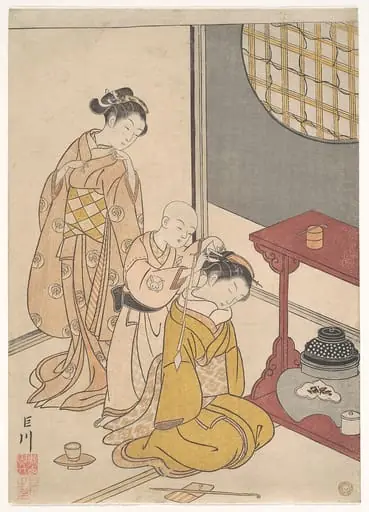
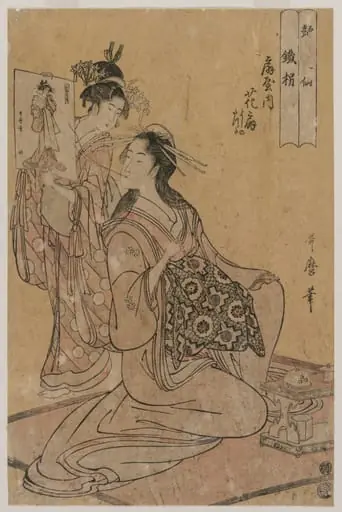
The composition centers on a bijin, a beautiful woman, whose body angles downward as she looks at a small cat biting the hem of her garment. The woman's long, dark hair is adorned with ornaments, and her robes feature muted floral and cloud motifs. Behind her, a screen or wall with horizontal lines displays a branch of blossoming flowers. The interaction between the woman and the cat provides a quiet, poetic narrative typical of bijin-ga, elevating a mundane domestic episode into a scene of lyrical grace. The calligraphic characters in the lower right corner further integrate text and image, a common convention in ukiyo-e that links the visual subject to contemporary or classical literary themes.
Technique & Style
Executed as a nishiki-e, or brocade print, the work utilizes the full-color woodblock printing technique that Harunobu pioneered. The image is characterized by flat areas of color bounded by crisp outlines, with minimal shading. The palette is restrained, relying on soft greens, beiges, and earthy reds to define the layered robes and green floor. The color application is smooth and even, allowing for delicate linear detail without the heavy, opaque application seen in some of Harunobu's earlier calendar prints. Stylistically, the woman's figure reflects Harunobu's signature approach: very thin and light, epitomizing an ideal of eternal girlhood in an unusual and poetic setting.
History & Provenance
The print is credited to Suzuki Harunobu and bears a date of 1800. This date is historically notable because Harunobu died in 1770, meaning the 1800 work must be a posthumous printing, a reproduction, or a forgery made under his name, a practice that became common shortly after his death as artists like Harushige boasted of their ability to forge the master's work. The work eventually entered the collection of the Metropolitan Museum of Art, where it is currently accessioned. The widespread distribution and thin dispersal of Harunobu's oeuvre globally have hindered comparative internal studies, making the authentication of any single work attributed to him difficult to confirm.
Context
Suzuki Harunobu was the first ukiyo-e artist to consistently produce full-color prints, inventing the nishiki-e technique around 1765. Prior to this, ukiyo-e relied on monochrome ink or limited two- and three-color benizuri-e. Harunobu's innovations, supported by wealthy samurai patrons who funded the use of multiple woodblocks and expensive colors, revolutionized the medium. He became a primary producer of bijin-ga, deliberately avoiding kabuki actors to focus on delicate, lyrical scenes of women and ordinary urban life in Edo. His style, defined by ethereal, childlike figures, was widely imitated during his lifetime and shortly after, until it was eventually eclipsed by the bolder styles of Katsukawa Shunsho and Torii Kiyonaga.
Legacy
Harunobu's establishment of the nishiki-e technique set the standard for ukiyo-e printmaking that persisted until the adoption of Western methods in the late nineteenth century. His specific visual language, particularly his portrayals of delicate, graceful women in poetic settings, created a fashion for lyrical imagery that influenced both Japanese and Western art scenes. However, the immense popularity and respect he commanded during his life also led to a complicated afterlife for his oeuvre. The proliferation of posthumous reproductions and forgeries has obscured the authenticity of many works attributed to him, leaving scholars to navigate a body of work where the master's hand is often difficult to isolate from that of his imitators.
Artist & collection

- Untitled
 Untitled
 Untitled
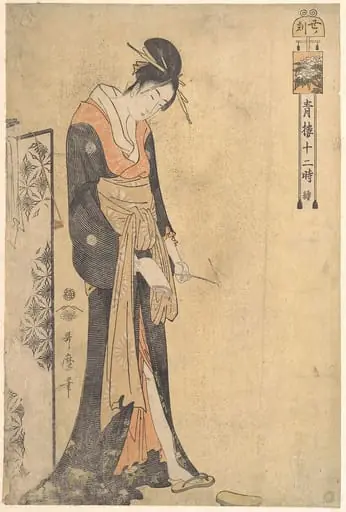 Ushi no Koku|青楼十二時 続 丑の刻|The Hour of the Ox (1 A.M.–3 A.M.)
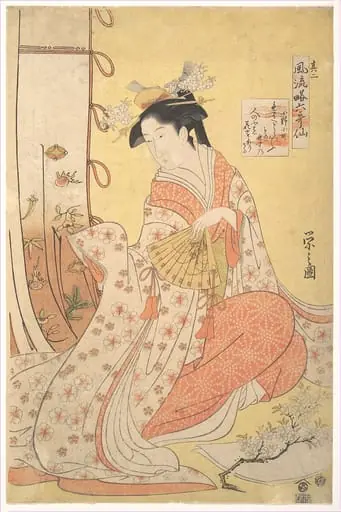 鳥文斎栄之画 「風流略六哥仙 其の二」小野小町|Ono no Komachi: Number Two (Sono ni), from the series Stylish Parodies of the Six Poetic Immortals (Fūryū yatsushi rokkasen)
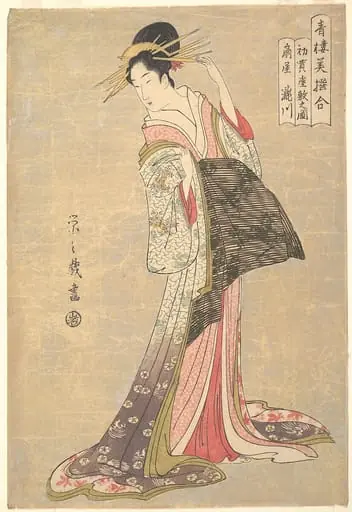 鳥文斎栄之画 「青楼美撰合 初売座敷之図 扇屋滝川」|Takigawa of the Ōgiya Brothel: The First Reception Room Appointment of the New Year (Hatsu-uri zashiki no zu: Ōgiya Takigawa), from the series A Comparison of Selected Beauties of the Pleasure Quarters (Seirō bisen awase)
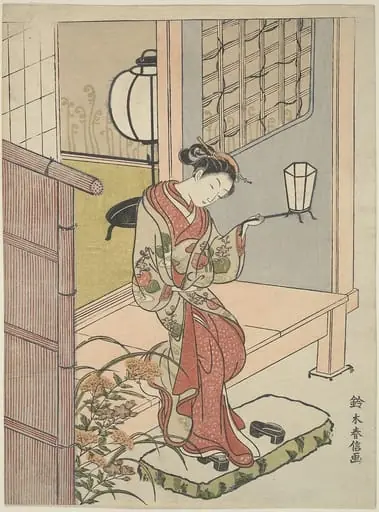 Untitled
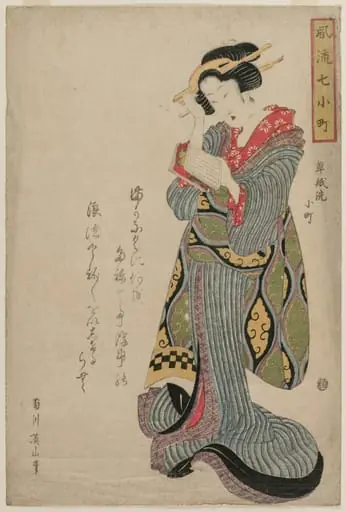 Komachi Washes the Book (from the series Seven Elegant Episodes from the Life of the Poetess Ono no Komachi)
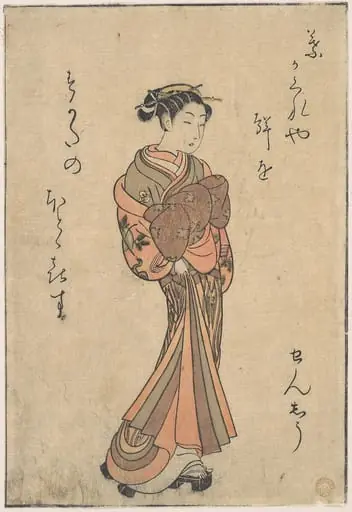 青楼美人合|The Courtesans, from the Series, "Seiro Bijin Awase Carver End Shigoro" (sic.)
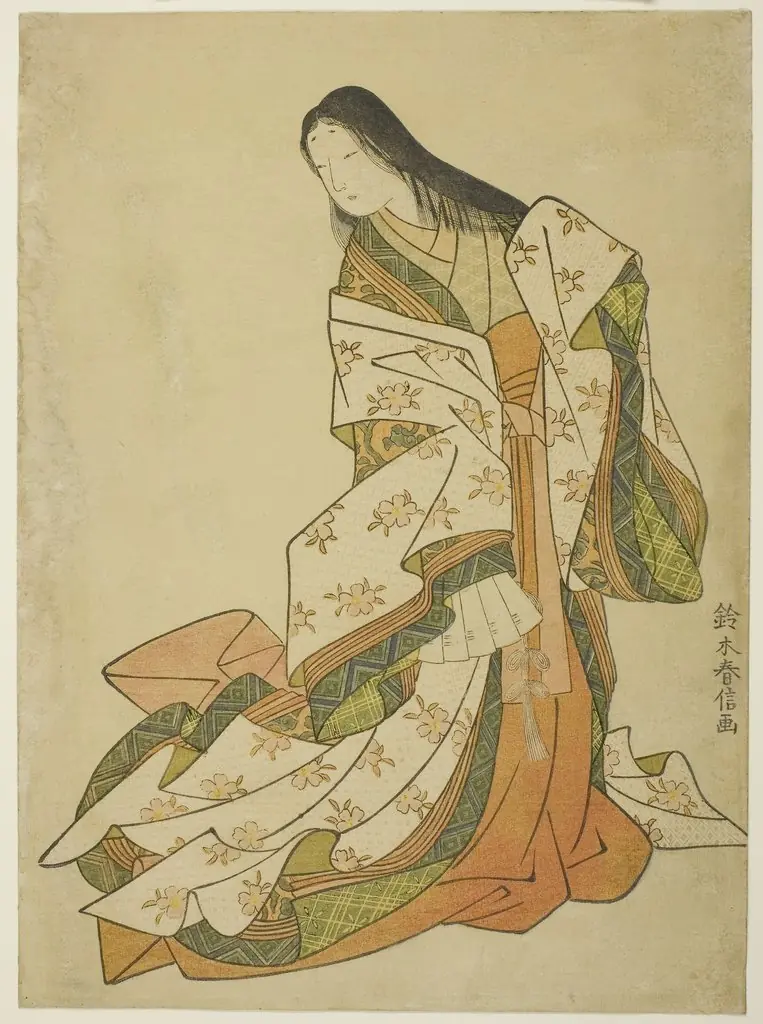 The Poetess Ono no Komachi
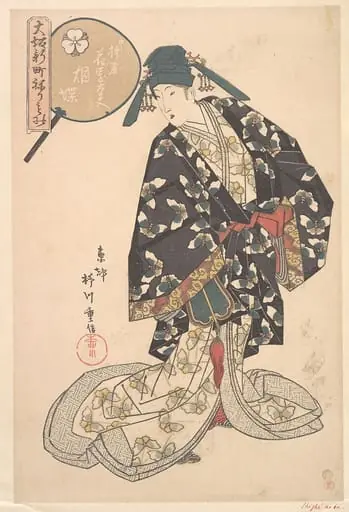 Untitled
 The Courtesan Hana-ogi of Ogiya as the Sennin Tekkai (from the series Eight Immortals of Sensuality)