Artwork
Untitled
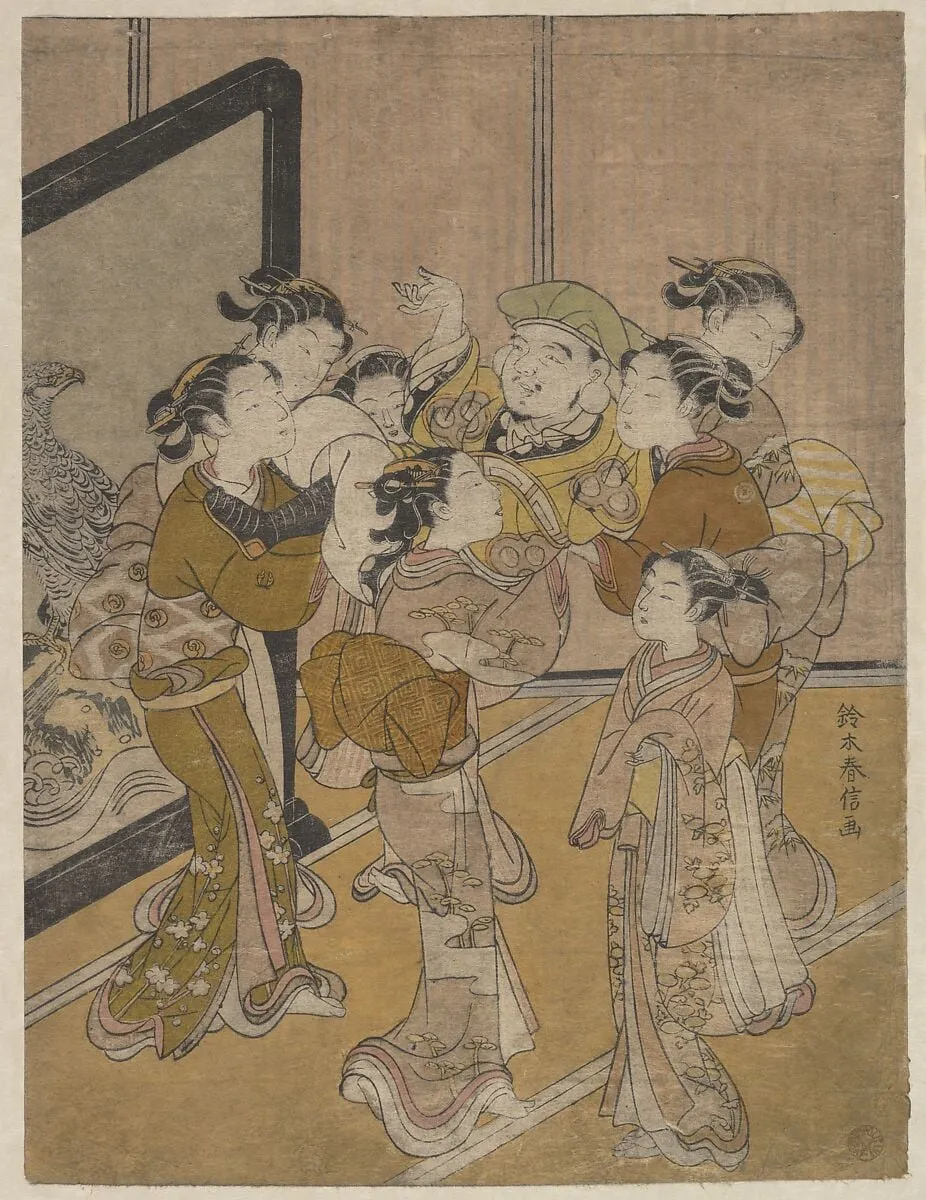
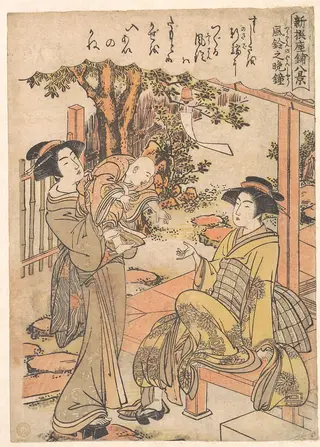
Untitled is an ink print by the Romanticist artist Suzuki Harunobu. It dates from 1766 and is held in the collection of the Metropolitan Museum of Art.
About this work
Subject & Meaning
The woodblock print depicts Daikokuten, one of the Seven Lucky Gods in Japanese tradition, portrayed as a woman through the specific iconography of Dōage.
The woodblock print depicts Daikokuten, one of the Seven Lucky Gods in Japanese tradition, portrayed as a woman through the specific iconography of Dōage. This representation is set against a backdrop featuring a folding screen and celebrates the Japanese New Year. The work integrates these figures to symbolize prosperity and good fortune associated with the holiday season, blending religious imagery with the domestic aesthetics typical of the ukiyo-e genre.
Context
Suzuki Harunobu's Untitled woodblock print from 1766, depicting Daikokuten, Dōage, and the Seven Lucky Gods alongside a woman before a folding screen, was created in the ukiyo-e, nishiki-e tradition. It is held in the Metropolitan Museum of Art's collection and exemplifies early ukiyo-e printmaking techniques. Scholarship situates this work within Harunobu's prolific output of New Year prints celebrating the Seven Lucky Gods, reflecting Edo-period popular culture and religious iconography.
The print's iconography aligns with traditional Japanese New Year imagery, where these deities symbolize prosperity and good fortune. Its classification as a ukiyo-e nishiki-e underscores its significance in the evolution of full-color woodblock printing in Edo Japan. This work contributes to understanding Harunobu's role in popularizing mythological themes through accessible art forms.
Legacy
The print’s enduring visibility in major collections and continued inclusion in scholarly surveys of ukiyo-e has kept it in view of later artists and curators interested in the Seven Lucky Gods motif. Its frequent reproduction in exhibition catalogues and online museum databases has reinforced recognition of Harunobu’s role in popularizing these deities, contributing to a broader understanding of how Edo-period prints shaped visual narratives of prosperity and ritual celebration.
Overview
Created in 1766, this untitled woodblock print by Suzuki Harunobu stands as a seminal example of the nishiki-e (brocade picture) technique, marking a pivotal moment in the history of Japanese ukiyo-e. The work depicts a woman in a vibrant kimono leaning against a man in a patterned robe, both figures standing upon a stylized cloud. This composition exemplifies the shift from earlier, monochromatic or hand-colored prints to fully integrated, multi-block color printing.
Harunobu's approach flattens the pictorial space, eliminating shadows to create a delicate, paper-cut-out aesthetic defined by soft, harmonious hues and elegant outlines. The inclusion of the cloud motif suggests a romantic or poetic narrative, a common theme in Harunobu's output that often drew from classical literature or contemporary sentiment. Produced during the artist's mature period, this print demonstrates his mastery in coordinating complex color registration and his ability to infuse everyday scenes with a refined, lyrical quality.
It represents a significant advancement in the technical and artistic capabilities of Edo-period printmaking, establishing a new standard for color and composition that influenced subsequent generations of ukiyo-e artists.
Technique & Style
Harunobu employed the nishiki-e method, an early full‑color woodblock technique that allowed multiple blocks to apply separate hues. The print’s composition relies on broad, unmodulated color fields and a flattened perspective, resembling a paper cut‑out, which was innovative for its time.
History & Provenance
As one of the first Japanese prints to use the full‑color nishiki-e process, this work marks a turning point in ukiyo‑e production. Prior to Harunobu’s experiments, most prints were monochrome or limited to a few added colors. The piece contributed to the rapid spread of polychrome prints in the late eighteenth century.
Artist & collection

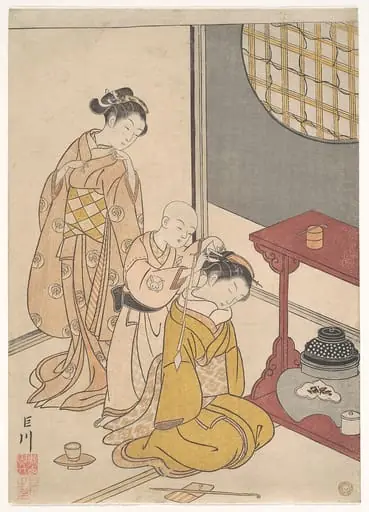
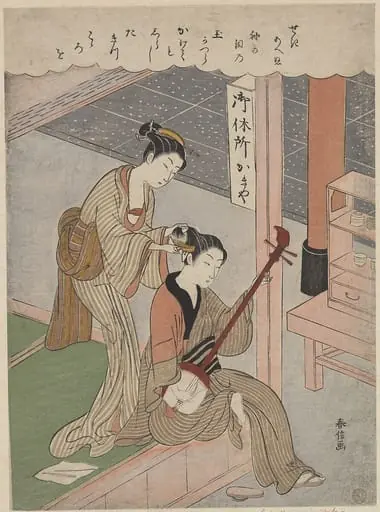
- 初詣|Young Women Visiting a Shinto Shrine
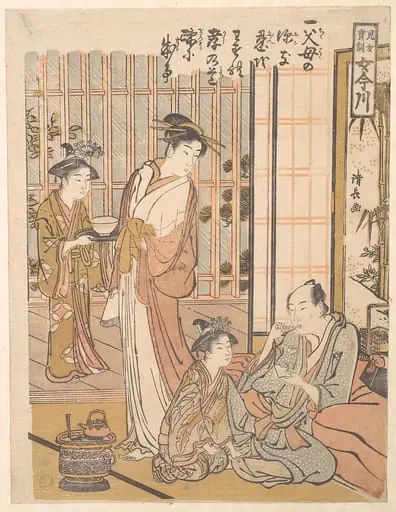 Untitled
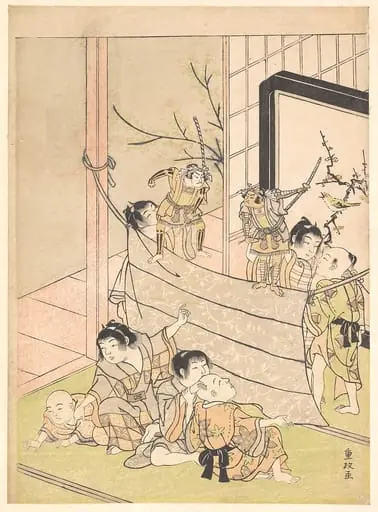 Untitled
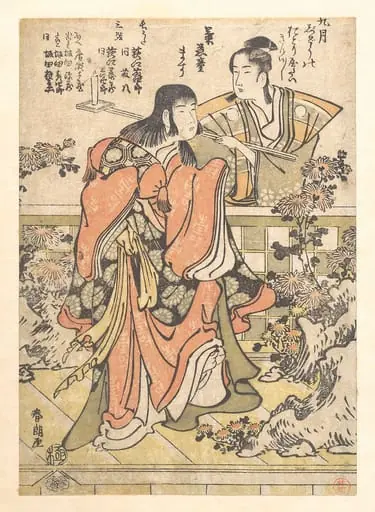 Untitled
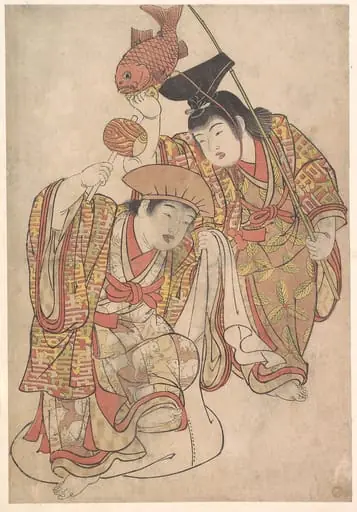 Untitled
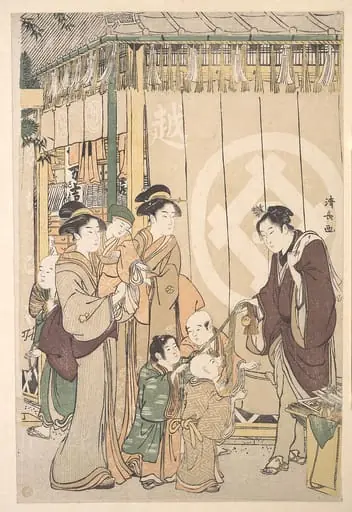 鳥居清長画 初春の越後屋|Group before the Echigo-ya Dry-goods Shop on New Year's Day
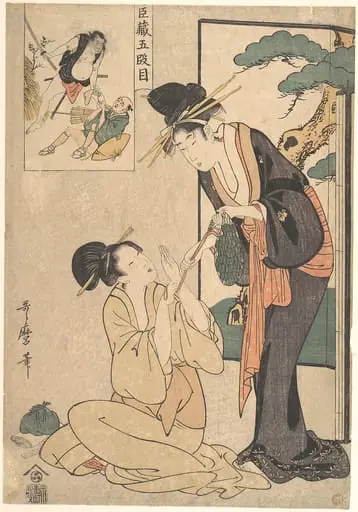 忠臣蔵五段目|A Woman Snatching a Bag of Sweetmeats from Her MotHer
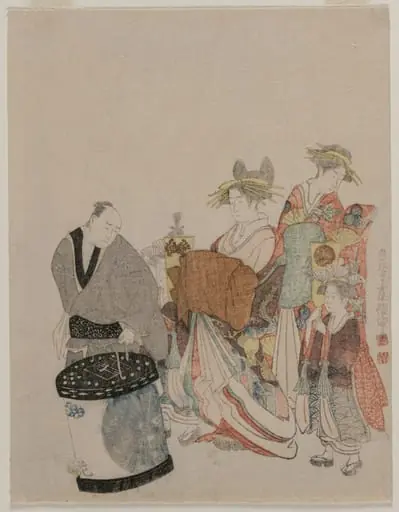 Courtesan on the Town with Attendants at Night
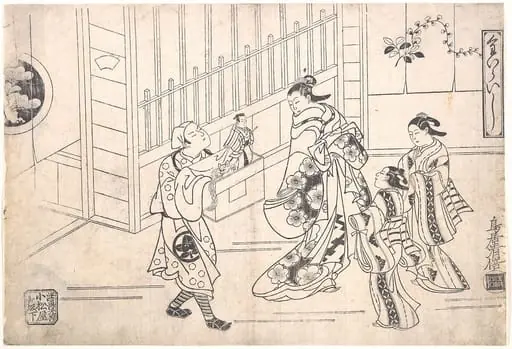 Kairaishi|The Actor Ichimura Takenojo VIII in the Role of a Puppeteer, showing Puppets to a Courtesan
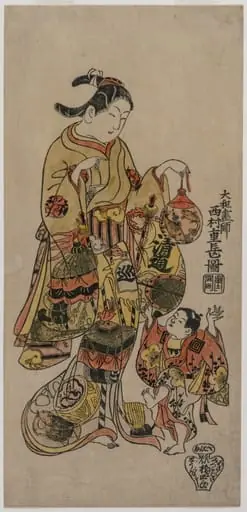 Child Reaching for a Fishbowl
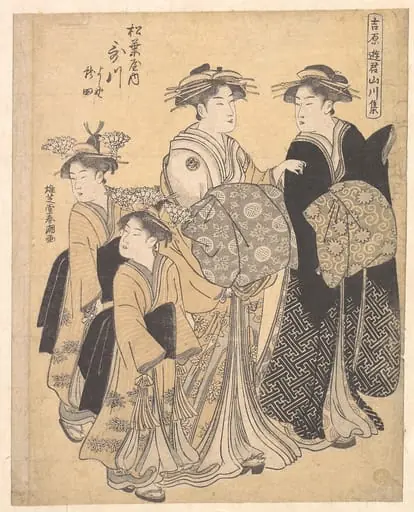 Untitled
 Untitled