Artwork
A Hermit Saint
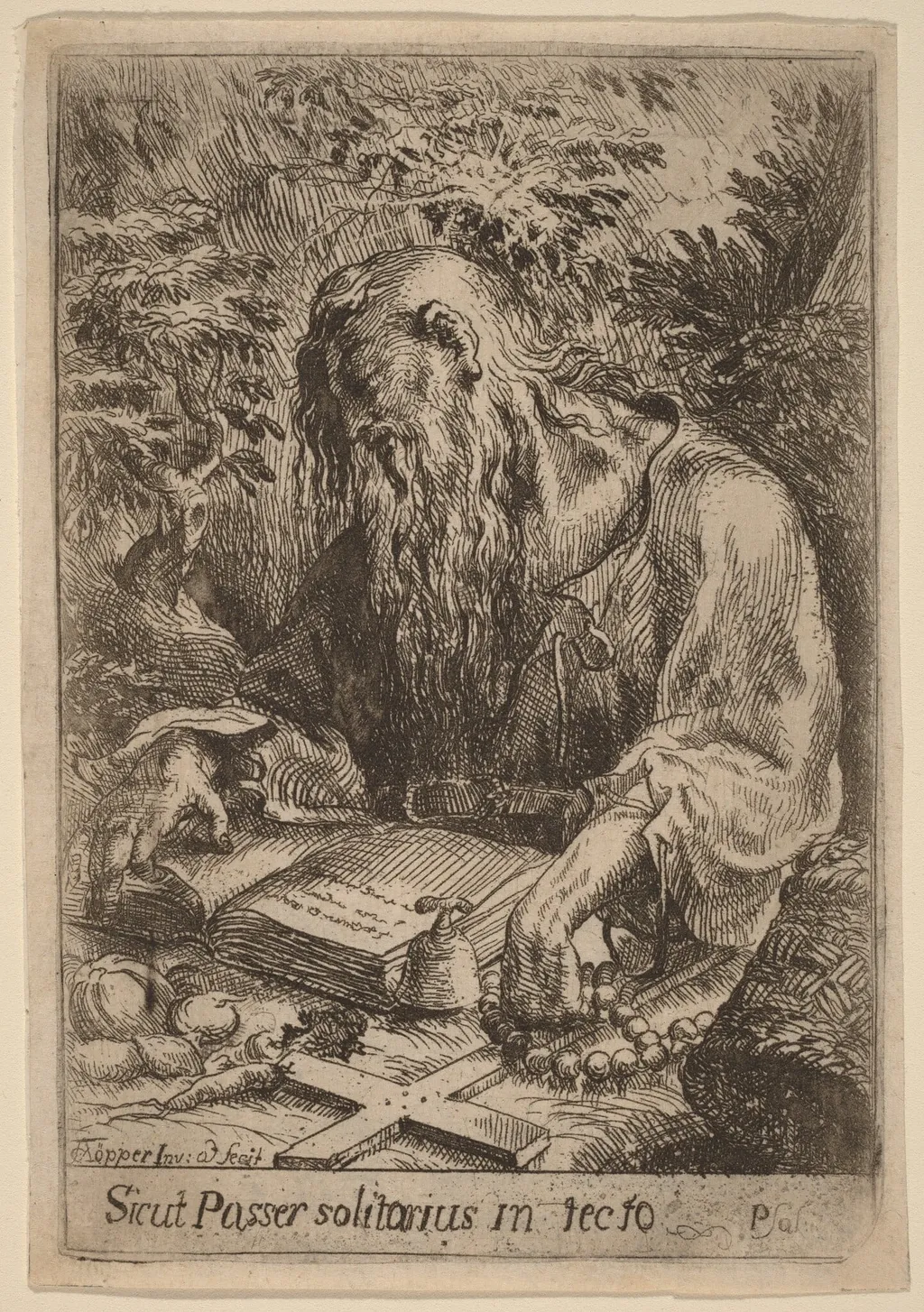
A Hermit Saint is an ink print by the Baroque artist Karel Frantisek Töpper. It dates from 1710 and is held in the collection of the National Gallery of Art.
- Inscription
- Inscribed:lower left in image: Töpper Inv et fecit / Sicut Passer solitarus in tecto PSal. [From Psalms 101: 8: I have become as a sparrow all alone on the housetop]; by later hand, lower center verso in graphite: Töepper Ga [undeciphered]... und 17 Jahrhundert Labordi [undeciphered] PM-00-26
About this work
Overview
The saint grips a staff, a traditional attribute of pilgrimage and penance, while a small dog rests nearby, partially obscured by the surrounding shadows.
Created in 1710 by Karel František Töpper, 'A Hermit Saint' is an etching on laid paper that captures the solitude of religious asceticism within a dense, untamed landscape. The composition centers on a solitary figure seated upon a rock, enveloped in a heavy cloak with their head bowed in contemplation or prayer. The saint grips a staff, a traditional attribute of pilgrimage and penance, while a small dog rests nearby, partially obscured by the surrounding shadows.
Töpper employs deep contrasts between light and dark to define the gnarled trees and uneven terrain, creating a wild, atmospheric space that isolates the figure from the viewer. This work exemplifies the artist's skill in etching during the early 18th century, reflecting the Baroque interest in dramatic lighting and the spiritual intensity of hermit life. Produced during a period when religious imagery remained central to Central European art, the print demonstrates Töpper's ability to convey mood and texture through line work alone, without the use of color.
The piece stands as a significant example of his graphic output, illustrating the intersection of nature's raw power and human devotion.
Subject & Meaning
The composition centers on a hermit saint, a figure traditionally associated with ascetic withdrawal and contemplation. The surrounding gnarled trees and uneven terrain convey a sense of isolation, suggesting the saint’s retreat from worldly concerns and immersion in spiritual reflection, reinforced by the subdued posture and the presence of a modest companion animal.
Technique & Style
Töpper employed the etching process, incising lines into a metal plate which were then transferred onto laid paper. The print’s sharp, precise lines render the texture of foliage, bark, and fabric with meticulous detail. The contrast of deep shadows and fine hatching creates a dense atmospheric effect characteristic of early 18th‑century printmaking.
History & Provenance
Created in the early 1700s, the work reflects Töpper’s engagement with religious themes common in Central European art of the period. While specific ownership records are limited, the etching has been documented in collections of early modern prints, illustrating the artist’s contribution to the devotional imagery circulated through prints.
Own this work as a print
Artist & collection


- Saint Jerome, 2nd plate
 Man with a Penknife
 Old man, Old Tree (Vieil homme, vieil arbre)
 Archeologist (L'archeologue)
 St. Jerome in Penitence
 St. Francis Beneath a Tree Praying
 A Philosopher
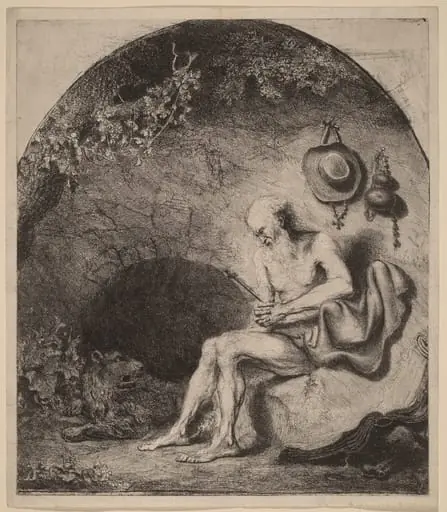 Saint Jerome in the Cave
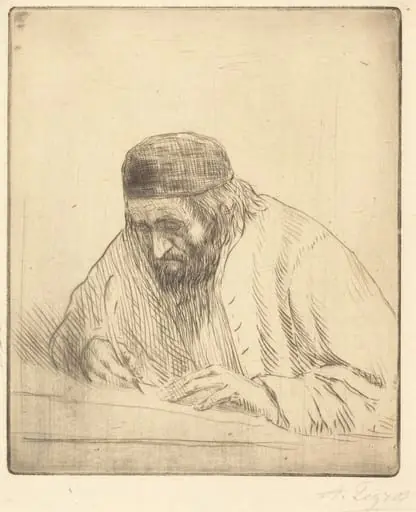 Writer (L'ecrivain)
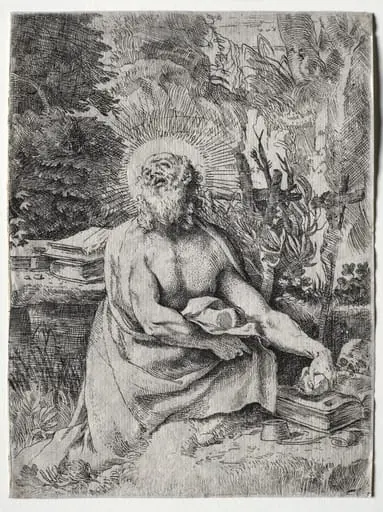 St. Jerome
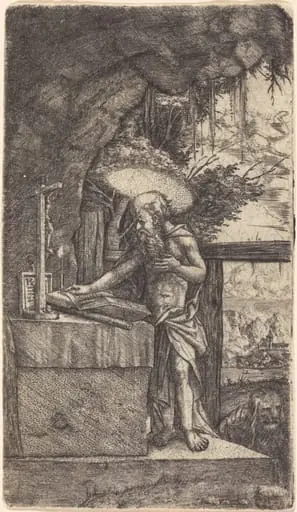 Saint Jerome Reading
 Bust of an Old Man in Profile, Facing Right