Artwork
Untitled
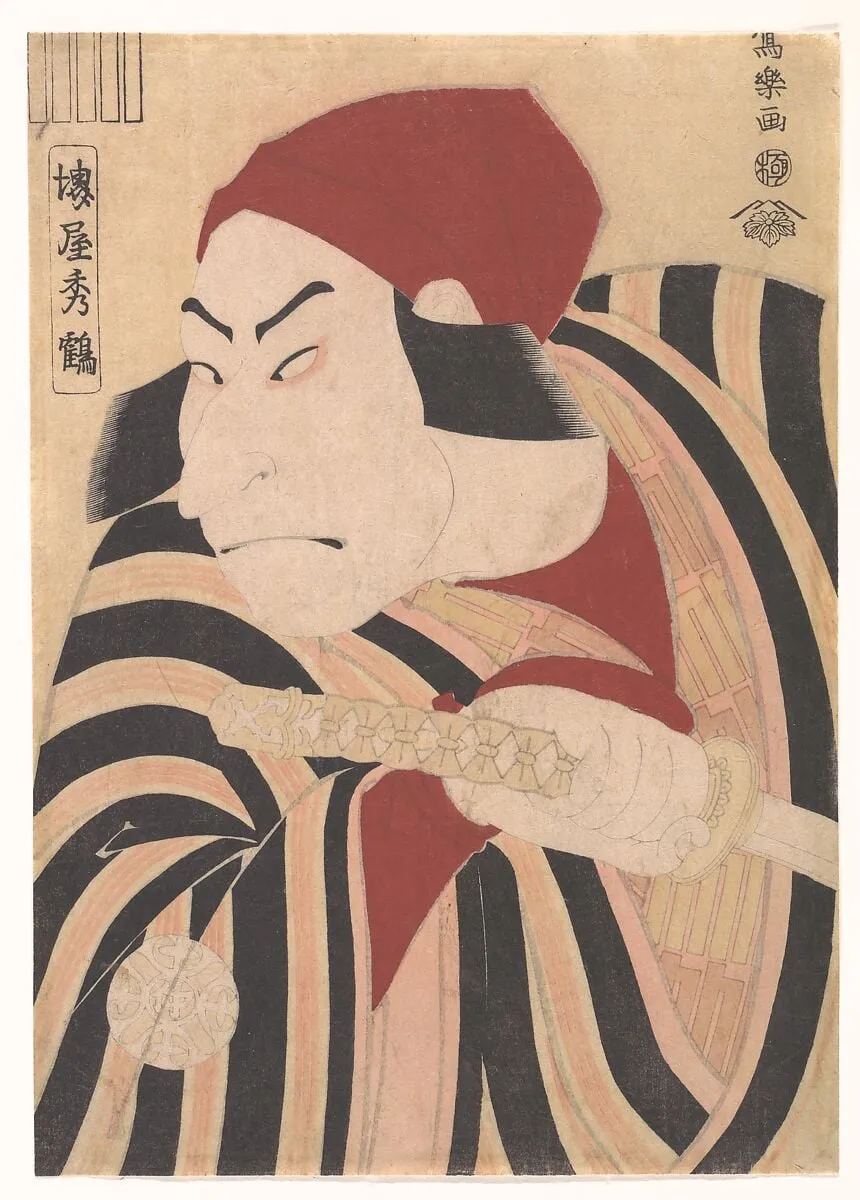
Untitled is an ink print by the Romanticist artist Tōshūsai Sharaku. It dates from 1794 and is held in the collection of the Museum of Fine Arts Boston.
About this work
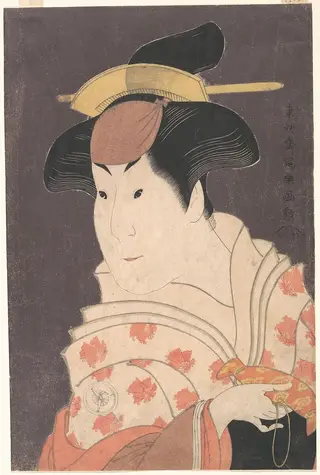
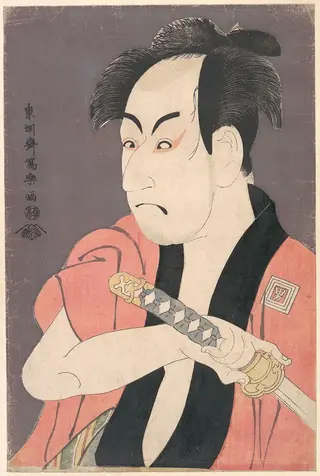
This print shows a Japanese actor mid-performance, his face twisted in exaggerated emotion.
This print shows a Japanese actor mid-performance, his face twisted in exaggerated emotion. The bold lines and bright colors make him pop against a plain background.
Sharaku made these prints for just ten months in 1794, then vanished. No one knows why he stopped or what happened to him. The prints were meant to be cheap souvenirs, but today they’re rare.
Look up actors to see more prints of kabuki stars from this time.
Subject & Meaning
The work is a ukiyo-e woodblock print depicting the kabuki actor Nakamura Nakazō II, portrayed as a man. Created in 1794 by Tōshūsai Sharaku, the piece belongs to the yakusha-e genre, which focuses specifically on theater portraits. As an ōkubi-e, the composition features a large-headed bust that emphasizes the subject's facial expression and character rather than a full narrative scene.
The print serves as a direct representation of the actor in his professional capacity, capturing his likeness during the Edo period.
Technique & Style
This 1794 portrait is a woodblock print executed in ink and color with white mica on paper. The work belongs to the ukiyo-e tradition, specifically the yakusha-e (actor print) and nishiki-e (full-color print) genres, and is rendered in the ōkubi-e format, a close-up, large-head composition that emphasizes the subject's facial expression and dramatic intensity. The inclusion of white mica adds a luminous, reflective quality to the surface, enhancing the theatrical presence of the depicted actor Nakamura Nakazō II.
Sharaku's distinctive handling in this print is marked by unflinching psychological directness and meticulous attention to individual physiognomy, hallmarks of his brief but celebrated printmaking career.
History & Provenance
The work was created in 1794 as a ōkubi-e portrait of the actor Nakamura Nakazō II. It is one of Sharaku’s earliest known prints and belongs to the series of actor likenesses produced that year. The impression at the Museum of Fine Arts, Boston, is documented as part of the Leonard A. Lauder Collection and is the only recorded impression known today.
Overview
Created in 1794, this untitled woodblock print by the enigmatic Edo‑period artist Tōshūsai Sharaku portrays a kabuki performer, identified as Nakamura Nakazō II, captured in a moment of heightened theatrical expression. Executed on paper with ink, color pigments and a touch of white mica, the image exemplifies the fleeting, souvenir‑type prints that circulated among theater audiences.
Context
The print belongs to a broader corpus of kabuki actor portraits that documented popular performers during the Genroku era. Although Sharaku’s identity remains a mystery, his work, including this piece, has come to be valued for its incisive psychological insight and its influence on later portraiture within Japanese printmaking.
Artist & collection

 Untitled
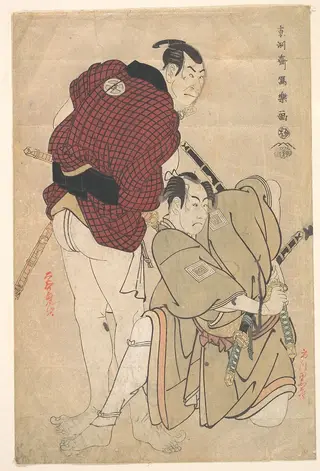 Untitled
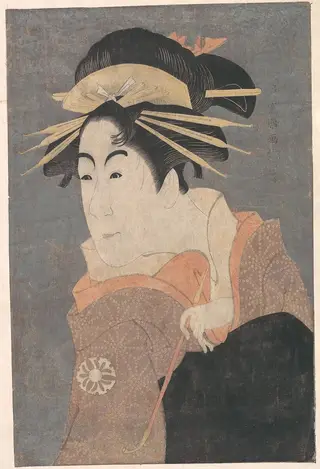 Untitled
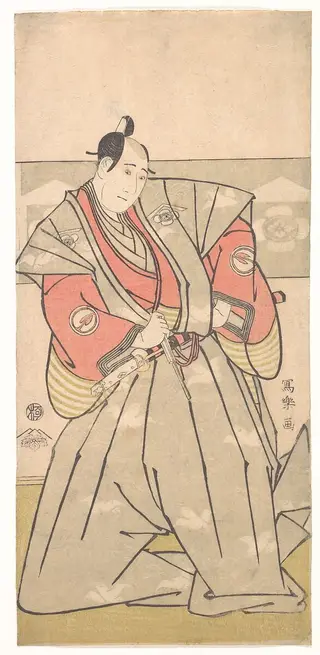 Untitled
 東洲斎写楽画 四代岩井半四郎の重の井 『恋女房染分手綱』|Iwai Hanshirō IV as Shigenoi in the Play "Koinyōbō Somewake Tazuna"
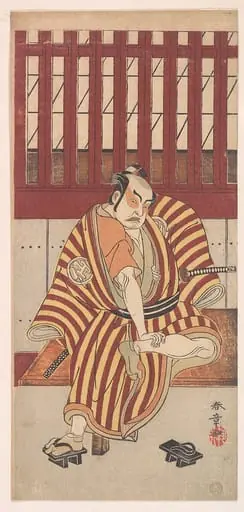
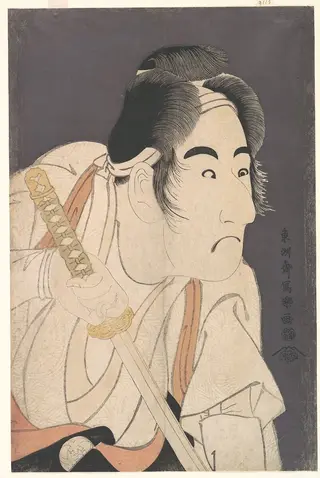
 東洲斎写楽画 初代市川男女蔵の奴一平 『恋女房染分手綱』|Ichikawa Omezō I in the Role of Yakko Ippei from the Play "Koinyōbō somewake tazuna"
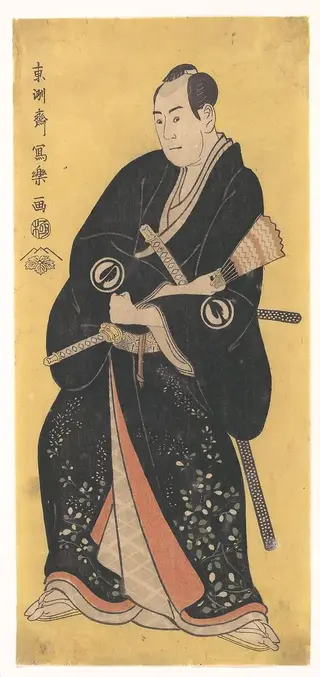
 東洲斎写楽画 二世坂東三津五郎の石井源蔵 『花菖蒲文禄曽我』|Bandō Mitsugorō II as Ishii Genzō in the Play "Hana-ayame Bunroku Soga"
 Untitled
- Untitled
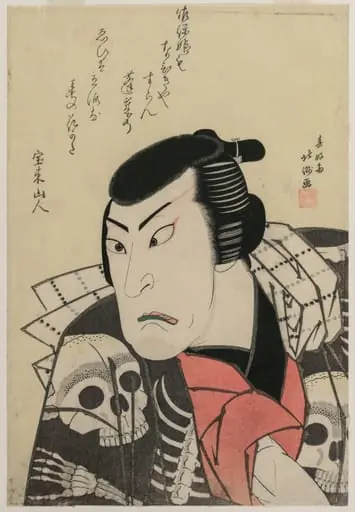 Actor Ichikawa Ebijūrō I as Tōken (China Dog) Jūbei, in the play Red and Purple, Rich Dyes of Osaka (Benimurasaki ai de someage)
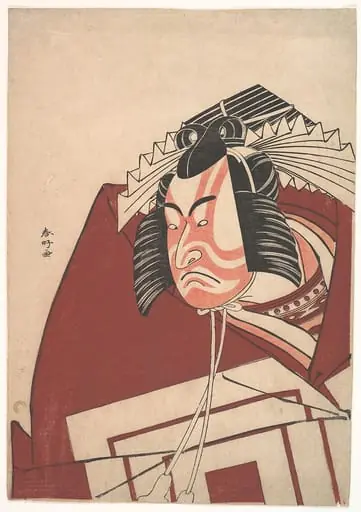 勝川春好画 二代目市川門之助|Ichikawa Monnosuke II in a Shibaraku Performance
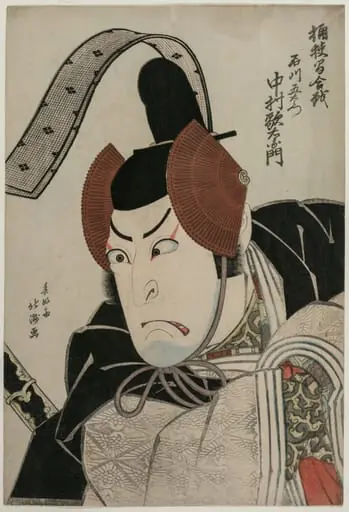 Actor Nakamura Utaemon III (Shikan) as Ishikawa Goemon at the Battle of Okehazama (Okehazama Gassen)
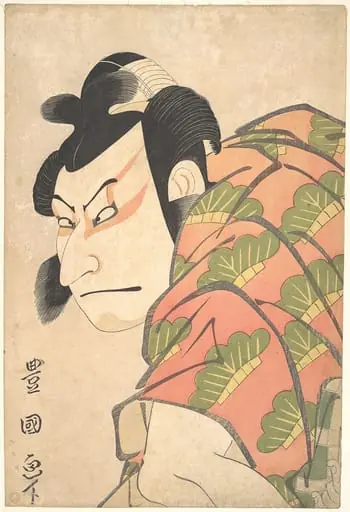 Untitled
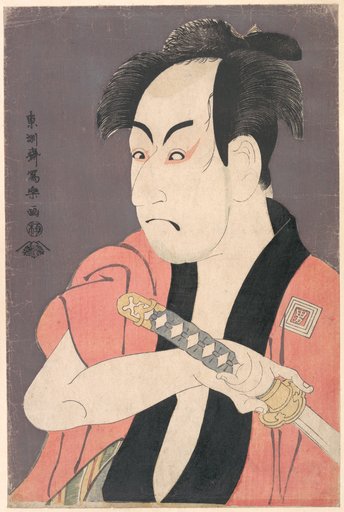
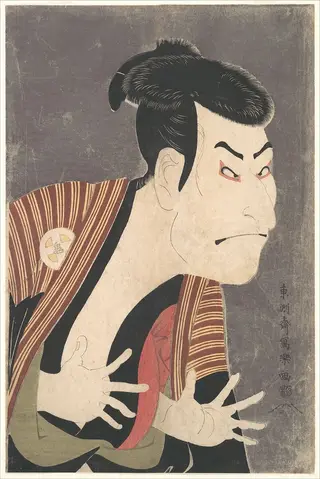 東洲斎写楽画 三代目大谷鬼次の奴江戸兵衛|Kabuki Actor Ōtani Oniji III as Yakko Edobei
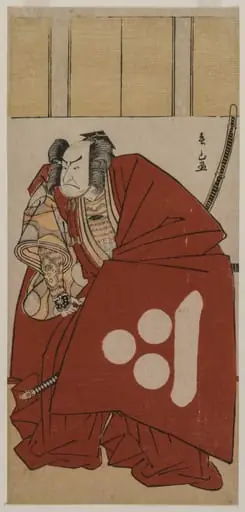 Nakamura Nakazo I as Watanabe no Tsuna
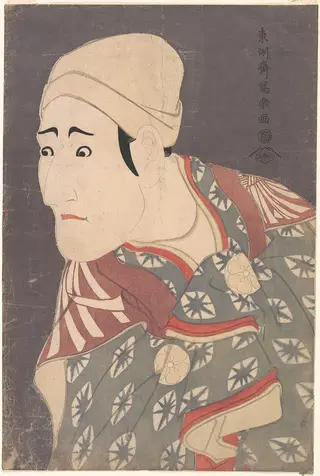 八代目守田勘弥の鴬の次郎作|Kabuki Actor Morita Kan’ya VIII as the Palanquin-Bearer in the Play A Medley of Tales of Revenge (Katakiuchi noriaibanashi)
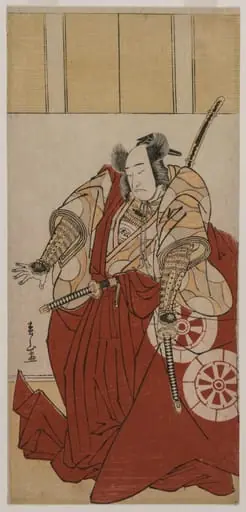 Onoe Matsusuke as Usui Sadamitsu
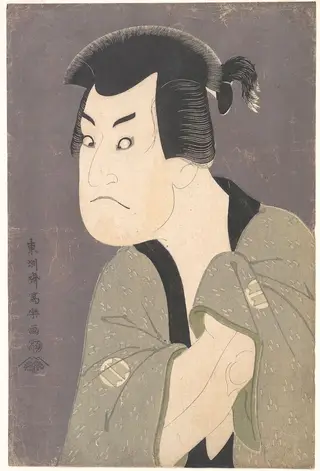 東洲斎写楽画 三世坂田半五郎の藤川水右衛門 『花菖蒲文禄曽我』|Sakata Hangorō III as Fujikawa Mizuemon in the Play "Hana Ayame Bunroku Soga"