Artwork
Genre Figures
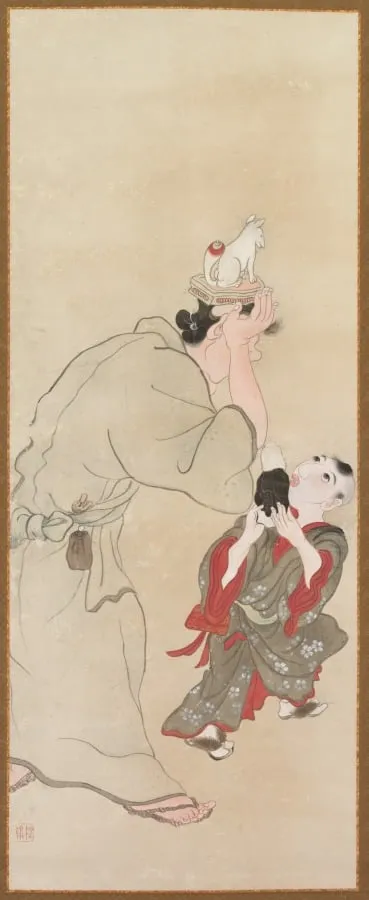
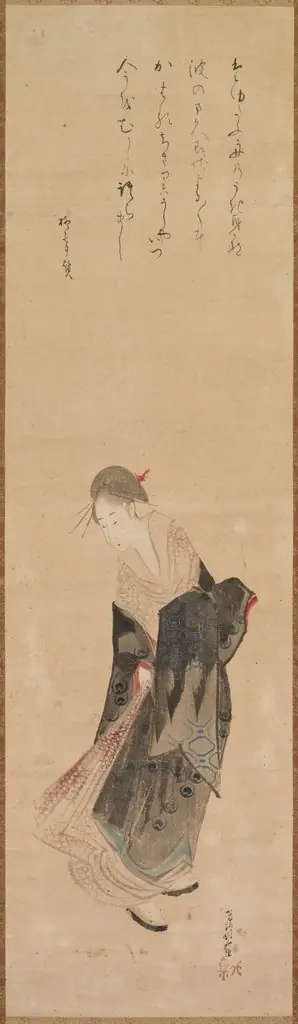
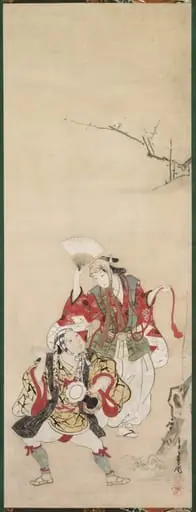
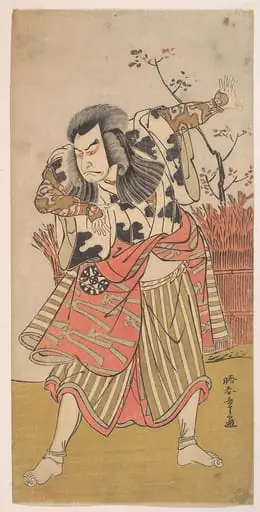
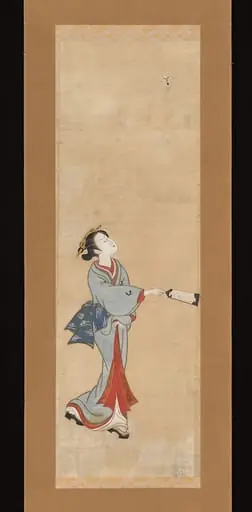
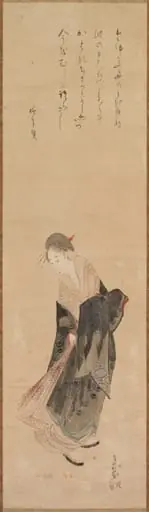
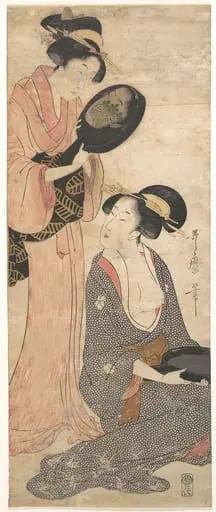
Genre Figures is an unspecified painting by the Romanticist artist Takebe Sōchō. It is held in the collection of the Cleveland Museum of Art.
- Accession no.
- 1987.72.2
- Credit line
- John L. Severance Fund
About this work
The artist, Takebe Sōchō, worked outside the famous schools but still made work that feels alive today.
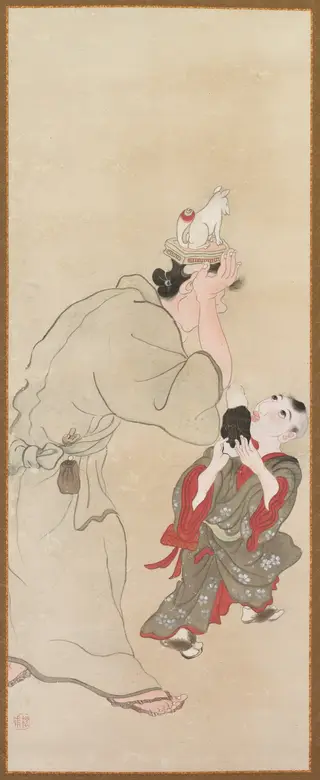
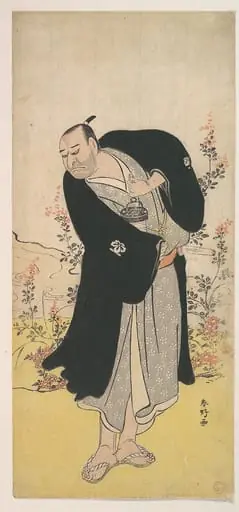
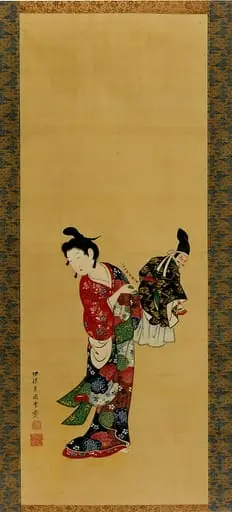
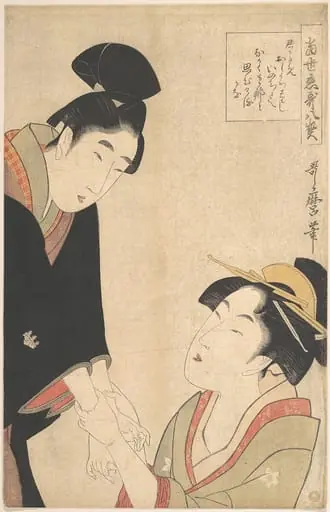
You see three people in a room: a woman sewing, a man reading, and a child playing with a toy.
This painting was once part of a folding screen, later cut into scrolls. The quiet scene feels like a snapshot of daily life in old Japan, no drama, just real moments. The artist, Takebe Sōchō, worked outside the famous schools but still made work that feels alive today.
To see more like this, look up Japan, Edo period (1615–1868).
Overview
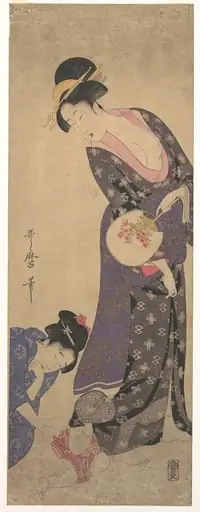
Takebe Sōchō’s work presents a quiet domestic interior, showing a woman engaged in sewing, a man absorbed in reading, and a child at play. The composition is arranged as a three‑panel scene, originally part of a folding screen that has since been reconfigured as hanging scrolls.
Subject & Meaning
The painting captures an ordinary moment of Edo‑period daily life, emphasizing the rhythm of household tasks and leisure without narrative drama. By focusing on mundane activities, the work reflects the genre tradition of portraying realistic, everyday experiences.
Technique & Style
Executed with the delicate brushwork typical of Japanese genre painting, the piece balances fine detail in the figures’ gestures with broader washes that suggest the interior space. The muted palette and restrained composition reinforce the scene’s calm, observational quality.
History & Provenance
Originally created as part of a folding screen, the three panels were later separated and transformed into hanging scrolls, a common practice for preserving and displaying screen paintings. The work has remained relatively obscure in formal art histories, though it is recognized among specialists in Edo‑period genre art.
Context
Takebe Sōchō worked outside the major painting schools of his time, yet his output aligns with the broader Edo interest in genre scenes that documented ordinary life. The painting offers insight into the domestic environment and social customs of the period.
Artist & collection