Artwork
Landschap met brug
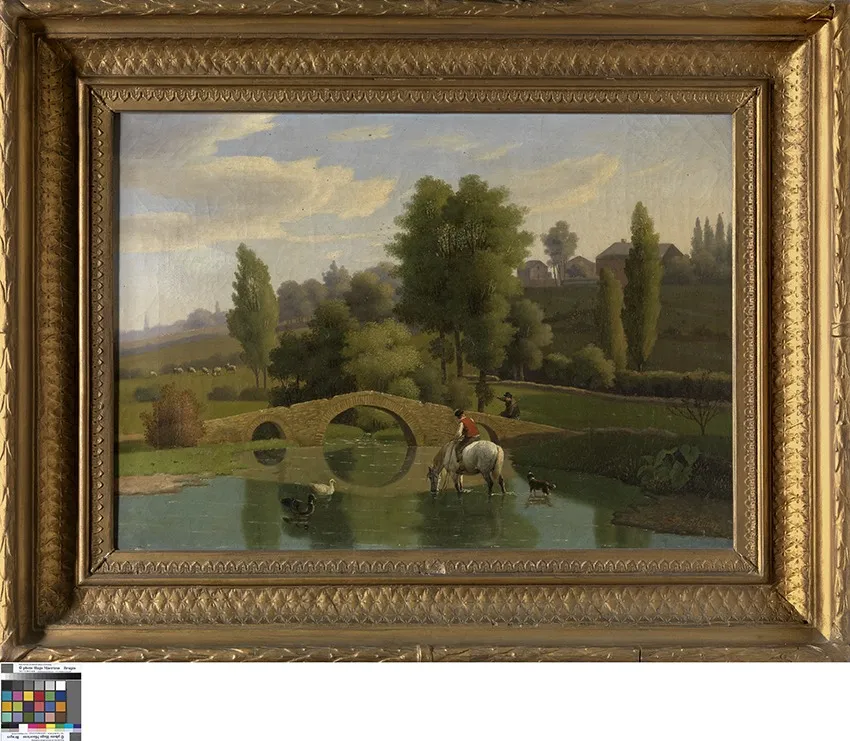
Landschap met brug is an oil painting by the French Romanticist artist Théodore De Schietere. It dates from 1807 and is held in the collection of the Groeningemuseum.
About this work
Subject & Meaning
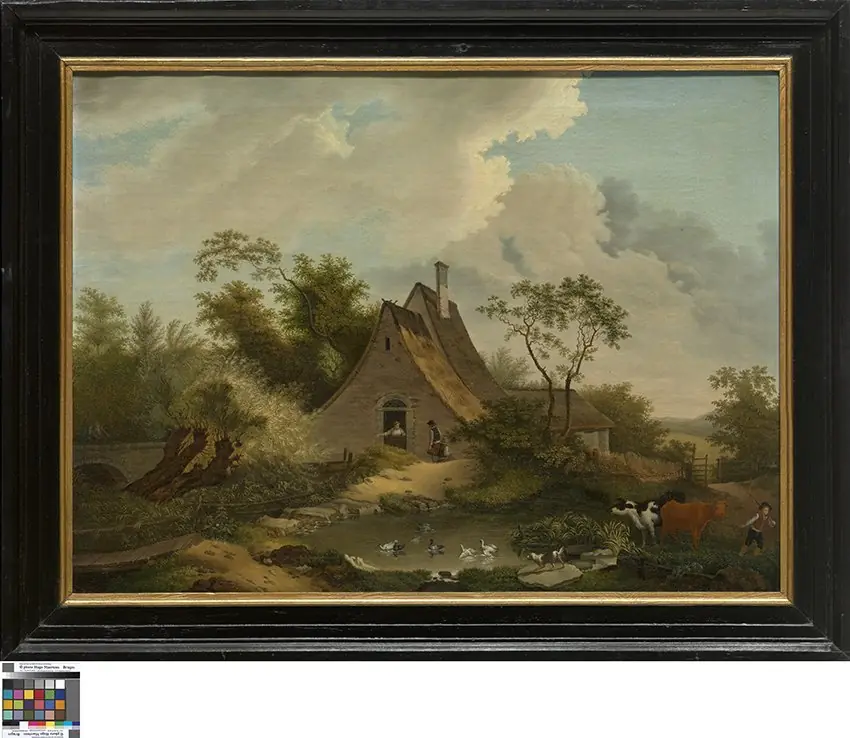
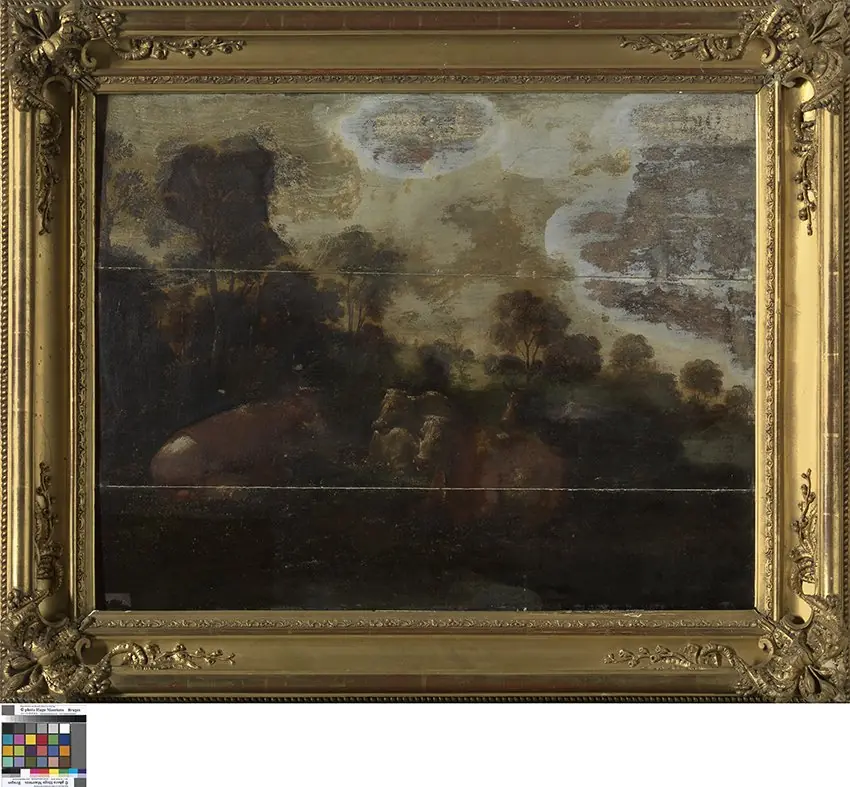
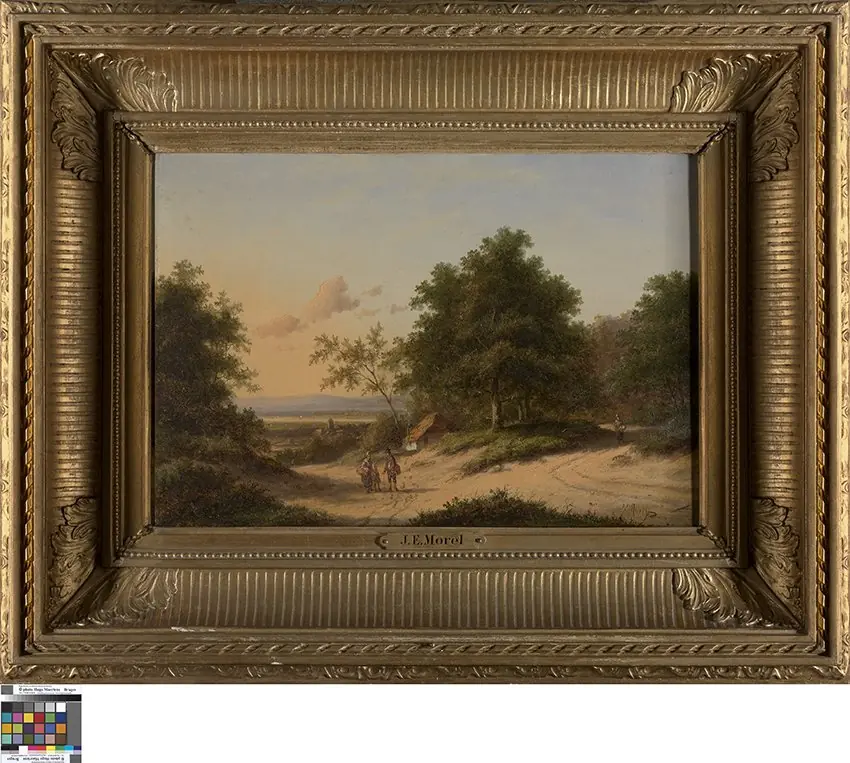
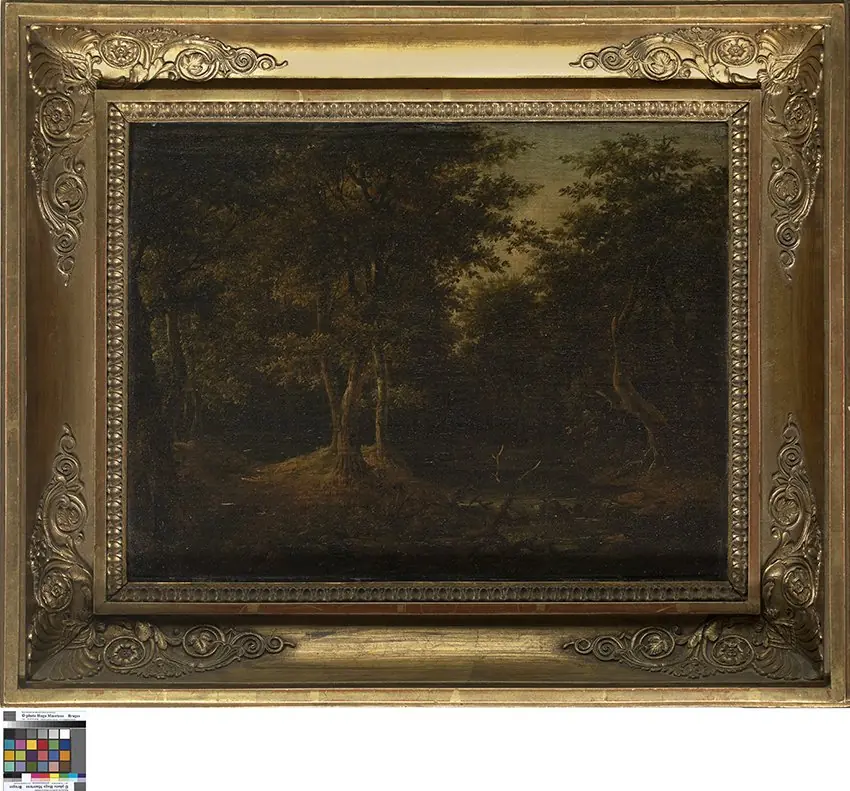
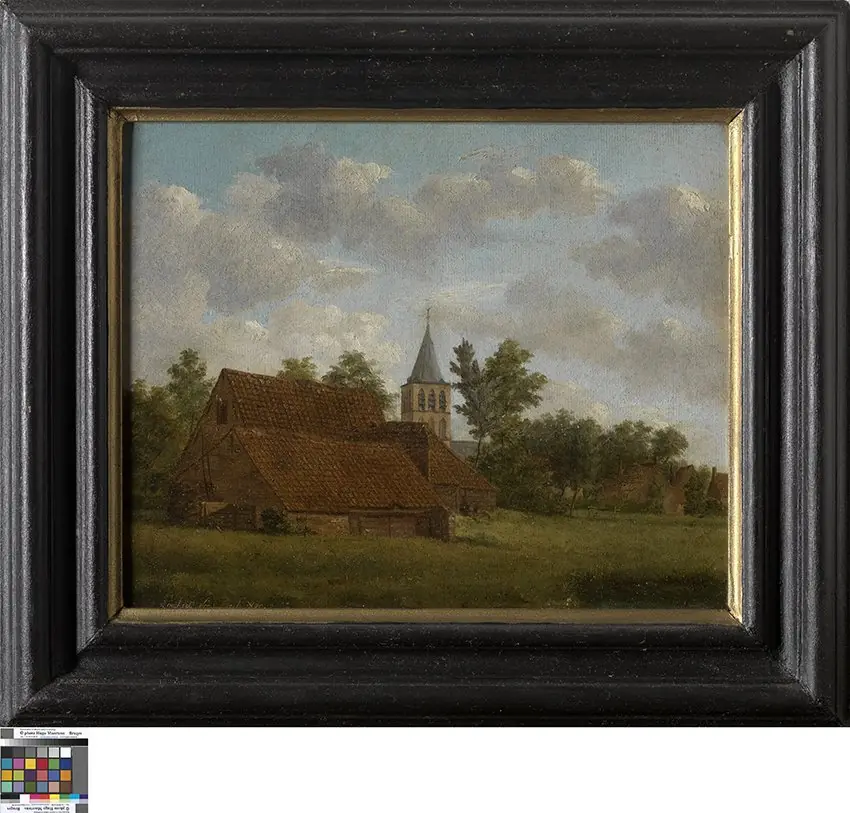
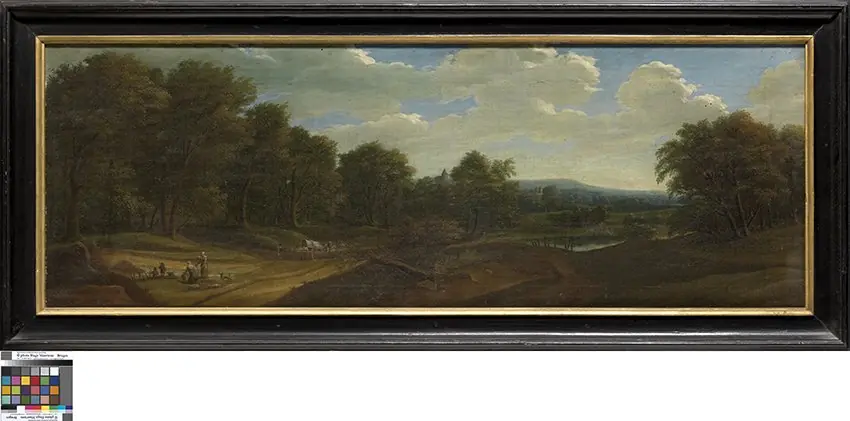
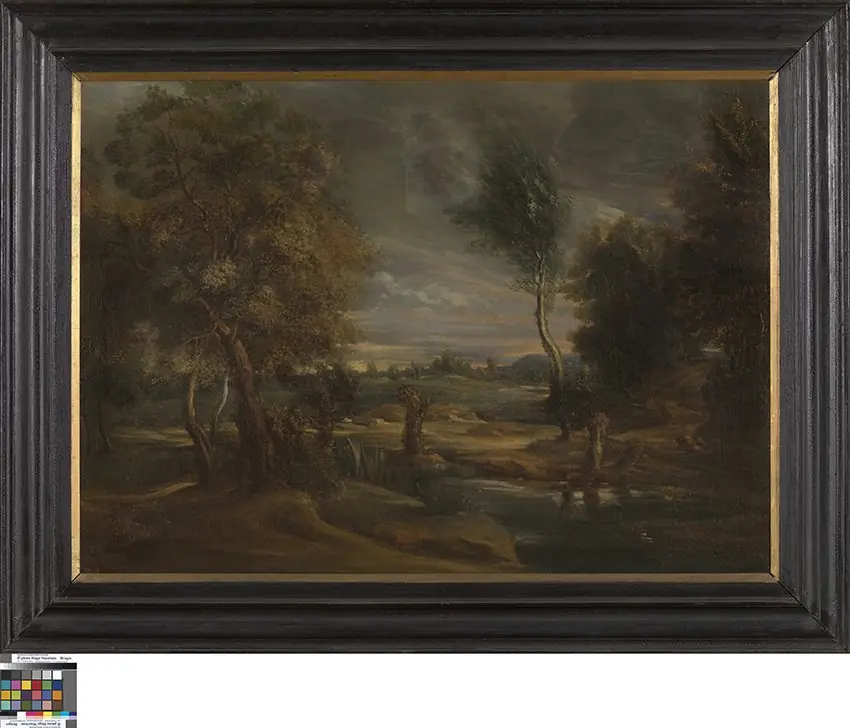
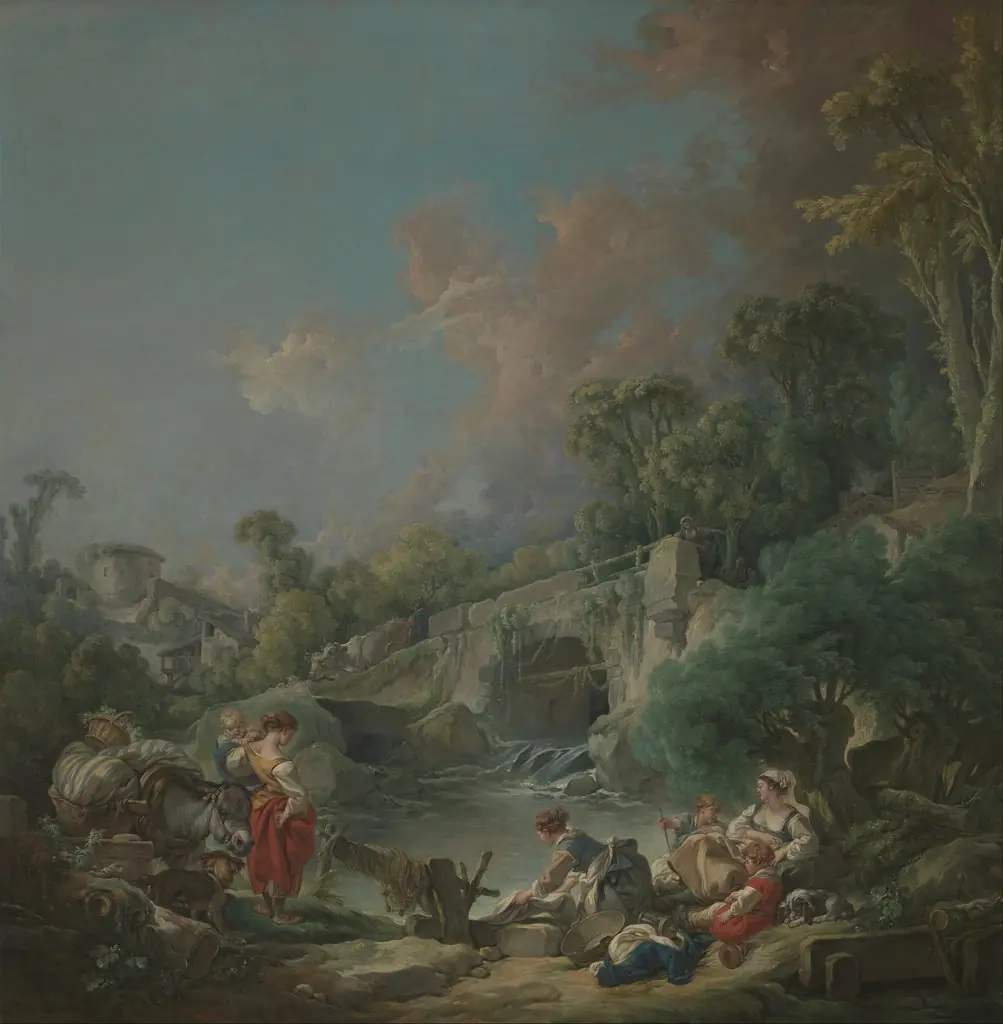
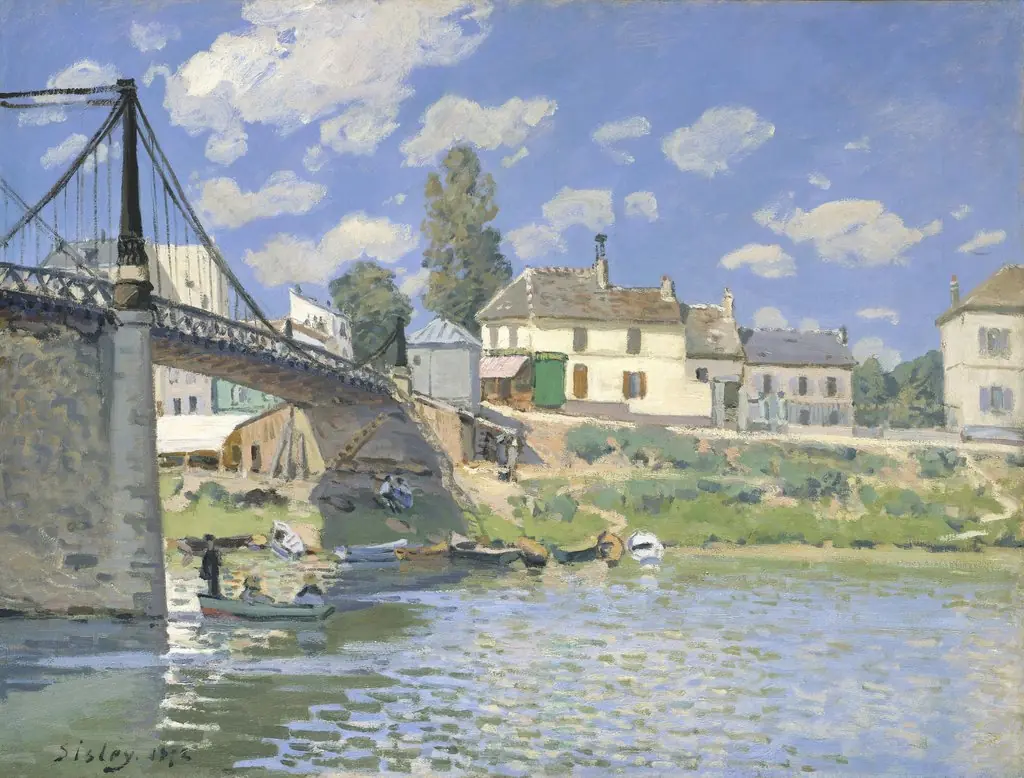
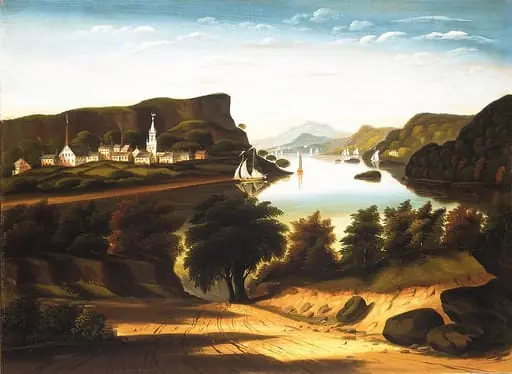
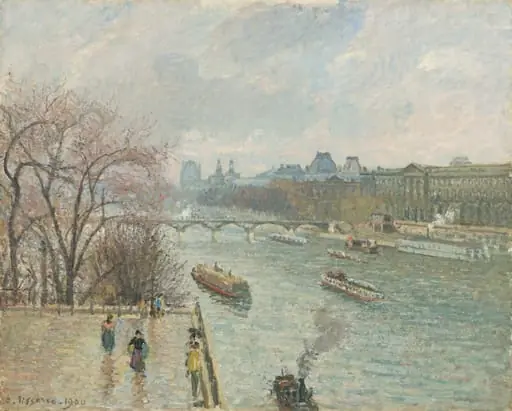
The work depicts a lively rural environment featuring a house and trees under a cloudy sky, populated by various animals including a horse, duck, and dog.
Théodore De Schietere's 1807 oil painting presents a landscape scene centered around a bridge, which serves as the structural and visual anchor of the composition. The work depicts a lively rural environment featuring a house and trees under a cloudy sky, populated by various animals including a horse, duck, and dog. An equestrian figure is also present, suggesting human activity within this natural setting.
While the specific symbolic intent of the artist is not explicitly detailed in available records, the inclusion of diverse fauna alongside domestic architecture and travel elements characterizes the piece as a comprehensive representation of countryside life during the early nineteenth century.
Technique & Style
The work is an oil painting on canvas, measuring 42.5 cm by 60.5 cm. It depicts a landscape with a bridge, a tree, a horse, a duck, a dog, an equestrian, a house, and clouds. The composition emphasizes atmospheric perspective and naturalistic detail characteristic of early 19th-century landscape painting.
History & Provenance
Théodore De Schietere created the oil painting Landschap met brug in 1807. The work, which depicts a landscape featuring a bridge, trees, and various figures including horses and dogs, entered the collection of the Groeningemuseum. Current records identify the museum as the holding institution for this piece, though specific details regarding its original commission or intermediate ownership history prior to its museum acquisition are not provided in the available documentation.
Overview
Created in 1807, this oil painting by Théodore De Schietere presents a tranquil riverside landscape. A stone bridge spans a placid waterway, while modest dwellings and a line of trees recede into a softly clouded sky. The composition conveys a moment of quiet rural travel, anchored by the gentle movement of figures and animals crossing the scene.
Context
During the early 1800s, Dutch artists often turned to bucolic scenes that celebrated the nation's waterways and rural architecture. De Schietere’s choice of a bridge and river aligns with this tradition, reflecting contemporary interests in the picturesque qualities of the Dutch lowlands and the everyday activities that animated them.
Artist & collection
Artist
Théodore De Schietere was a Brussels tax collector who painted in stolen hours, turning his office ink into washes of pearly light on the city’s rooftops.