Artwork
Untitled
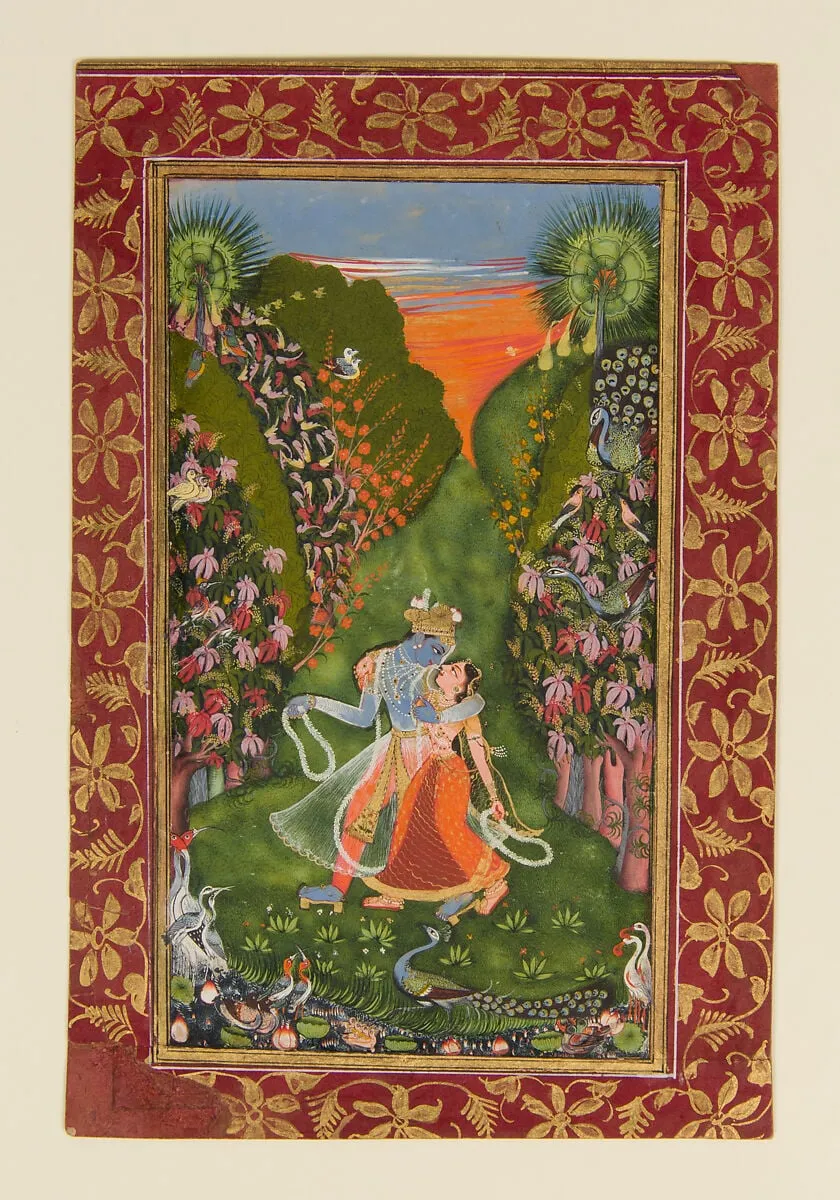
Untitled is a watercolor painting by the Baroque artist The Kota Master. It dates from 1762 and is held in the collection of the Metropolitan Museum of Art.
- Accession no.
- 2003.178a, b
- Credit line
- Cynthia Hazen Polsky and Leon B. Polsky Fund, 2003
About this work
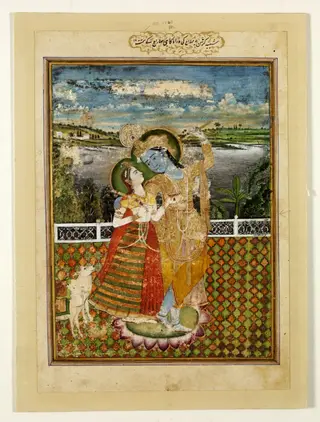
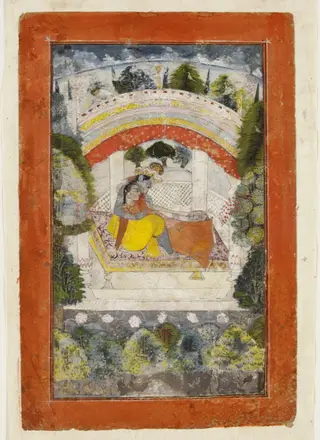
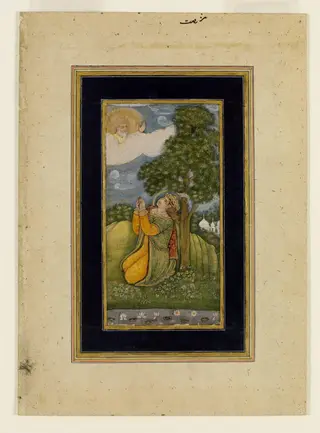
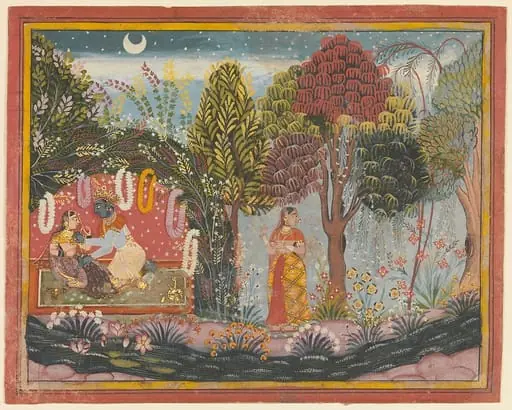
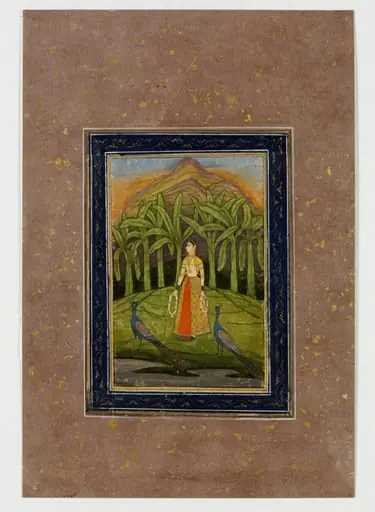
Krishna and Radha lock eyes in a sunset grove in a double-sided work by the Kota Master, an anonymous painter active in 18th-century Rajasthan. On the front, birds and flowering trees echo the lovers' passion; the back, added decades later, shows Krishna fluting alone. It was the first Kota Master work to enter the Metropolitan Museum, acquired in 2003.
Subject & Meaning
Radha represents the human soul, and Krishna represents God; Radha's passion signifies the soul's intense longing and the priority of love for the divine.
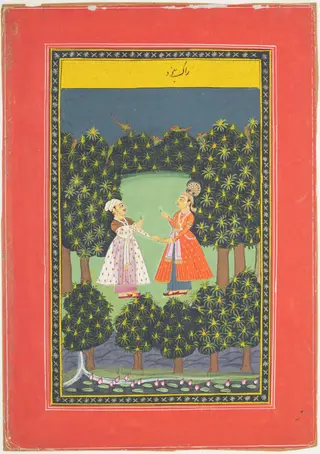
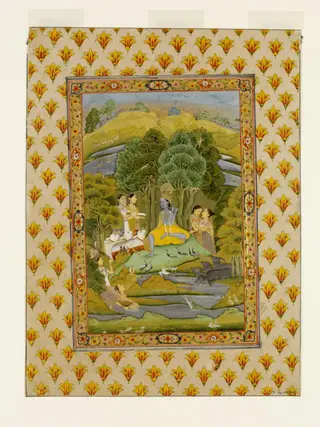
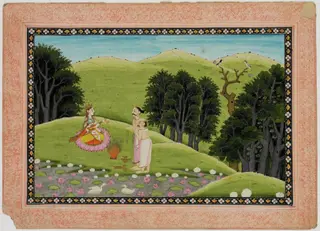
This painting depicts the divine lovers Radha and Krishna in a flowering grove, accompanied by peacocks, birds, trees, and flowers. The figures are portrayed as contemporary nobles, a stylized representation of the Hindu gods. The work expresses their love through the natural setting, birds, and entwined clothing, which symbolize their spiritual and emotional union.
Radha represents the human soul, and Krishna represents God; Radha's passion signifies the soul's intense longing and the priority of love for the divine. The scene is based on the Bhagavata Purana and is the only known Kota Master painting from Hindu scripture.
Technique & Style
The work is executed in ink, opaque watercolor, and gold on paper, a typical medium for Rajput painting. It measures 7½ × 4⅜ inches (19.1 × 11.1 cm). The composition depicts Radha and Krishna in a flowering grove, surrounded by trees, flowers, birds, and peafowl, with their clothing entwined to symbolize their love.
The verso bears a later image of Krishna playing the bansuri, likely by a different hand. This painting is the only known Kota Master depiction of a scene from Hindu scripture, and its intimate scale and delicate detailing reflect the refined courtly style of mid-18th-century Kota painting.
History & Provenance
This work was created around 1762 in Kota by an unidentified artist known as the Kota Master, in ink, opaque watercolor, and gold on paper. A later image on the verso, depicting Krishna playing the bansuri, was added by a different artist. The painting was acquired by the Metropolitan Museum of Art in 2003 through the Cynthia Hazen Polsky and Leon B. Polsky Fund, purchased from Terence McInerney Fine Arts Ltd.
Since acquisition, the work has been displayed several times, including loans to the Frist Center for the Visual Arts in Nashville and the Brooklyn Museum for the exhibition "Vishnu: India's Blue-Skinned Savior." As of 2019, it was not on view at the museum.
Context
The painting is attributed to an unidentified artist known as the Kota Master, who worked in the Kota school of Indian miniature painting around 1762. It is significant as the only known Kota depiction of a scene from Hindu scripture, specifically Radha and Krishna from the Bhagavata Purana. Scholarship interprets the flowering grove and entwined clothing as symbols of Radha's passionate love for Krishna, representing the soul's longing for God.
This work also reflects the practice of portraying contemporary nobles as divine lovers, a hallmark of Rajput courtly painting. Its acquisition by the Metropolitan Museum of Art and inclusion in the exhibition "Vishnu: India's Blue-Skinned Savior" underscore its recognized importance in art history.
Overview
This double-sided painting, commonly known as Radha and Krishna Walk in a Flowering Grove, was created around 1720 by an anonymous artist referred to as the Kota Master. Executed with ink, opaque watercolor, and gold on paper, the work depicts a scene from Hindu sacred texts. It is held in the collection of the Metropolitan Museum of Art, where it represents a notable example of early 18th-century Rajasthani painting.
Artist & collection

Artist
The Kota Master was an anonymous painter active at the Rajput court of Kota in Rajasthan during the late seventeenth and early eighteenth centuries.