Artwork
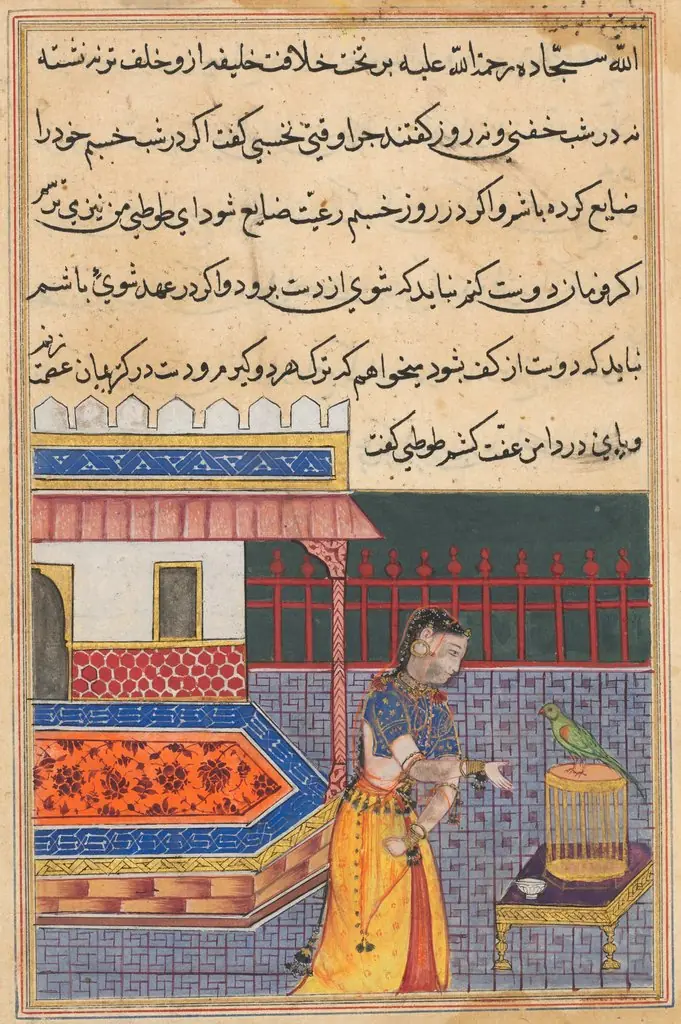
The parrot addresses Khujasta at the beginning of the thirty-eighth night, from a Tuti-nama (Tales of a Parrot)
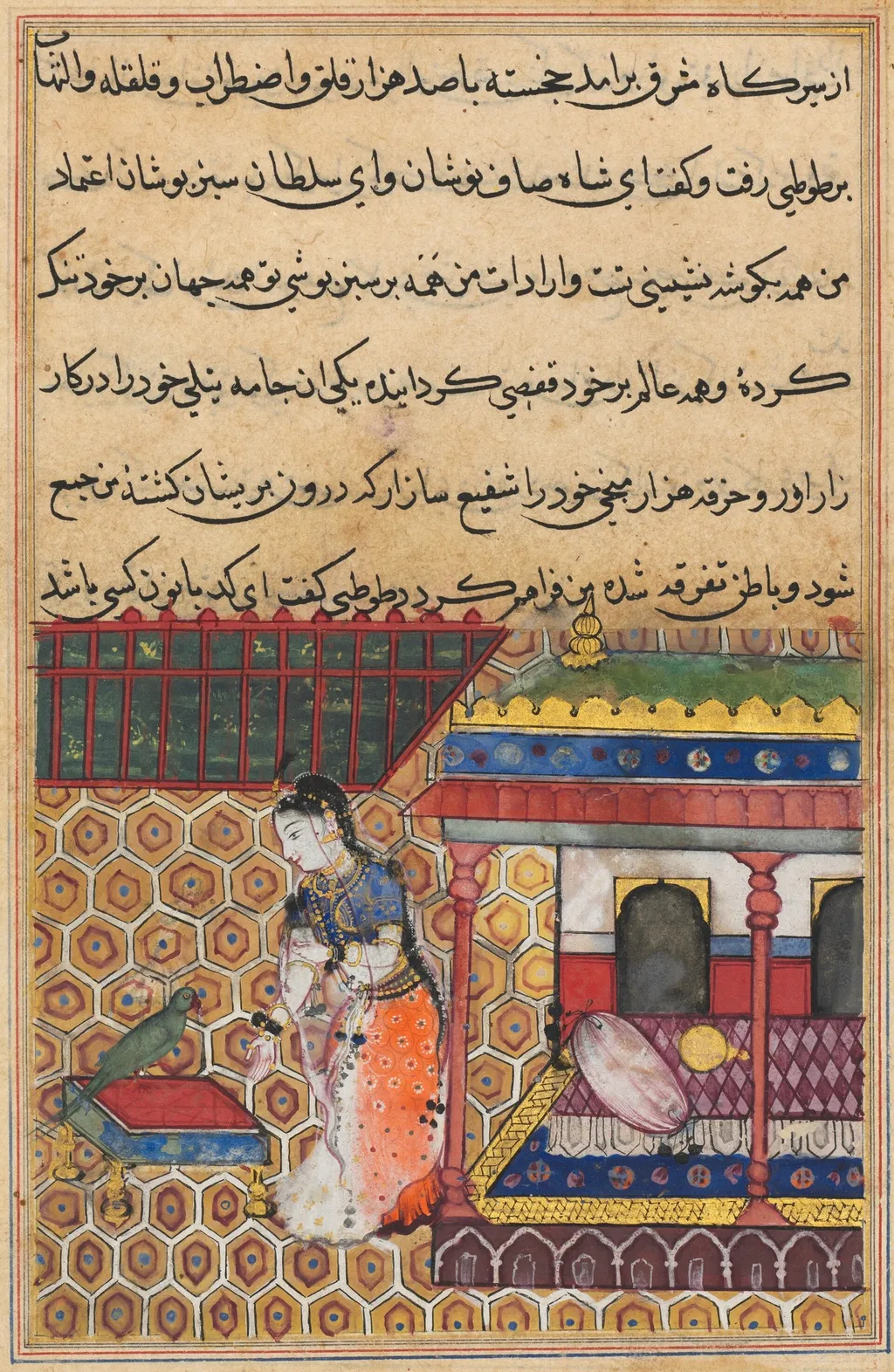
The parrot addresses Khujasta at the beginning of the thirty-eighth night, from a Tuti-nama (Tales of a Parrot) is an unspecified painting. It dates from 1560 and is held in the collection of the Cleveland Museum of Art. The work is a painted illustration taken from a Persian manuscript known as the Tuti‑nama (Tales of a Parrot).
About this work
Subject & Meaning
The painting shows a parrot speaking to Khujasta at the start of the thirty-eighth night of the Tuti-nama (Tales of a Parrot).
The painting shows a parrot speaking to Khujasta at the start of the thirty-eighth night of the Tuti-nama (Tales of a Parrot). In the frame story the parrot detains Khujasta each night with a tale to keep her from straying while her husband is away, so the scene reflects the work's themes of storytelling and moral instruction within the Mughal narrative tradition. It was created around 1560 in Mughal India.
History & Provenance
This folio from a Tuti-nama (Tales of a Parrot) is dated to about 1560 and was produced in Mughal India. It is housed in the Cleveland Museum of Art under accession number 1962.279.248.a and is attributed to an unknown artist of the imperial atelier. The painting depicts the parrot addressing Khujasta at the beginning of the thirty-eighth night and has remained in the museum's collection since its acquisition. No specific exhibition history is documented in the available records.
Overview
The work is a painted illustration taken from a Persian manuscript known as the Tuti‑nama (Tales of a Parrot). It depicts a scene in which a woman in a vivid orange‑white garment stands beside a red balcony, while a green parrot perched on a nearby cushion gazes toward her face. The composition is framed by a patterned wall of yellow and blue motifs, a red bed, and a small table bearing a pink object.
Technique & Style
Executed in miniature painting technique, the scene features fine brushwork and intricate detailing, especially evident in the black ornamental patterns on the woman's dress and the scalloped golden edge of the balcony. The palette relies on saturated reds, oranges, and greens, balanced by cooler blues and yellows in the background, characteristic of Safavid‑period manuscript illumination.
Context
The Tuti‑nama combines poetry and prose to convey moral and romantic tales, often accompanied by elaborate miniatures. Such illustrations served both decorative and didactic purposes, enhancing the narrative and reflecting the sophisticated artistic culture of Persian courts, where patronage of illuminated books was a mark of refinement.
Artist & collection

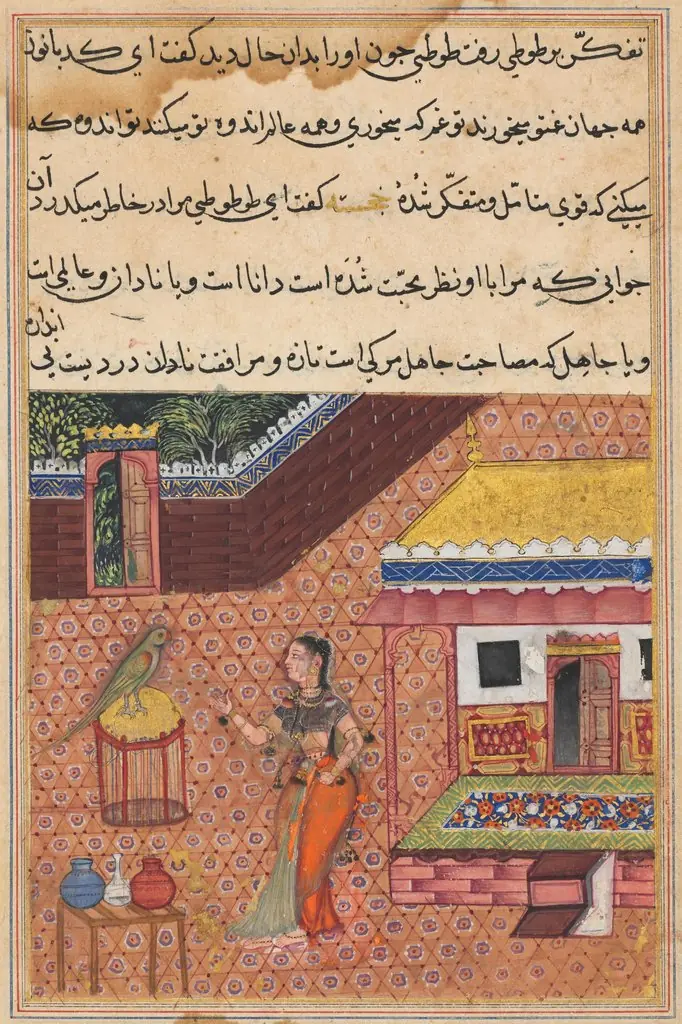
- The parrot addresses Khujasta at the beginning of the thirty-fourth night, from a Tuti-nama (Tales of a Parrot)
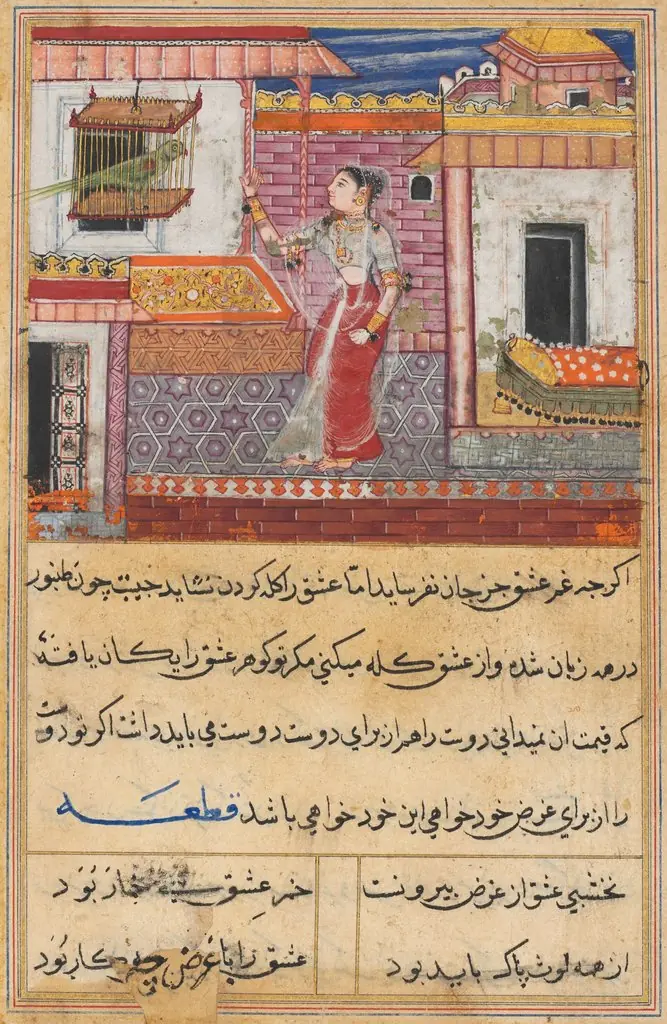 The Parrot Addresses Khujasta at the Beginning of the Thirteenth Night, from a Tuti-nama (Tales of a Parrot)
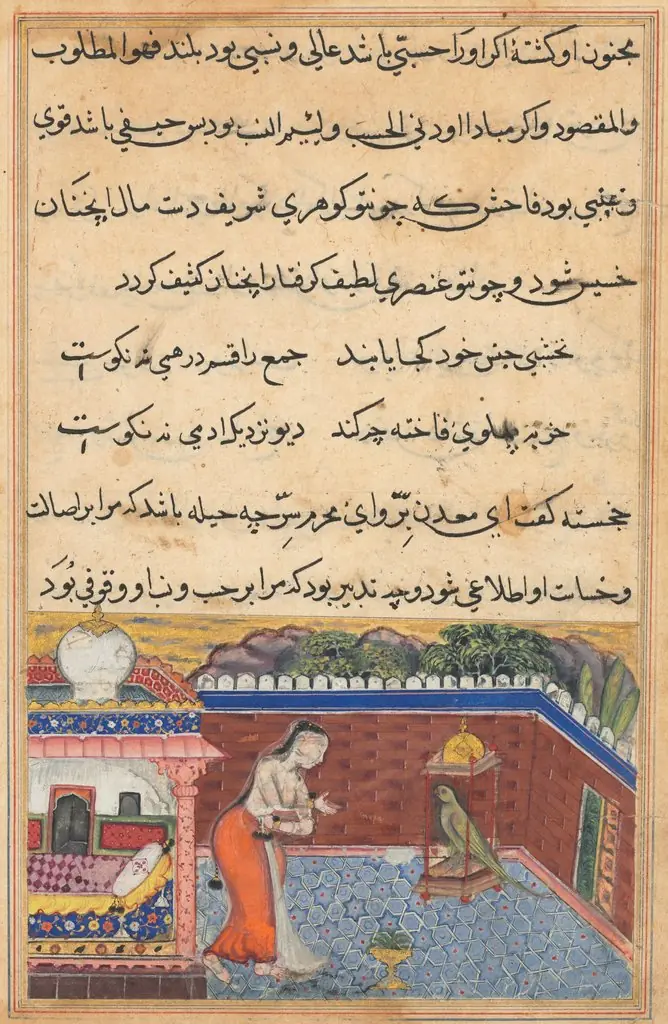 The parrot addresses Khujasta at the beginning of the thirty-first night, from a Tuti-nama (Tales of a Parrot)
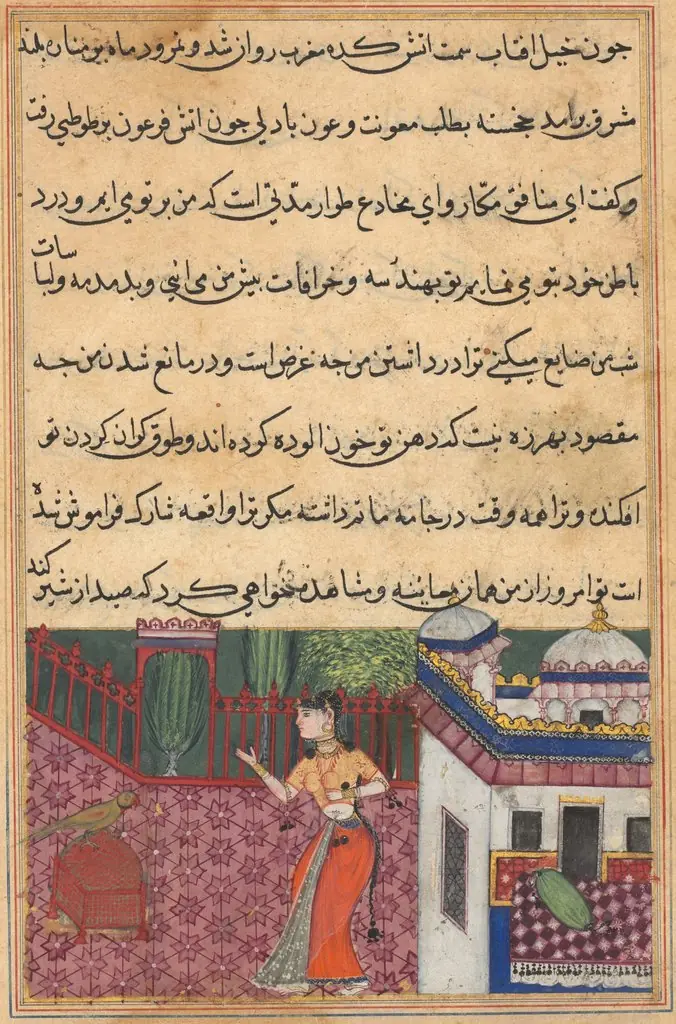 The parrot addresses Khujasta at the beginning of the thirty-third night, from a Tuti-nama (Tales of a Parrot)
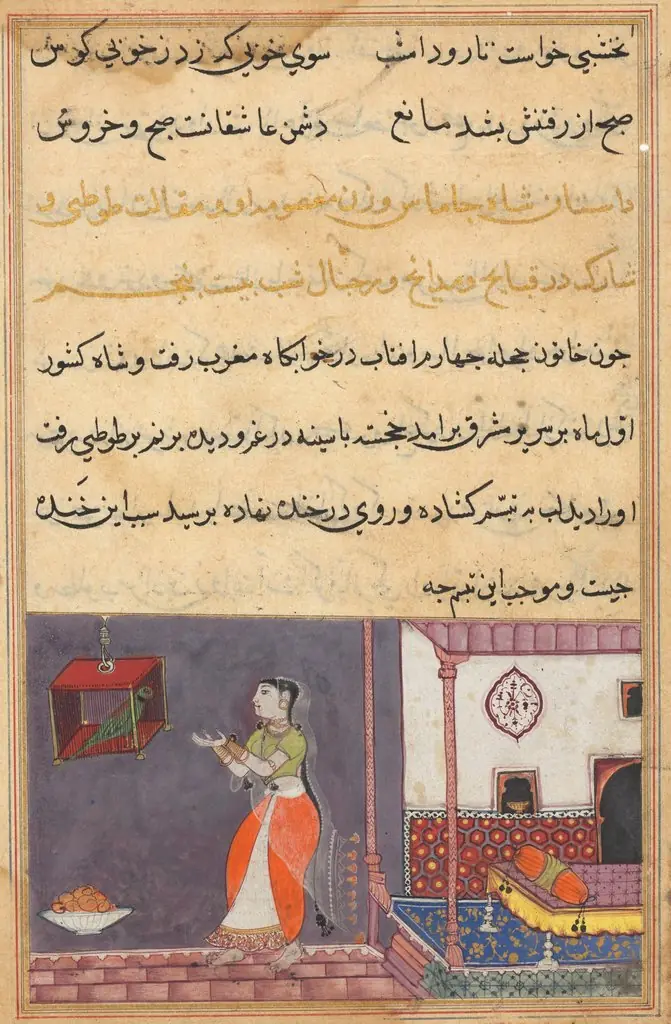 The Parrot Addresses Khujasta at the Beginning of the Twenty-fifth Night, from a Tuti-nama (Tales of a Parrot)
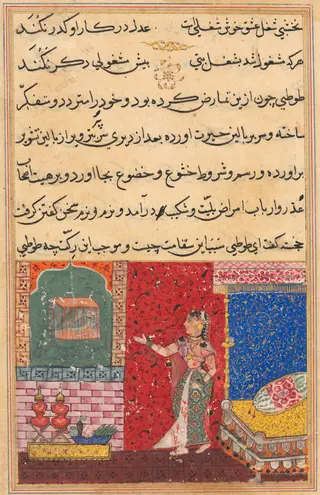 The Parrot Addresses Khujasta at the Beginning of the Fifteenth Night, from a Tuti-nama (Tales of a Parrot)
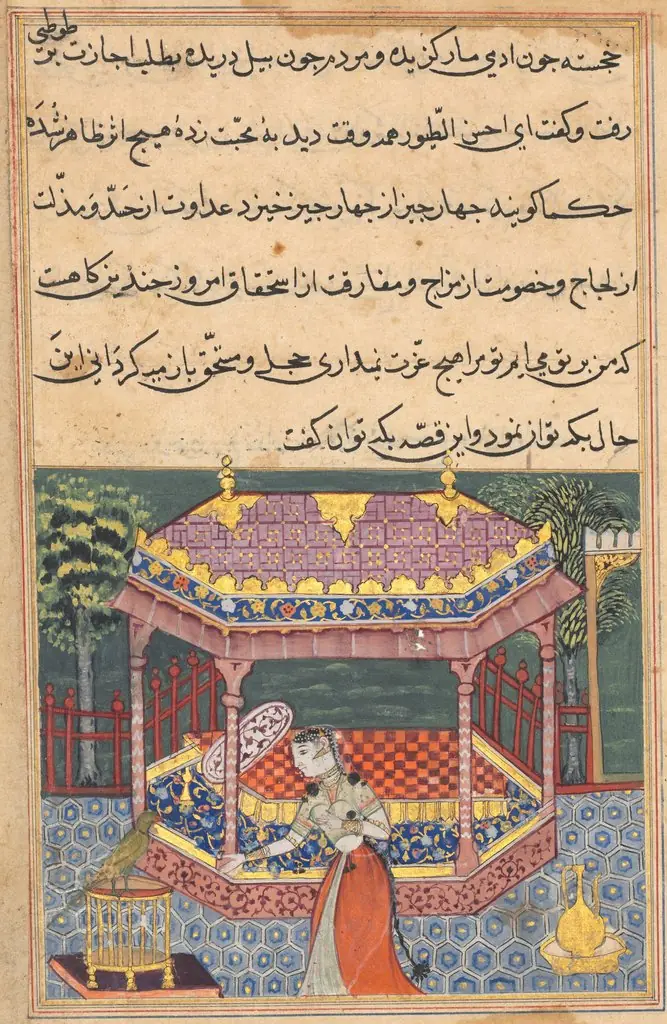 The parrot addresses Khujasta at the beginning of the thirty-seventh night, from a Tuti-nama (Tales of a Parrot)
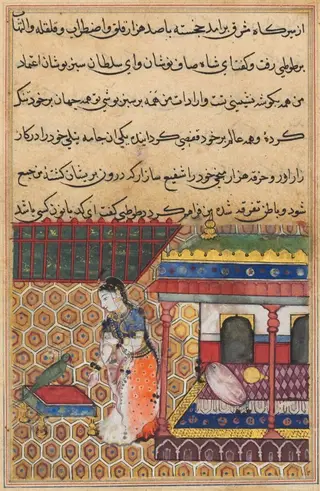 The parrot addresses Khujasta at the beginning of the thirty-eighth night, from a Tuti-nama (Tales of a Parrot)
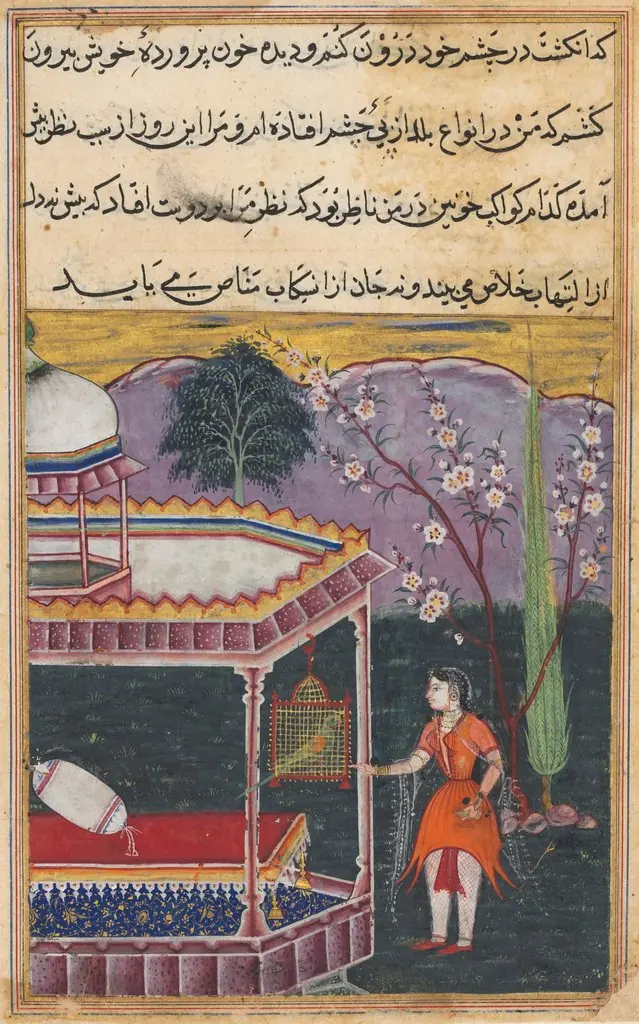 The Parrot Addresses Khujasta at the Beginning of the Eighth Night, from a Tuti-nama (Tales of a Parrot)
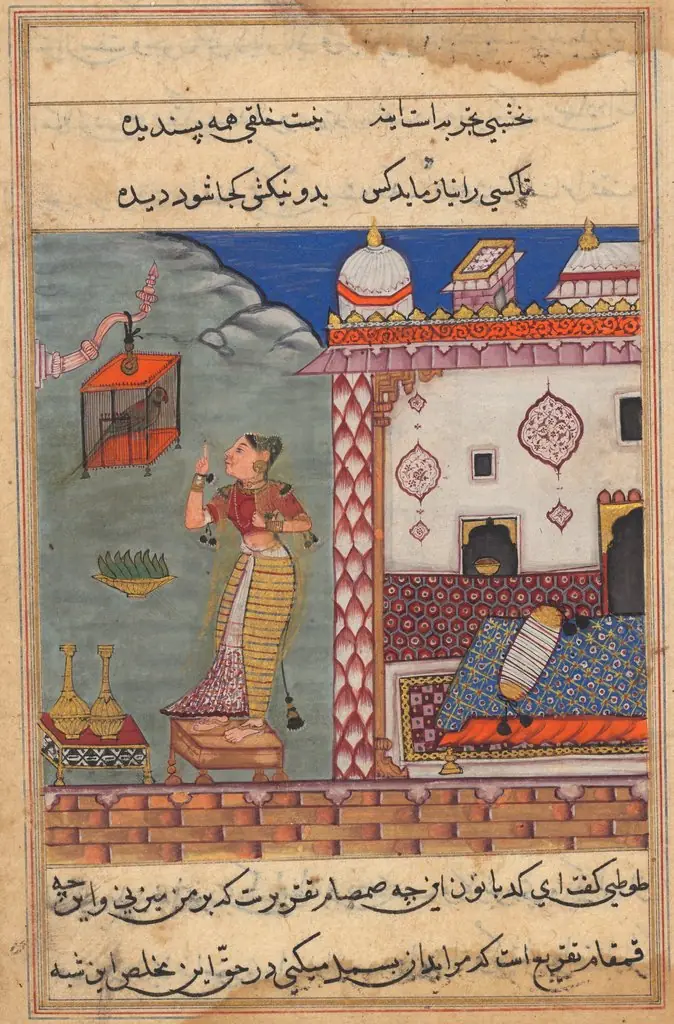 The Parrot Addresses Khujasta at the Beginning of the Twenty-seventh Night, form a Tuti-nama (Tales of a Parrot)
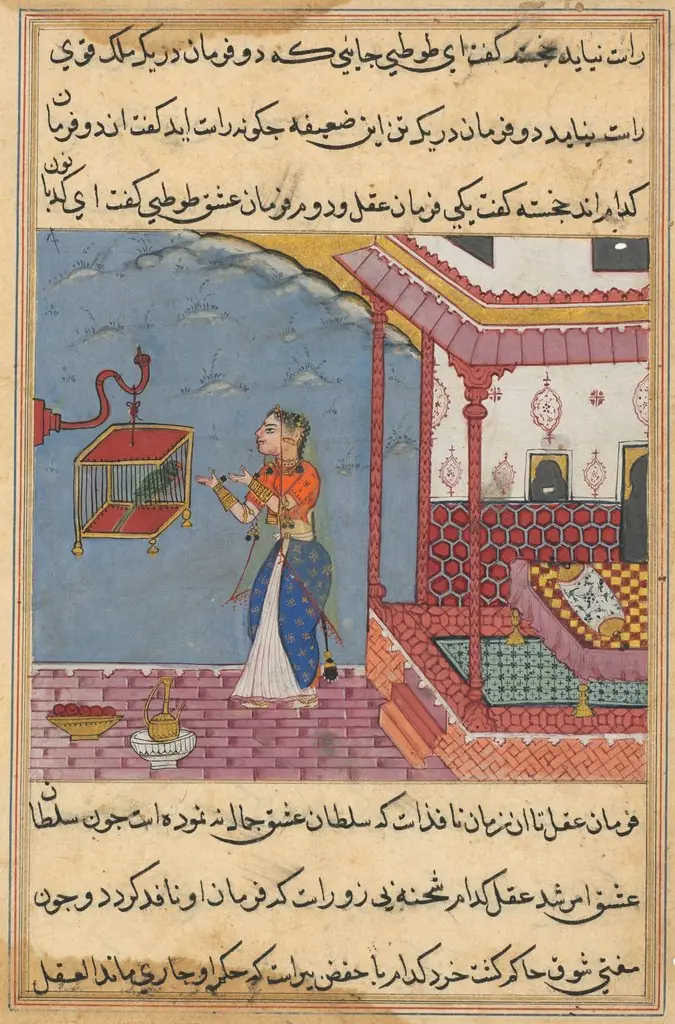 The Parrot Addresses Khujasta at the Beginning of the Twenty-Fourth Night, from a Tuti-nama (Tales of a Parrot)
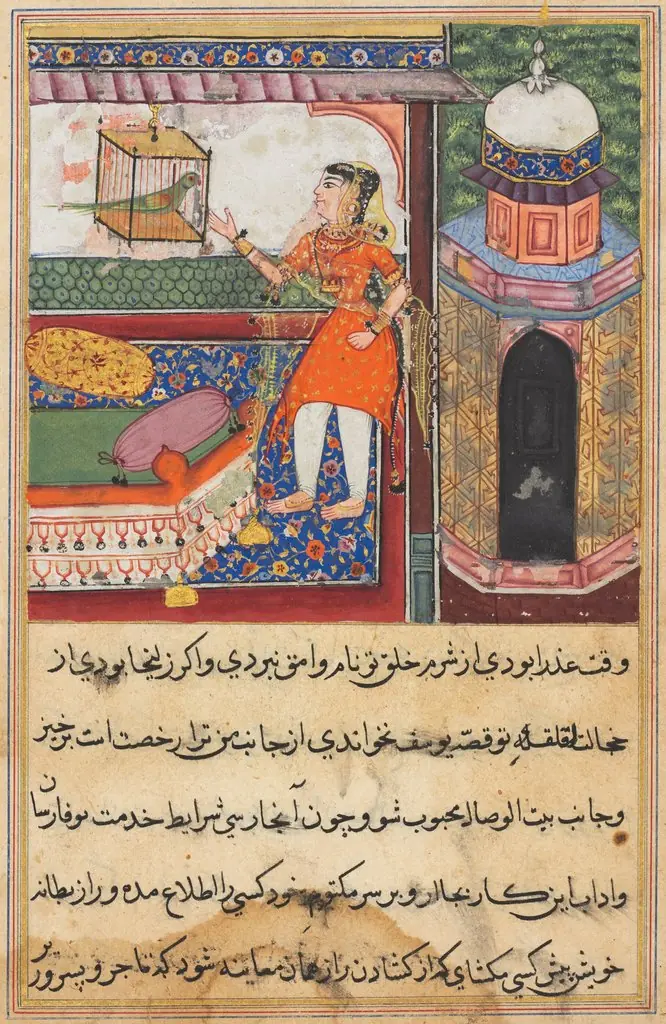 The Parrot Addresses Khujasta at the Beginning of the Tenth Night, from a Tuti-nama (Tales of a Parrot)
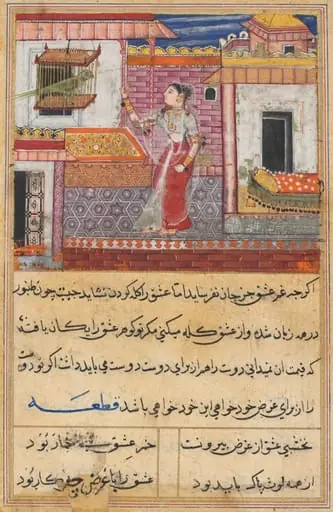 The Parrot Addresses Khujasta at the Beginning of the Thirteenth Night, from a Tuti-nama (Tales of a Parrot)
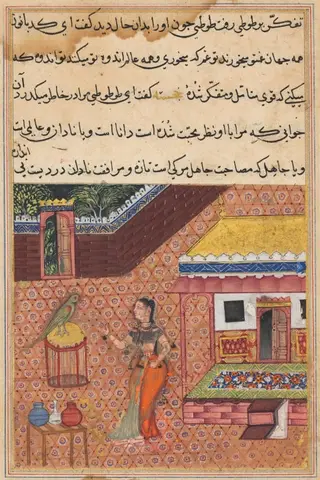 The parrot addresses Khujasta at the beginning of the thirty-fourth night, from a Tuti-nama (Tales of a Parrot)
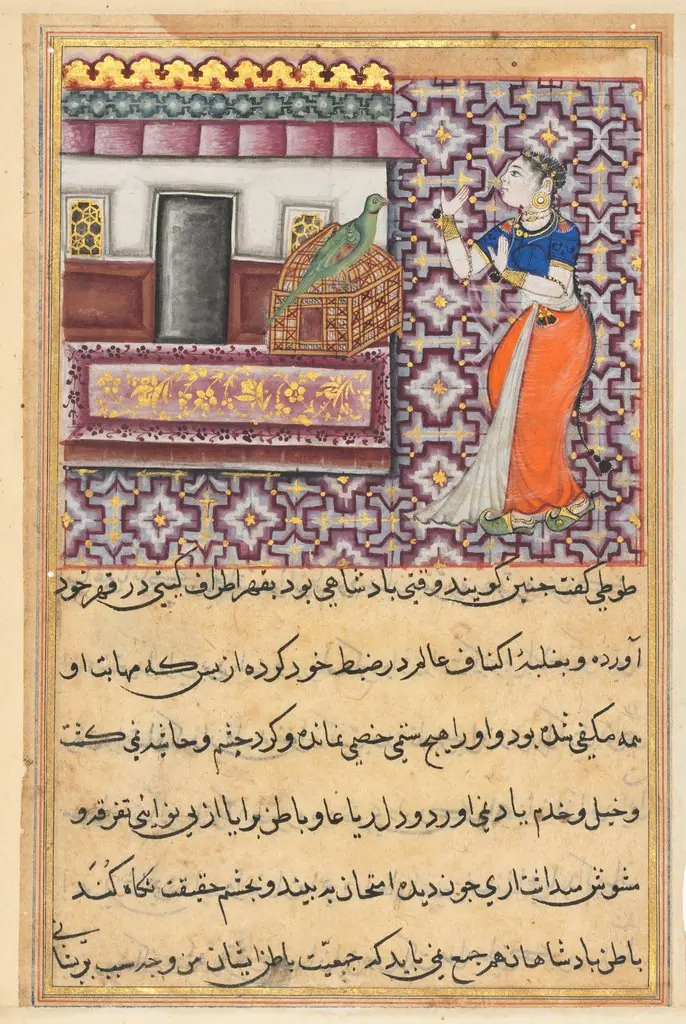 The parrot addresses Khujasta at the beginning of the fiftieth night, from a Tuti-nama (Tales of a Parrot): Fiftieth Night
 The parrot addresses Khujasta at the beginning of the forty-first night, from a Tuti-nama (Tales of a Parrot): Forty-first Night