Artwork
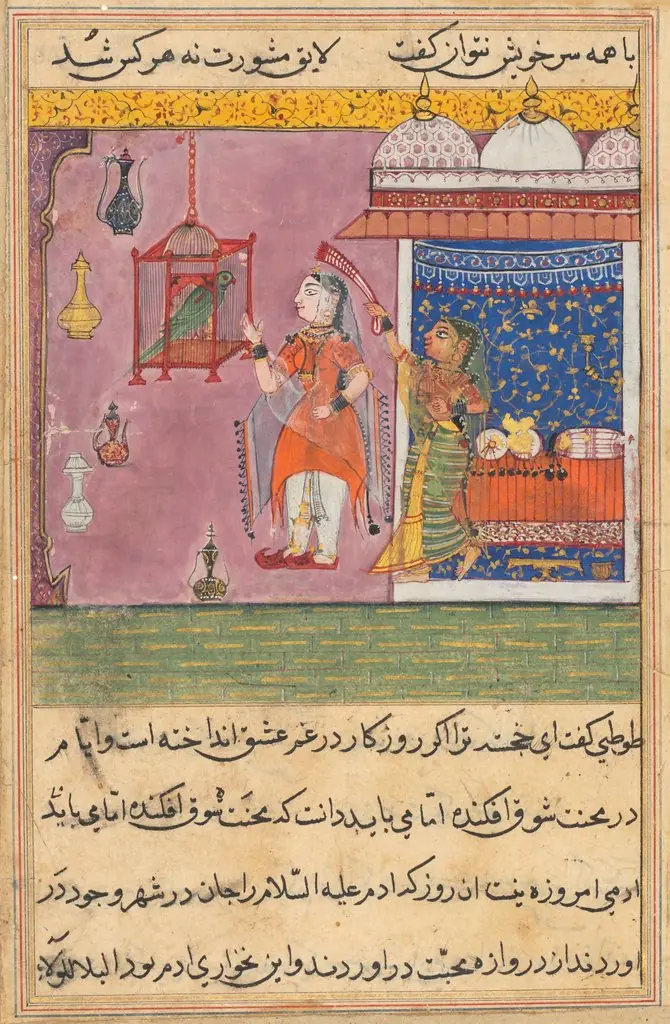
The Parrot Addresses Khujasta at the Beginning of the Twenty-third Night, from a Tuti-nama (Tales of a Parrot)
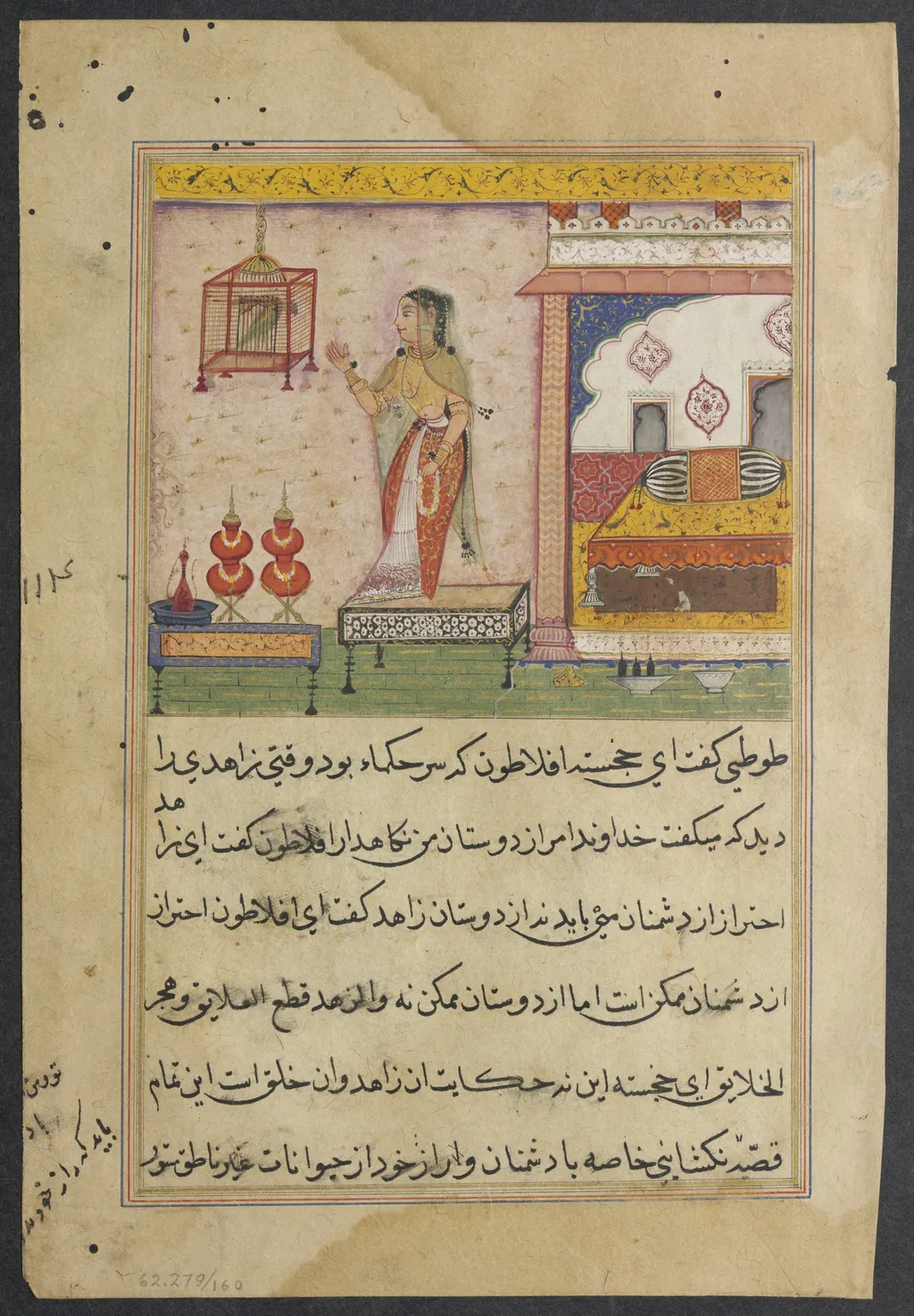
The Parrot Addresses Khujasta at the Beginning of the Twenty-third Night, from a Tuti-nama (Tales of a Parrot) is an unspecified painting. It dates from 1560 and is held in the collection of the Cleveland Museum of Art.
About this work
History & Provenance
It currently resides in the collection of the Cleveland Museum of Art, where it is cataloged under the accession number 1962.
Created in 1560 within the Mughal Empire, this painting is attributed to an unknown artist. The work forms part of a manuscript of the Tuti-nama (Tales of a Parrot). It currently resides in the collection of the Cleveland Museum of Art, where it is cataloged under the accession number 1962.279.160.a.
No further details regarding its specific commission, earlier ownership history, or the circumstances of its acquisition by the museum are provided in the available records.
Legacy
The painting's presence in the Cleveland Museum of Art and its documented provenance since the mid-20th century have contributed to scholarly attention on Mughal manuscript illumination, though specific references to its influence on later artistic practice remain scarce in the cited sources. Its inclusion in discussions of 16th-century Persianate narrative art underscores its role as a representative example of the Tuti-nama tradition, which continued to inform manuscript production across South and Central Asia.
Overview
The work depicts a woman standing in an opulently appointed interior, her hand raised as she appears to address a brightly colored parrot perched within a red cage. Two red lanterns illuminate the scene, while a patterned curtain and a modest bed form the backdrop, creating a vivid, narrative atmosphere characteristic of miniature painting traditions.
Subject & Meaning
The composition illustrates a moment from a Tuti‑nama, a literary genre of illustrated tales featuring a talking parrot. The woman’s gesture suggests a dialogue with the bird, emphasizing themes of communication and moral instruction common in such stories, where the parrot often serves as a wise commentator.
Technique & Style
Executed in fine brushwork, the painting employs a rich palette of gold, red, and deep blues, with intricate decorative motifs on textiles and furnishings. The flat spatial treatment, detailed patterning, and stylized figures align with Persian miniature conventions, where emphasis lies on ornamental surface rather than realistic perspective.
Context
Originating from the tradition of Tuti‑nama manuscripts, the piece reflects the cultural exchange between Persian literary art and courtly visual culture. Such illustrations were typically produced for elite patrons, serving both decorative and didactic purposes within the broader context of 16th‑century Persian art.
Artist & collection

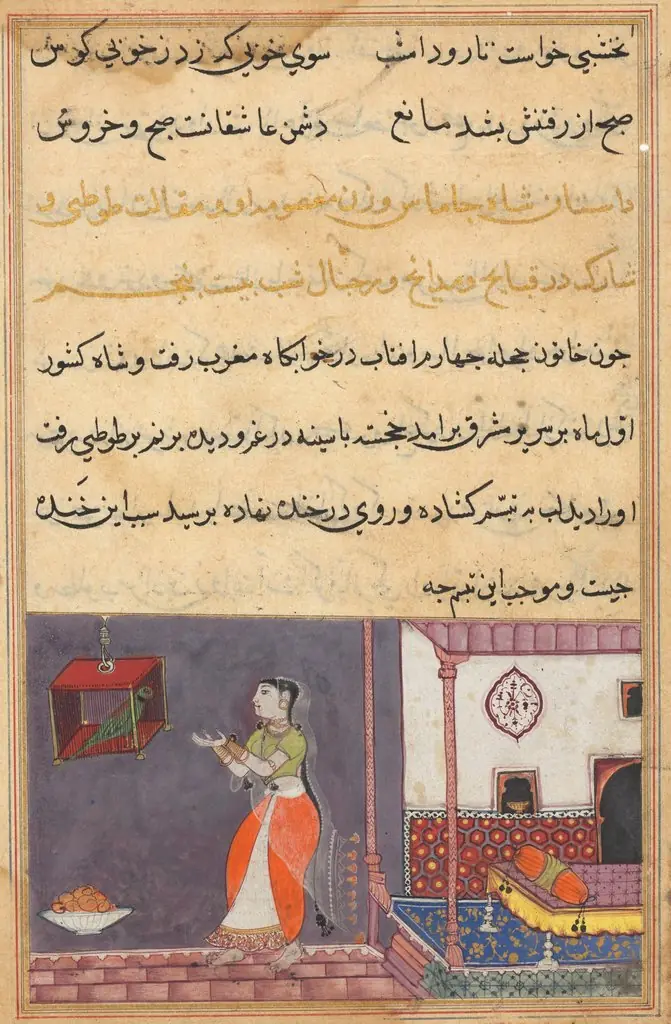
- The Parrot Addresses Khujasta at the Beginning of the Twenty-fifth Night, from a Tuti-nama (Tales of a Parrot)
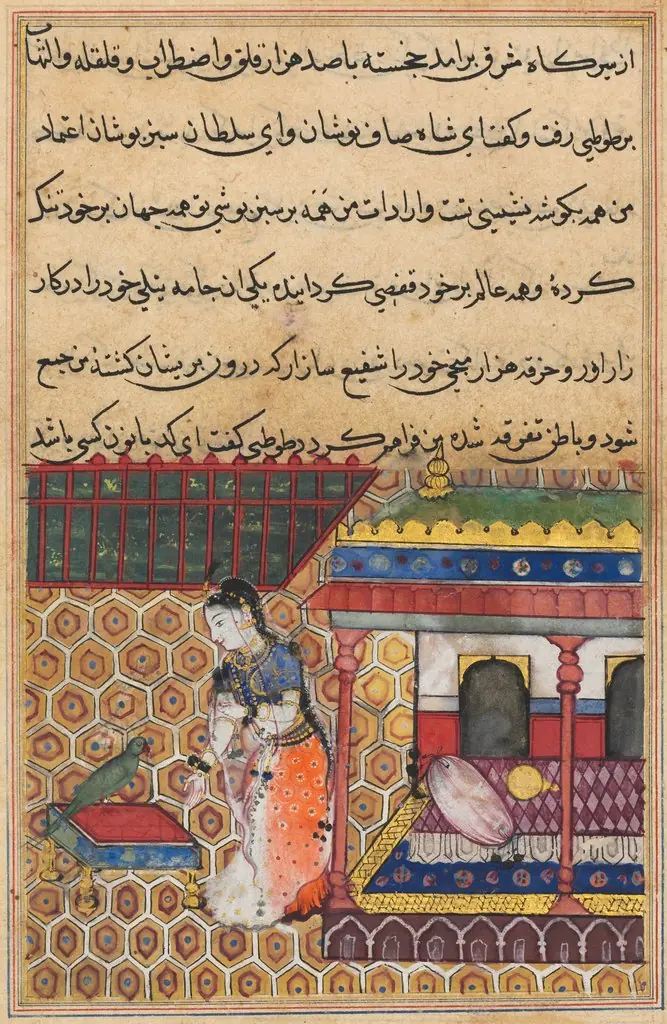 The parrot addresses Khujasta at the beginning of the thirty-eighth night, from a Tuti-nama (Tales of a Parrot)
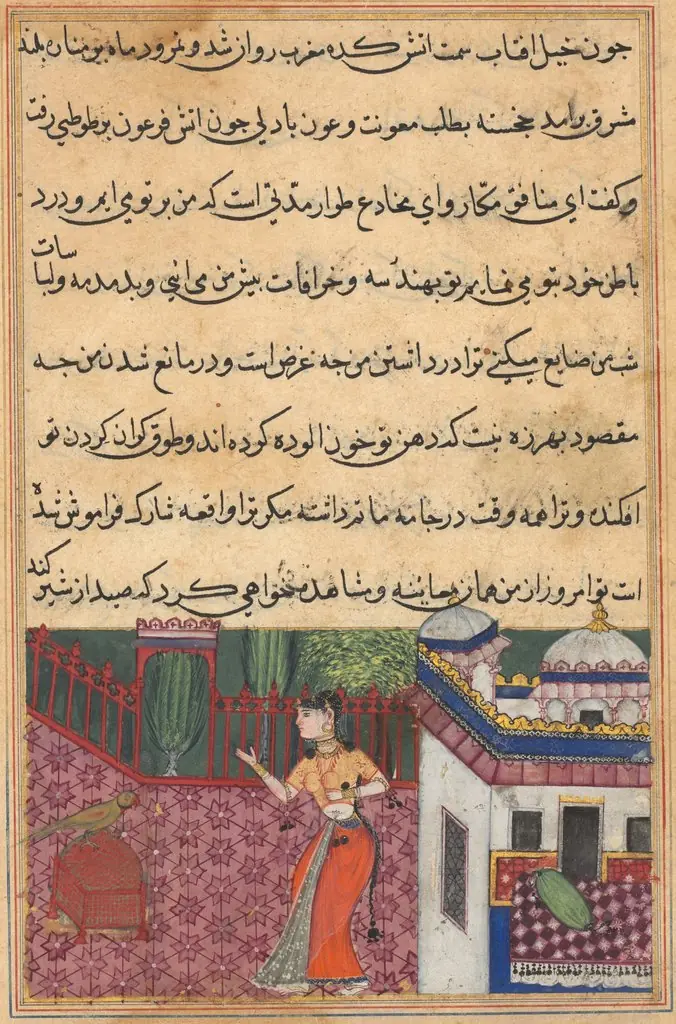 The parrot addresses Khujasta at the beginning of the thirty-third night, from a Tuti-nama (Tales of a Parrot)
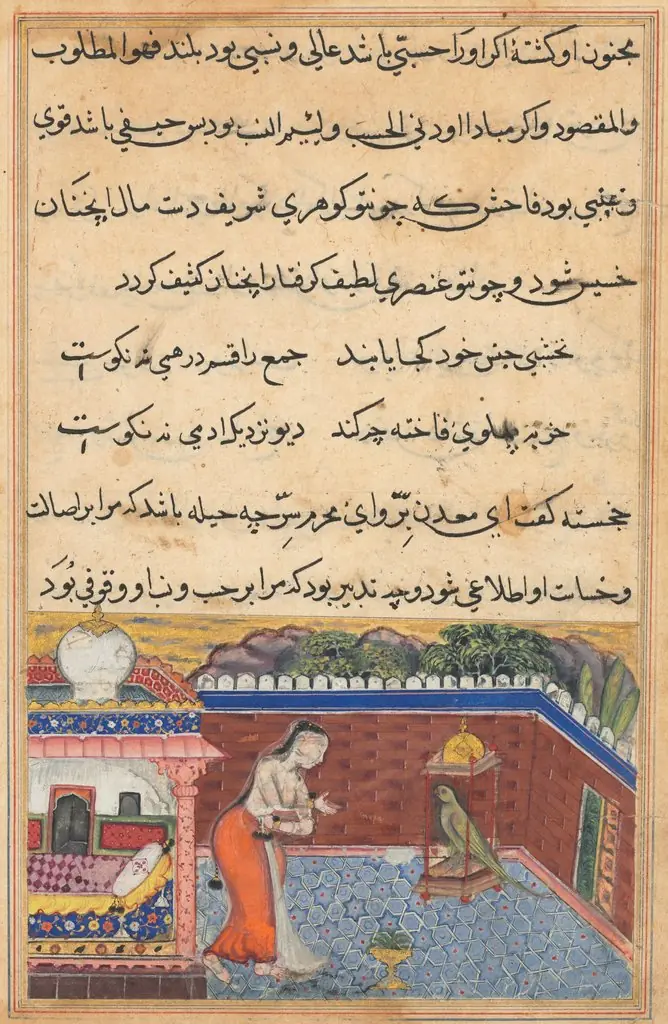 The parrot addresses Khujasta at the beginning of the thirty-first night, from a Tuti-nama (Tales of a Parrot)
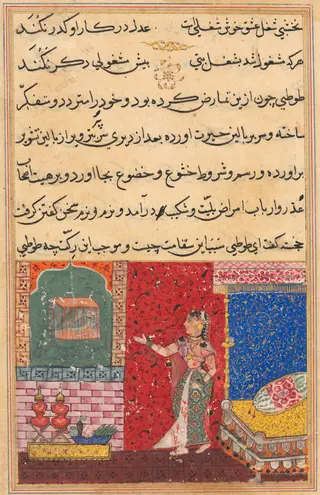 The Parrot Addresses Khujasta at the Beginning of the Fifteenth Night, from a Tuti-nama (Tales of a Parrot)
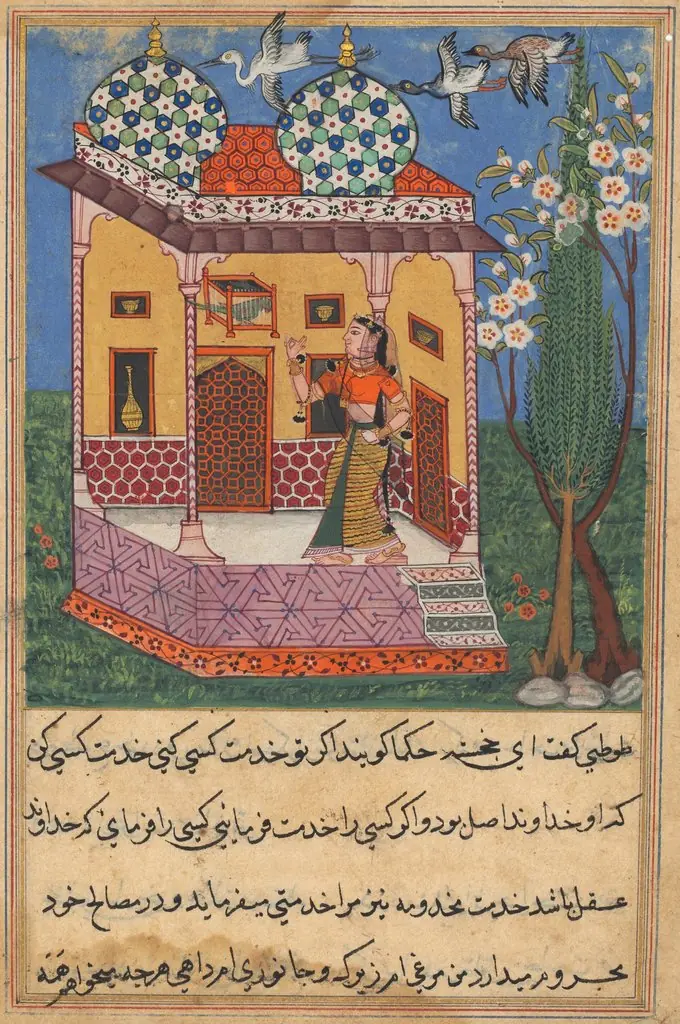 The Parrot Addresses Khujasta at the Beginning of the Twenty-sixth Night, from a Tuti-nama (Tales of a Parrot)
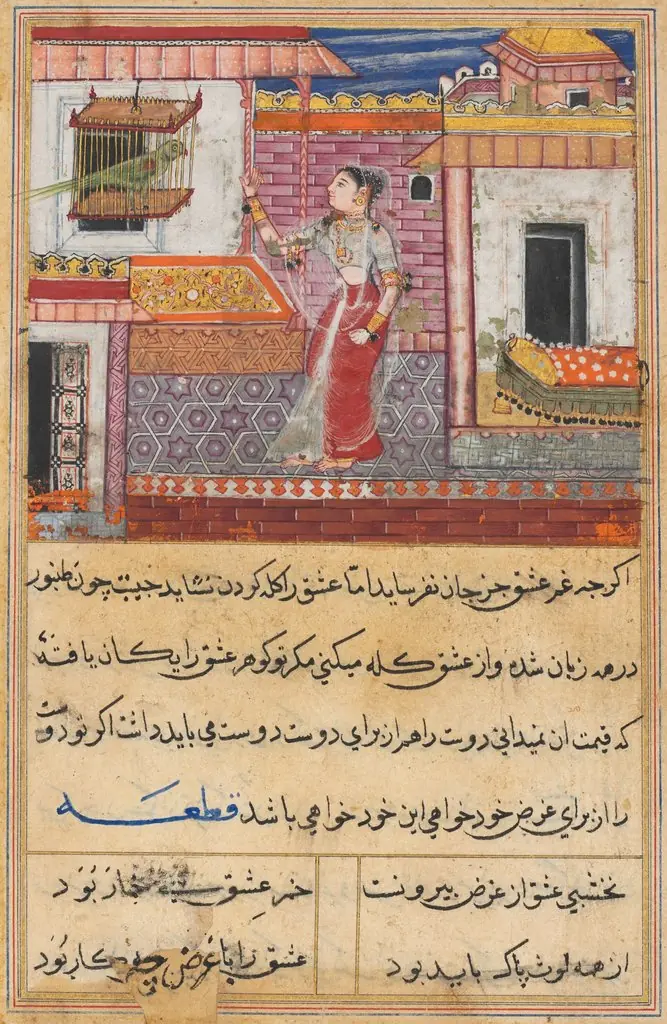 The Parrot Addresses Khujasta at the Beginning of the Thirteenth Night, from a Tuti-nama (Tales of a Parrot)
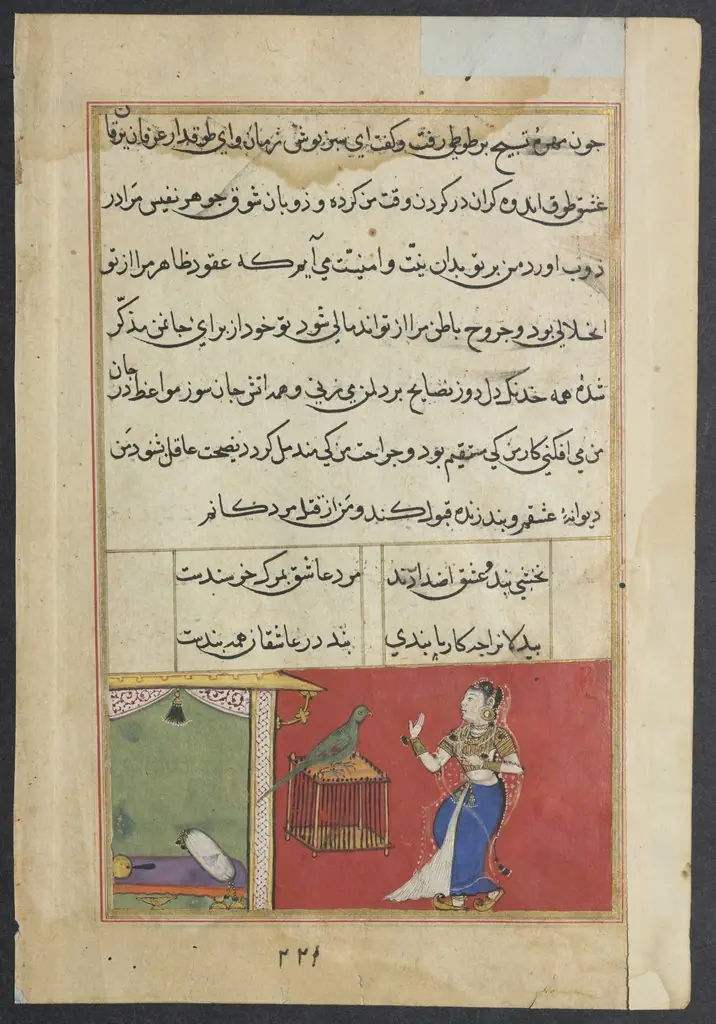 The parrot addresses Khujasta at the beginning of the forty-seventh night, from a Tuti-nama (Tales of a Parrot): Forty-seventh Night
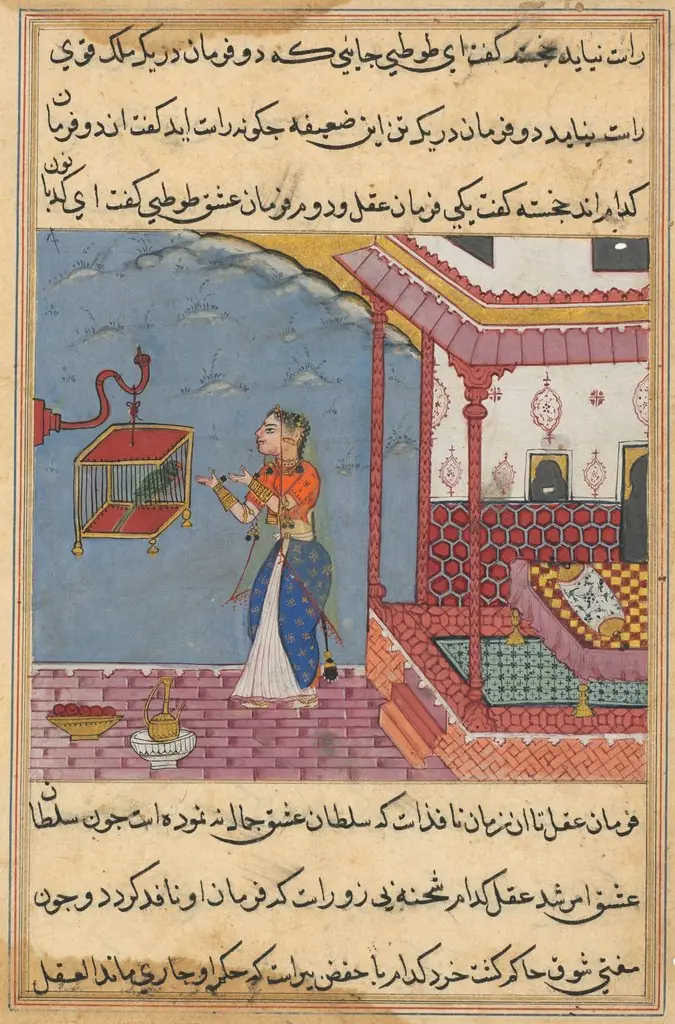 The Parrot Addresses Khujasta at the Beginning of the Twenty-Fourth Night, from a Tuti-nama (Tales of a Parrot)
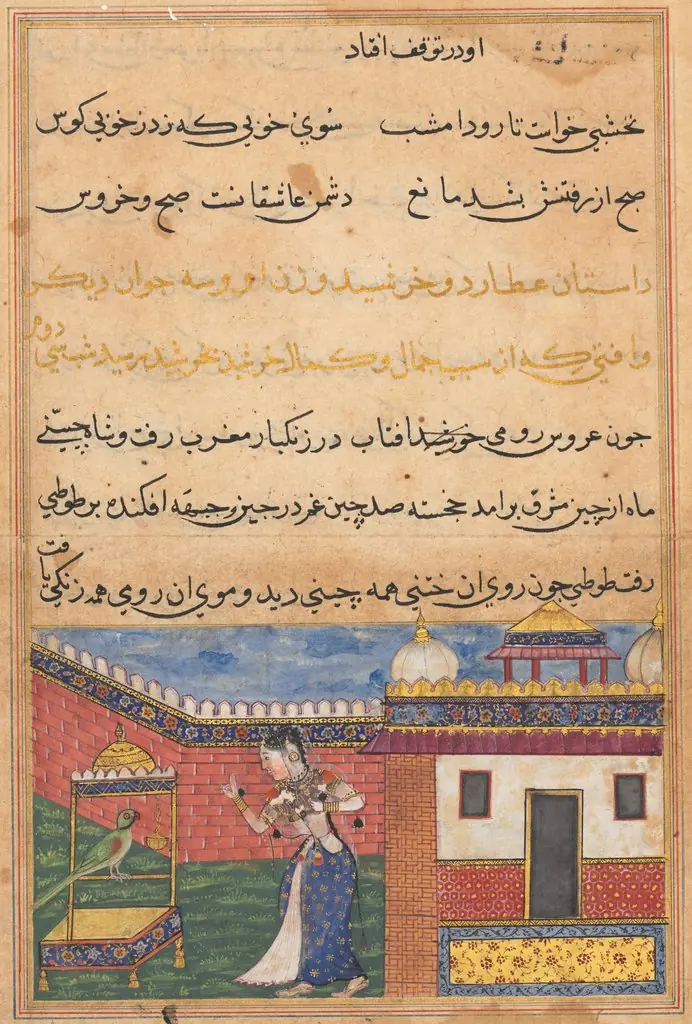 The parrot addresses Khujasta at the beginning of the thirty-second night, from a Tuti-nama (Tales of a Parrot)
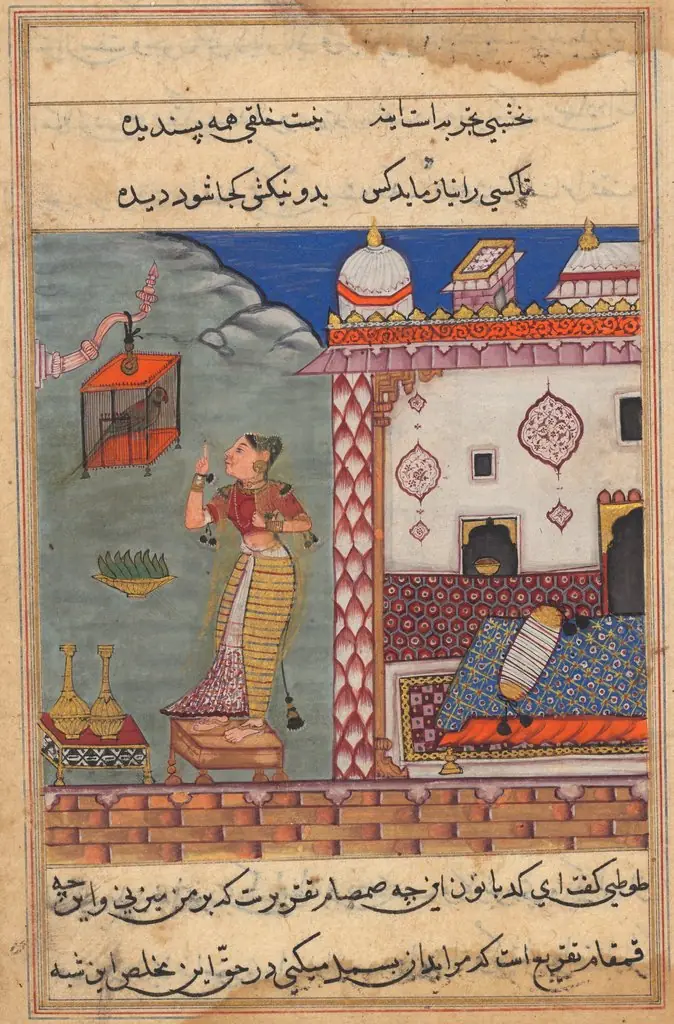 The Parrot Addresses Khujasta at the Beginning of the Twenty-seventh Night, form a Tuti-nama (Tales of a Parrot)
 The Parrot Addresses Khujasta at the Beginning of the Nineteenth Night, from a Tuti-nama (Tales of a Parrot)
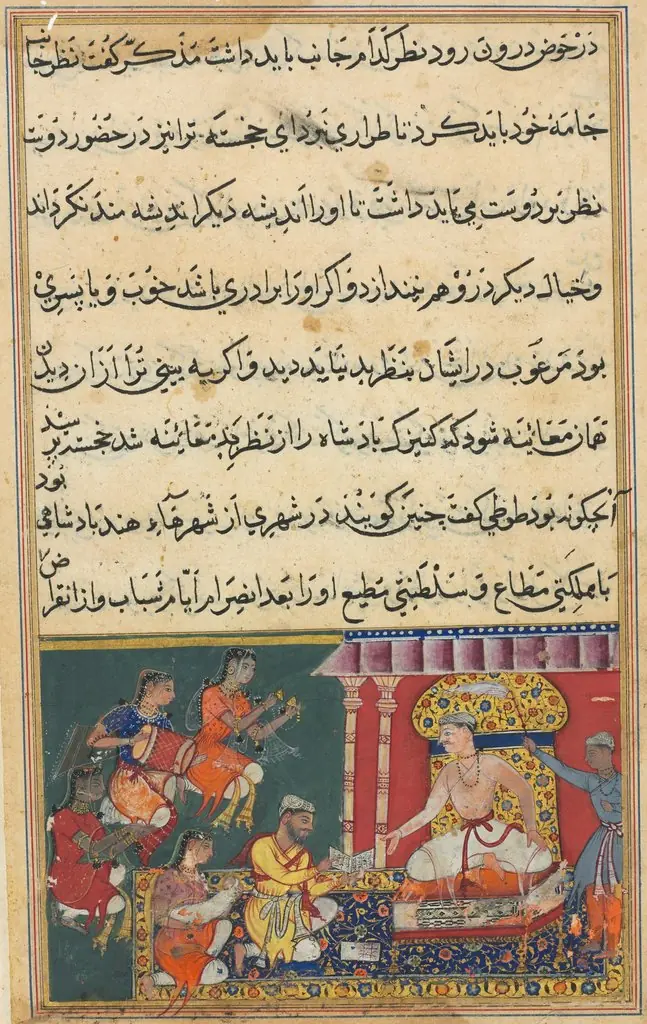 The astrologer predicts a calamity for the newly born prince in his thirteenth year, but one which he would be able to overcome, from a Tuti-nama (Tales of a Parrot): Eighth Night
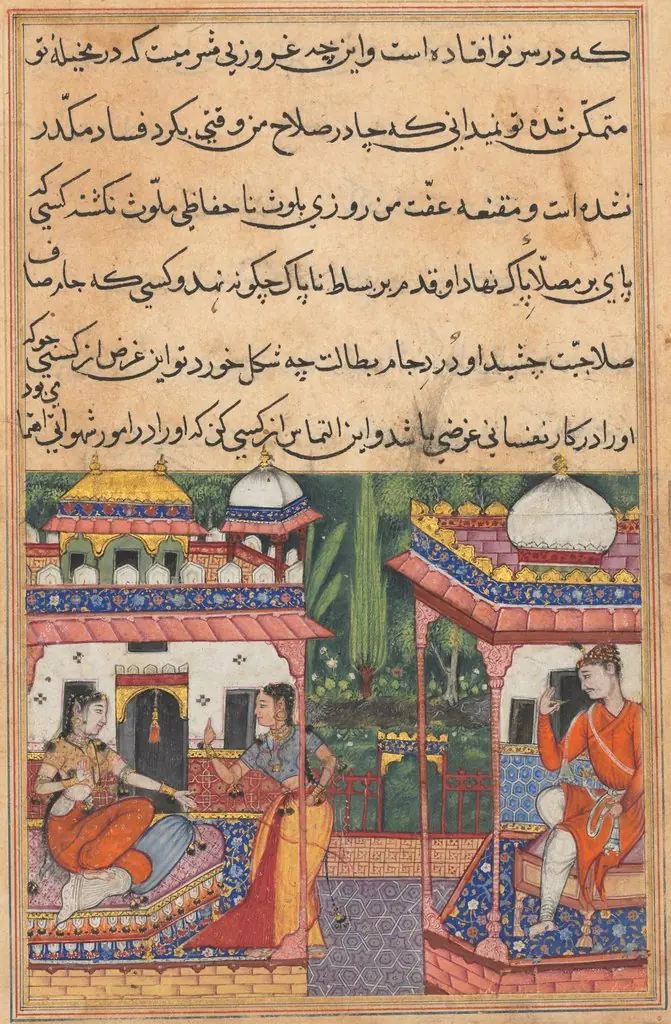 Kaiwan sends a message of love to Khurshid, wife of his brother Utarid who is away on a journey, from a Tuti-nama (Tales of a Parrot): Thirty-second Night
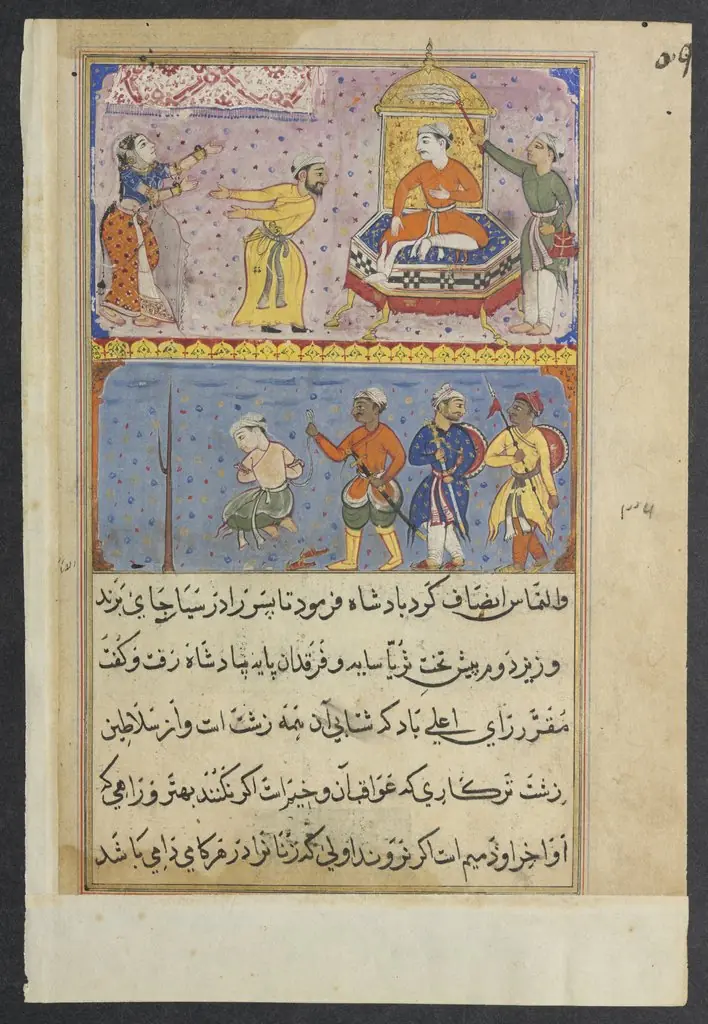 The prince, once reprieved, is returned to the palace of execution a second time on the plea of the king’s handmaiden, from a Tuti-nama (Tales of a Parrot): Eighth Night
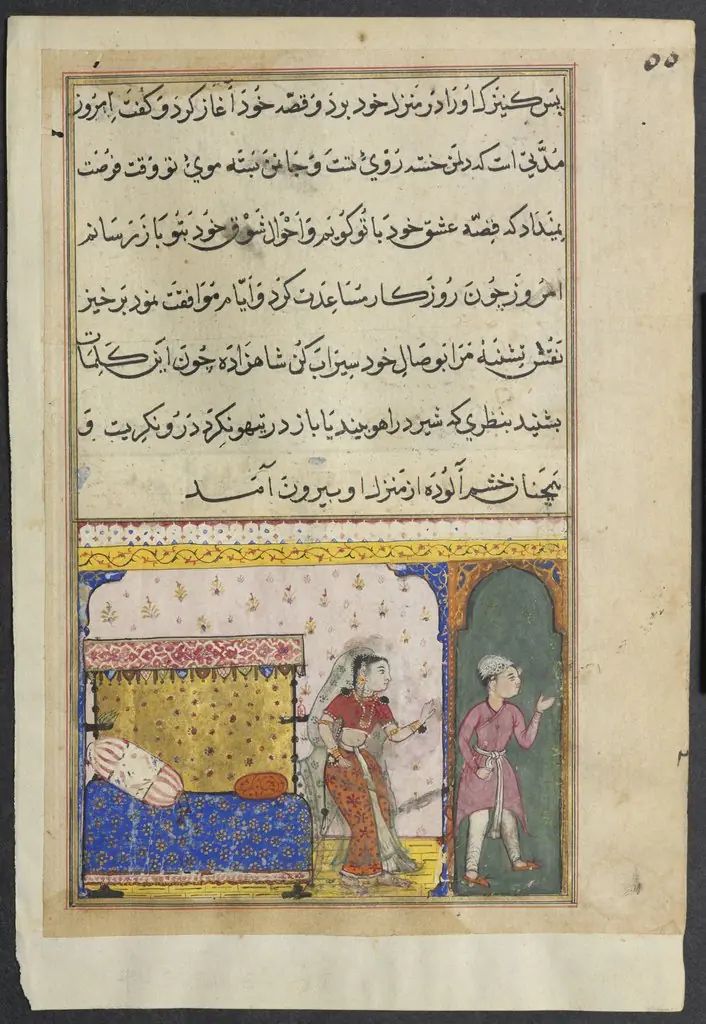 The prince rejects the amorous advances of the king’s handmaiden, from a Tuti-nama (Tales of a Parrot): Eighth Night
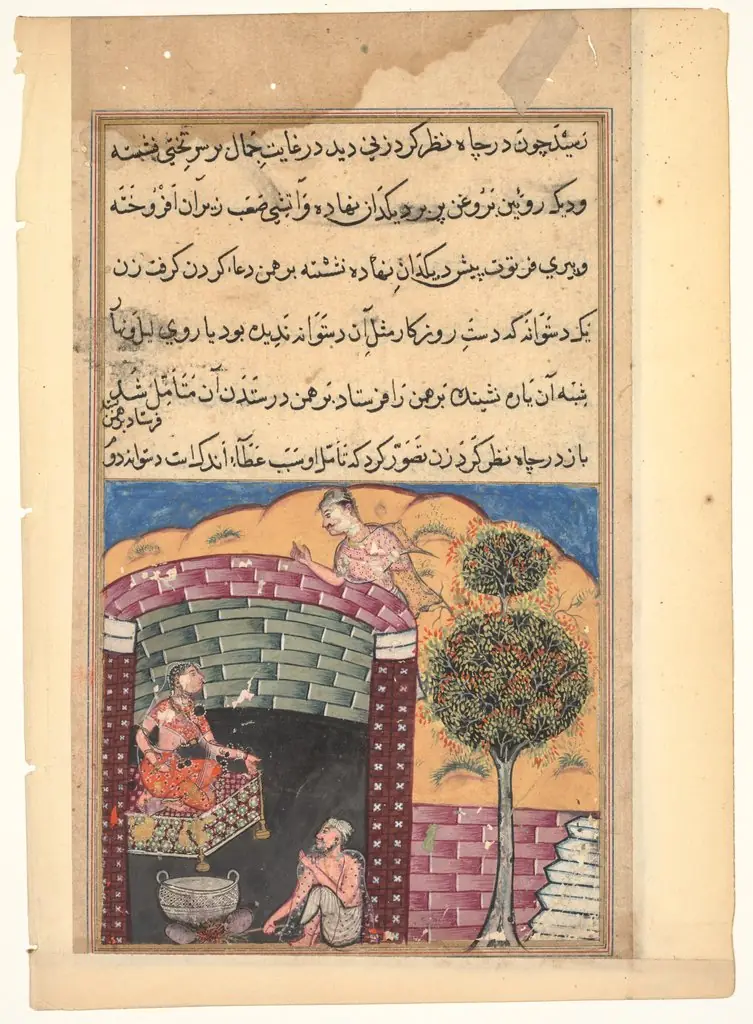 The Brahman gambler sees the daughter of the king of the jinns in a pit together with an old man and a cauldron of boiling oil, from a Tuti-nama (Tales of a Parrot: Seventh Night)